Many of the people who inhabit the Manndalen valley are Sea Samis. The everyday language in many homes was Sami up until the 1960s, when people starting speaking Norwegian, so now only the older generation have Sami as their mother tongue. In recent years, however, there has been a renewed interest in the language among young people, and Sami is being spoken once more. The interest in duodji, Sami handicrafts, is also growing. Many people in Manndalen are also of Norwegian, Finnish and Swedish origin.
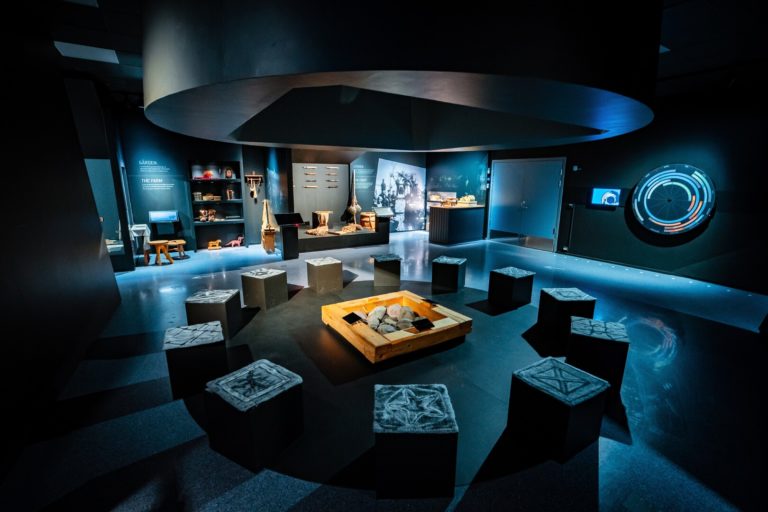
Rátnu – ancient textiles
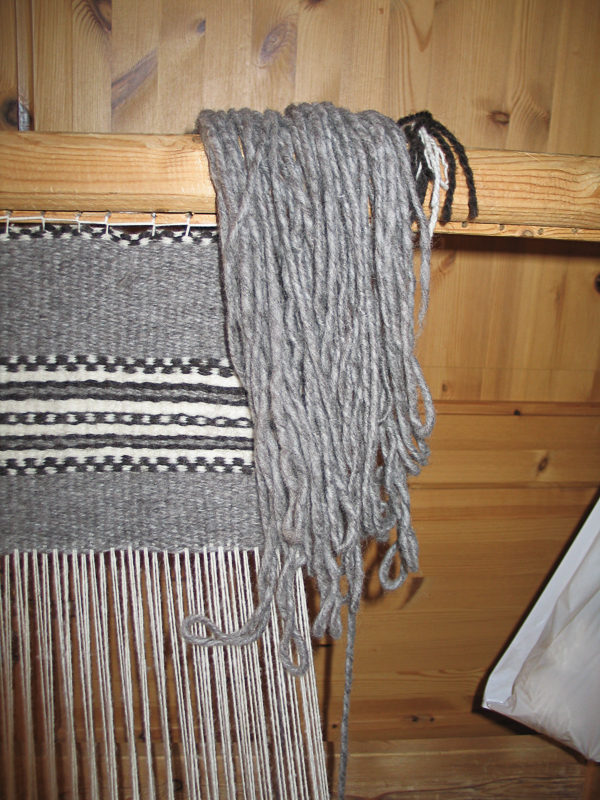
A unique handicraft tradition has survived in Manndalen, namely “oppstadvev”. This weaving technique, using a vertical warp-weighted loom, was not invented in Manndalen, however. We find it depicted on a Greek vase painting from 560 BC, and for centuries it was widespread throughout most of Europe. The technique survived among the Sea Samis in Manndalen until our own time because the rugs and blankets produced on these looms were much prized, as goods to sell, among Samis, Kvæns (inhabitants of Finnish origin) and Norwegians. The technique was also used by Sea Samis who had settled by the Lyngenfjord. As they lived in “gamme” (turf huts), they had little space and so a simple, collapsible loom was ideal.
Distinctive technique
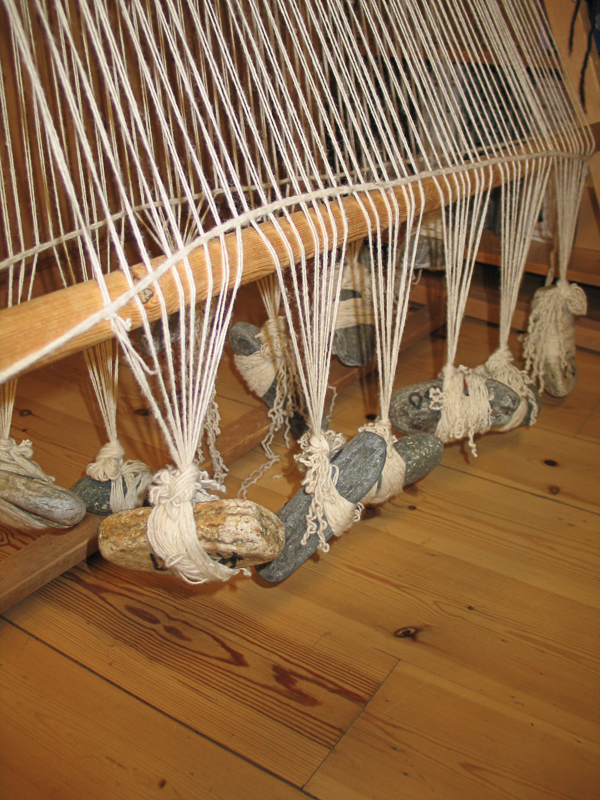
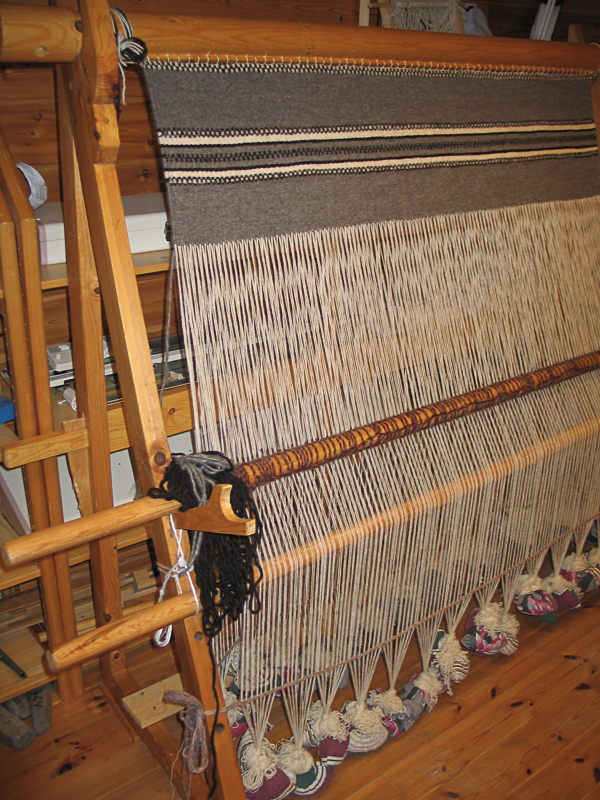
The warp-weighted loom is a simple construction of wood which stands upright against a wall, having one plank on each side and a beam across the top. The vertical warp yarns are kept straight and in tension by tying stones to them weighing around half a kilogram (about 1lb) each, so that the yarns hang freely. The weft yarn is passed through the weave by hand, without a shuttle, the weaver moving back and forth across the weave. This weaving technique produces a selvedge at both sides and at the top, so there are three selvedges.
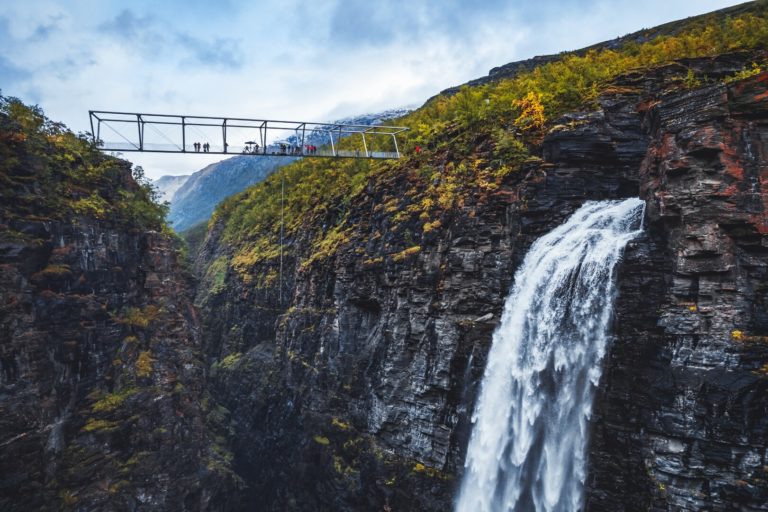

The grene were versatile textiles
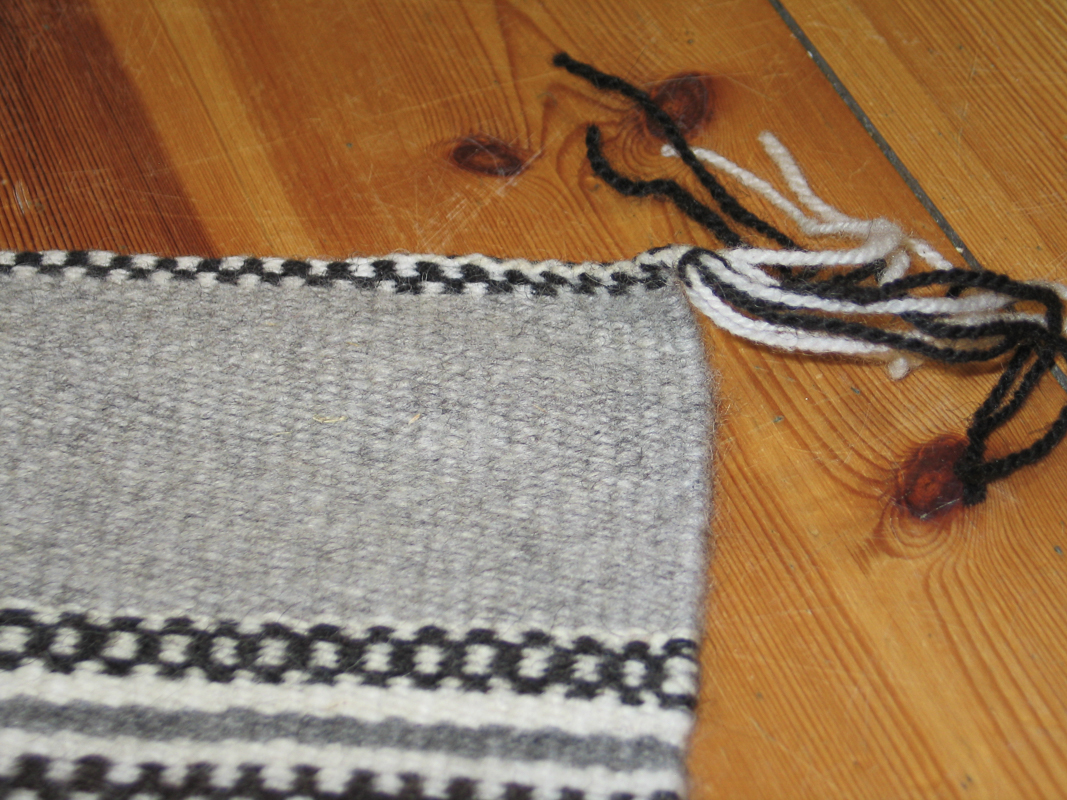
The rugs and blankets woven in this way are called “grene”. They were previously used for covering “lavvo” (Sami tents), as coverings in sleds, or as bed covers; in fact they were very practical and could be used for a variety of purposes. Today, they are much in demand as decorative wall hangings, in both private homes and public buildings. The original “grene” were woven from sheeps’ wool in natural white with patterns in natural black, or using wool dyed with plant dyes. Modern-day “grene” are also made in grey, and “grene” in black with white patterns are also popular.
Survival and renewalof the grene
Manndalen was the most southerly community that was forcibly evacuated and razed to the ground by the German occupying forces in 1945. With all that was lost in the destruction, the old looms and most of the “grene” also disappeared. However, a few women continued weaving after the war, and gradually as the unique nature of this traditional craft was discovered by handicraft experts from outside the Sami community, demand for the textiles increased. This prompted more women to take up the technique. Weaving courses are now held frequently, enabling the technique to be maintained and passed on.
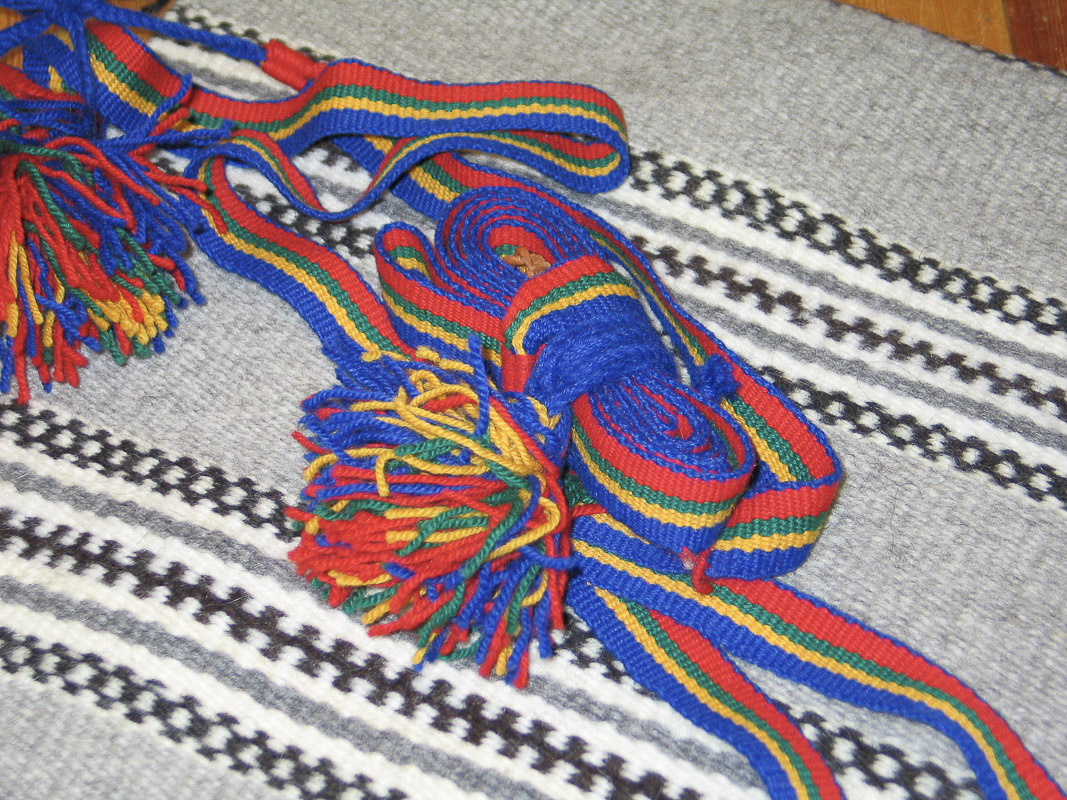
The Manndal pattern is full of colours
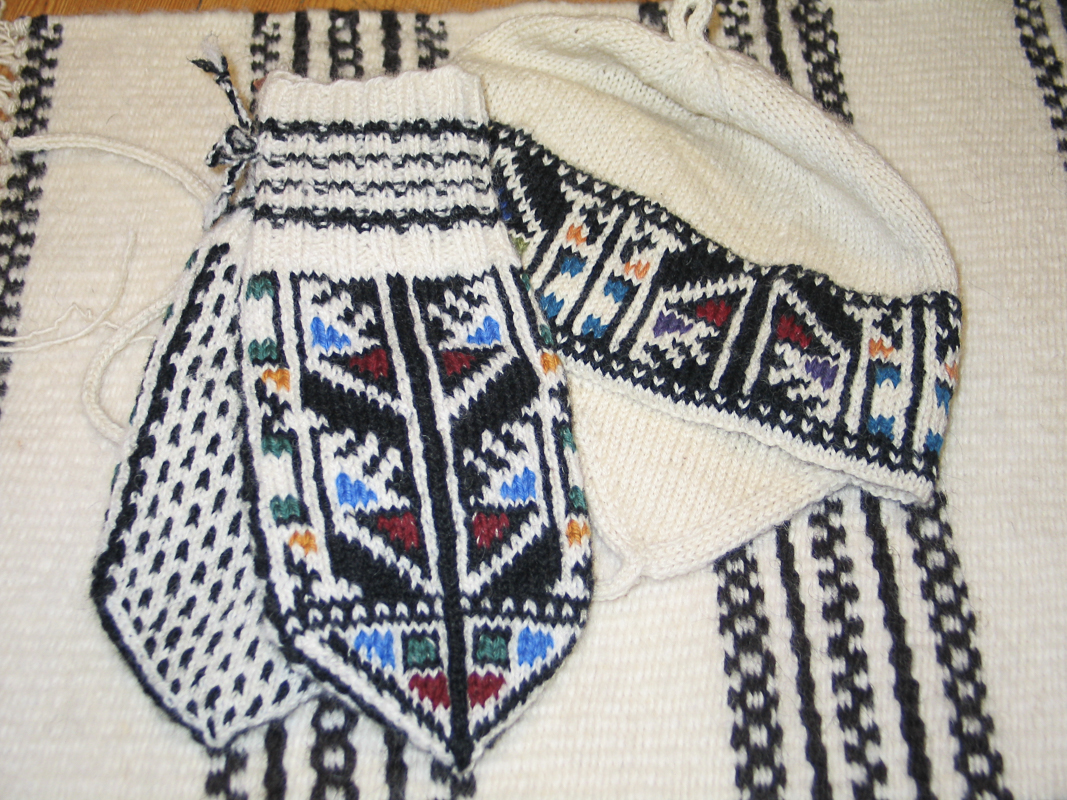
Since the people in Manndalen had sheeps’ wool, they could earn money from selling hand-knitted hats, mittens and “lester” (woollen socks). From the 1920s, mittens were knitted using the special Manndal pattern. The origins of the pattern are unknown, but it may have come from the east via the big regional markets. Knitwear from Manndalen in natural white, grey and black with decorative detail in bright colours is extremely popular throughout the whole of Troms.
Bonkos are the warmest mittens
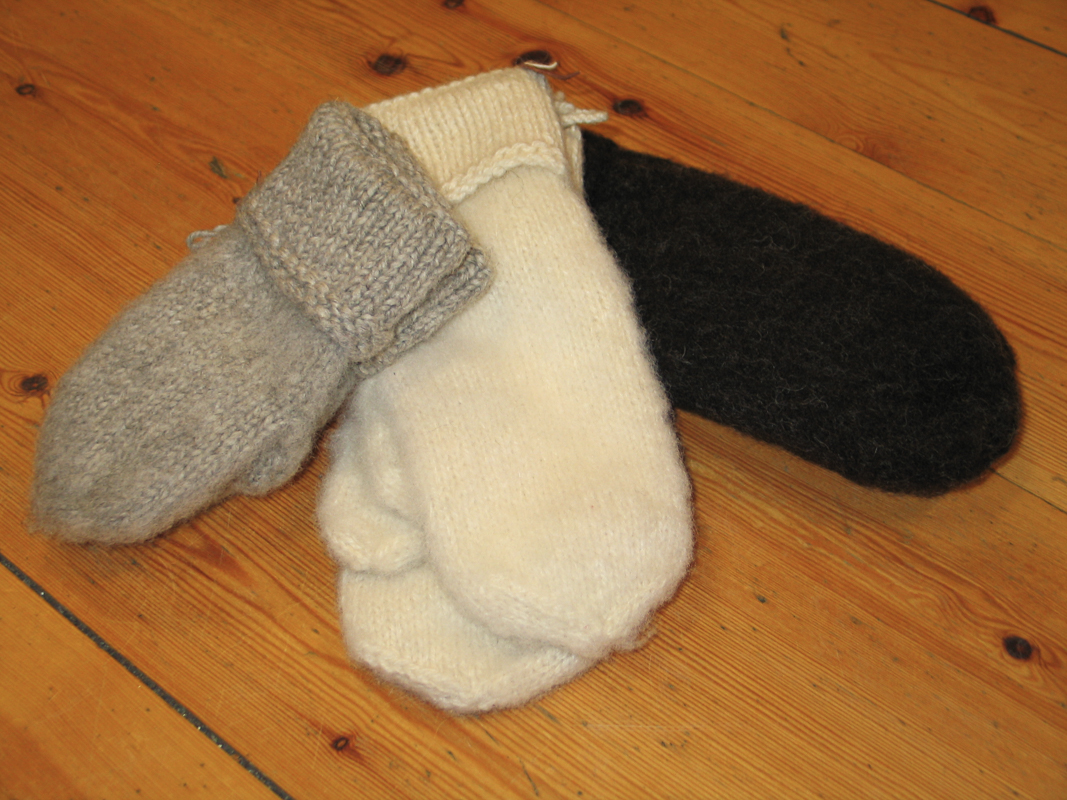
When the inland wind whistles down the Manndalen valley in winter, there is only one kind of mitten that will keep the cold out, namely the Bonkos mitten. Made from homespun woollen yarn, after the mittens are hand-knitted they are felted using carding combs. This creates a layer of air in the wool, making the mittens wonderfully warm and cosy to wear. Børge Ousland, the famous Norwegian polar explorer, is among those who swear by Bonkos mittens.

Lyngenkofta – the traditional costume
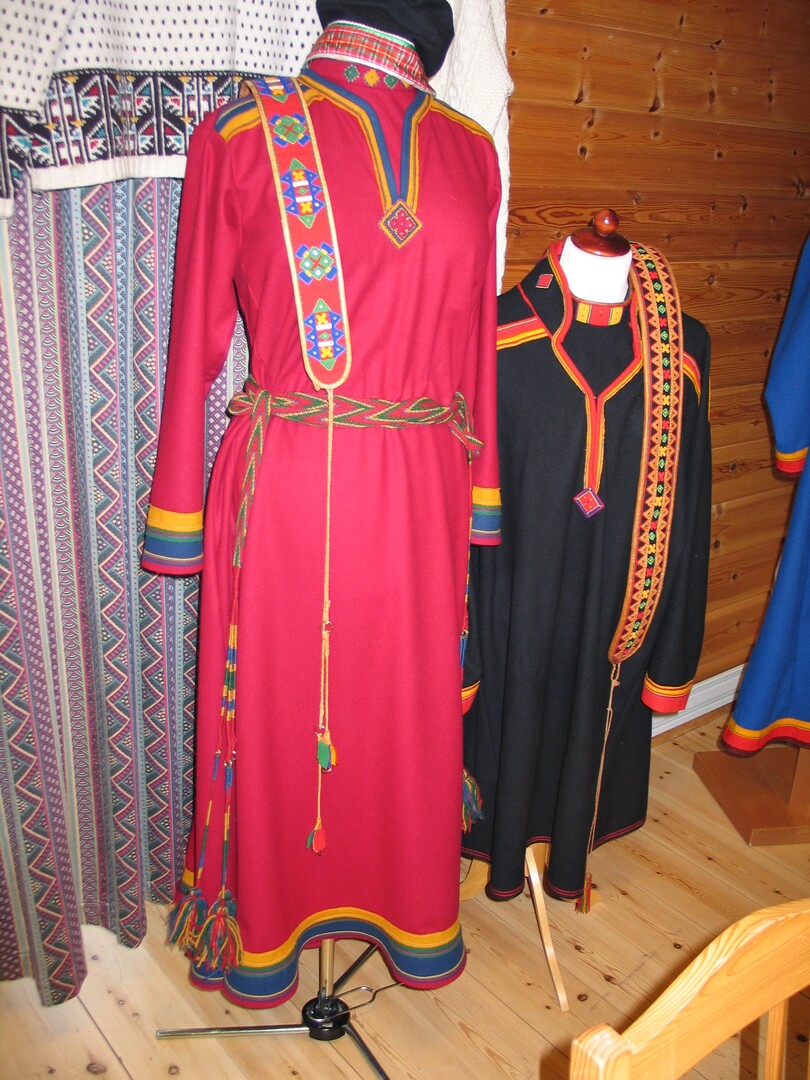
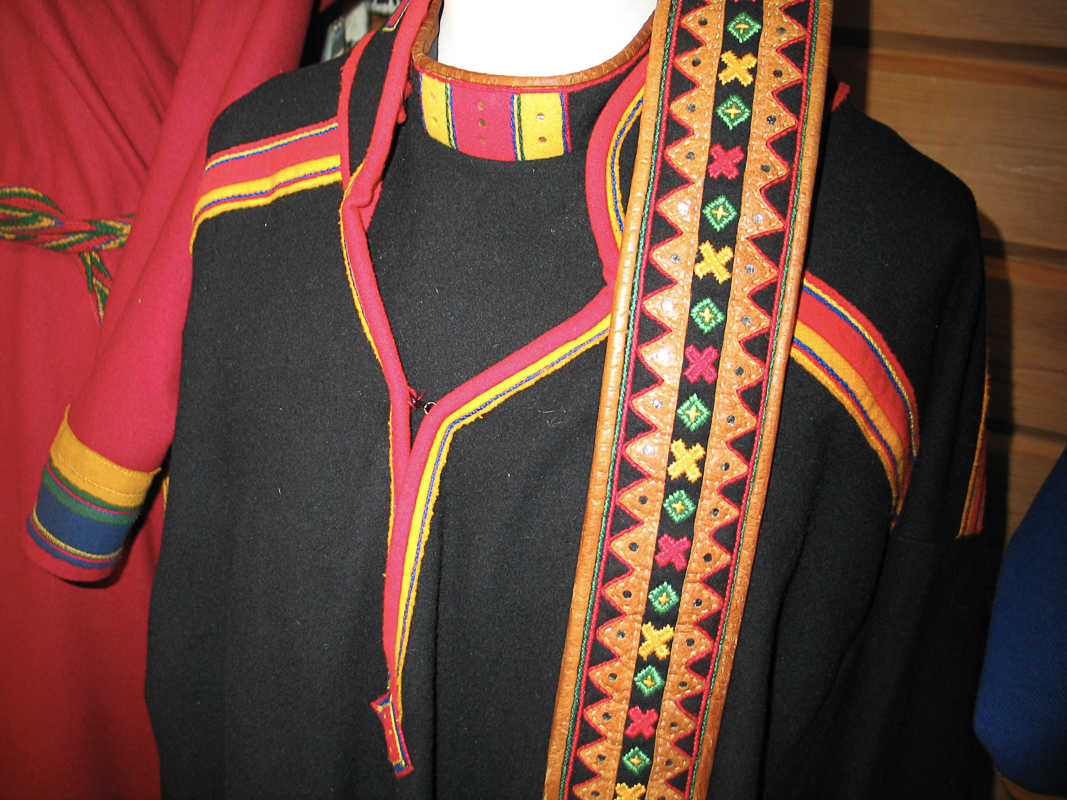
The “kofte”, a decorative outer kirtle or tunic traditionally worn by the Sami, varies in different parts of Sameland, the far northern areas inhabited by the Sami. The Lyngenkofta, which was worn by the Sea Samis in Manndalen, stopped being worn a century ago. However, there are photographs, drawings and some old “kofte” still in existence, and on this basis the Lyngenkofta has been reconstructed. With the renewed interest in Sami cultural heritage, there is also a greater desire to wear these traditional costumes on festive occasions, such as the Norwegian Constitution Day on 17 May, and for weddings and confirmations.
About Manndalen and duodji
Manndalen in Northern Norway is particularly known for its Sea Sami culture and strong handicraft traditions. Traditional weaving, knitting and Sami clothing have been preserved and revived here, and many of these crafts are still practised today.
Duodji is the Sami tradition of handicraft and applied arts. It includes textile work, sewing, weaving, woodwork, knife-making and many other skills. Traditional objects are often both practical and highly decorative.
A warp-weighted loom is an ancient type of vertical loom. The warp threads hang down from a horizontal beam and are kept taut by weights, traditionally made from stone. The technique was once widespread in Europe but survived into modern times among the Sea Sami in Manndalen.
A grene is a traditional woollen textile woven on a warp-weighted loom. In the past, grene were used as blankets, bed covers, coverings in sleds and even for Sami tents. Today, they are also used as decorative textiles and wall hangings.
The Manndal pattern is a distinctive knitting pattern associated with Manndalen. It has been used for mittens and other woollen garments since at least the 1920s. The traditional colours are natural white, grey and black, often with small details in brighter colours.
Bonkos are exceptionally warm woollen mittens traditionally made in Manndalen. They are knitted from homespun wool and then brushed with carding combs, creating an insulating layer of air in the wool. They have even been used on polar expeditions.
The Lyngen gákti is the traditional Sami clothing associated with the Sea Sami communities around the Lyngenfjord, including Manndalen. It disappeared from everyday use more than a century ago but has been reconstructed from surviving garments, photographs and drawings. Today it is worn again for celebrations and special occasions.
Yes. Grenebua in Manndalen sells locally made handicrafts, including woven textiles, knitted goods and other products made by local craftspeople. Buying locally made handicrafts is also a way of supporting the continuation of these traditions.