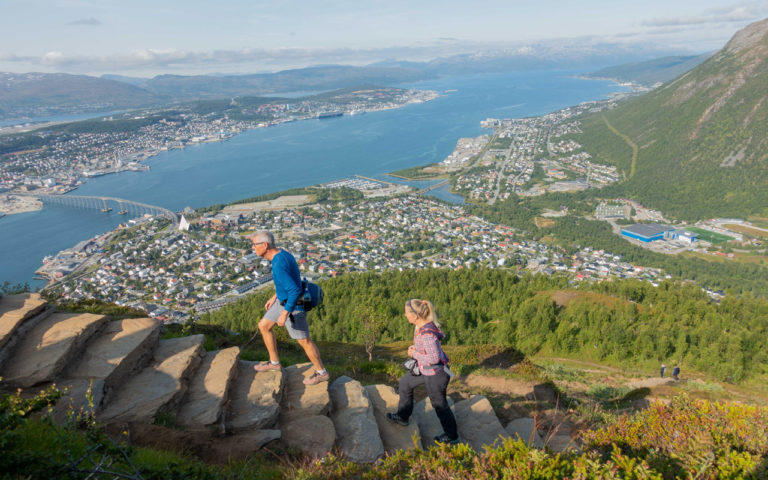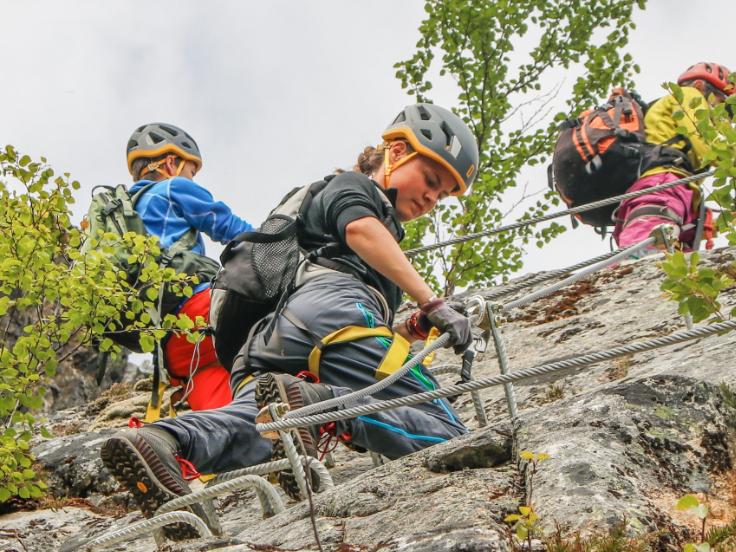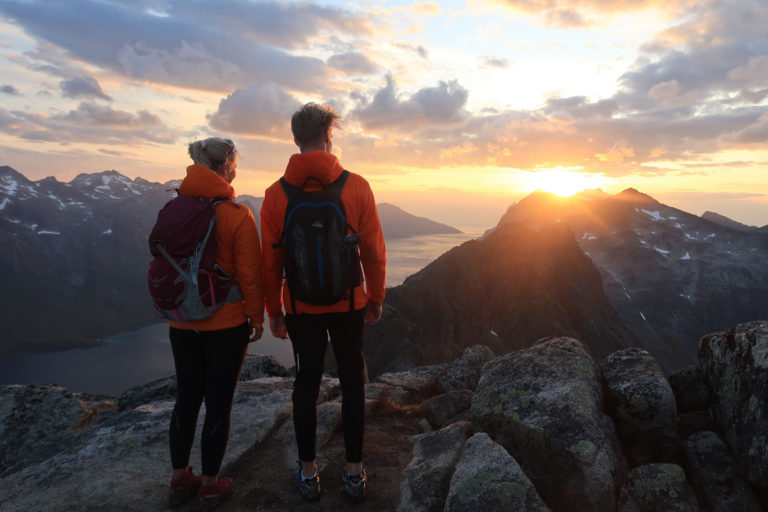
There are quite a few “sherpa stairs” across Northern Norway these days. But each of them has its own personality, both because of the topography on the site and the view you have from the top. The Lyngentrappa stairs offer a relatively short and brutal start, followed by an easier mountain hike to “the end of the world”. Best of all, the beauty is revealed bit by bit, as if part of a divine masterplan.
The stairs start with a bang
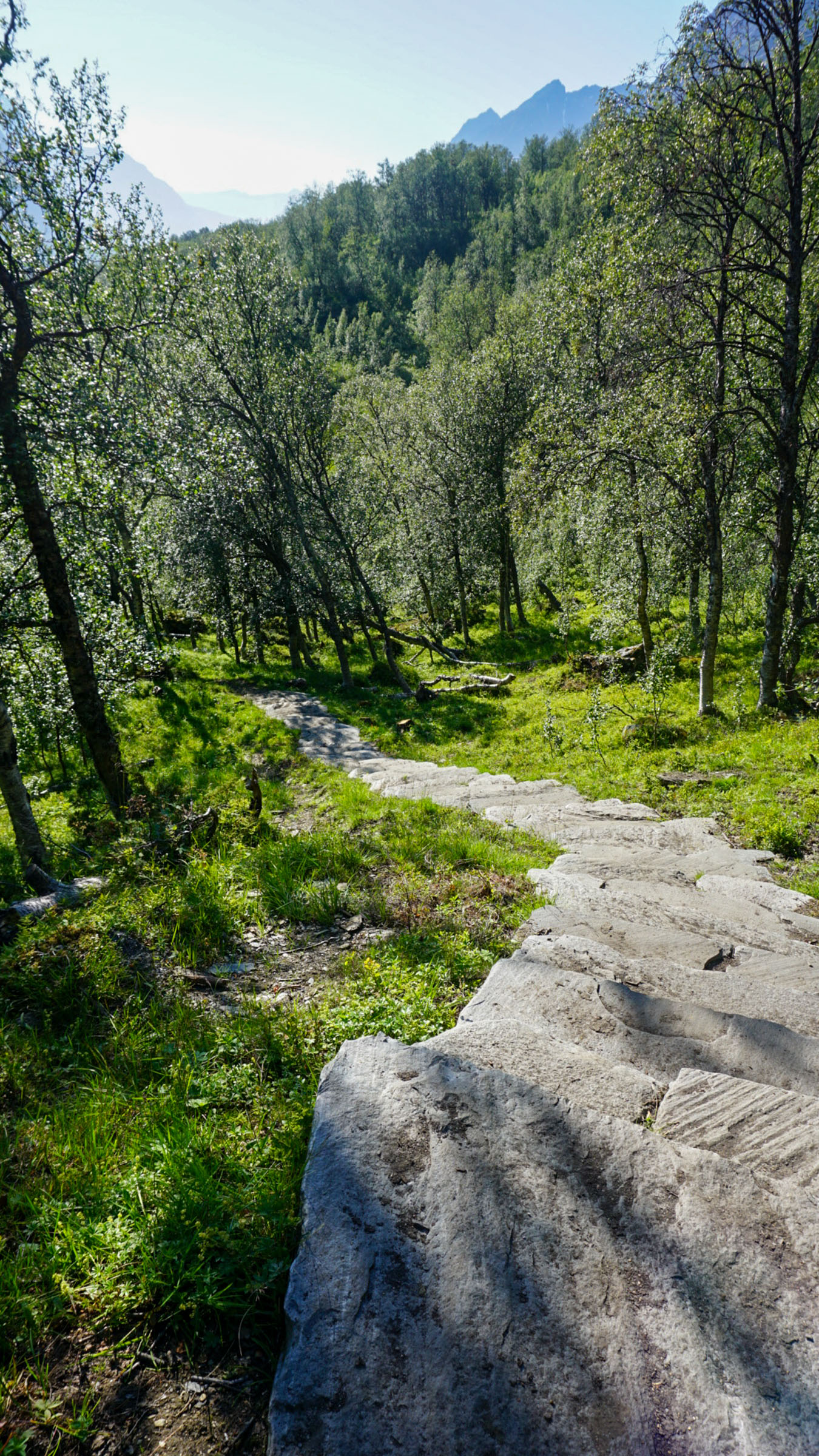
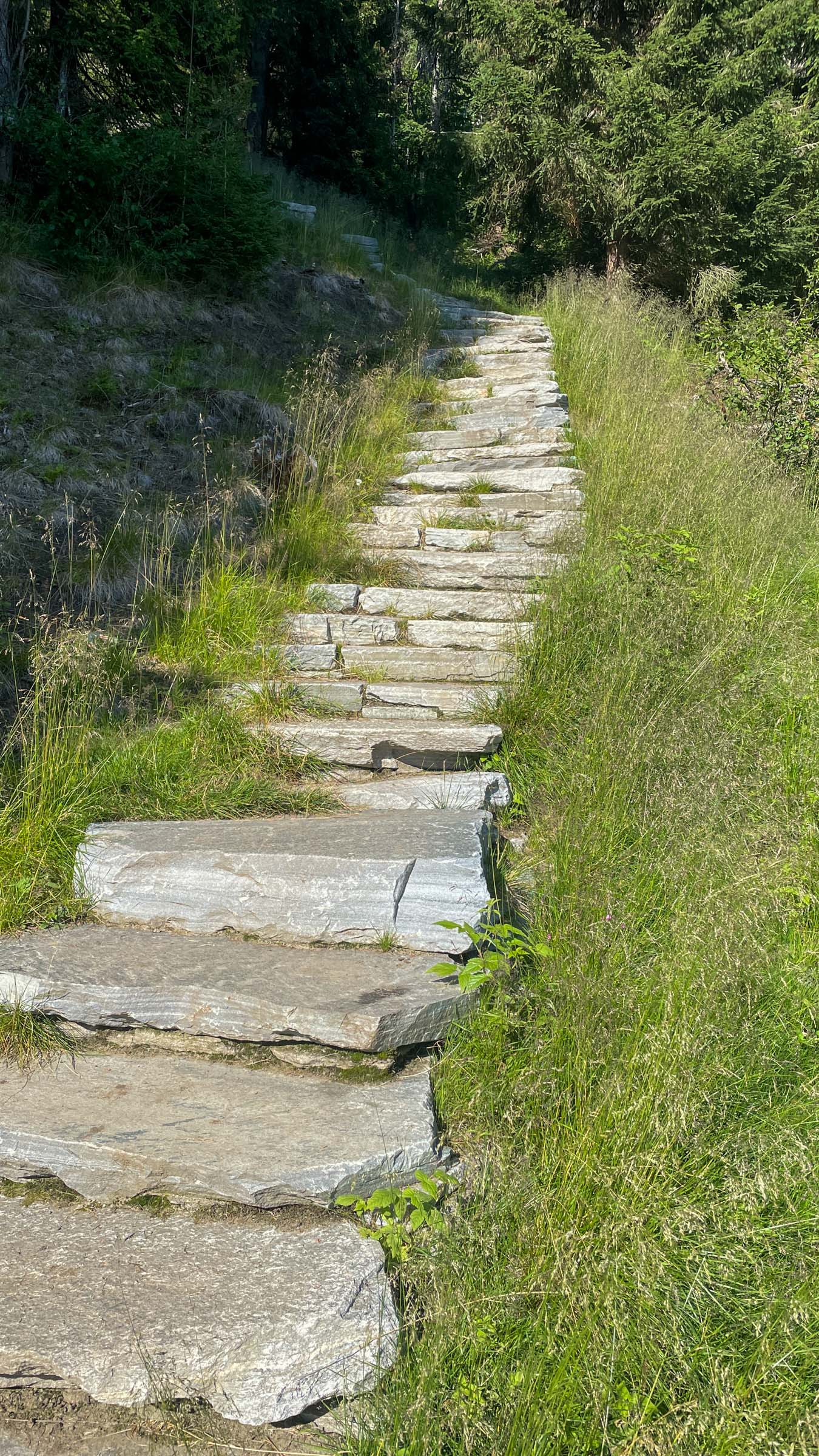
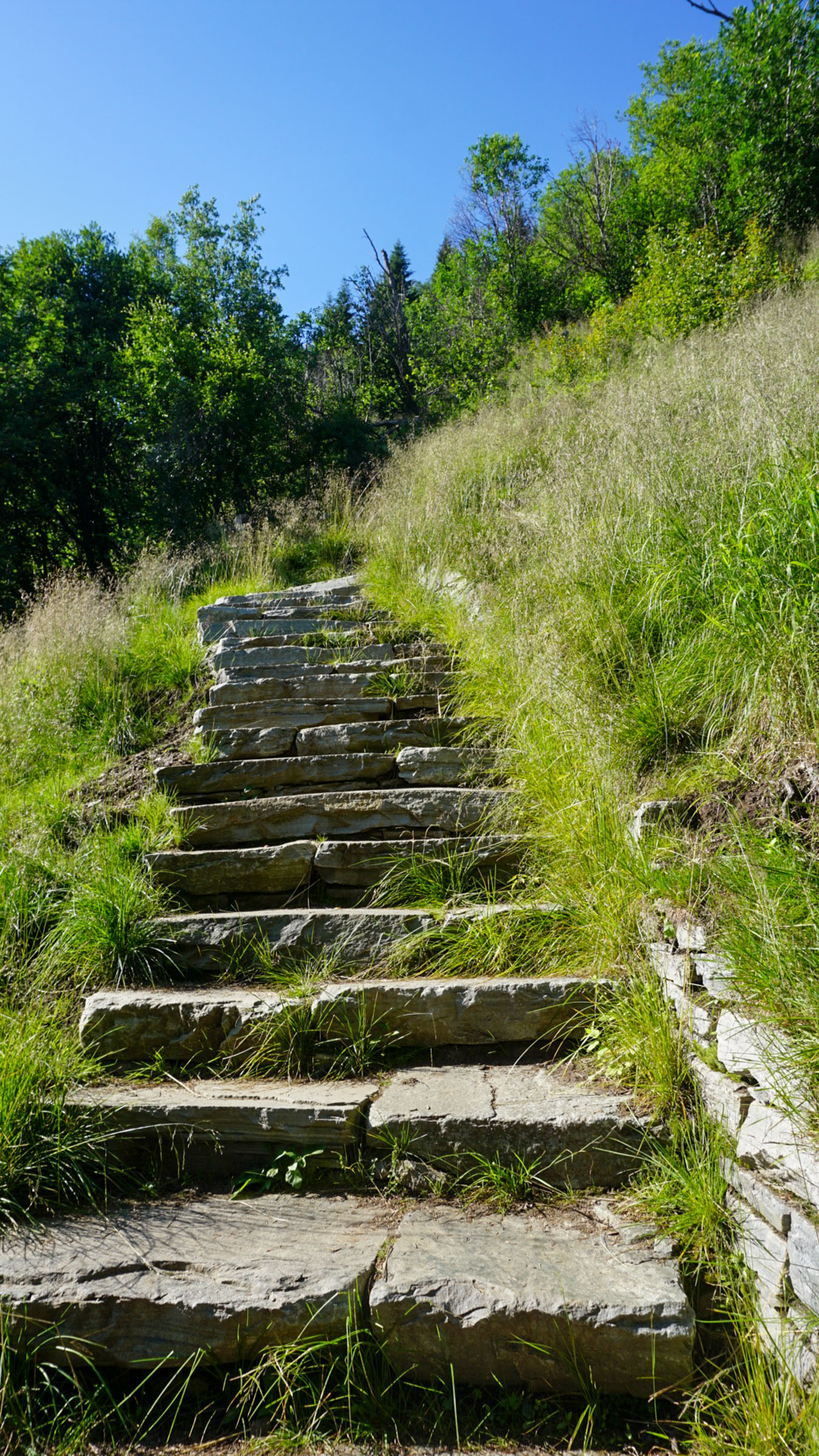
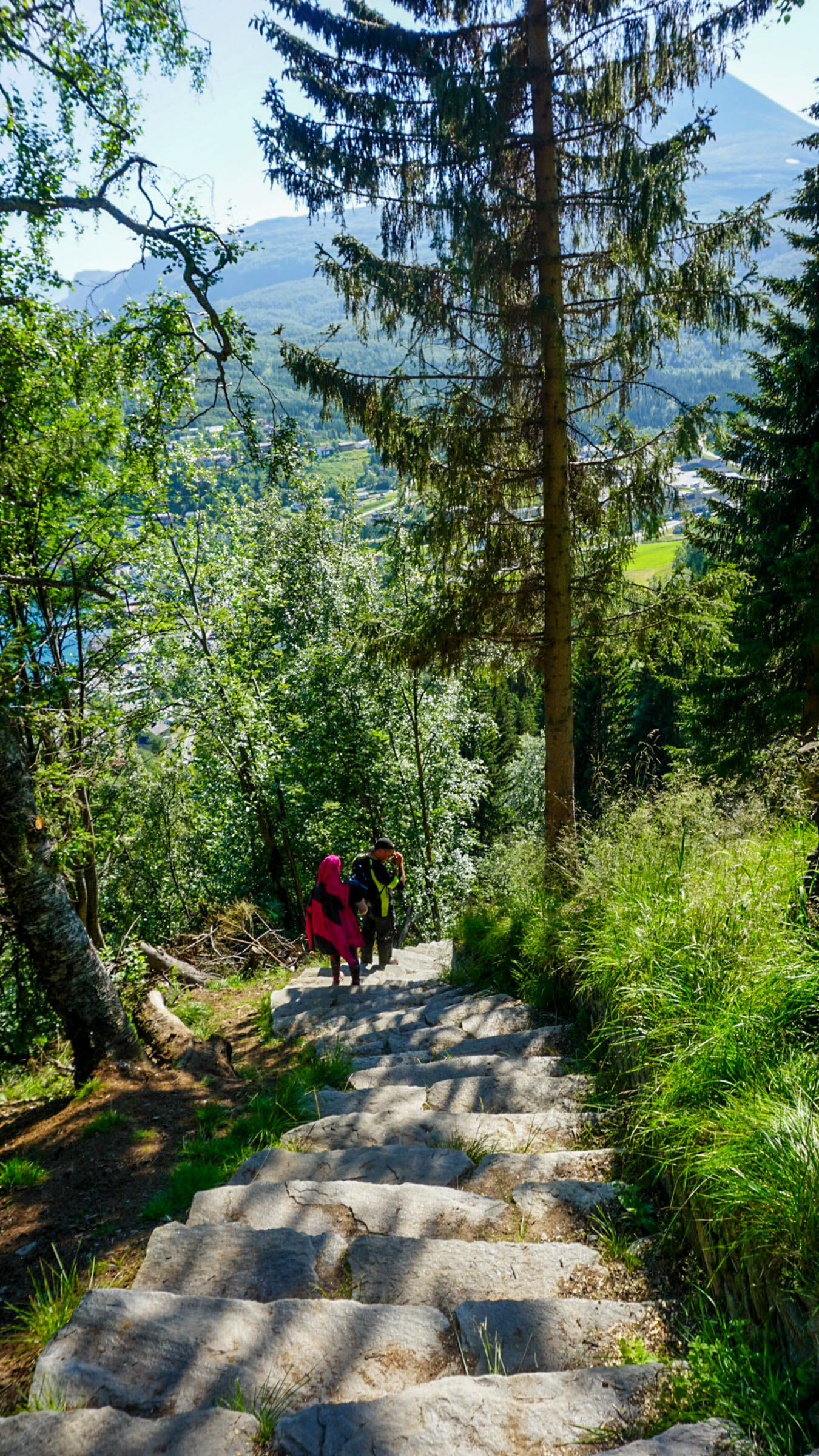
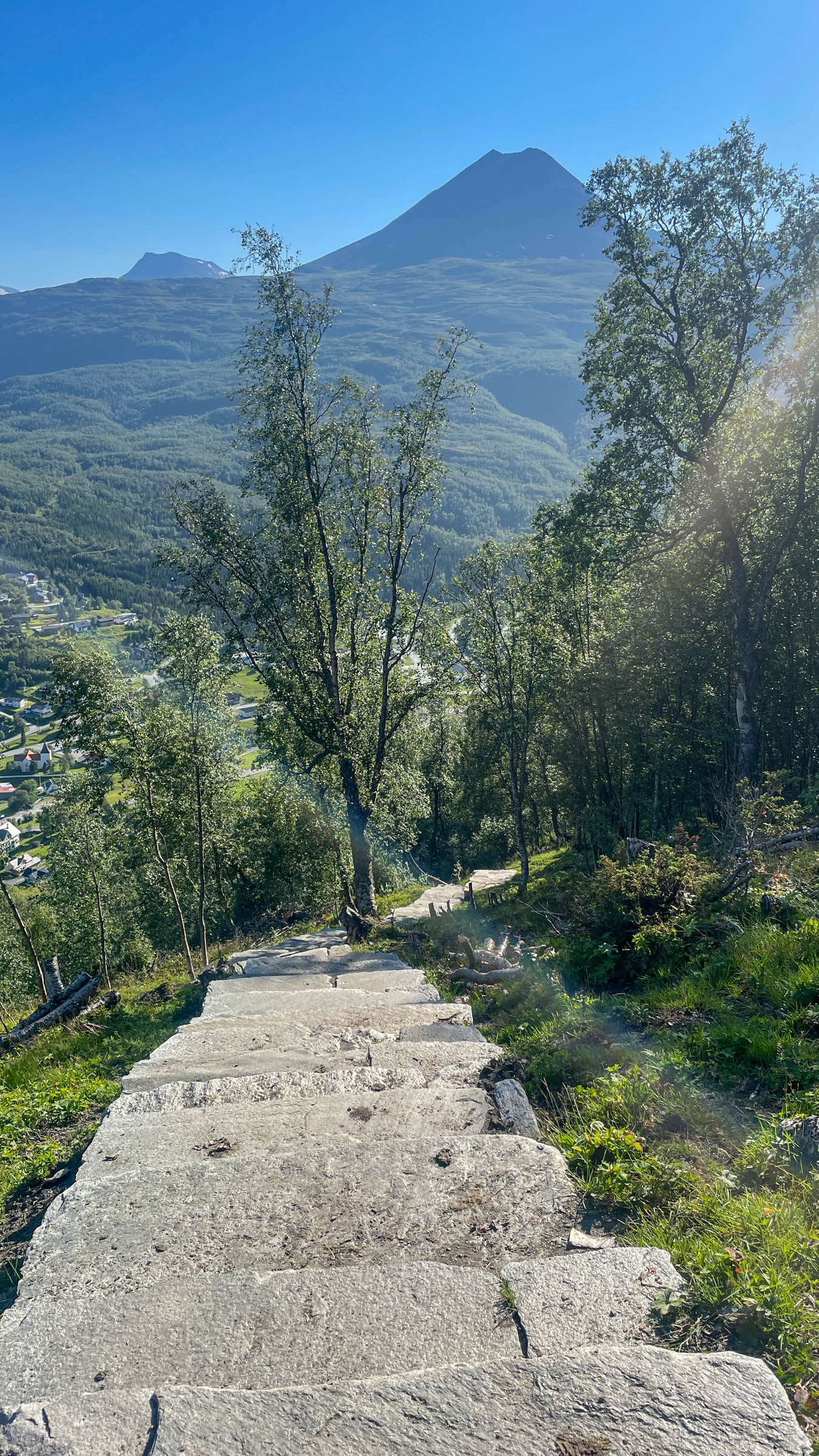
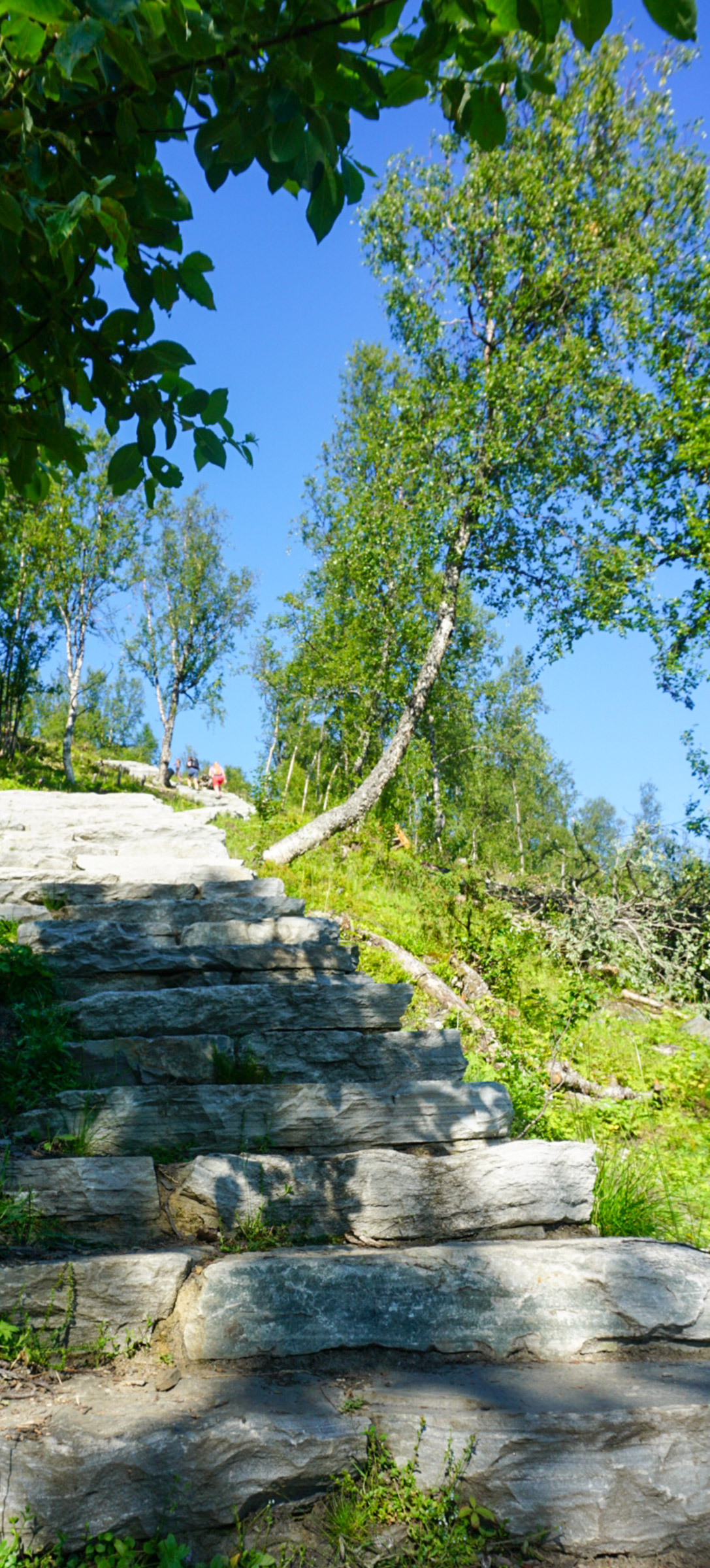
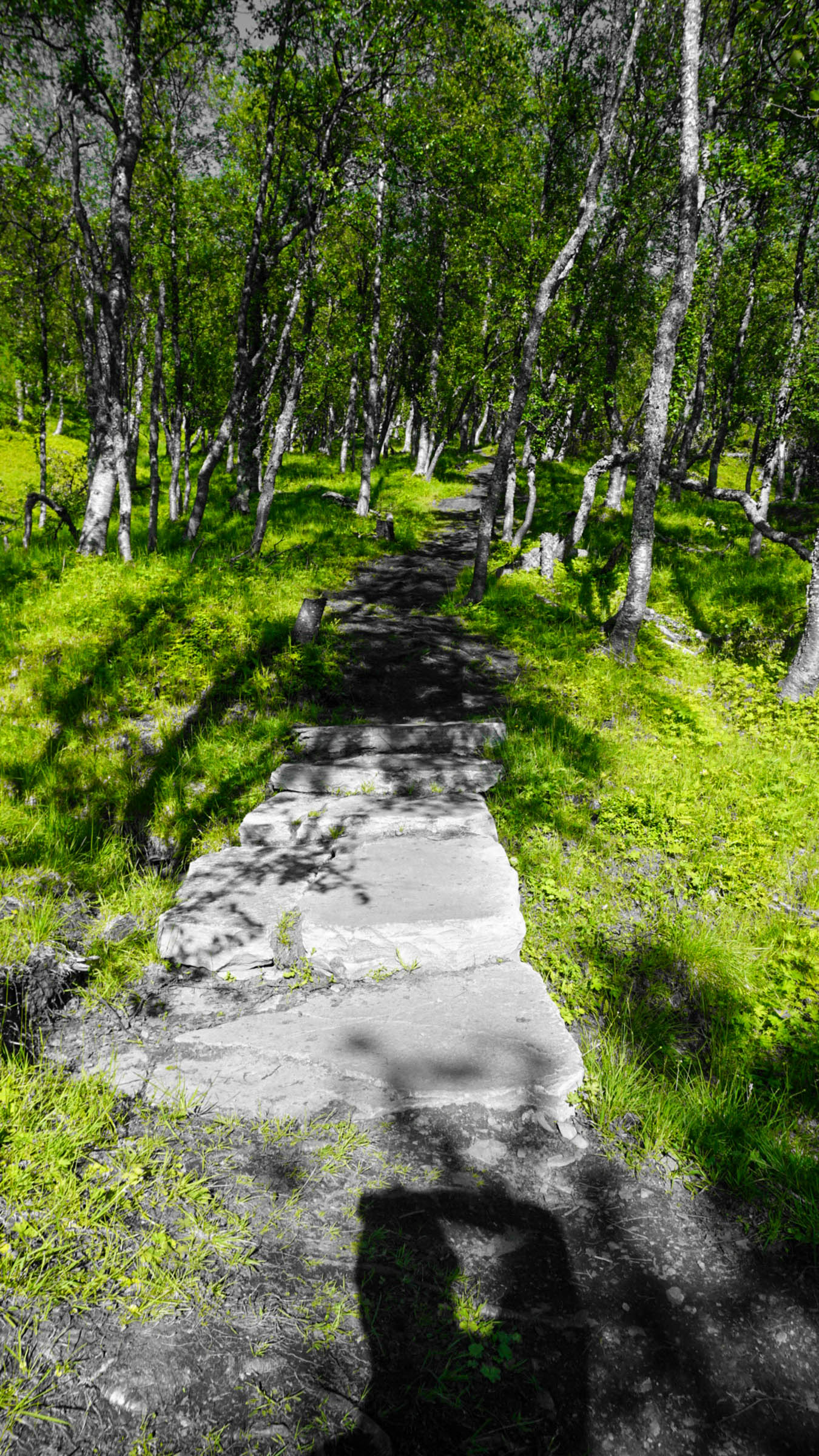
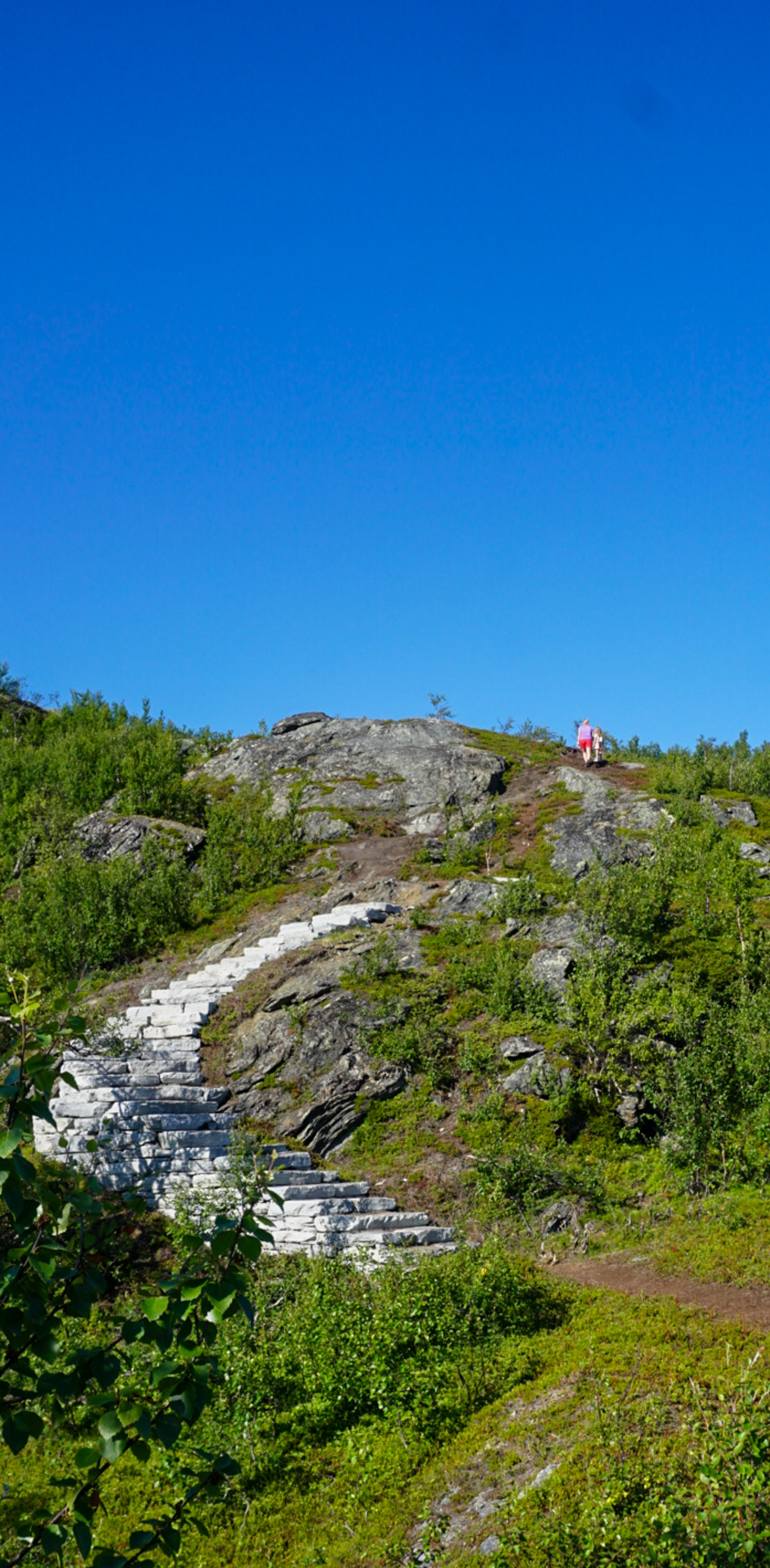
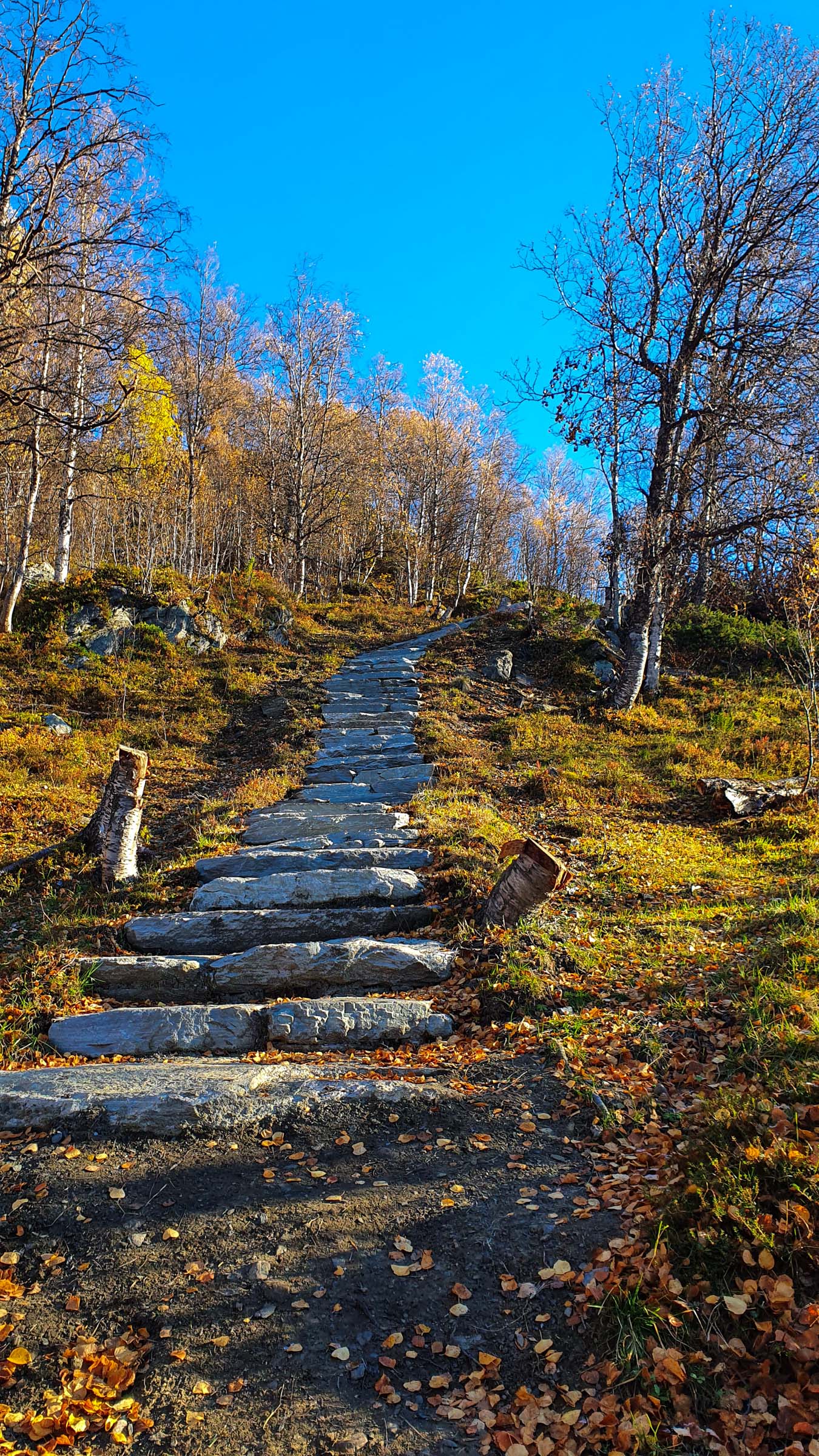
After parking in downtown Lyngseidet, I found the signposting easy to follow. I found the path leading around a meadow and along a spruce planting. And there it was—a path through a turnstile meant to keep the sheep in place. Winding around the lower trunks of spruce trees, the ascent felt manageable for a minute or two. However, soon I looked up a steep hillside with stairs zigzagging virtually straight up. They seemed deeply cut into the terrain, as if they had been there forever, rather than installed just a few years ago. Around and between the steps, waving grasses and flowers were growing. Every now and then, I get a bit of vertigo, but here I felt no trace of it. It all felt very safe, just a lot of hard work.
The staircase has its own sense of theatre
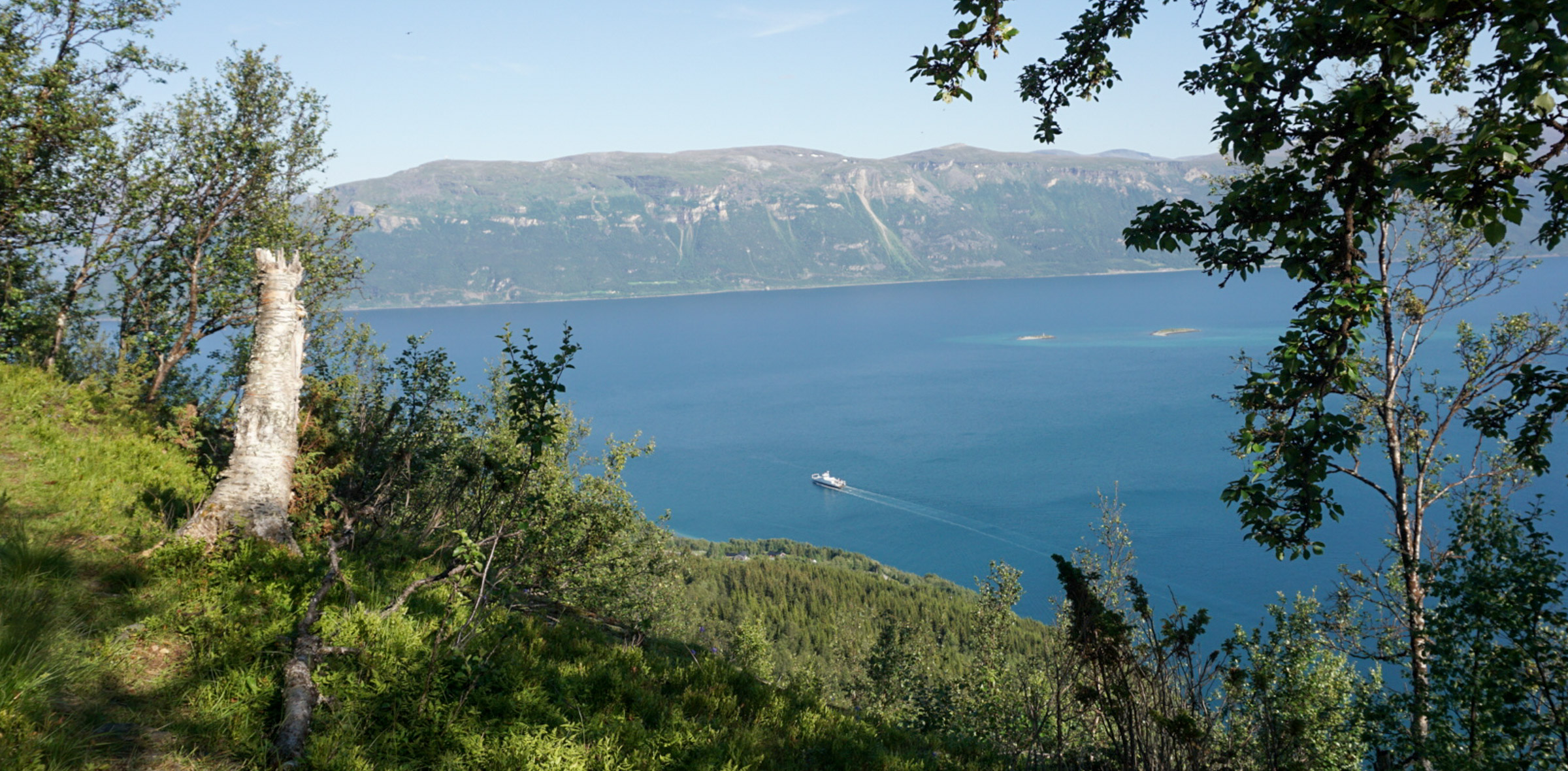
Another notable feature of the staircase is the dramatic staging. Gasping for breath, when you look down from the first few hundred steps, you see nothing but dark, menacing spruce trees. The stairs offer just a small opening in the dense forest. Thus, there is no view to speak of. However, as you reach above the planted spruce forest, the natural, light birch forest takes over. The summer greenery gradually reveals glimpses of the blue fjord and the village of Lyngseidet. Occasionally, the ferry to Olderdalen may appear from the greenery, far below. We sense the wide panorama, but the foliage continues to play tricks on us. Until…
The grand view is from the top
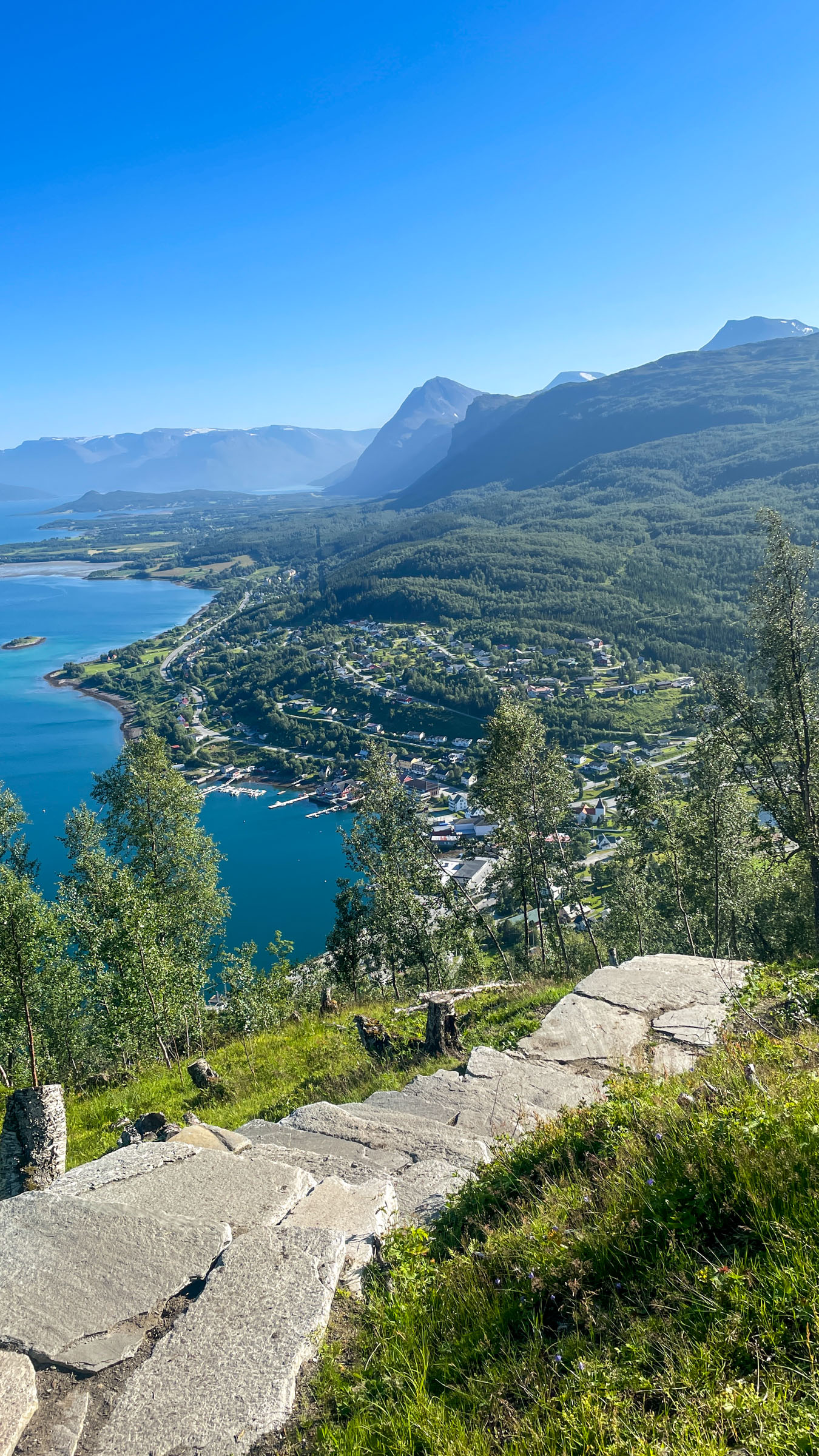
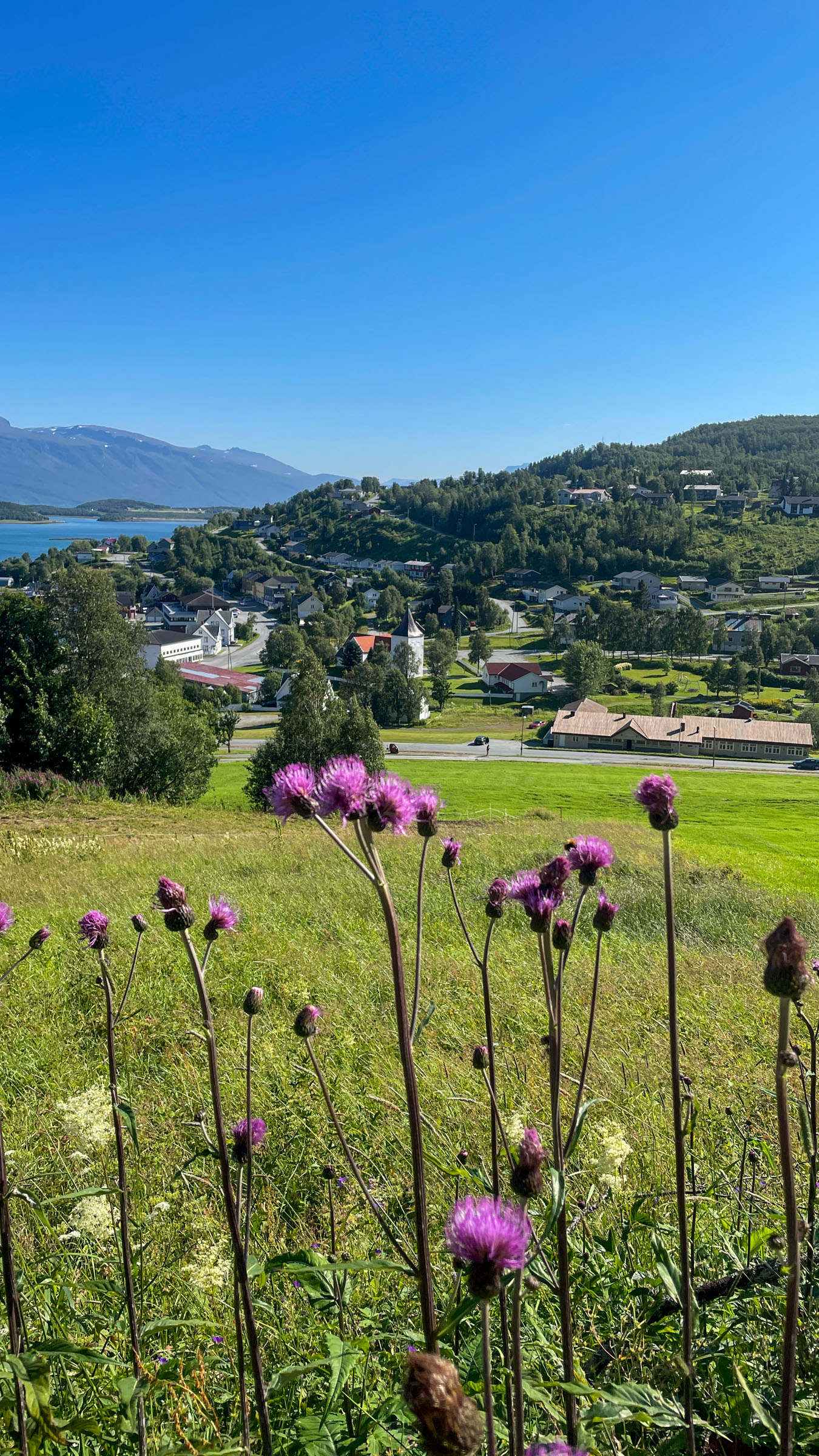
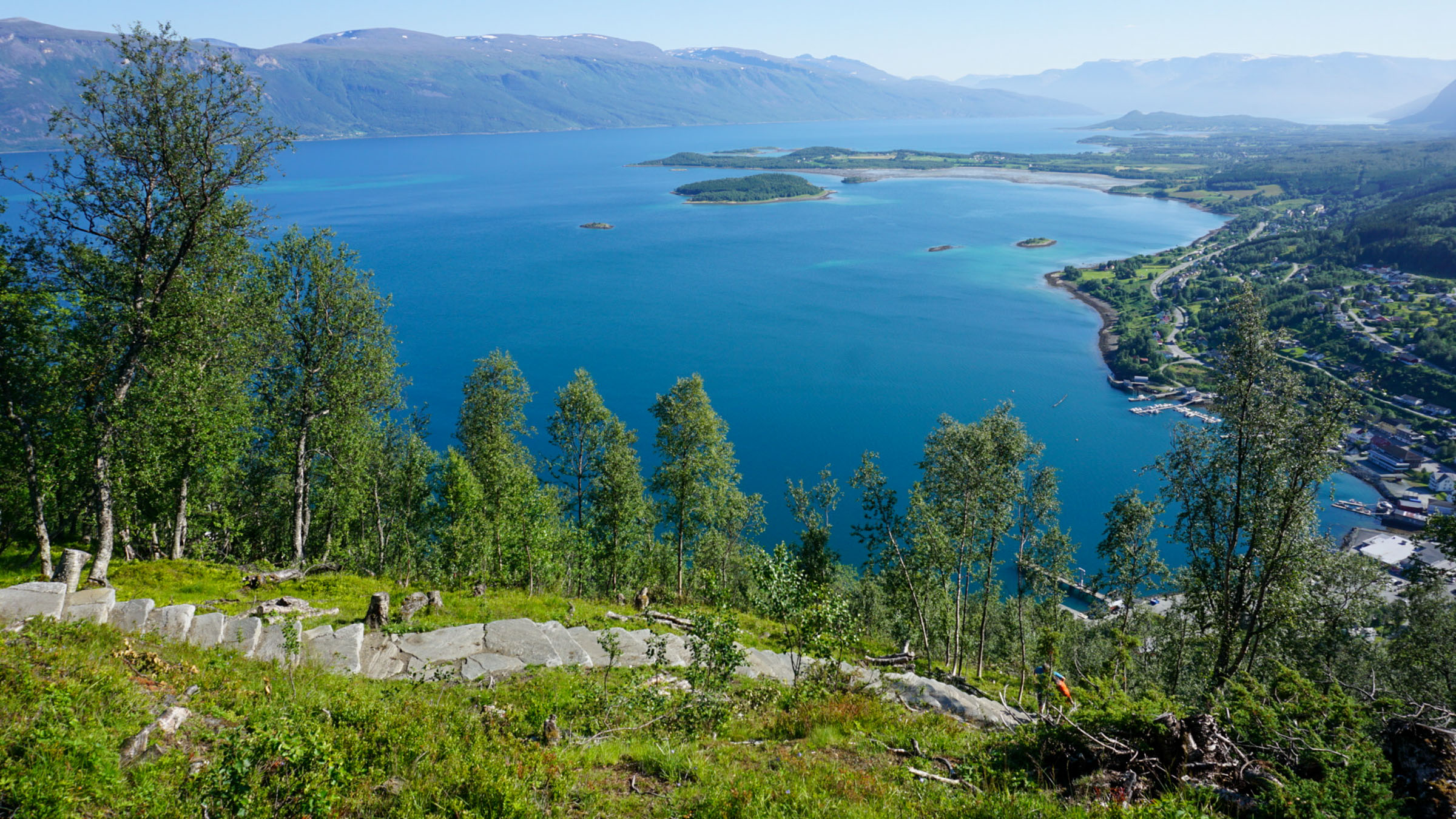
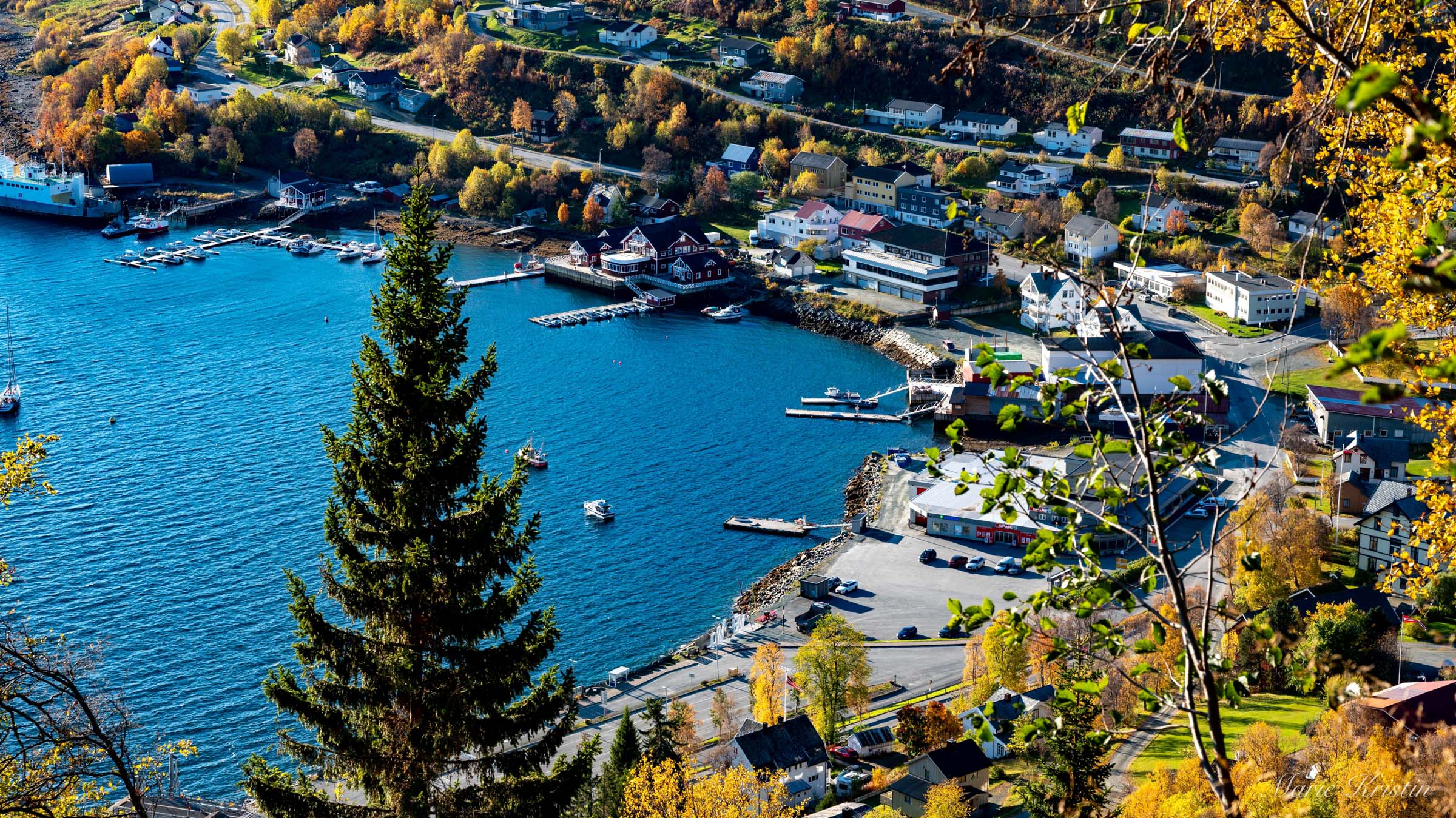
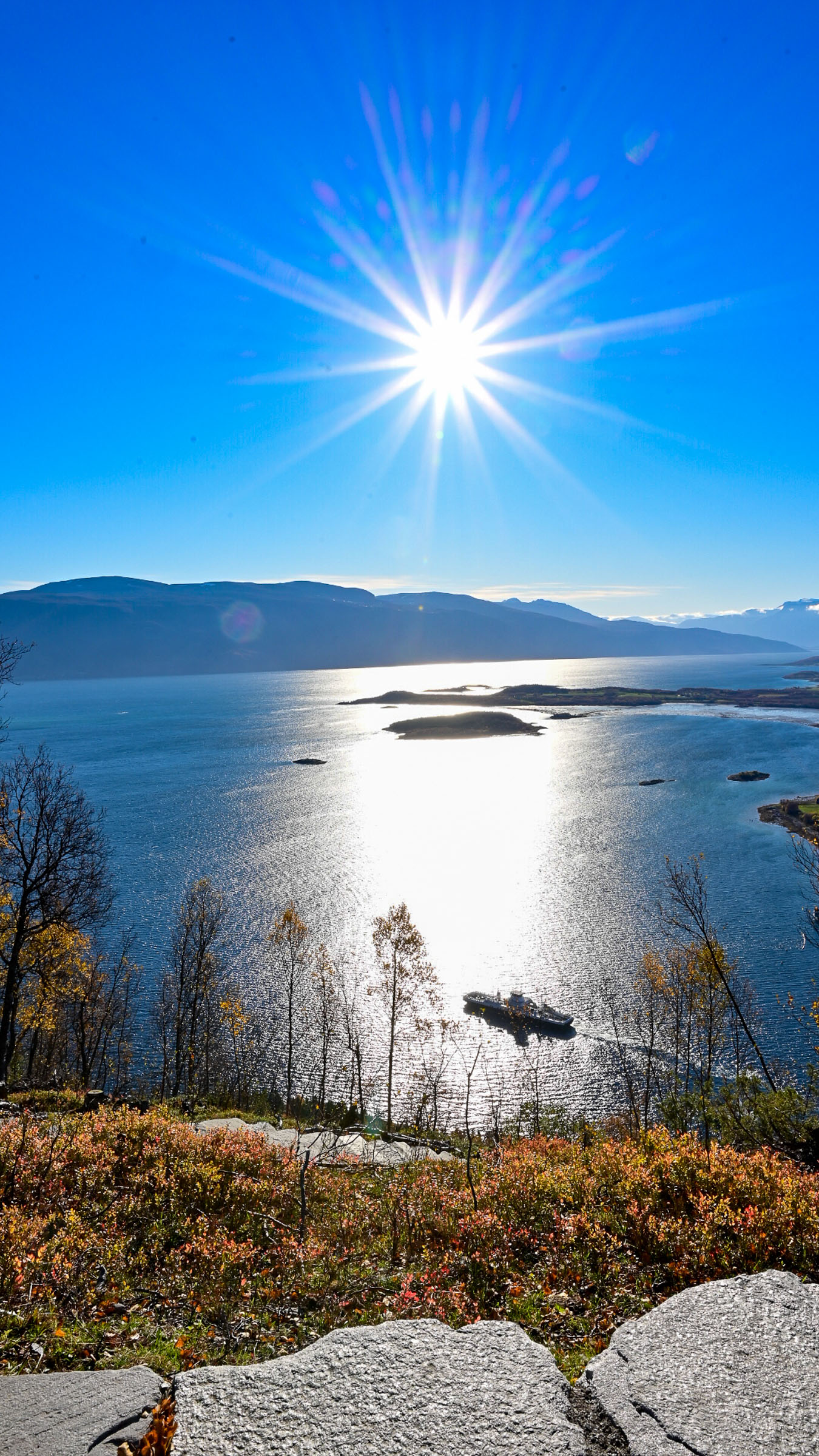
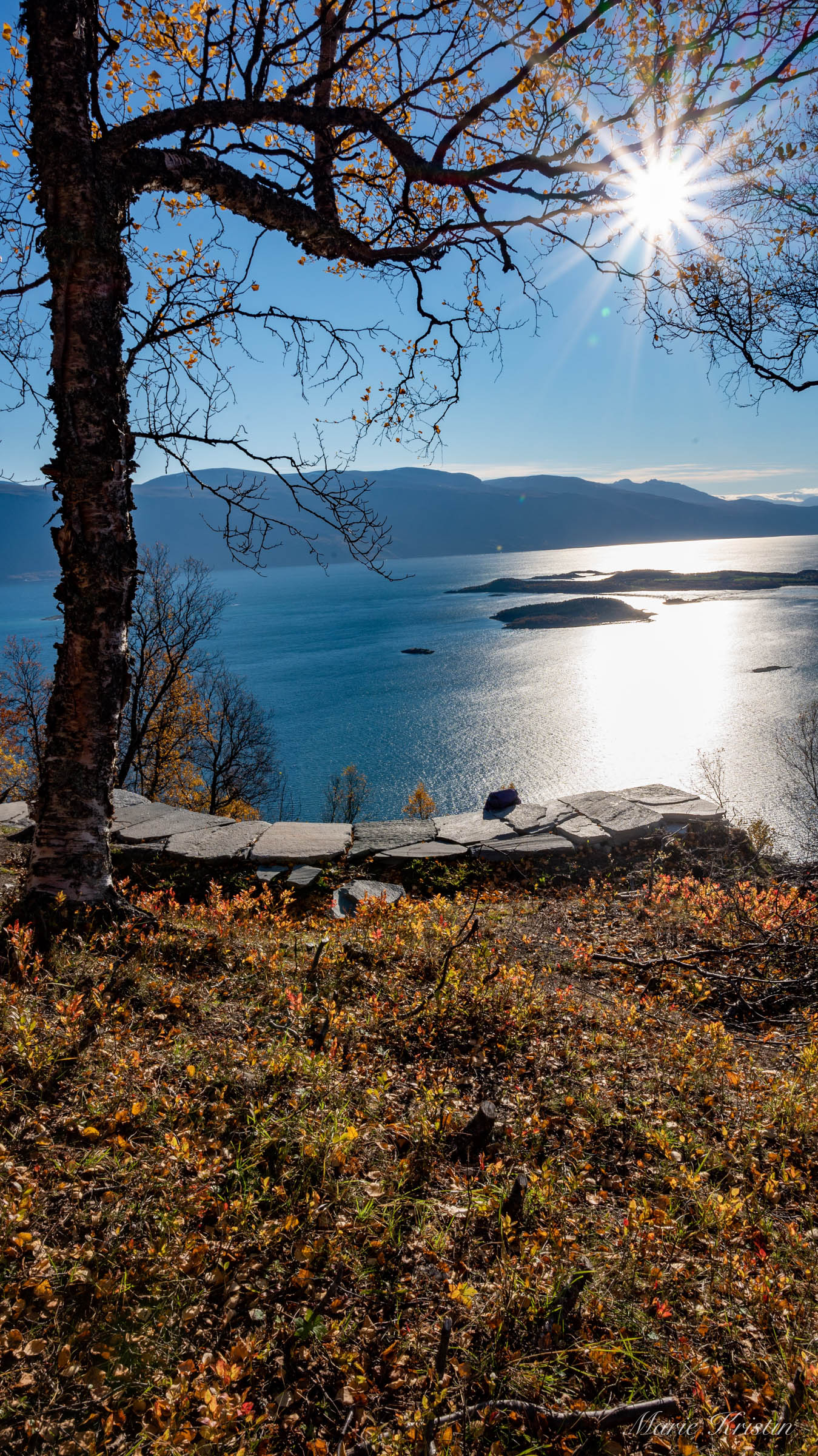
Much sooner than feared, I reached a view platform, about 800 steps up. The view was overwhelming. The village of Lyngseidet lay spread out like toy houses around the old church far below. The Lyngen Alps loomed in a deep, enigmatic blue against the bright summer sky ahead and to the right. Flat, long, thin peninsulas with forest and farmland jutted into the fjord below, remnants of ancient moraines from the end of the ice age. To the left, the broad expanse of the Lyngenfjord stretched out, with distant mountains on the far side. I sat on a stone bench and took it in and found myself uplifted and content.
The terrain flattens out on top
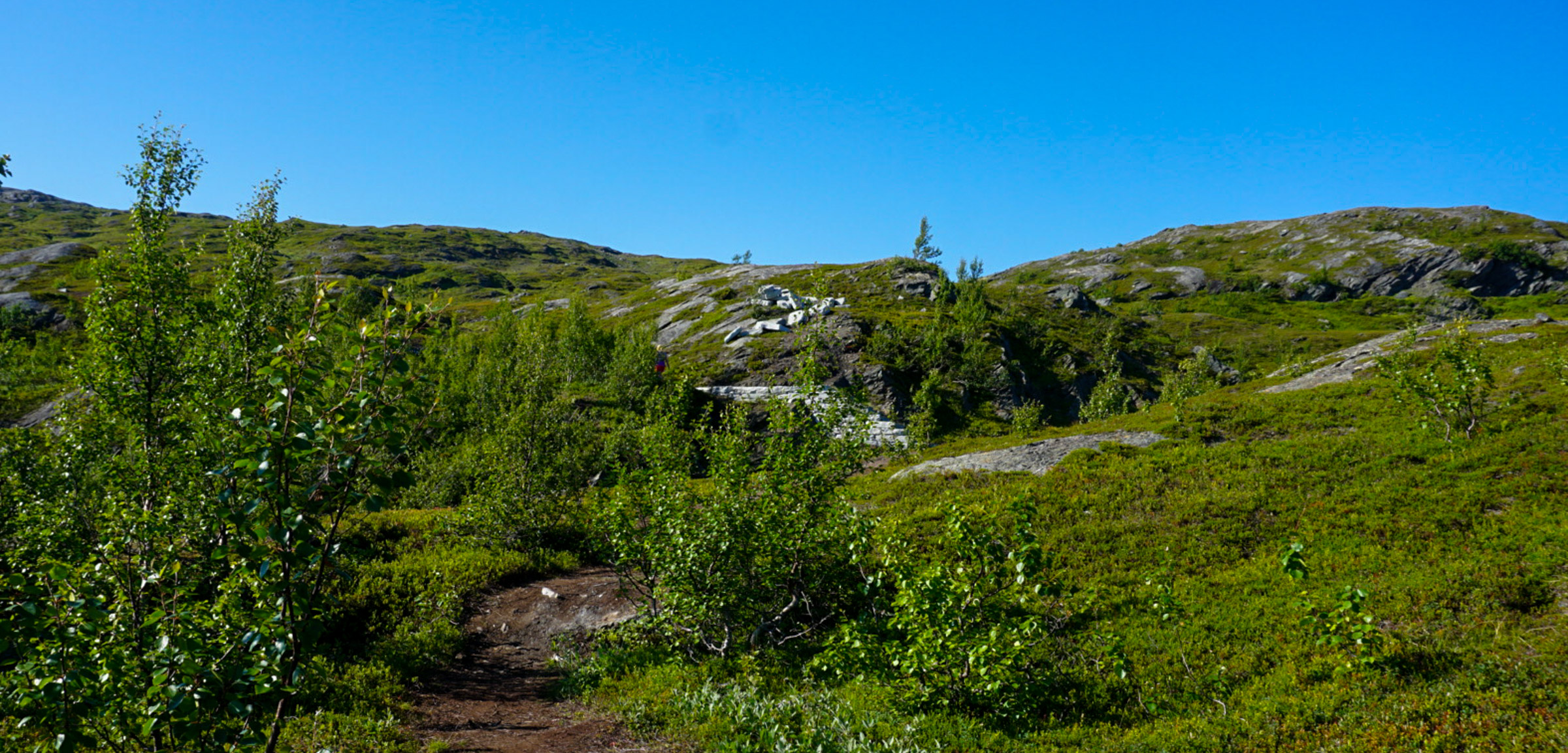
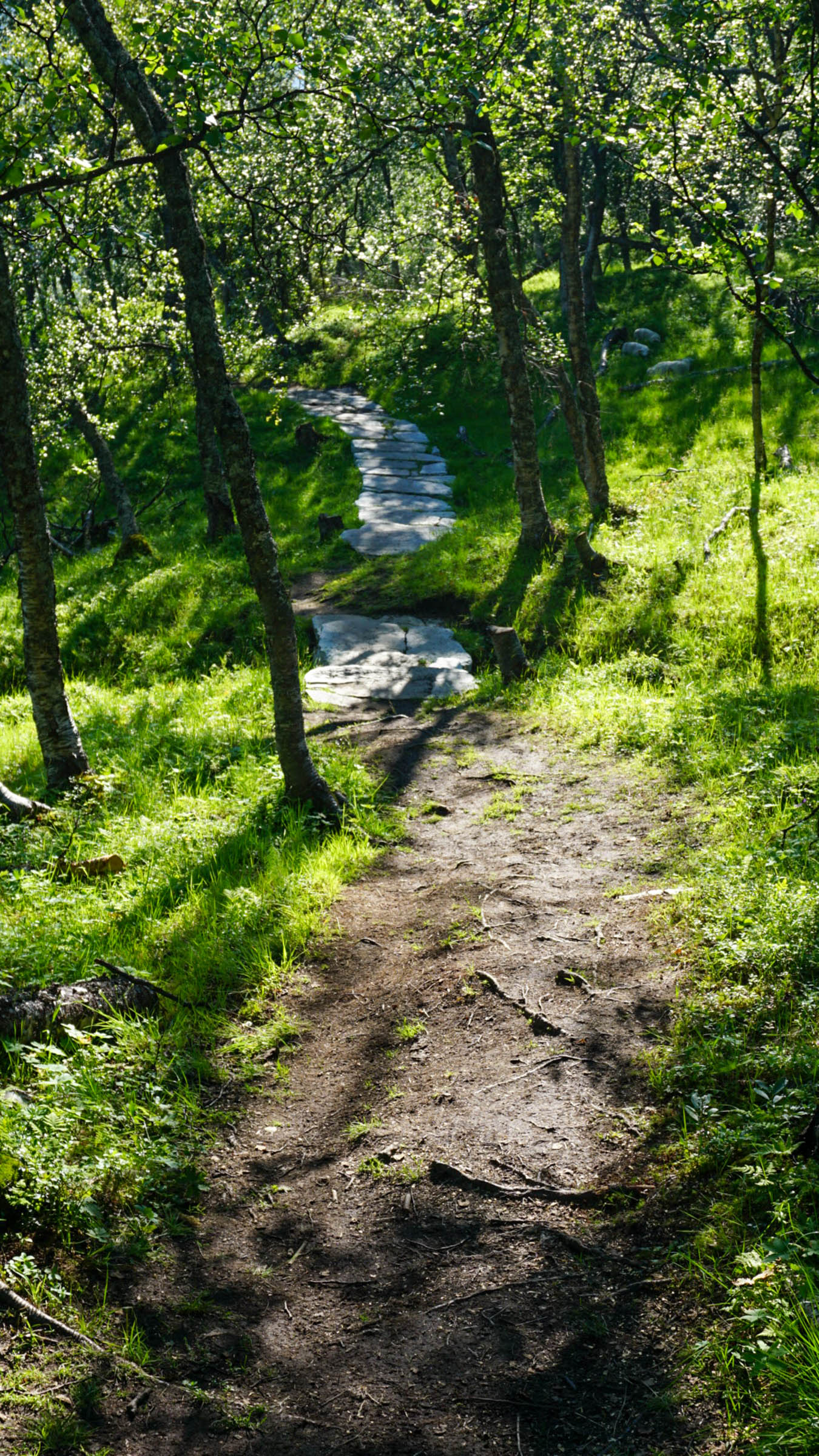
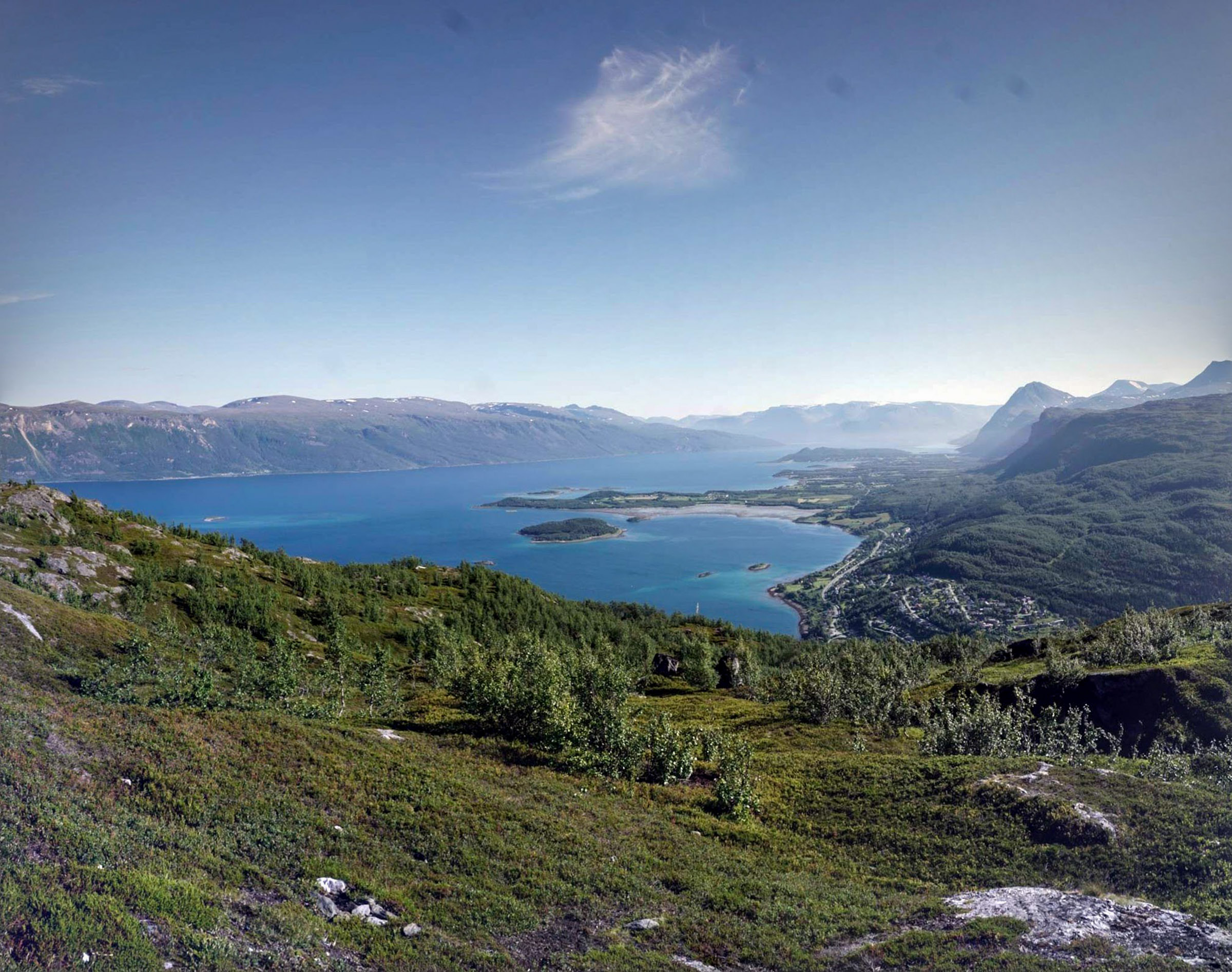
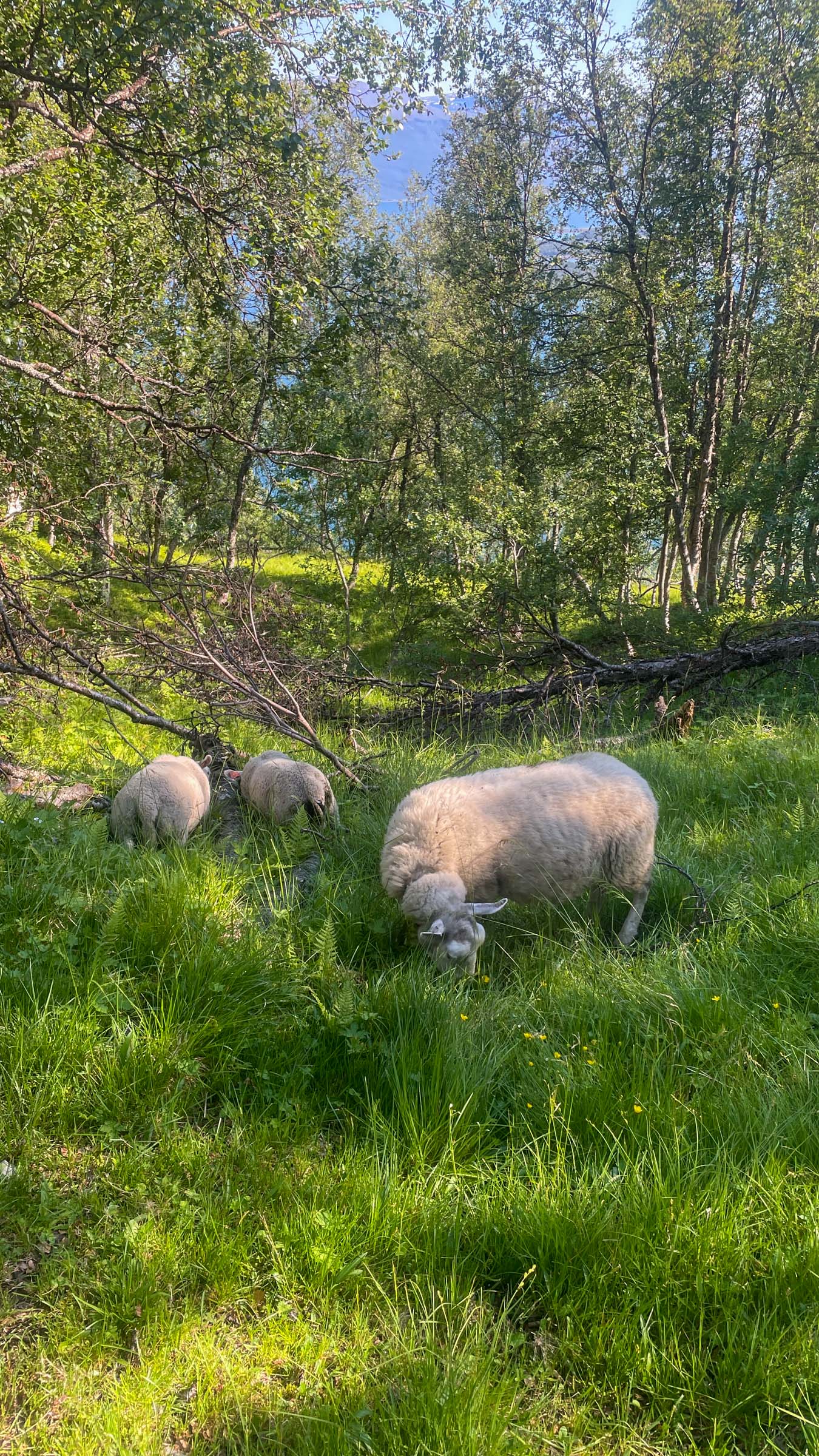
Some locals turned back from the viewpoint. They tackled the steepest section for a quick cardio workout. I, however, was here for the experience and began my walk through the light mountain forest. Sheep grazed along the side and had left little pearls of droppings on the path. The sun filtered through the leaves as I heard small streams babbling. Slowly the forest gave way to low-growing willow shrubbery, heather and dwarf birches. Stone slabs bridged the streams, and many shorter sections of stairs appeared as you walked. Finally, I reached Verdens Ende – the end of the world, which is also the end of the trail. From there, the view is even grander. The village of Lyngseidet is no longer visible, and the fjord appears much more distant. You get a real sense of being in the wilderness, far from civilization
Who should climb the Lyngentrappa staircase?
In short, almost everyone can enjoy it. The steps are well-integrated into the terrain, minimising the risk of vertigo. I met fit retired people, people with a bit of a pouch and fitness fanatics on my way. However, no one could outpace 7-year-old Nora, who ran ahead of everyone else. Descending can strain the knees, so if you have serious knee issues, the stairs may not be suitable for you. Those with serious heart conditions should be mindful of their limits. As with all natural sites in Norway, use of the Lyngentrappa is at your own risk.
What time of the year can you climb the Lyngentrappa?
Being south facing, the Lyngentrappa clears of snow earlier than many other places. However, this can vary from year to year. By May, the snow is usually gone. June, July and August are good times to hike. September, with its beautiful autumn colours, is a favourite for many, but after a frost, the steps can be slippery in the morning. October often offers good climbing conditions, but we recommend carrying crampons in your backpack. You might be able to climb the stairs on a mild, rainy November day, but this is not guaranteed. If there is a layer of snow, we do not recommend climbing the Lyngentrappa. While locals may climb it in the snow, remember that they are accustomed to snow and ice and typically have better footwear and gear than visitors from outside the Arctic Circle
Can we see the Northern Lights from the Lyngentrappa?
The Northern Lights are just as frequent in the autumn as in winter. Seeing them from high above the village is a great idea if you dress warmly and bring a good headlamp In September, night frost is common, and by October, it is more frequent, which can make the steps slippery. Therefore, in addition to a headlamp, you should carry good crampons in your backpack. Also, bring extra clothes since you may get sweaty climbing up and feel cold while sitting at the top. Remember, when it starts snowing, climbing the steps is no longer advisable.

Facts about Lyngentrappa – The Lyngen Stairs
Lyngentrappa – loosely translated into the Lyngen Stairs – is found in the village of Lyngseidet in the municipality of Lyngen. The stairs – built of stone by the Sherpa people from Nepal – ascend from this village into the Lyngen Alps.
From Tromsø, you drive to Breivikeidet, about 40-50 minutes east of the city. There you take the ferry to Svensby, the crossing is about 20 minutes. From there, again, it’s about a 20 minute’s scenic drive to Lyngseidet. There are also buses several times a day. For updated ferry timetables, consult the Svipper website on 190/191 (ferry timetable), and on the “bus routes” number 150.
The Sherpa people in Nepal lives in mountainous areas. To ease communication and save the landscape from erosion, they have traditionally built steps made of stone slabs. Their special technique is well suited for Norway’s mountainous landscapes, and thus Sherpa stone masons have come to Norway over the last ten years to built stairs. Sherpatrapp – sherpa steps – are thus found many places in Norway.
Sure! The view is all different; whereas you see the city of Tromsø and the surrounding islands from the Sherpatrappa, the Lyngentrappa offers no less than the Lyngen Alps and the Lyngen fjord. So none of them are to be missed!
Visit Lyngenfjord is the local tourist board. Their website has accommodation, activities, restaurants and transport all around the Lyngenfjord area.