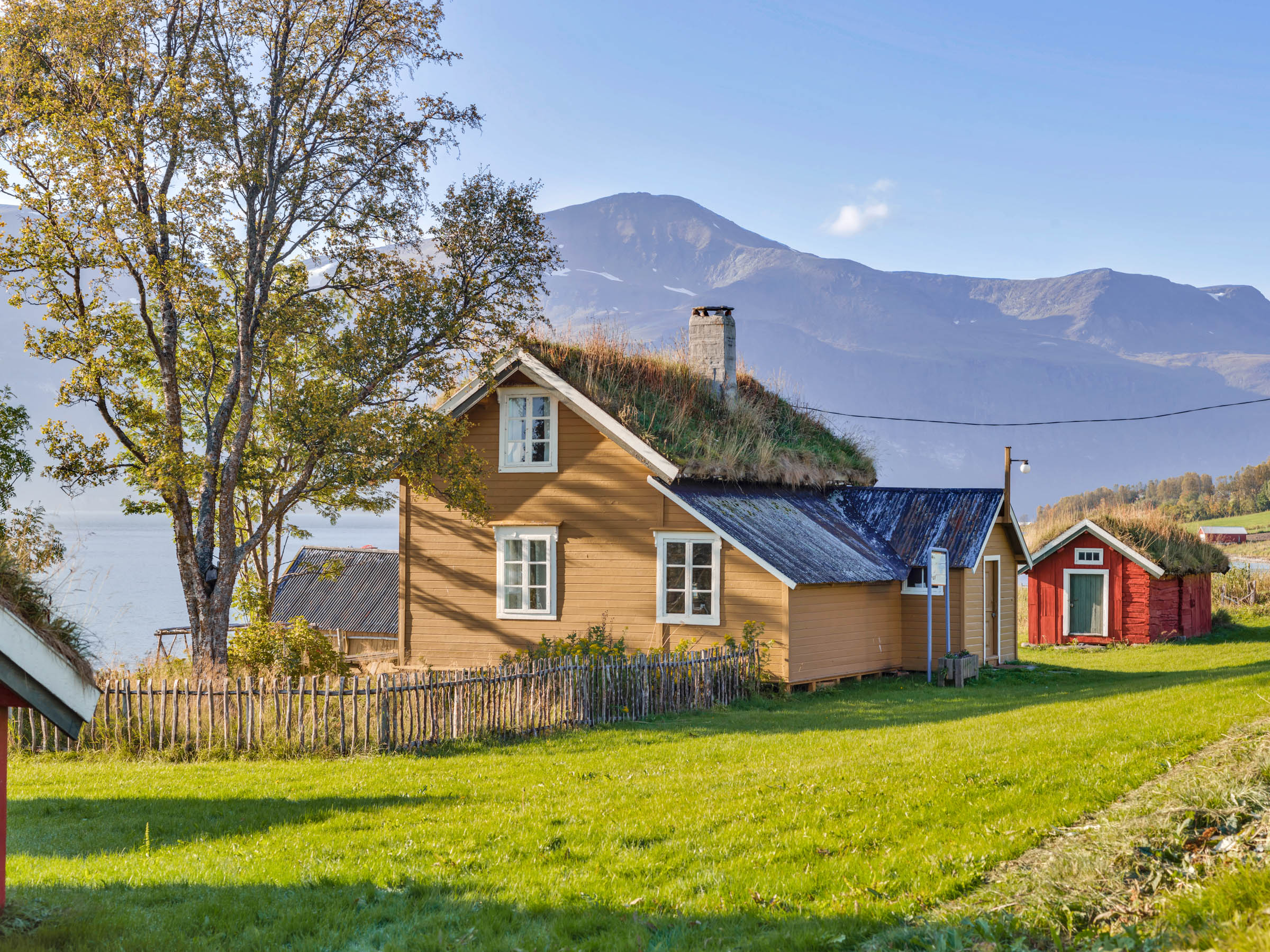
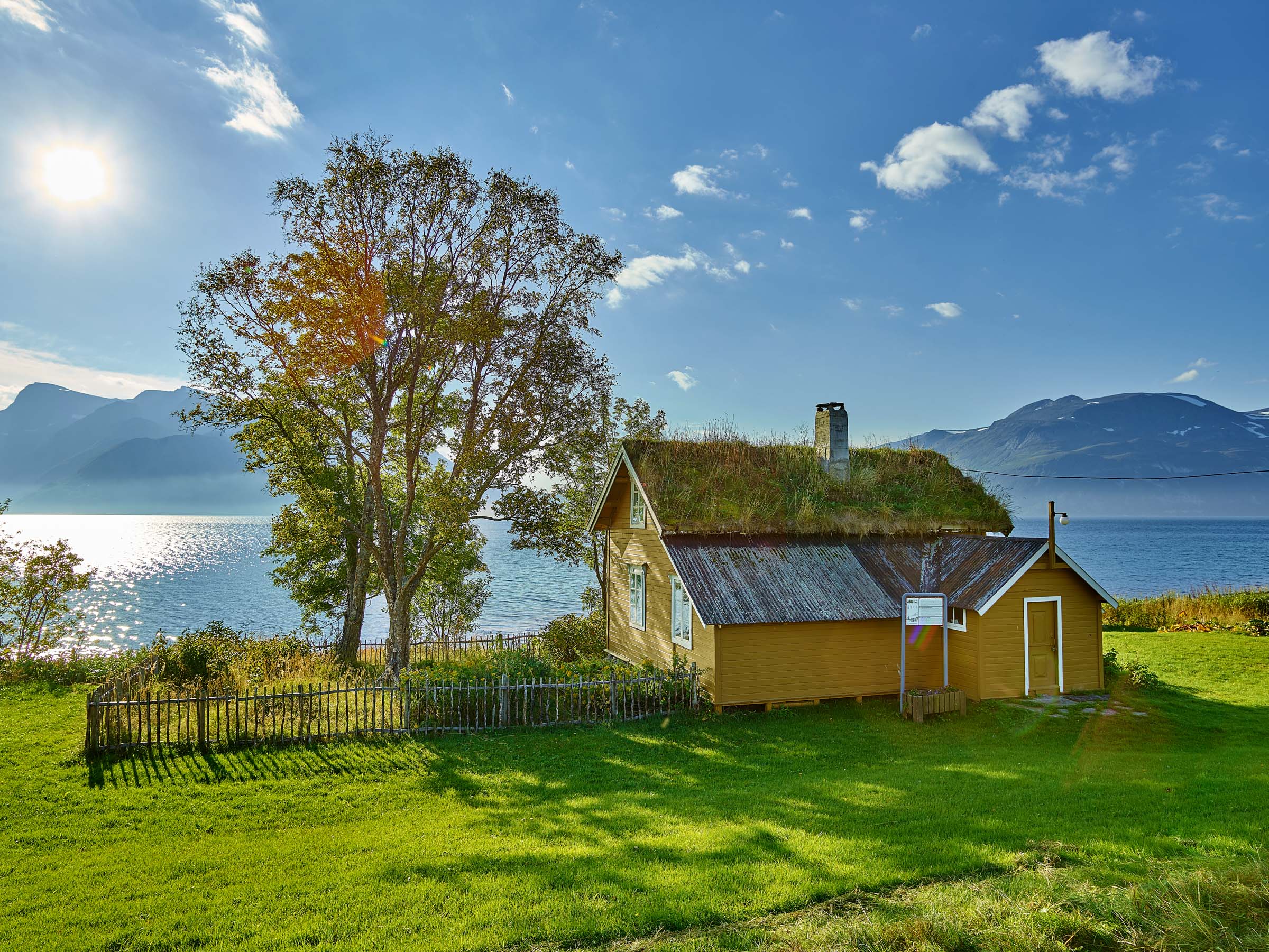
Mieke, the museum guide, opened the door for me. I ducked my head and entered a bygone era. Around me, everything was neat and tidy. It is clear that nobody lives here anymore, the oven is cold, no wooden toys are scattered on the floor, and no wet coats are hanging to dry. Yet, an ordinary country family from 1890 would be very happy to move right in. They would fill it with life in a split second. As time travellers from the 21st century, we don’t need much creativity to imagine it either. I threaded my way around the house, mindful of preserving the air of history.
The Entrance Area was for Dirty Boots
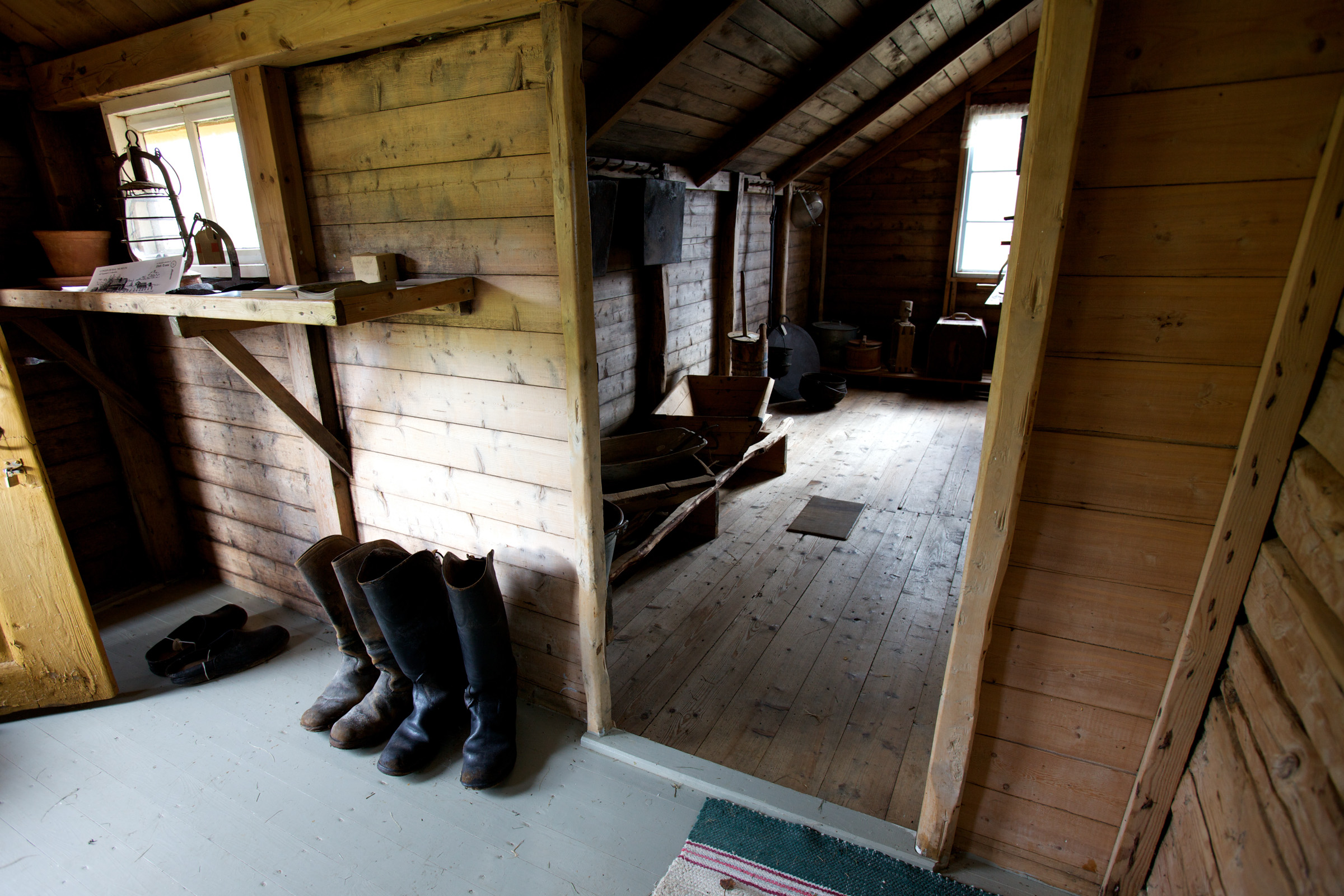
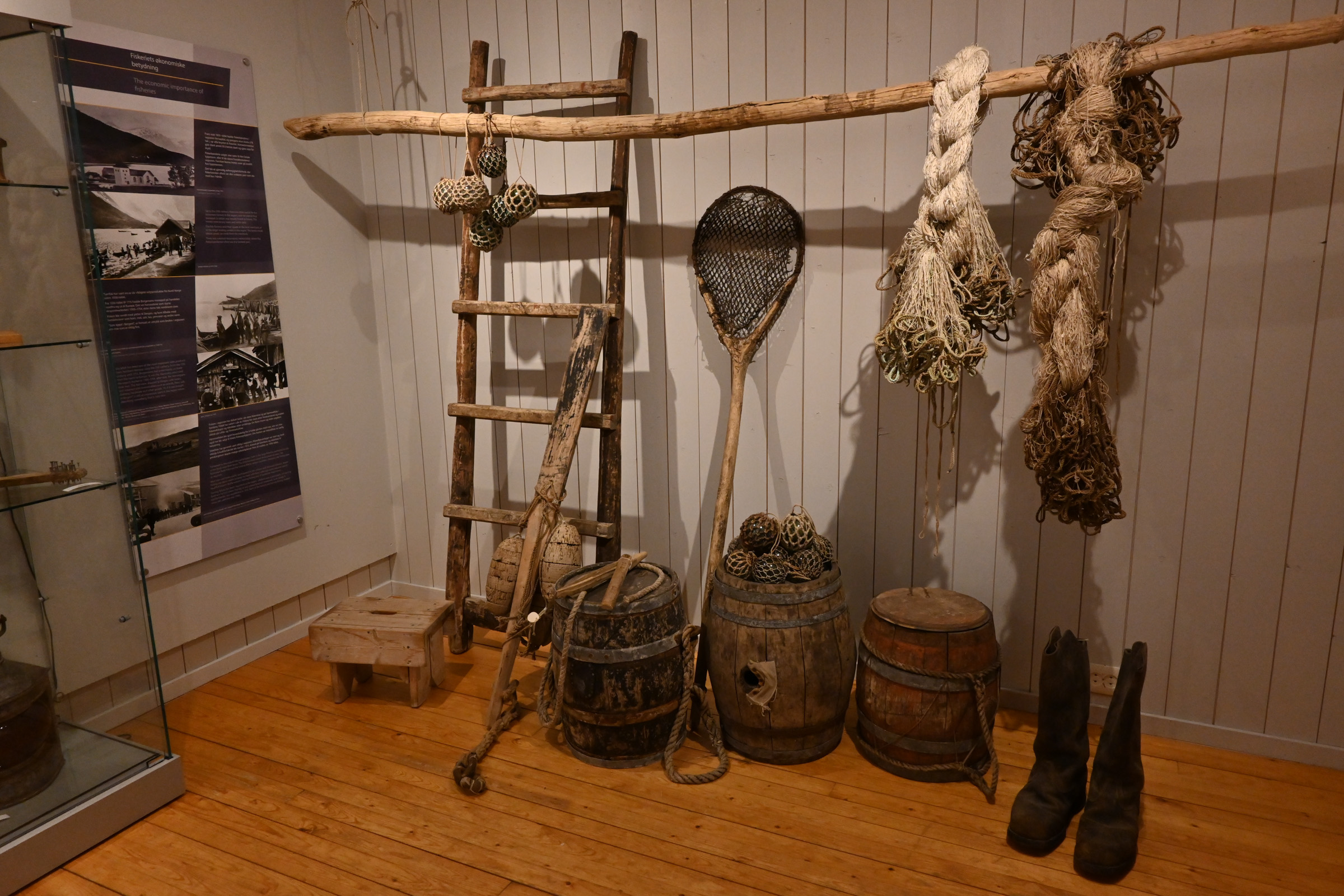
Keeping a timber house warm in winter takes a lot of work. When you enter an old house in Northern Norway, there is always a front room, or a mud room. At Gamslet, this is a rather spacious area where one could leave heavy wellingtons and wet clothes used for fishing. The atmosphere is recreated with period tools from the area. The main door is the oldest part of the house; its origin is debateable, a whaling station from Svalbard or maybe the trading post at Finnkroken. Recycling is not a new thing, anything useable had value.
The Kitchen is the Main Living Area
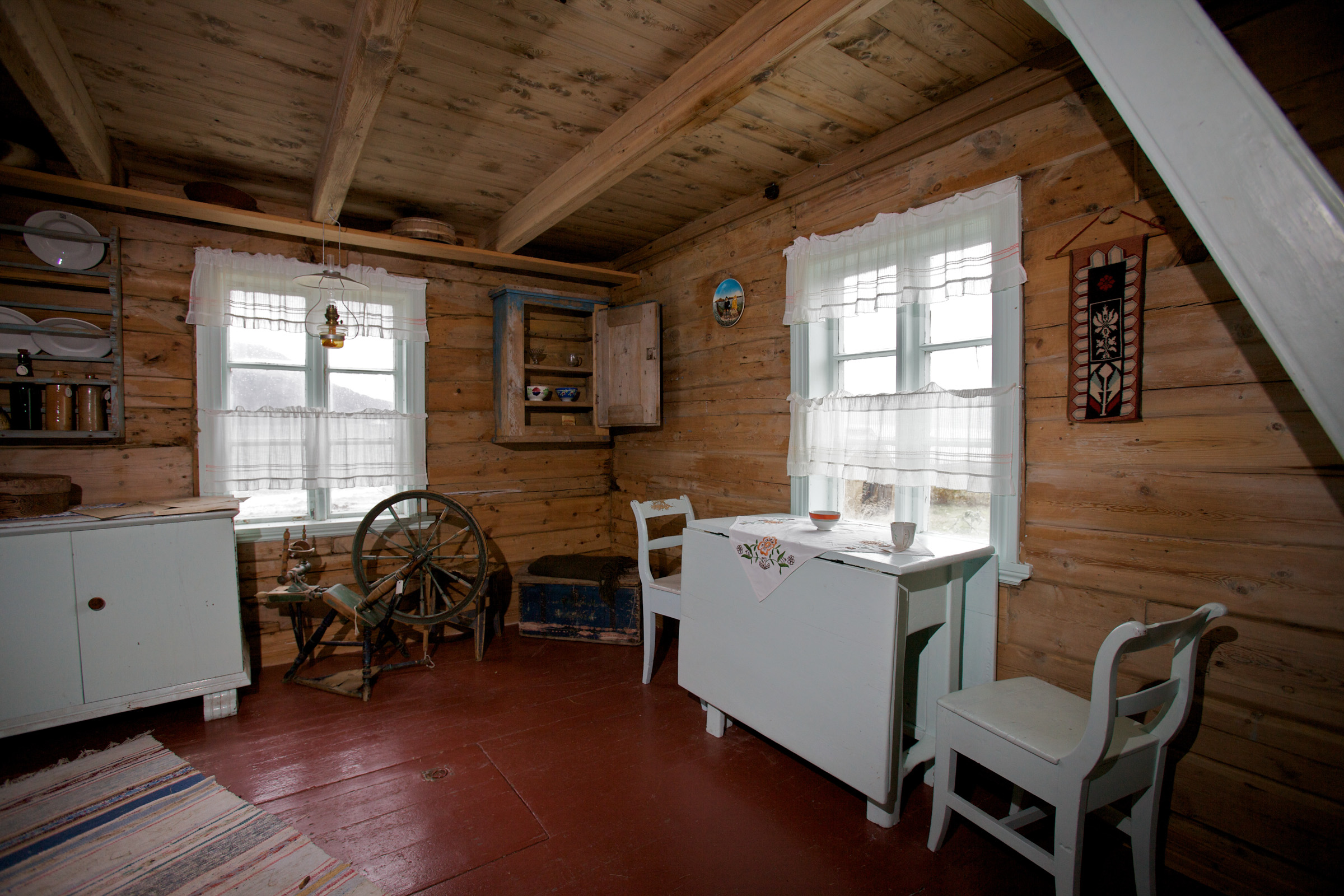
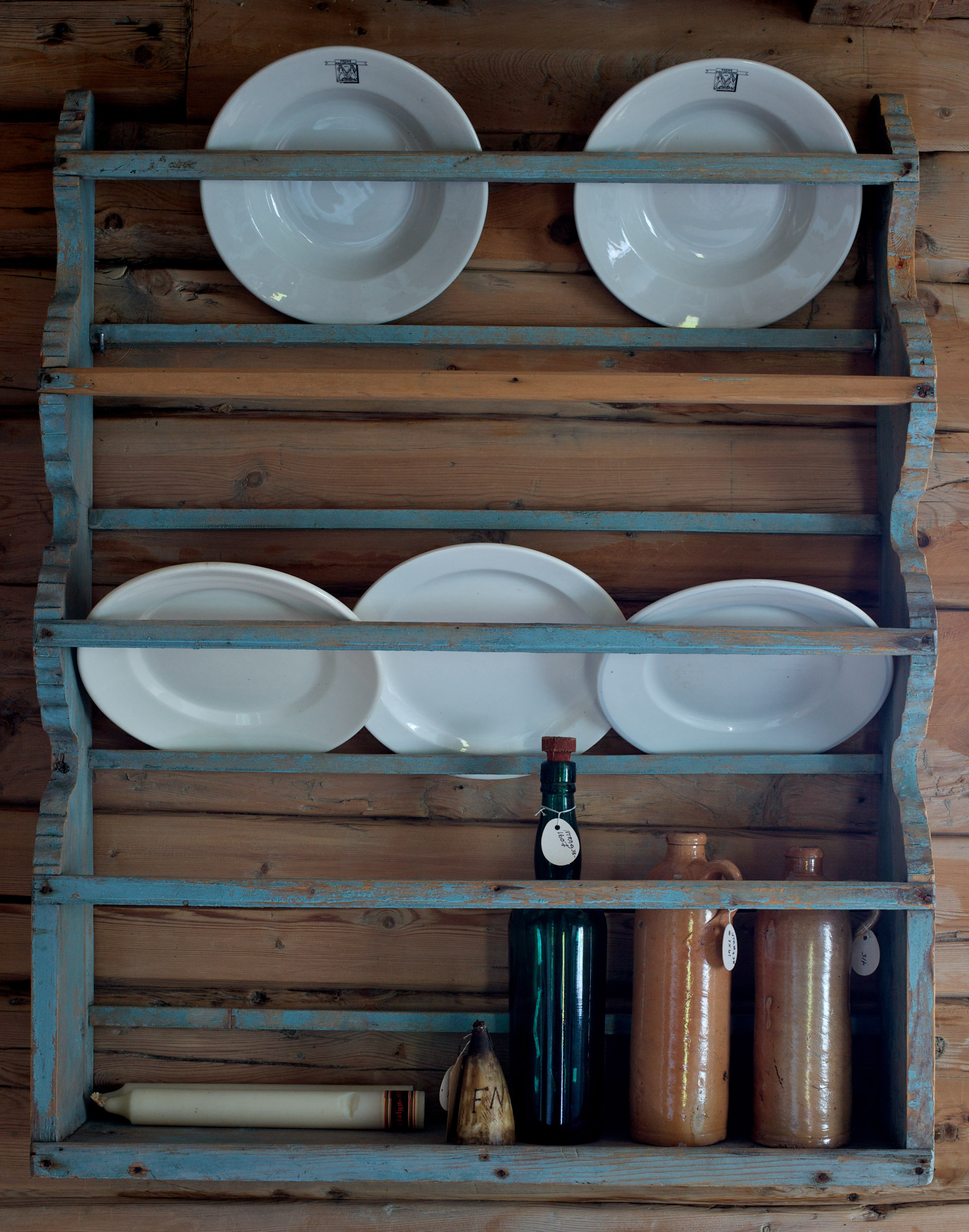
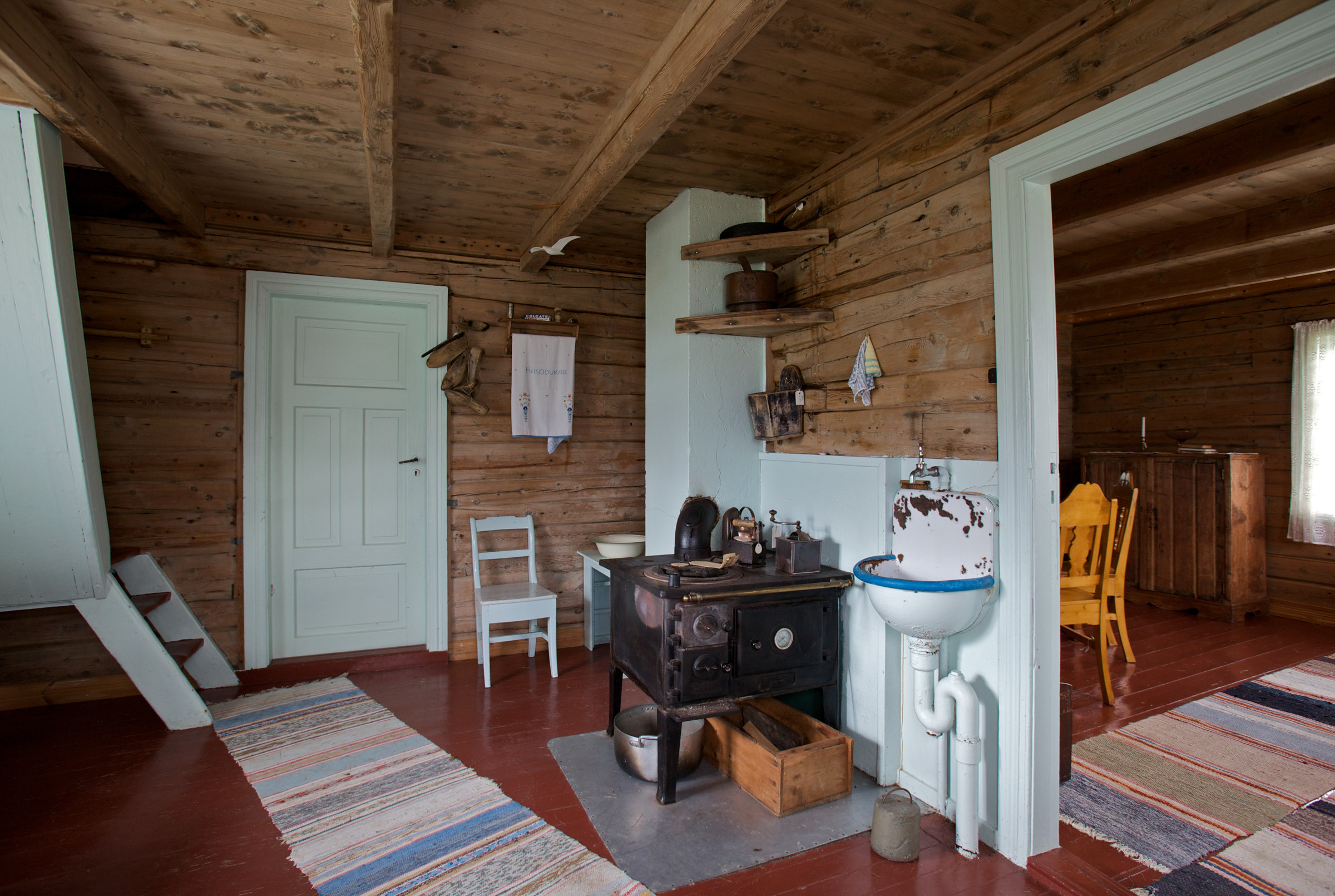
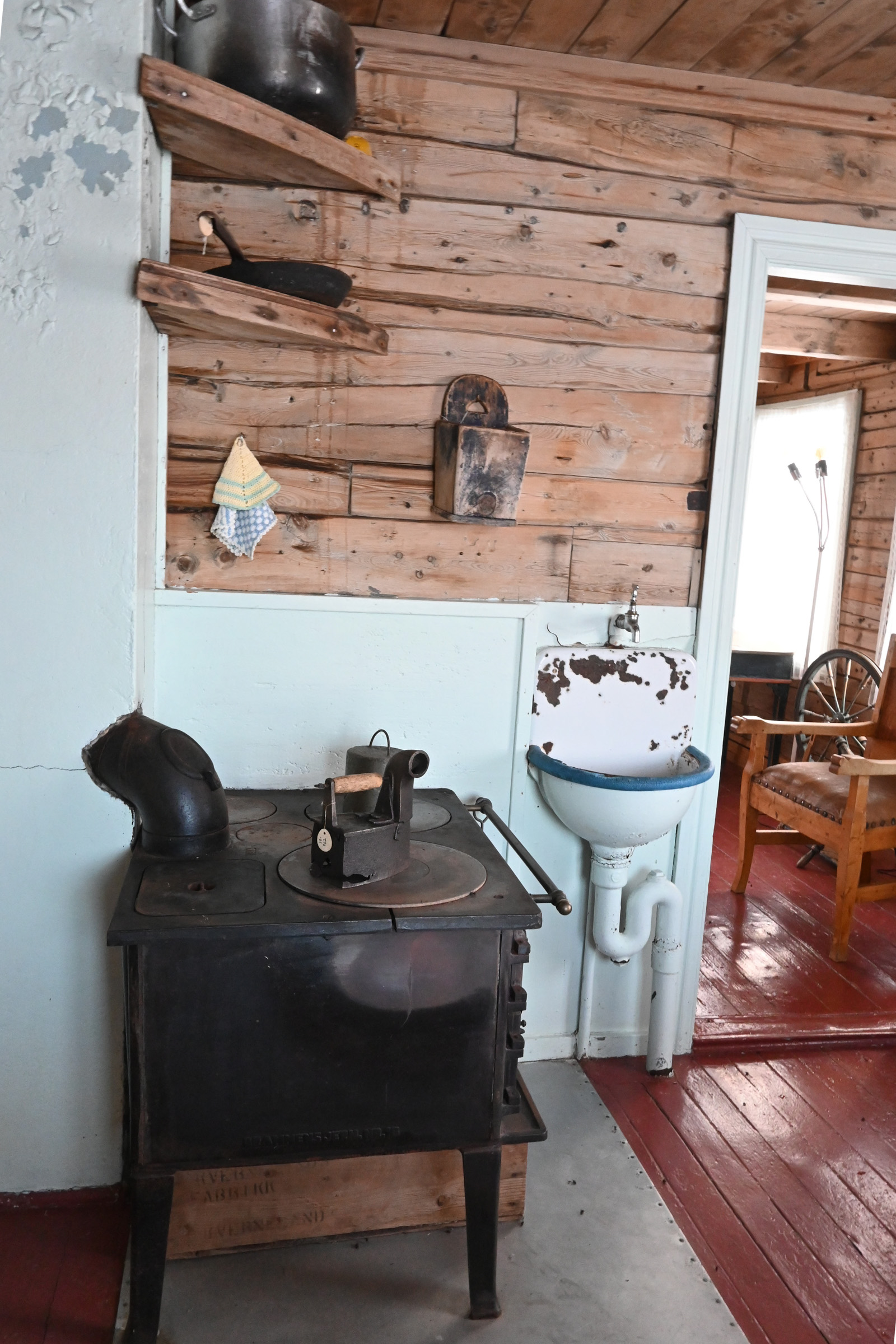
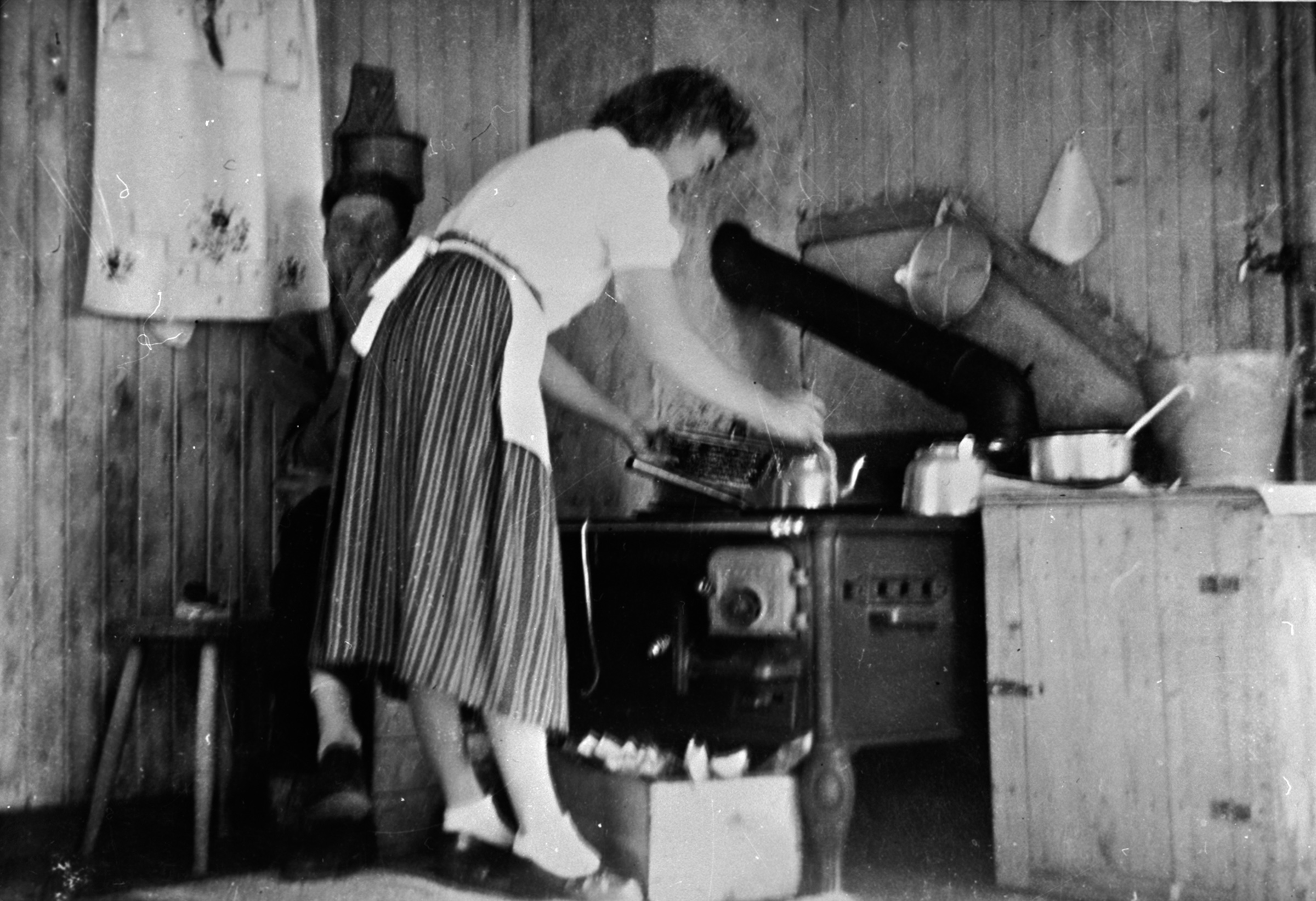
Across a threshold – back in the day the shoes would have been taken off – one enters the kitchen. An embroidered kitchen towel holder, an old sink for cold water only, a display rack for plates, a painted vintage kitchen counter with cabinets – it all feels a bit like grandma’s house. The centre of attention, though, is the oven. The cast iron cook stove is the beating heart of the house. Here, food was cooked, and keeping the fire going was a primary task during the day. The kids would play on the floor, and the neighbour would be served a cup of coffee on the kitchen table. Life happened in the kitchen.
The Kitchen was also a Workshop
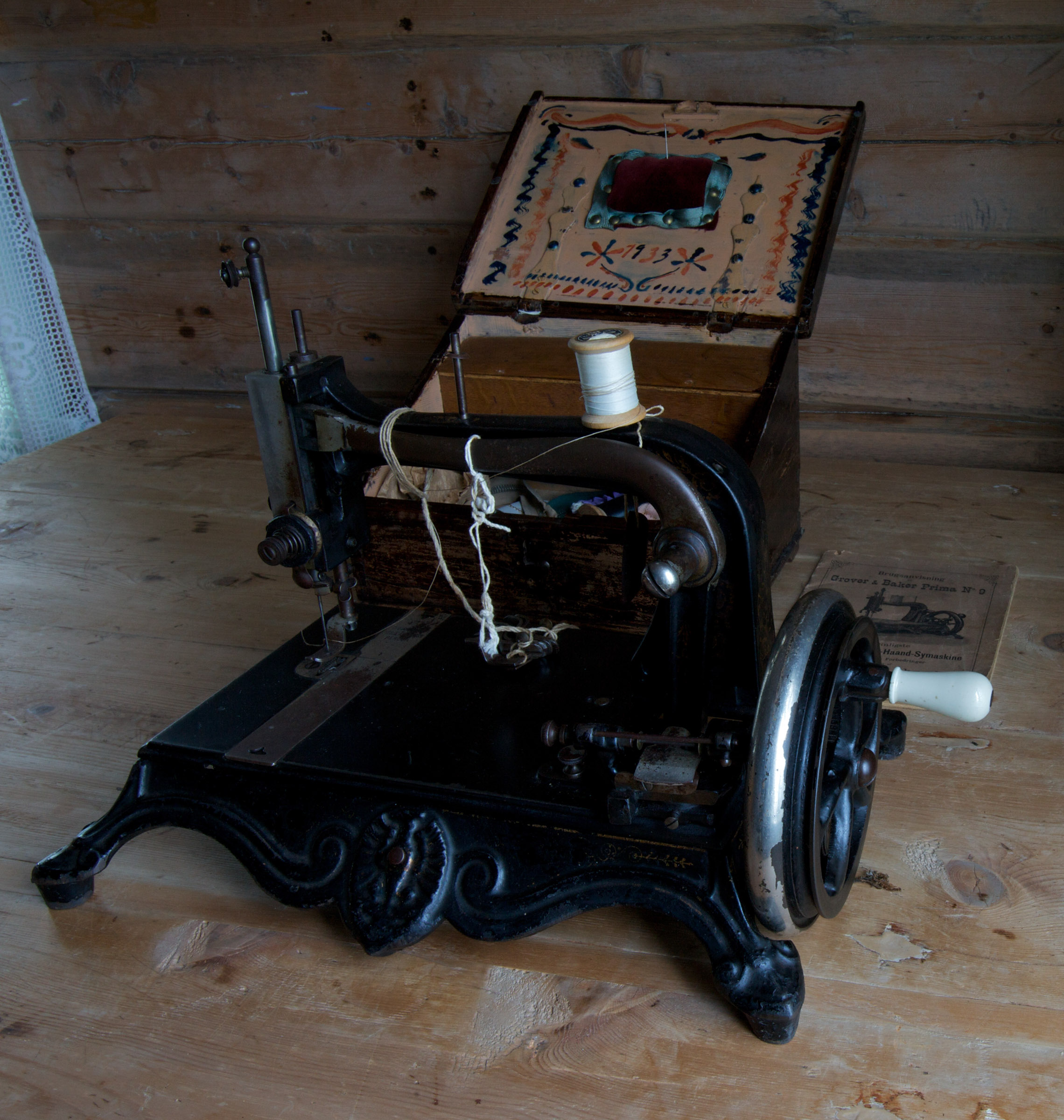
One of the activities taking place in the kitchen would be knitting. Women would follow a yearly cycle, where free time in autumn and winter would be filled with knitting and sewing. Warm mittens, socks and underwear would be produced for the all-important lofotkiste – a chest the menfolk in the household would bring when participating in the Lofoten fishing after Christmas. The chest is still placed in a corner. There was seldom an idle hand in this kitchen.
The Living Room was for the Grand Occasions
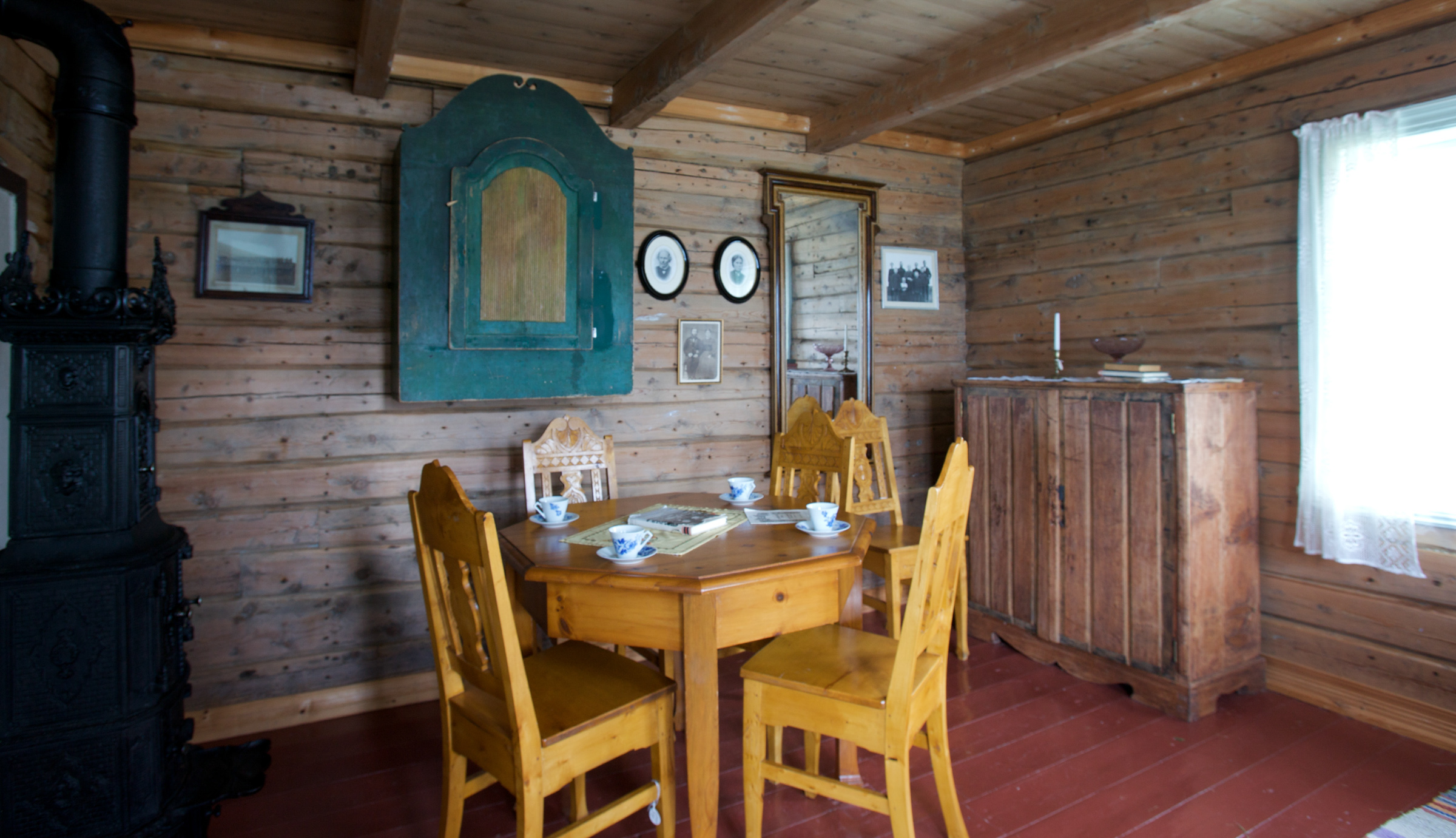
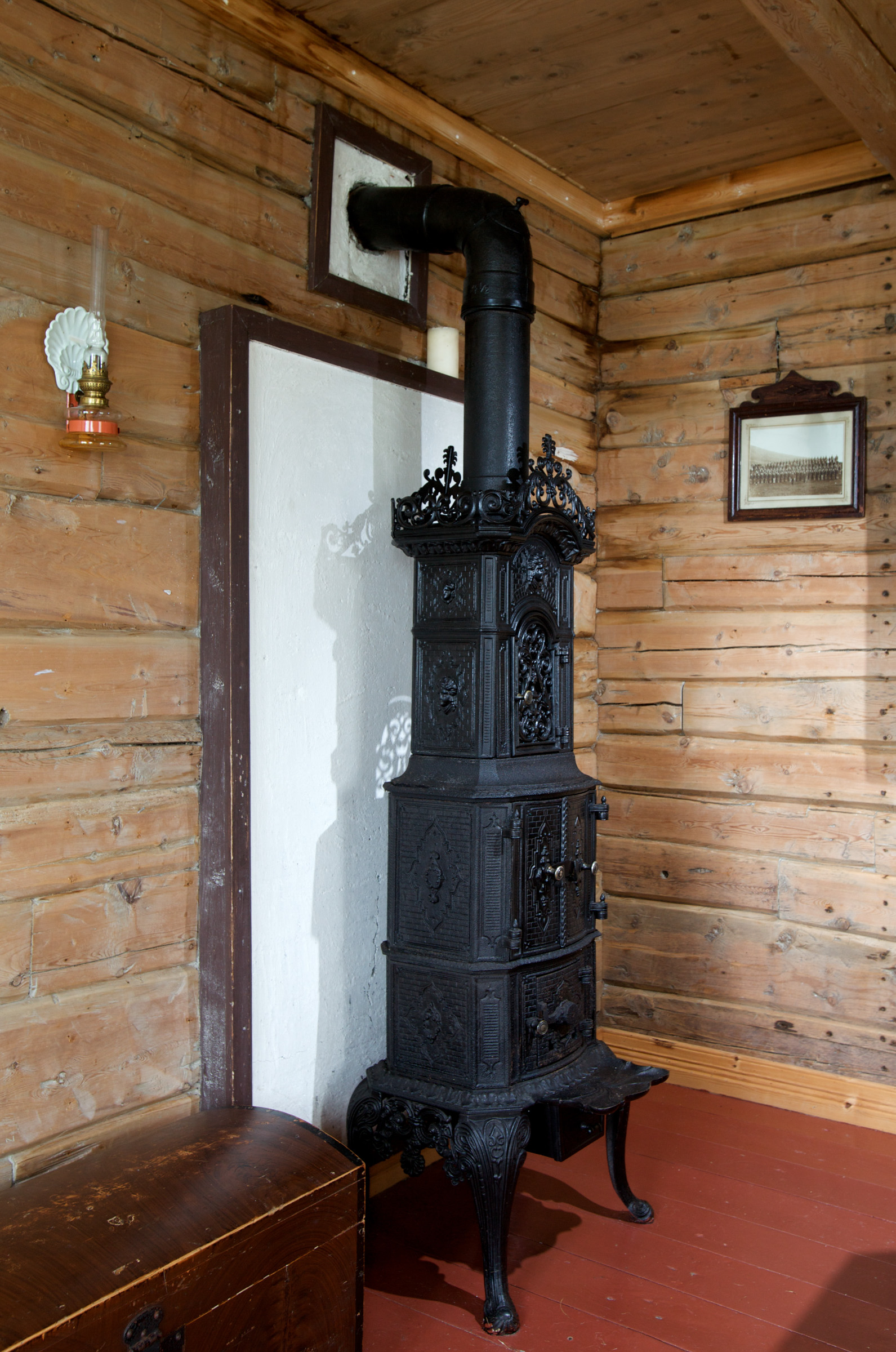
The atmosphere in the living room is totally different. An elaborately decorated cast iron stove with tiers would keep the room warm. With a dining table, an armchair, cupboards, and framed family photos on the wall, the room looks very cozy. The armchair was made by Simon, the owner of the house. However, the living room was never a place to linger. The stove was only lit at special occasions, like Christmas and when important guests were visiting. Most of the time, the door from the kitchen would be closed, and there would be no heating. The amount of wood needed and the work required wouldn’t make it worth it.
The Attic was Snug and Warm
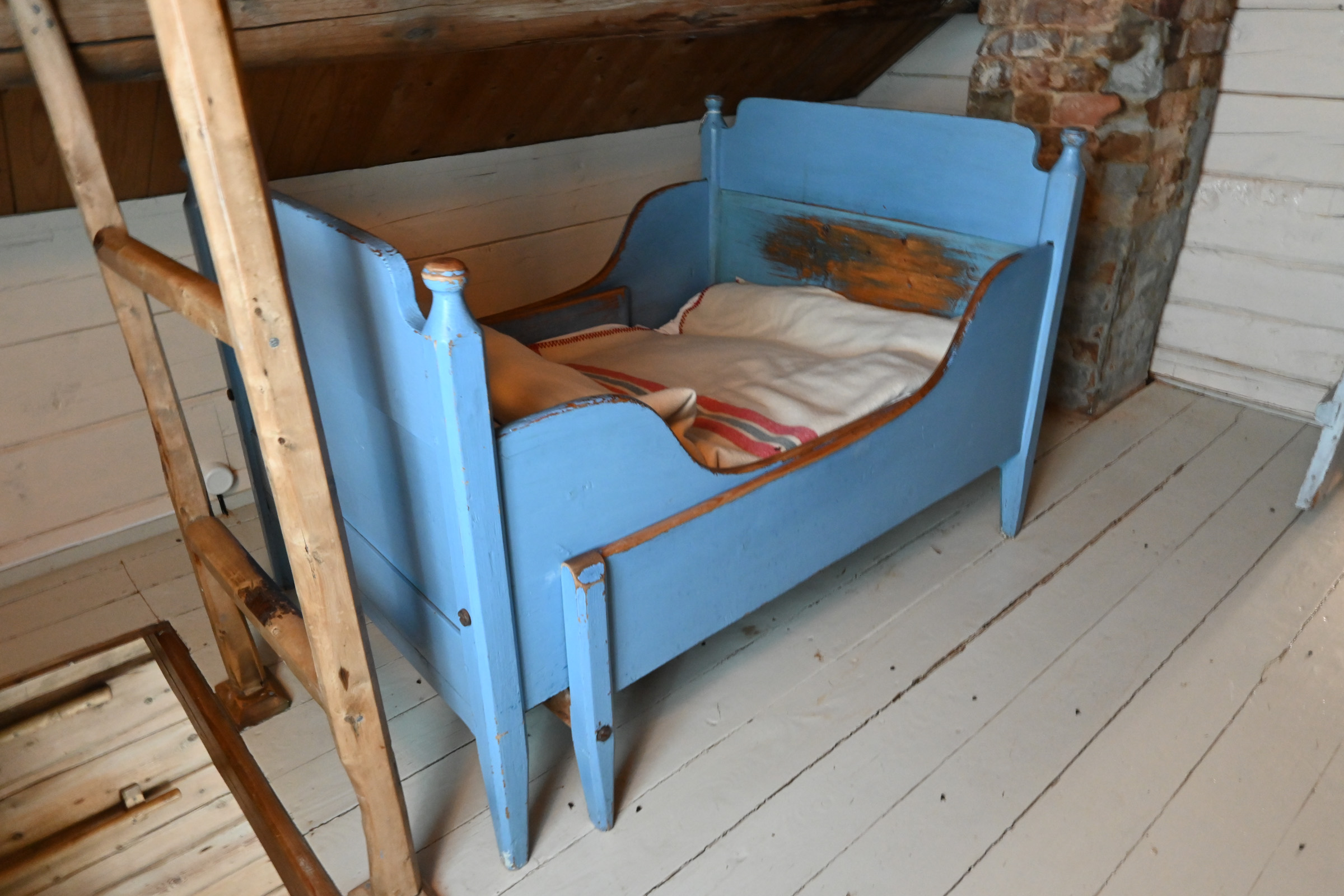
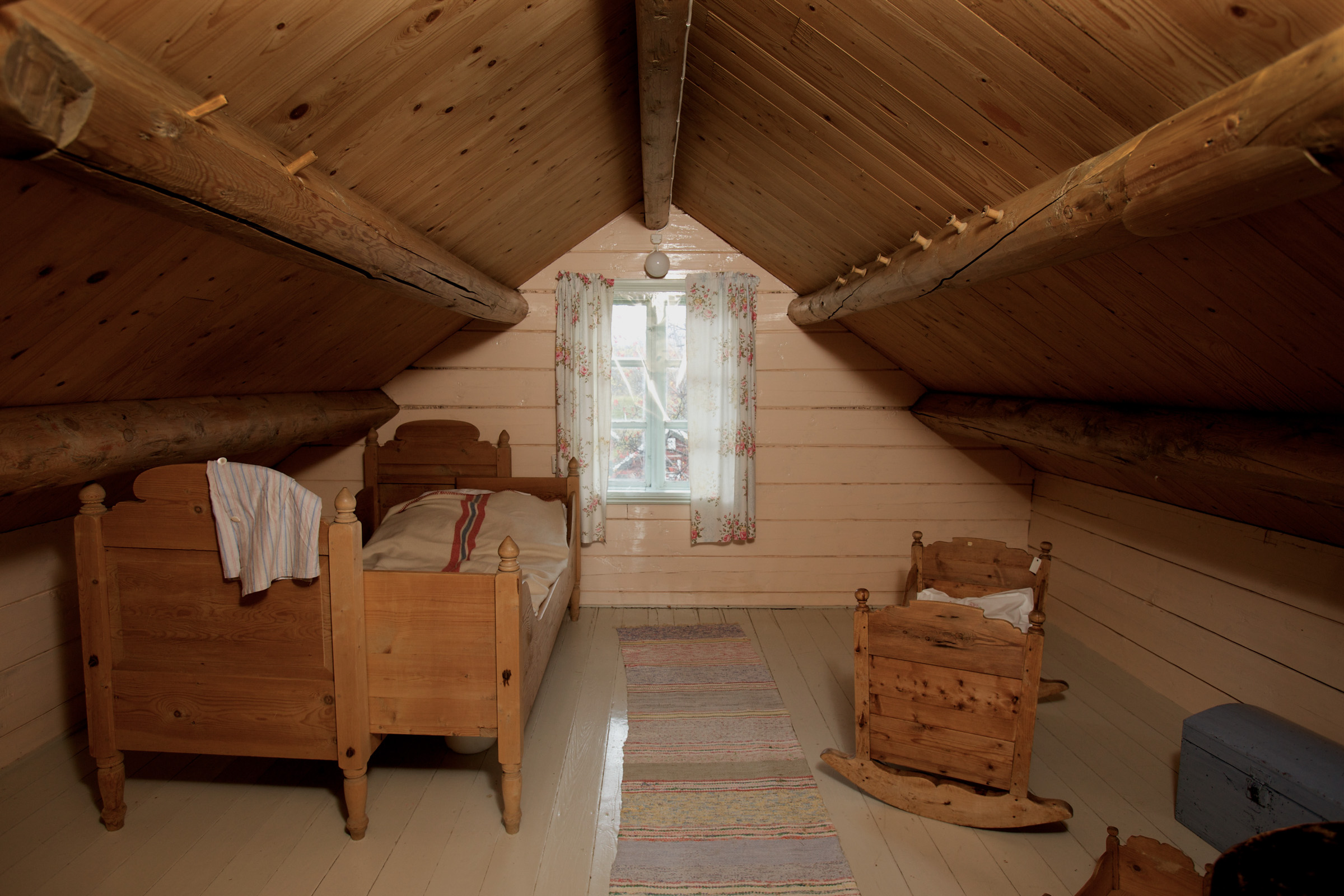
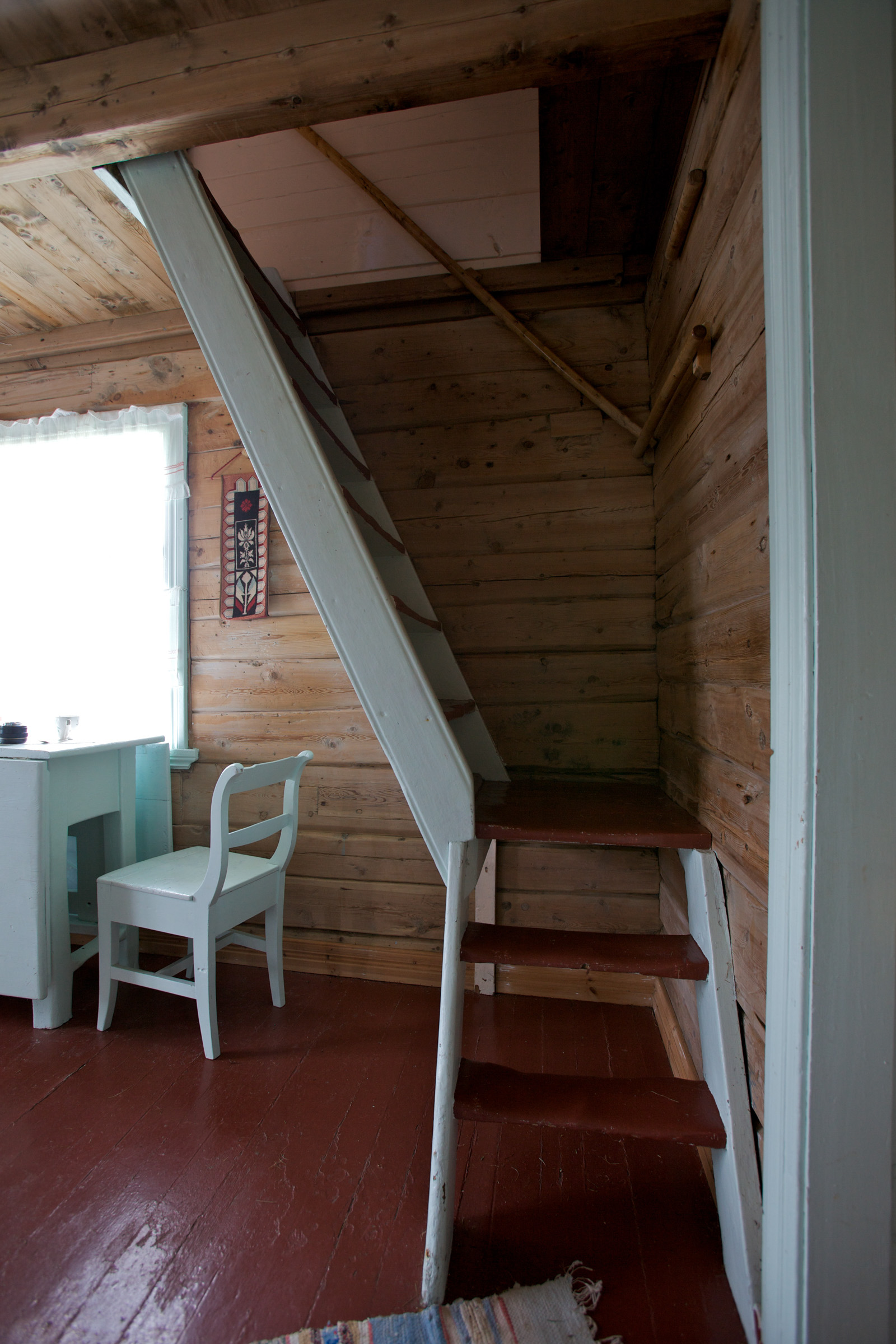
A tight and steep little staircase leads to the attic, which consist of two small rooms connected with a door. Under the sloped roof, the heating from the downstairs oven would keep it all reasonably warm even on the coldest winter days. The children would sleep in the first room in two trundle beds. One bed could be made wider to sleep two children, another could be extended lengthwise for a growing teenager. Next to the parents’ bed in the next chamber, there is the cradle for the youngest. The whole family would sleep close together at the warmest place in the house, creating a cozy atmosphere. The privacy we expect today was totally absent.
The Boathouse is Organised Chaos
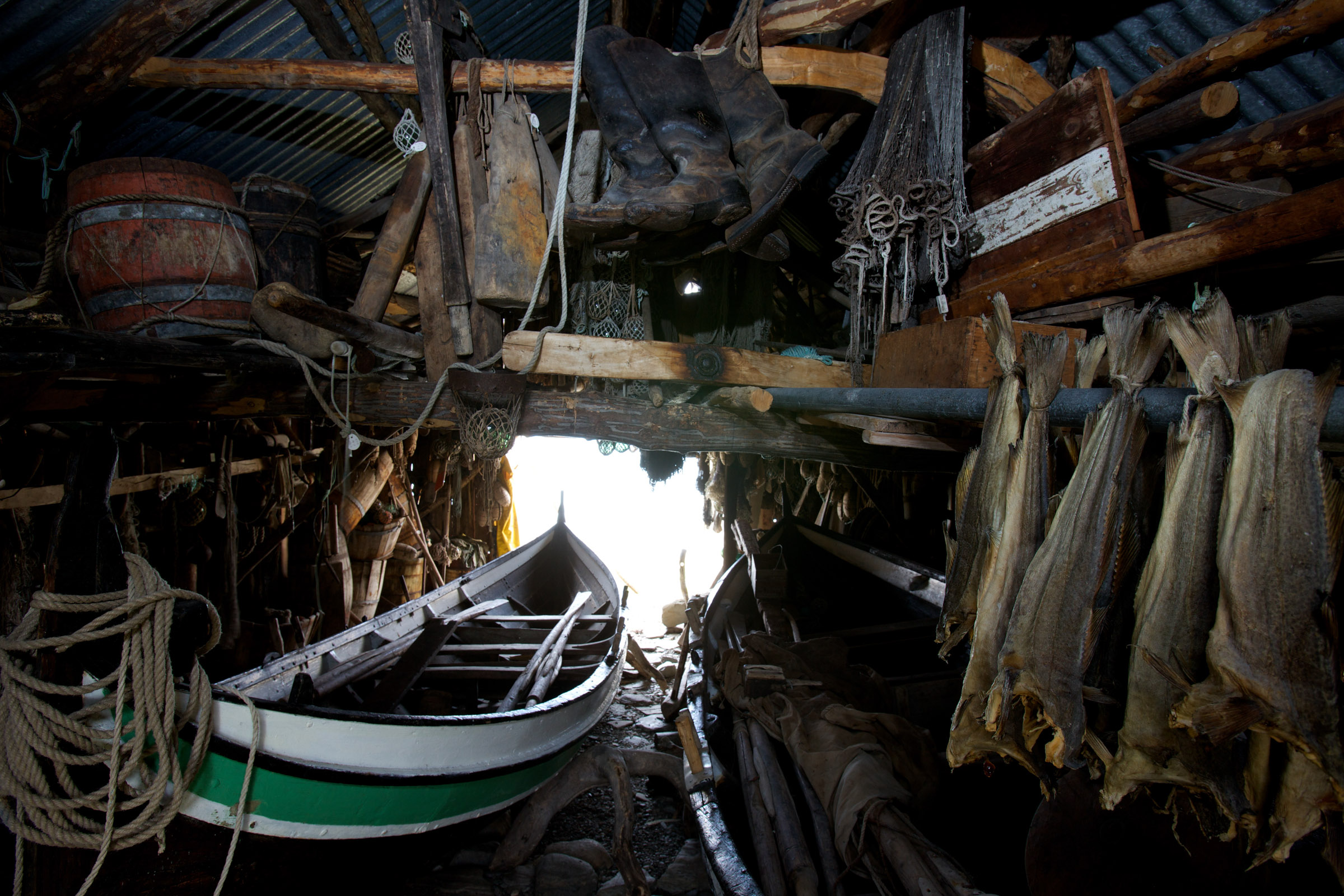
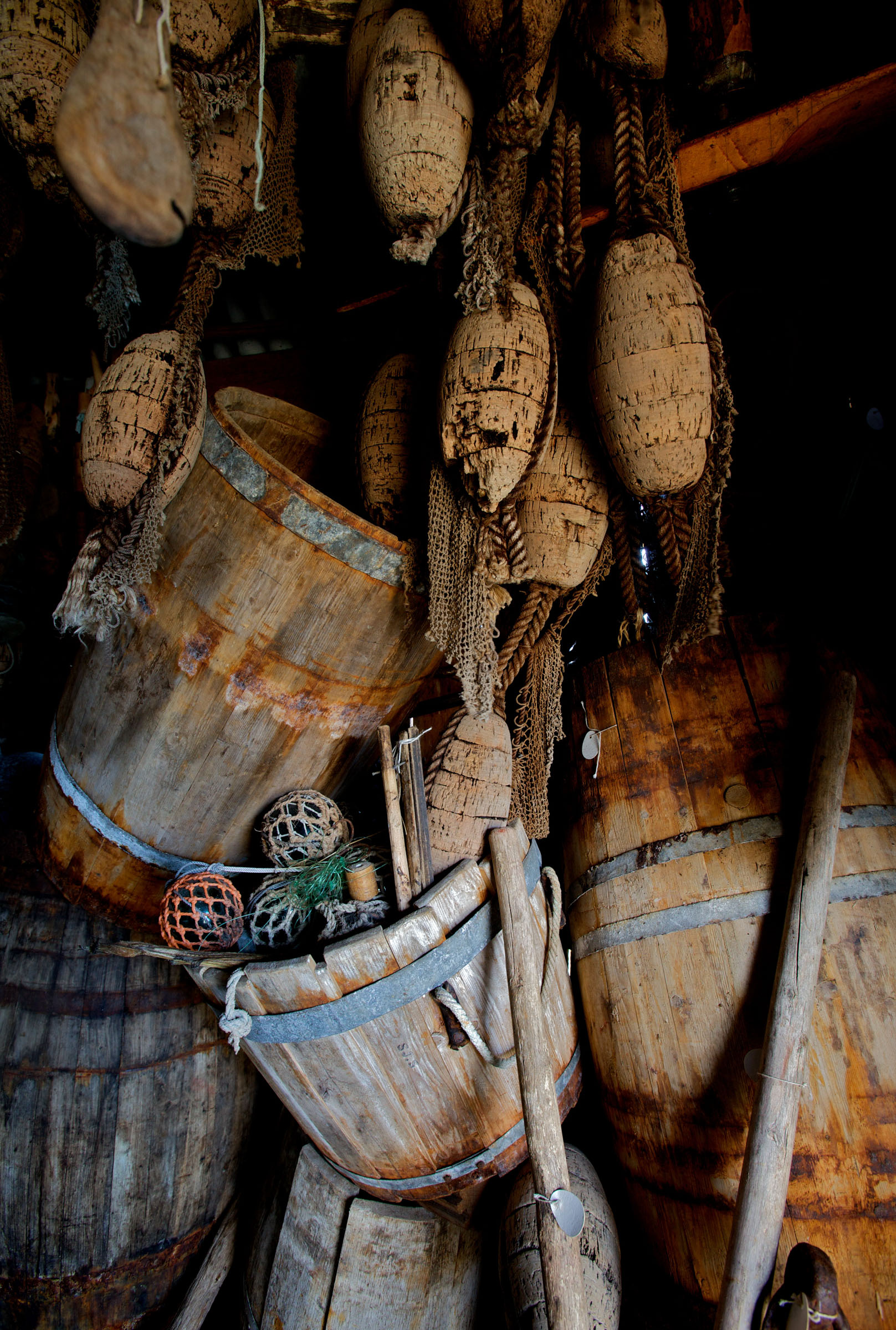
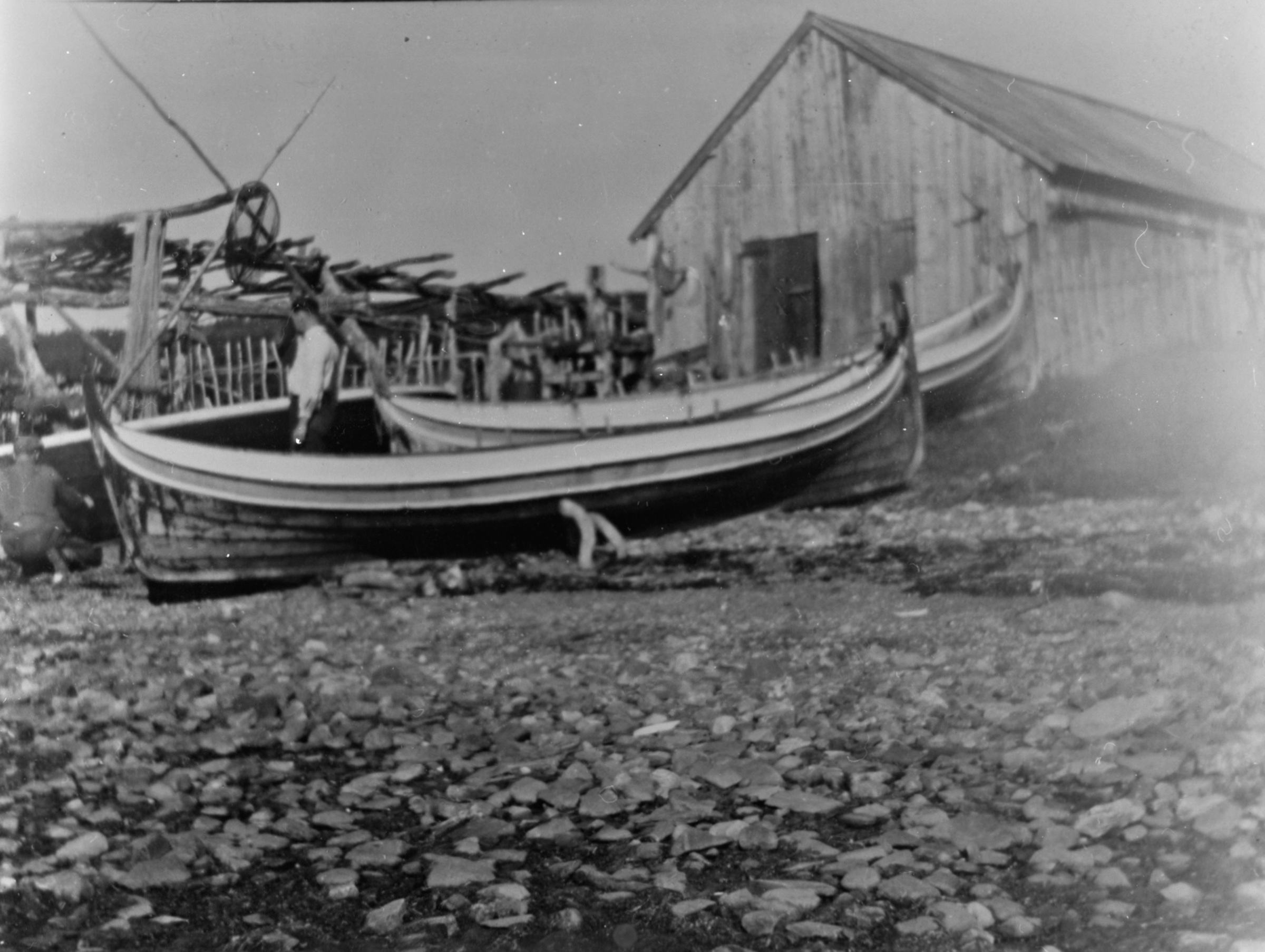
I looked around the boathouse. Sunlight streamed in through the slatted wooden structure, creating stripes of light inside. There were several traditional high-stemmed Nordland boats on the ground. Stockfish was attached to the ceiling beams, and nets, floats, and fishing gear hung down from the ceiling. I wondered how people could work in such a narrow space. “Oh, we haven’t cleaned up here yet”, my guide said. “When the work is done, there will be one boat here, and only as much fishing gear as would realistically be here”. The menfolk on the farm would participate in the seasonal fisheries along the coast, most notably the Lofoten fisheries. They would typically be gone for a month or two, leaving women and children at home. One would also fish on the Ullsfjord to get fresh fish, and this hjemmefiske – “home fishing” – could be done by women too.
In summer, one didn’t have to live so close together
The shack next door served as a storage but was also used for sleeping in during the summer. At that time, heating was not necessary, and the farm family did not need to sleep so close together
The Livestock Lived Equally Simply
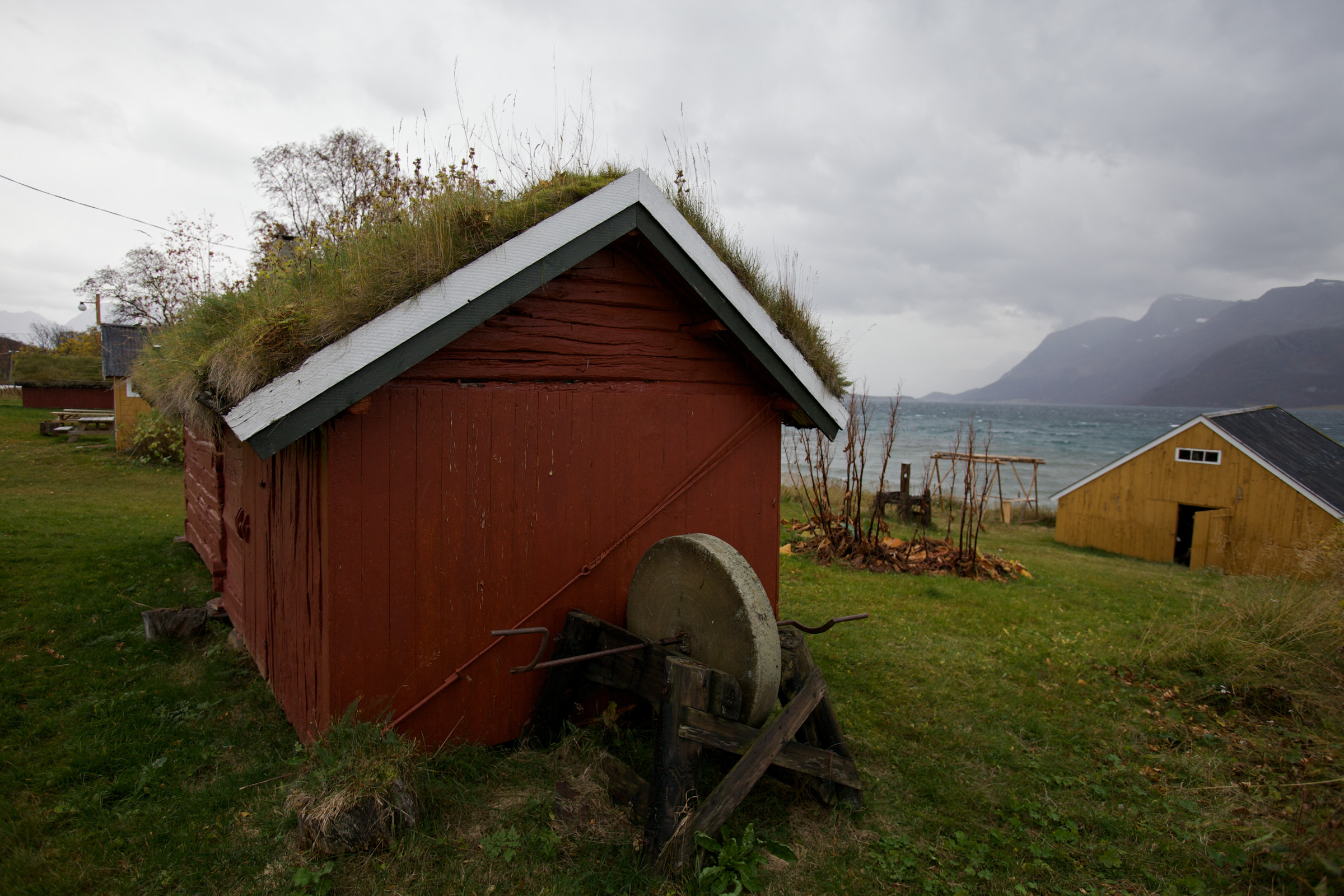
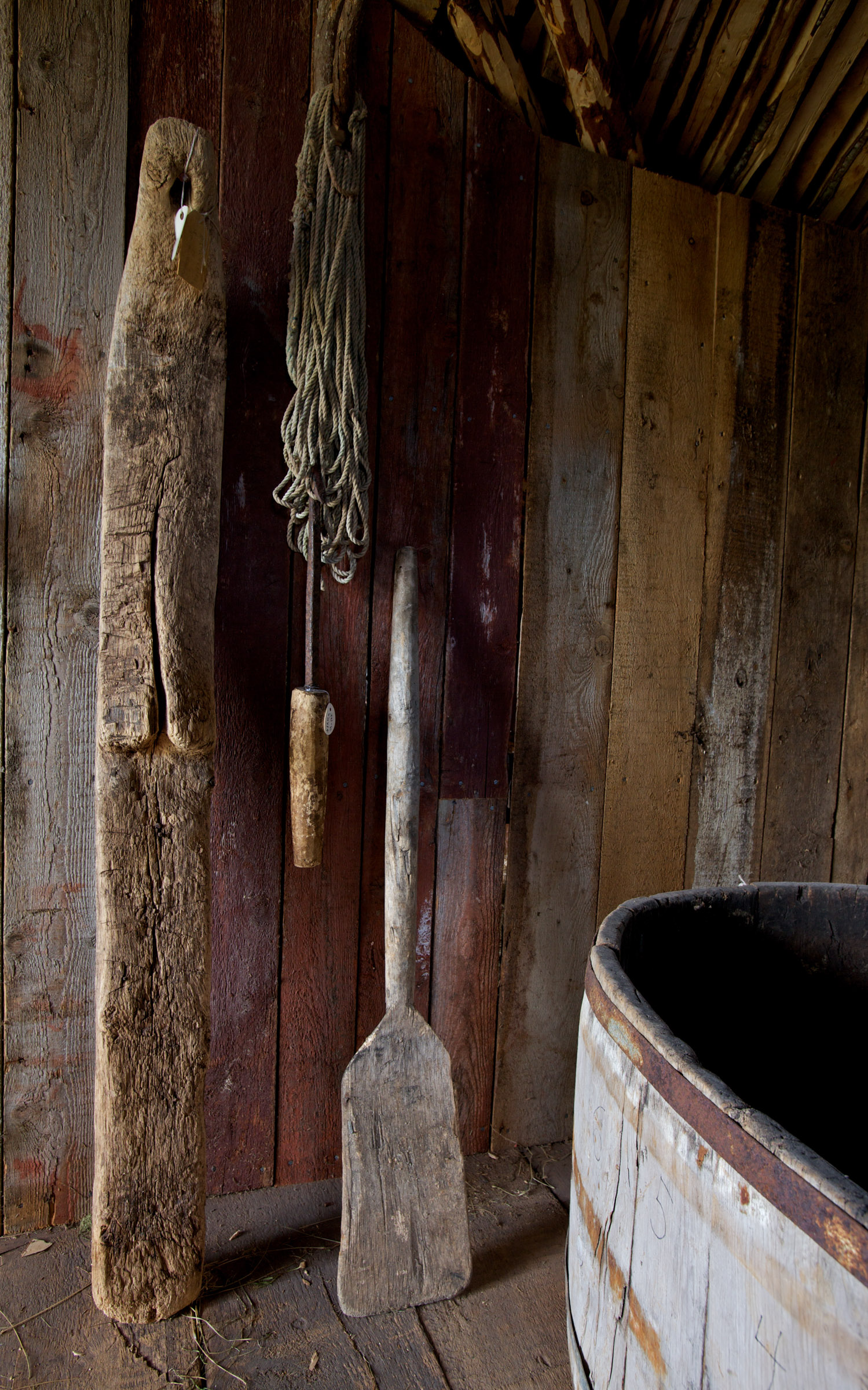
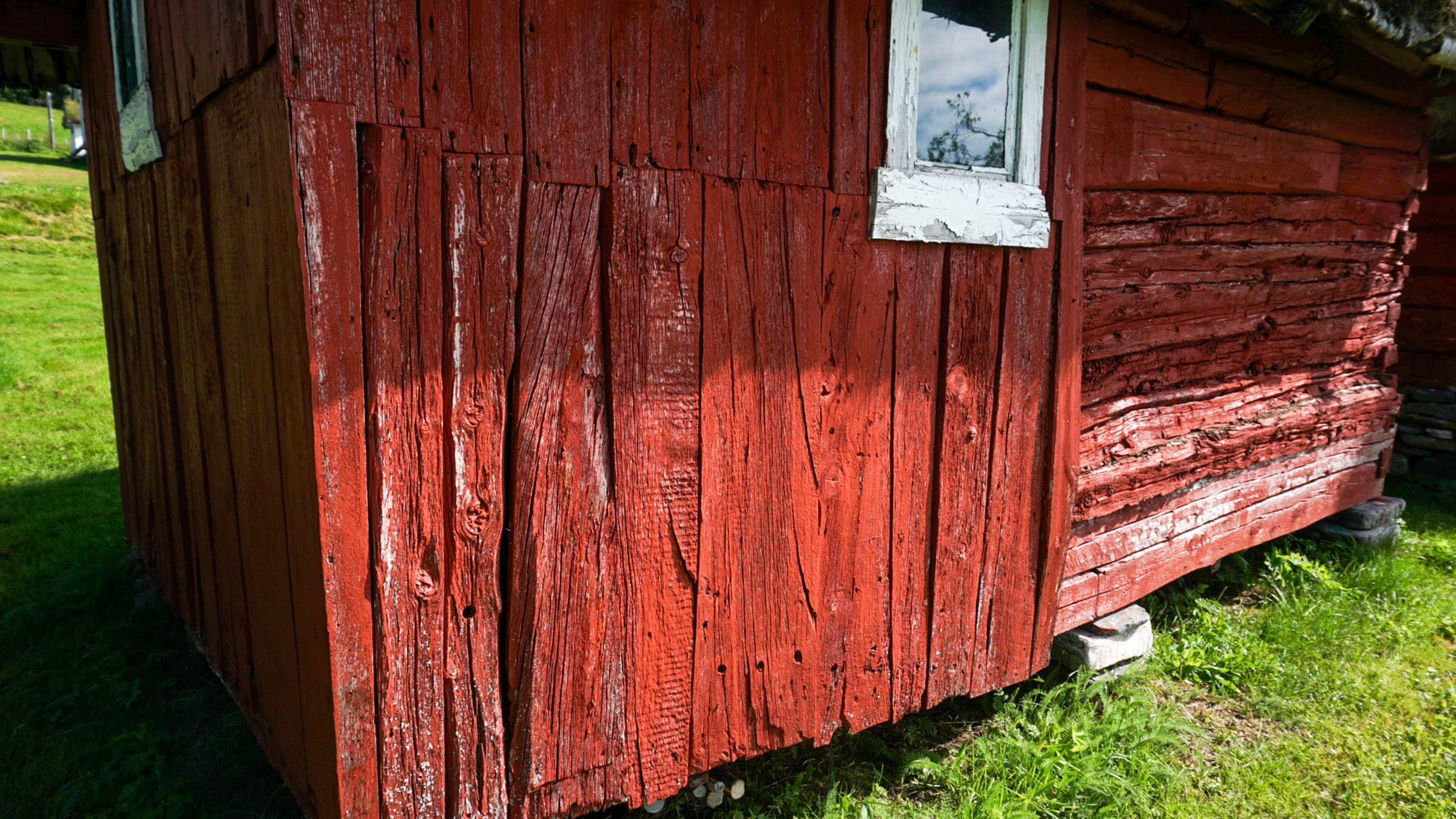
A little, square building, in barn-red, is the stable. It is just about big enough for a farm horse, and here the horse was locked in at night in winter. But even in winter, the horse had to work. The The lyngshest is a local pony breed, but it’s said that the horse on Gamslett was a fjording – a western Norwegian breed. The barn next to it is also small, with room for a few goats and sheep. It all felt cramped, and I whispered to myself “poor animals”. A vat dating from the 18th century is one of the oldest objects. It was used to crush coarse forage such as hay before feeding the animals. A black pot-like vat was used to crush fish cut-offs to provide extra protein for the livestock.
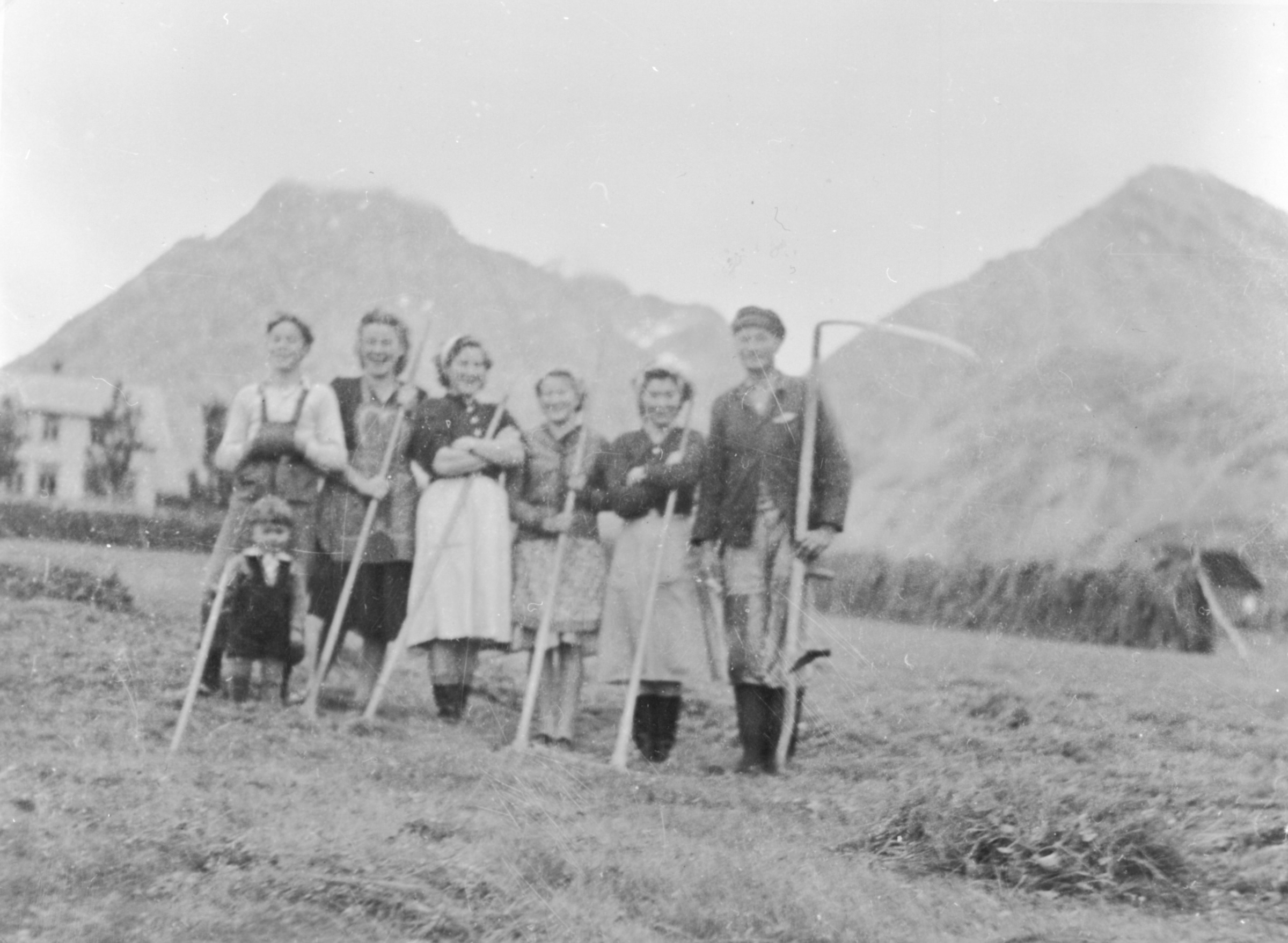
The Garden was a Status symbol
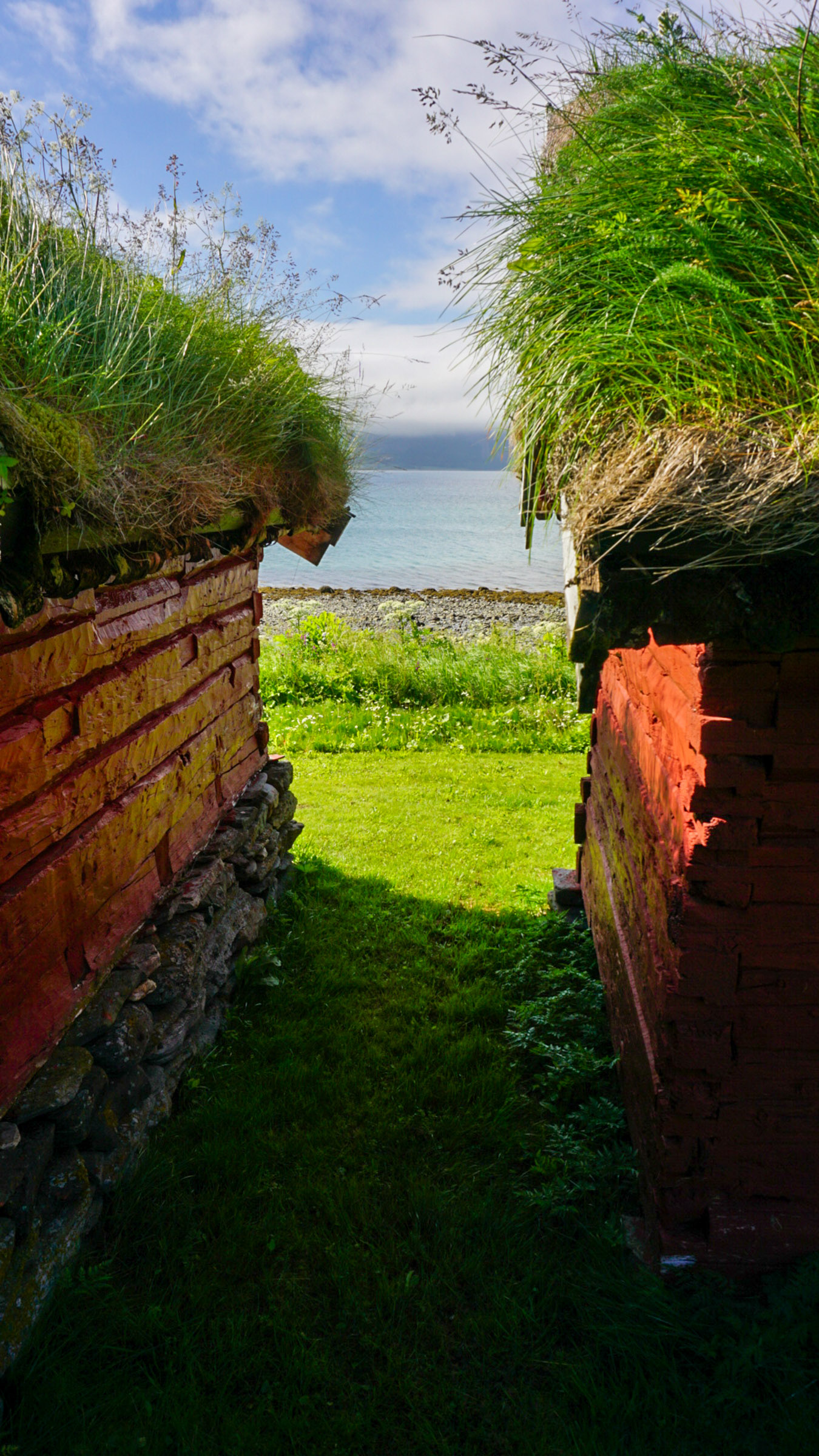
A willow stake fence encloses the little garden, keeping livestock away. A garden was a bit of a status symbol, so it was placed clearly visible from the fjord. Back then, there was no road, and the fjord was the main traffic artery. It is full of red currant shrubs, lush rhubarb leaves and decorative rowan trees. A noticeable, decorative flower is the tansy – Tanacetum vulgare – with striking yellow button-shaped flowers. It is both decorative and has medicinal properties. When there was a housewife living here, there may have been more flowers and herbs.
The Visit Started with Coffee
When I arrived a sunny, summery mid-morning, I was the only guest. I paid my ticket at a service house on the woodland fringe above the farm, and in there the coffee machine was already running. It felt just right to sit down and have a cup before the visit, along with a talk with Mieke, as is the way around here. The service house is where the last inhabitants of the farm moved when Gamslett farm became a museum. Today, Gamslett is part of Nord-Troms Museum, with a number of interesting museums in the Northern Troms – Lyngenfjord area. The guides you meet at Gamslett are usually volunteers from the Friends of Gamslett local organisation.

The Exhibits put it all Together
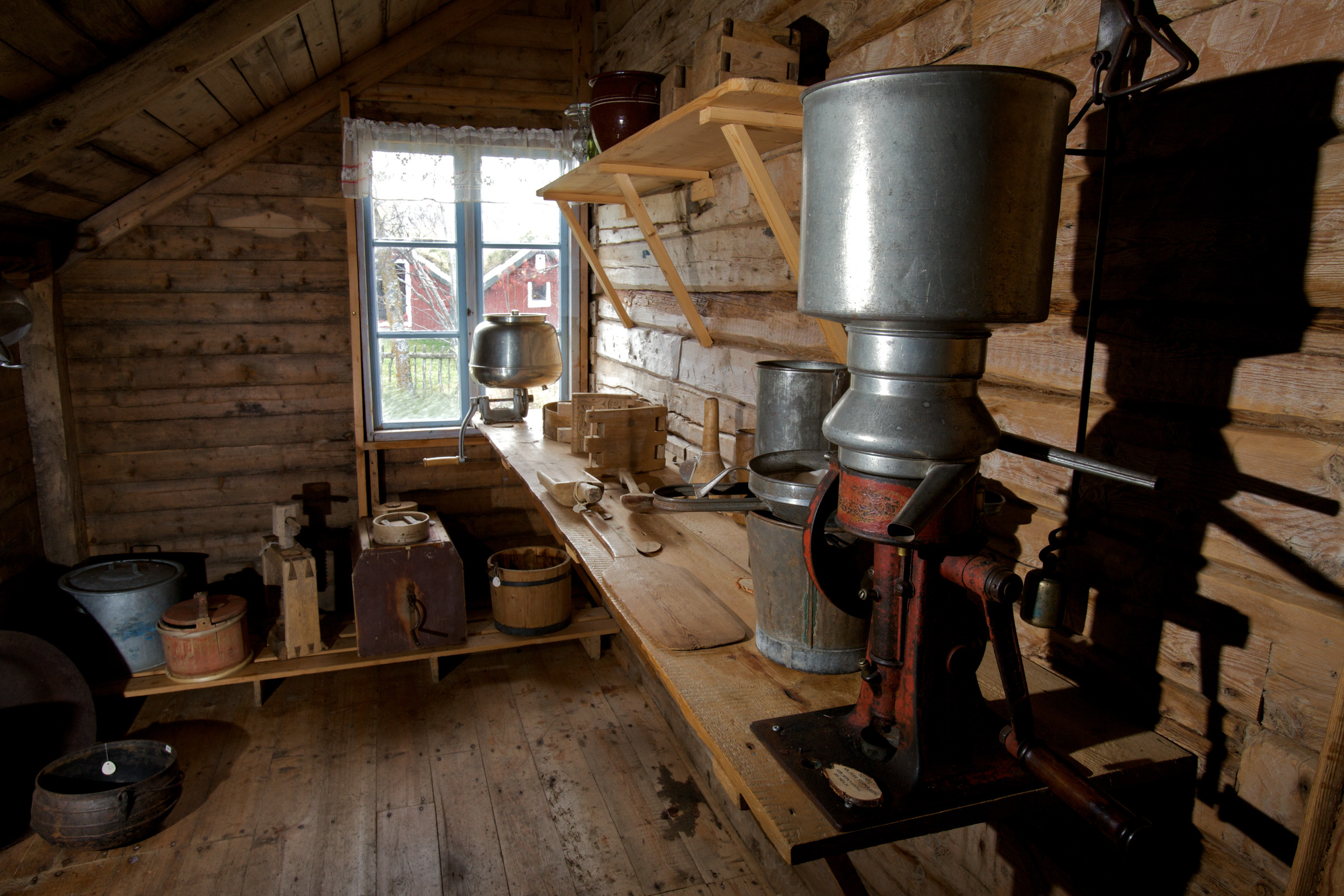
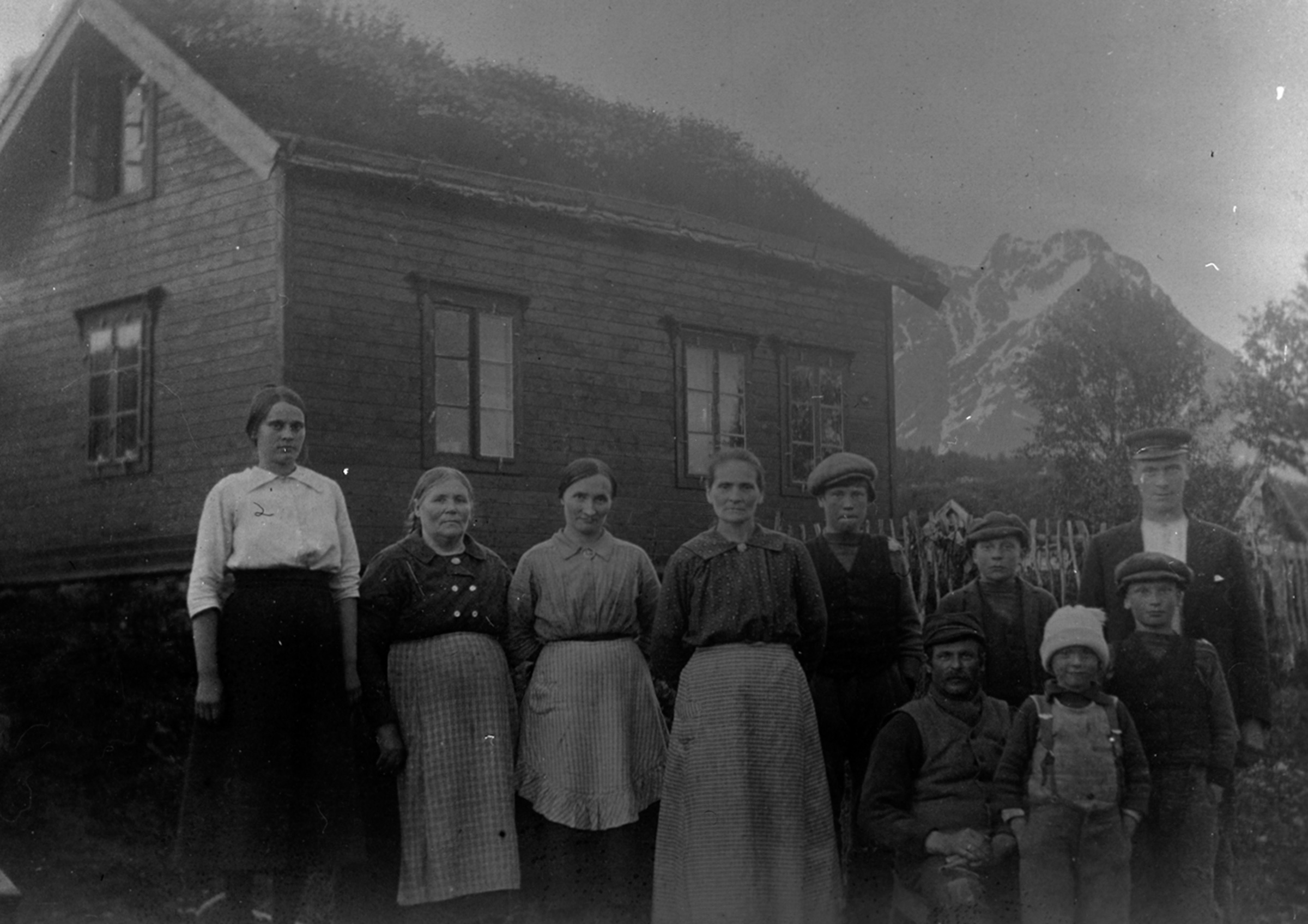
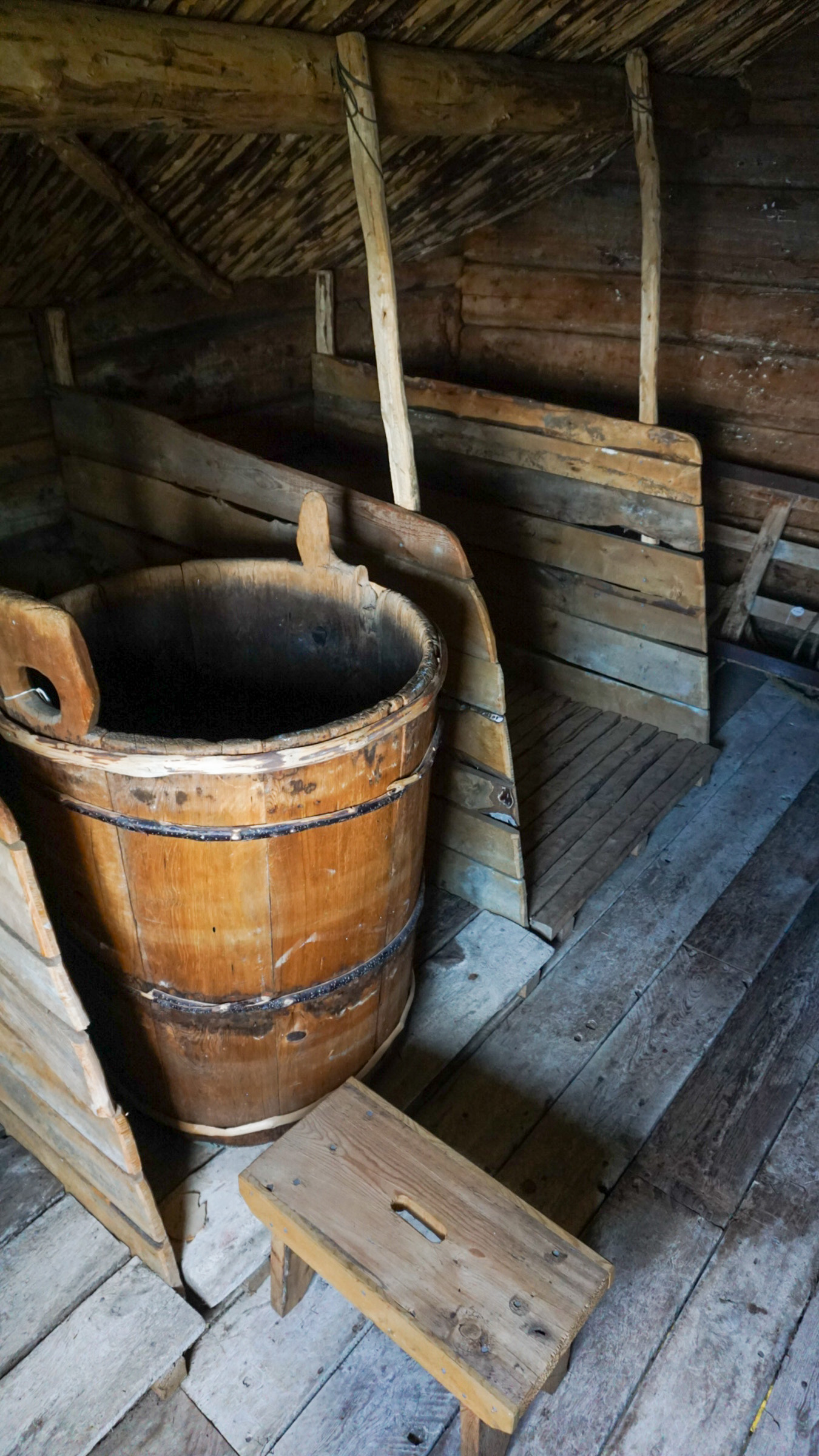
Coffee on old-style chairs in fun colours, a little gift shop and facilities, the most important aspect, though, is the exhibit. With the help of old photos and clear, concise texts, the farm’s history is put into context. We get to hear about the combination of fishing and farming, how women took care of the farm, about seasonal fishing, and the yearly cycle of work. The trade connections with Russia, the Pomor trade, are also presented. We get to meet the farm folk, the carpenter Simon Kristian Johannessen and his wife, Josefine Marie Nilsen, and their children.
Alf Made it into a Museum
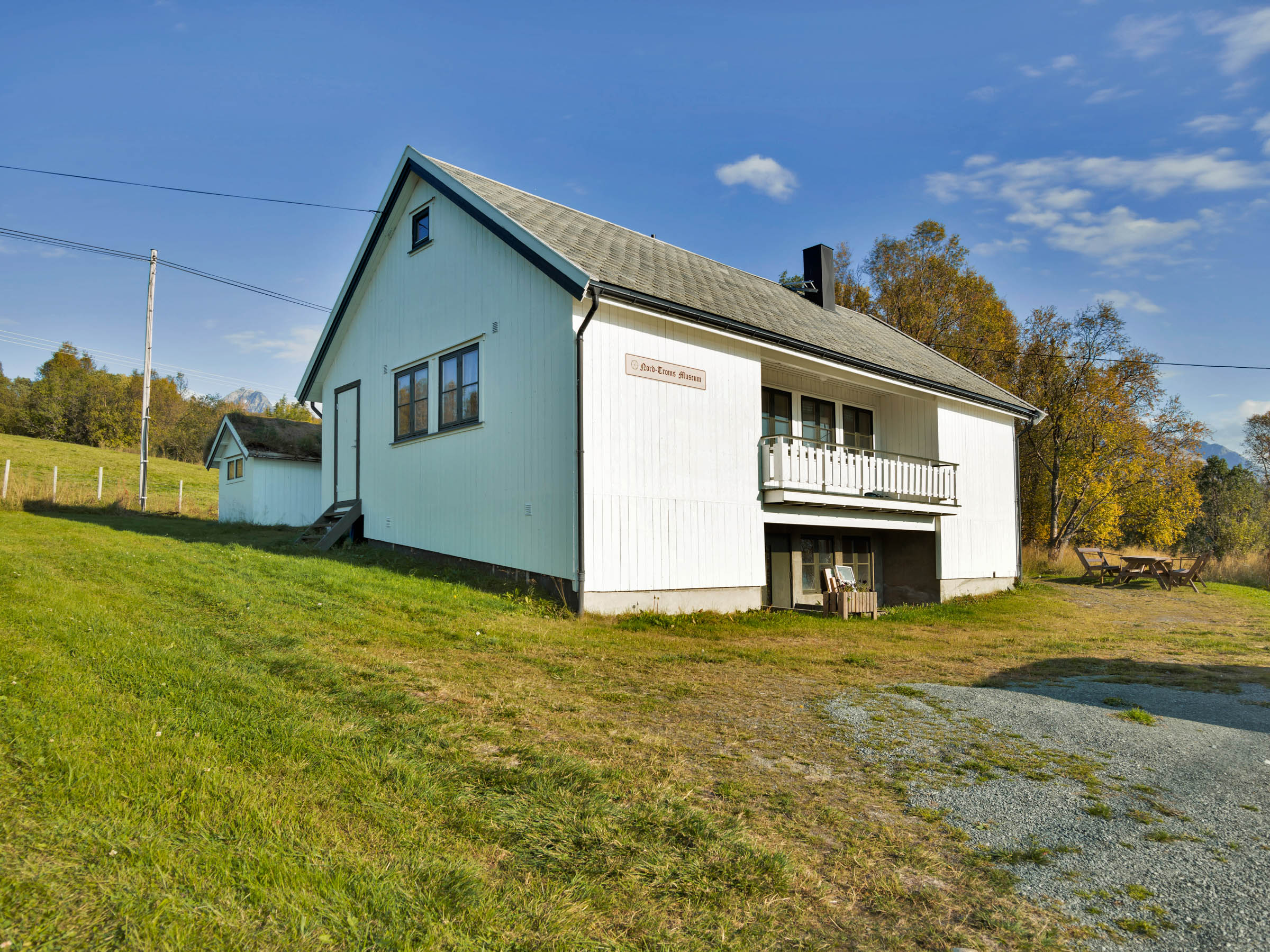
Alf, the youngest son, was the one with a sense of history. He started collecting old stuff which would later become a local museum. In this way, the modest buildings on the farm were preserved when most other houses were replaced by modern, comfortable houses in the post-war period. Finally, Nord-Troms Museum has cleared out, sorted, restored and maintained. Today, thanks to the efforts of Alf, we can visit this tiny time capsule. Gamslett is one of several small museums that together constitute Nord-Troms Museum. Spread around the beautiful fjord area, they tell stories of Sámi, Kven and Norwegian history, taking us through the multi-ethnic and multi-faceted heritage of the area.
Practical about Gamslett gård/museum
The farm of Gamslett gård is found in the municipality of Lyngen, about 1 hour east of Tromsø. From Tromsø, you drive for about 40-50 minutes, then take the Brevikeidet-Svensby ferry. From the ferry landing at Svensby, you drive a mere 2-3 minutes to the parking.
You can see it all in 30 minutes. Coffee in the little cafe is additional.
The museum is open in the summer. Consult the website of Nord-Troms Museum.
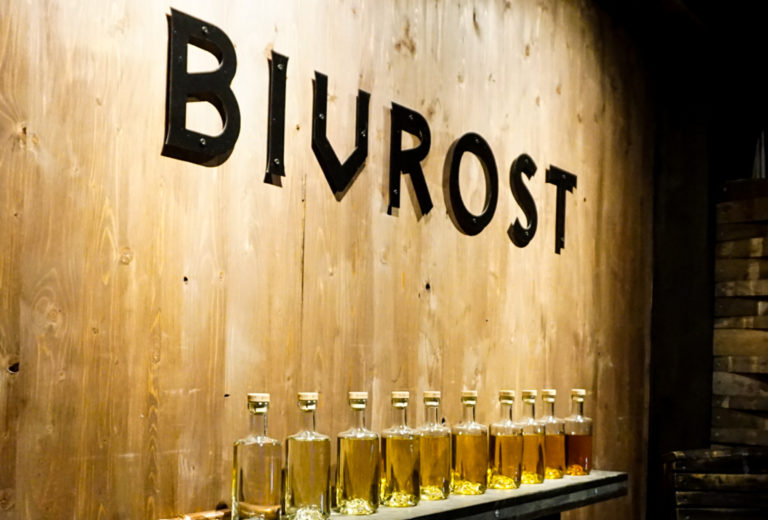
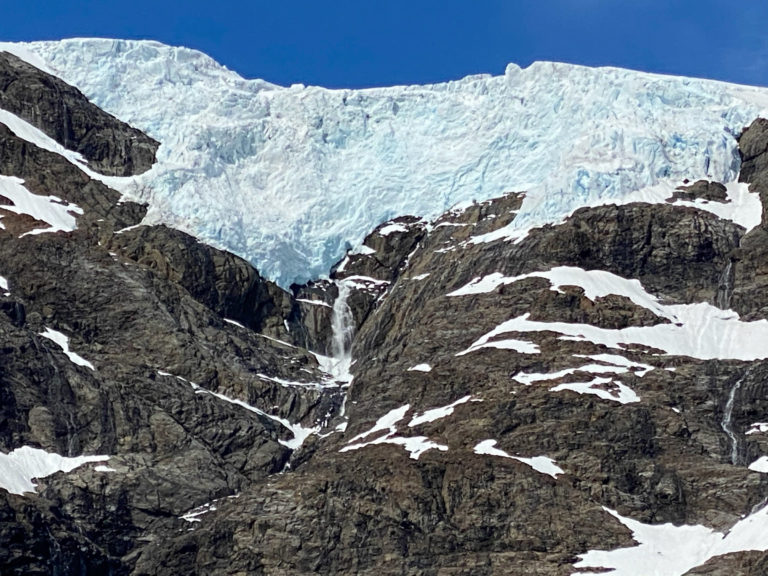
The Lyngen peninsula is characterised by the Lyngen Alps, and has several nice hikes. The central village is Lyngseidet, and nearby, at Årøybukt, you find the world’s northernmost distillery. For more info about the area, consult the website of Visit Lyngenfjord.
There are several nice and homely alternatives in the area. We recommend the website of Visit Lyngenfjord.
Nord-Troms Museum is a regional museum organisation with several small museums around Northern Troms / Lyngenfjord (the area north and east of Tromsø). Consult the website for Visit Lyngenfjord for more history.