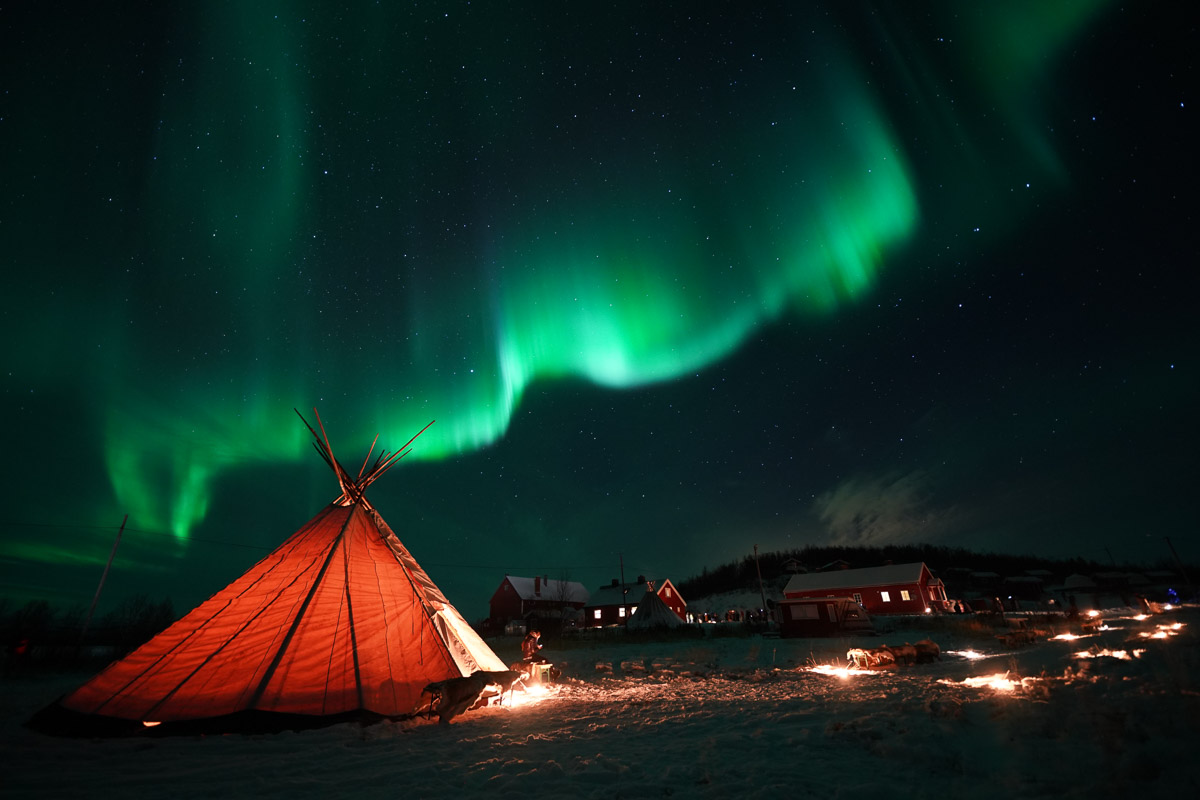
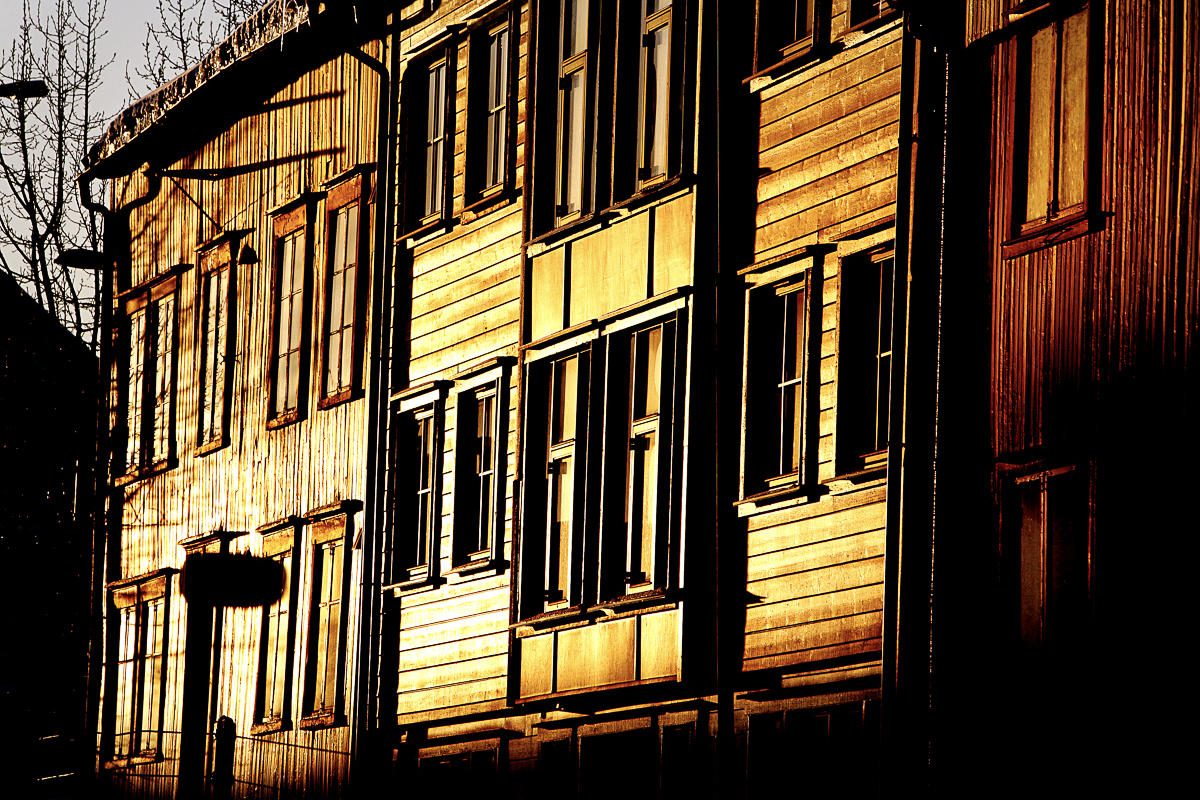
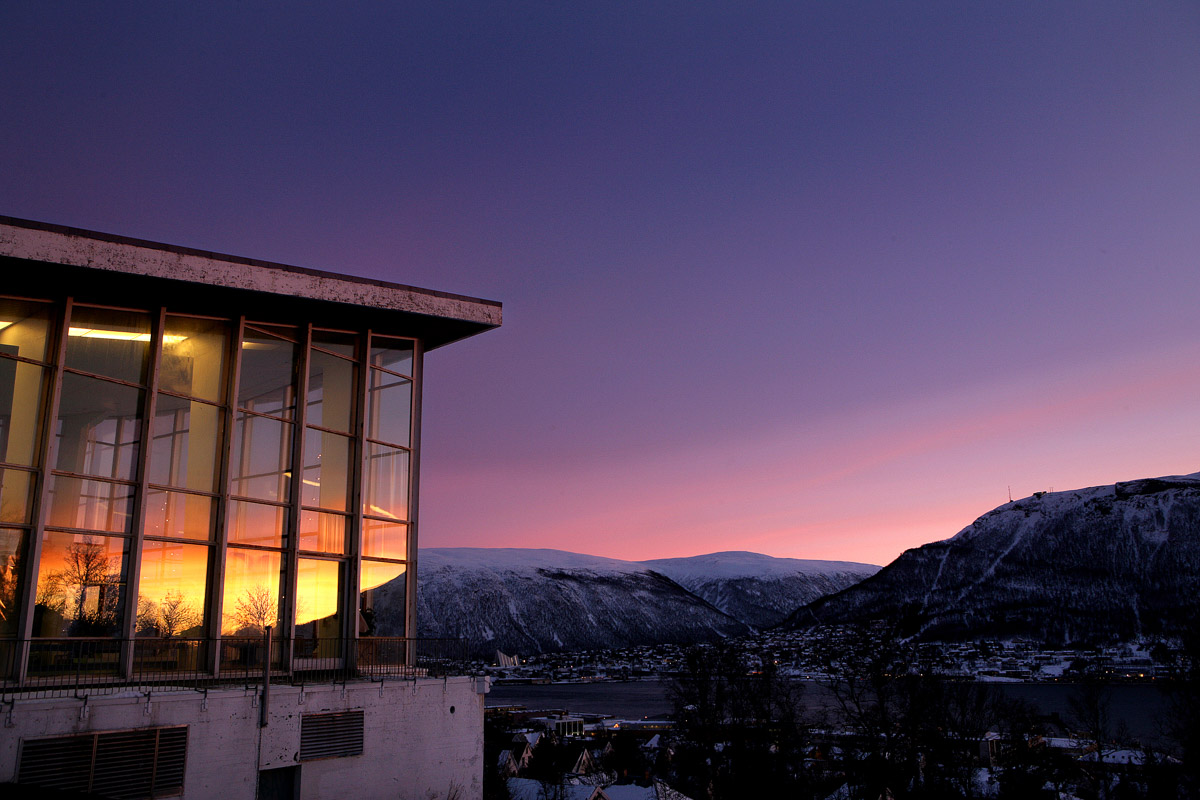
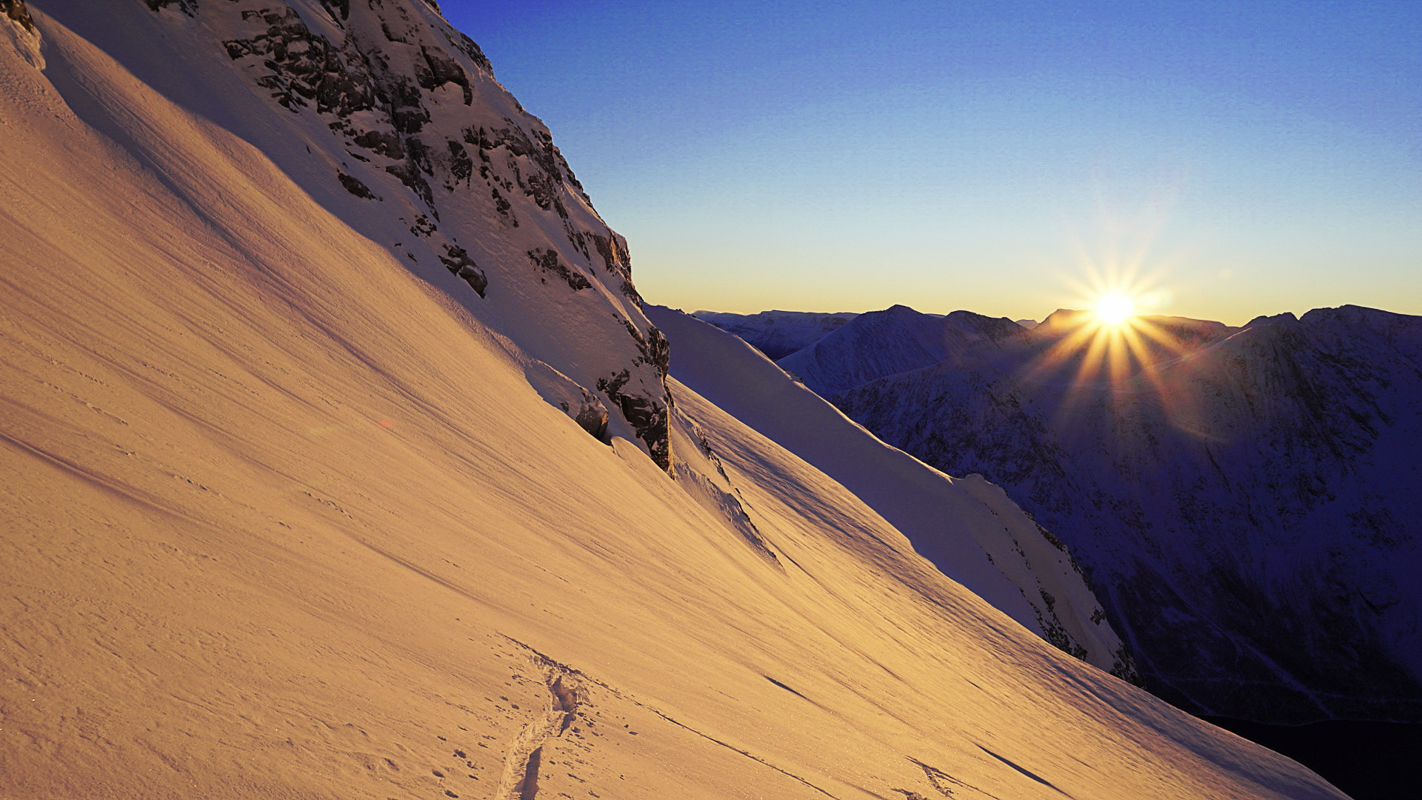
After weeks and months without the sun, suddenly she returns! The sun peeks over the horizon or between the mountaintops for a minute or two, and faces that have grown pale over winter and snow-clad landscapes become tinged with pink and orange. The blue period is over, and the lighter months of winter can begin!
Sun-worshipping cult
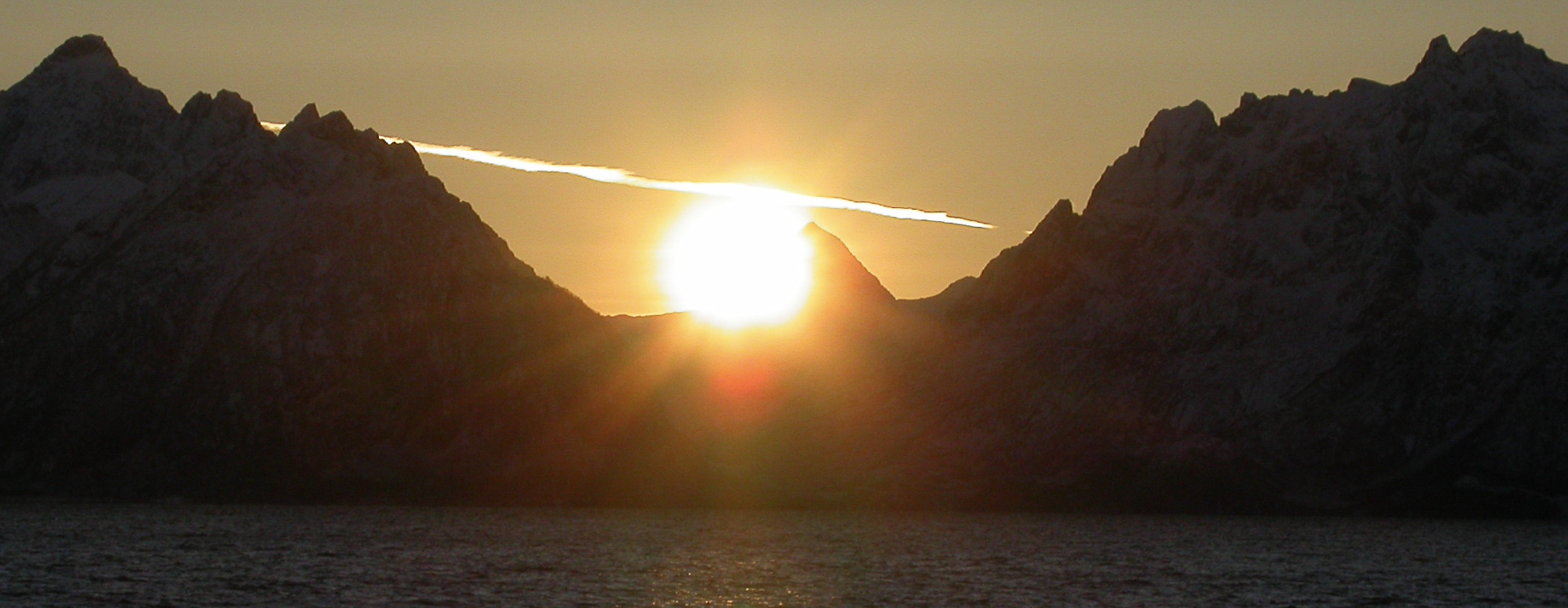
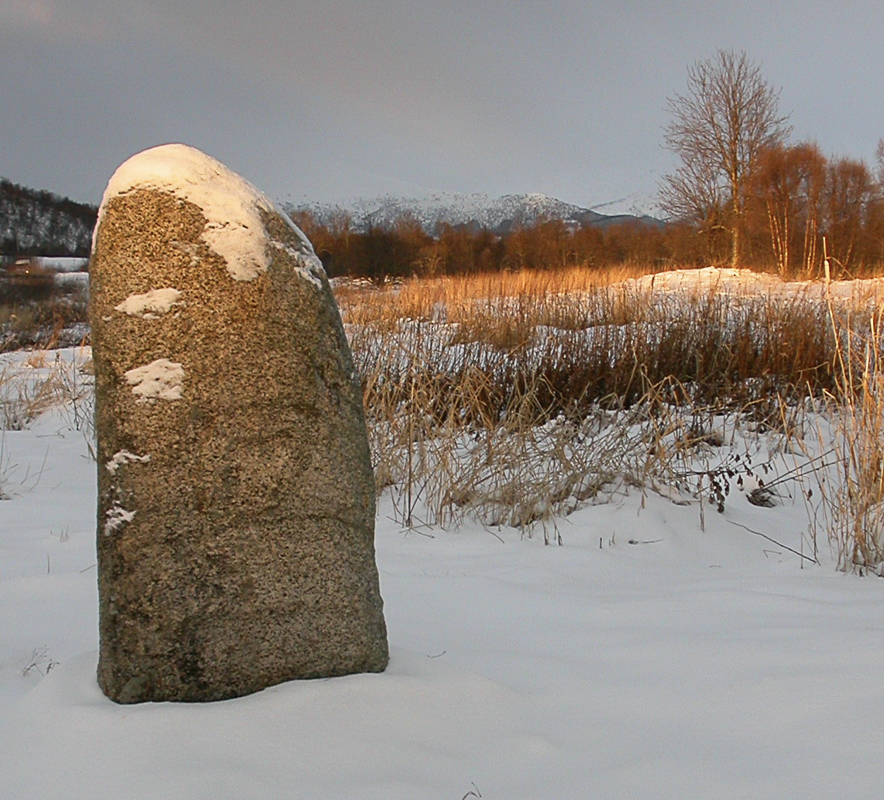
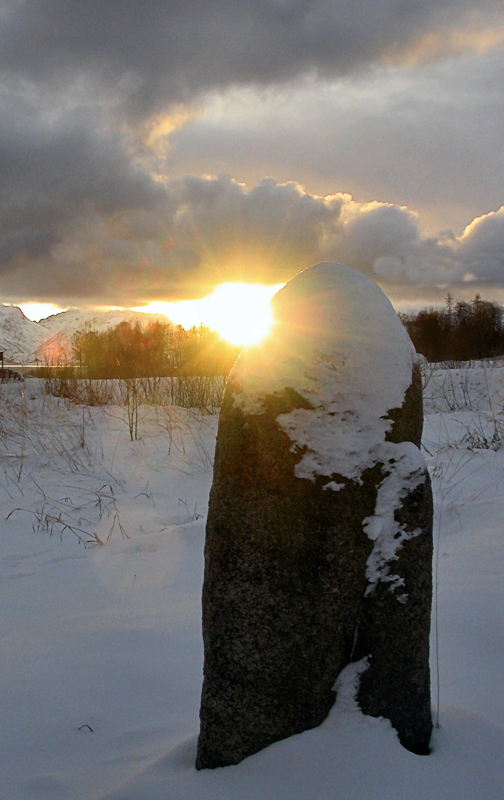
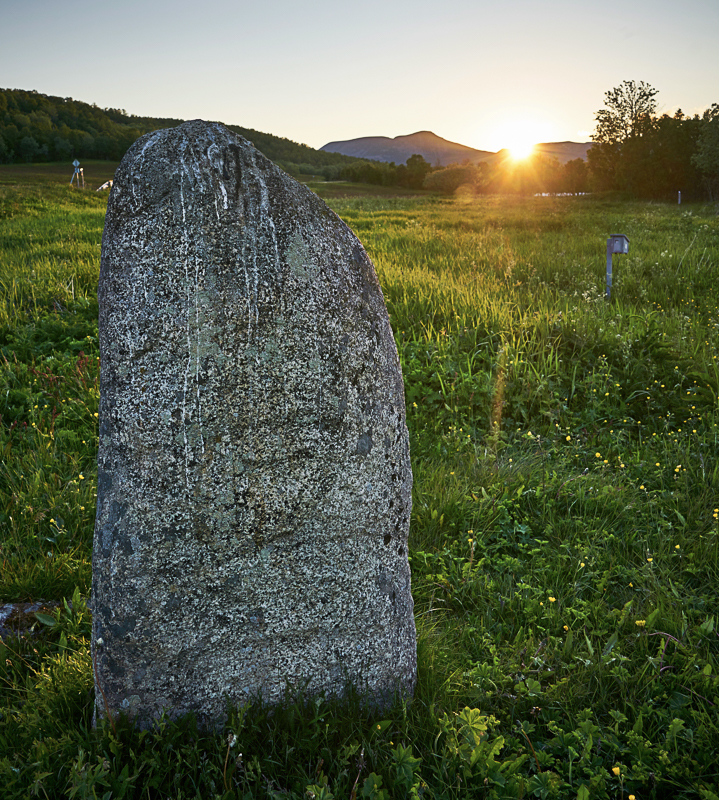
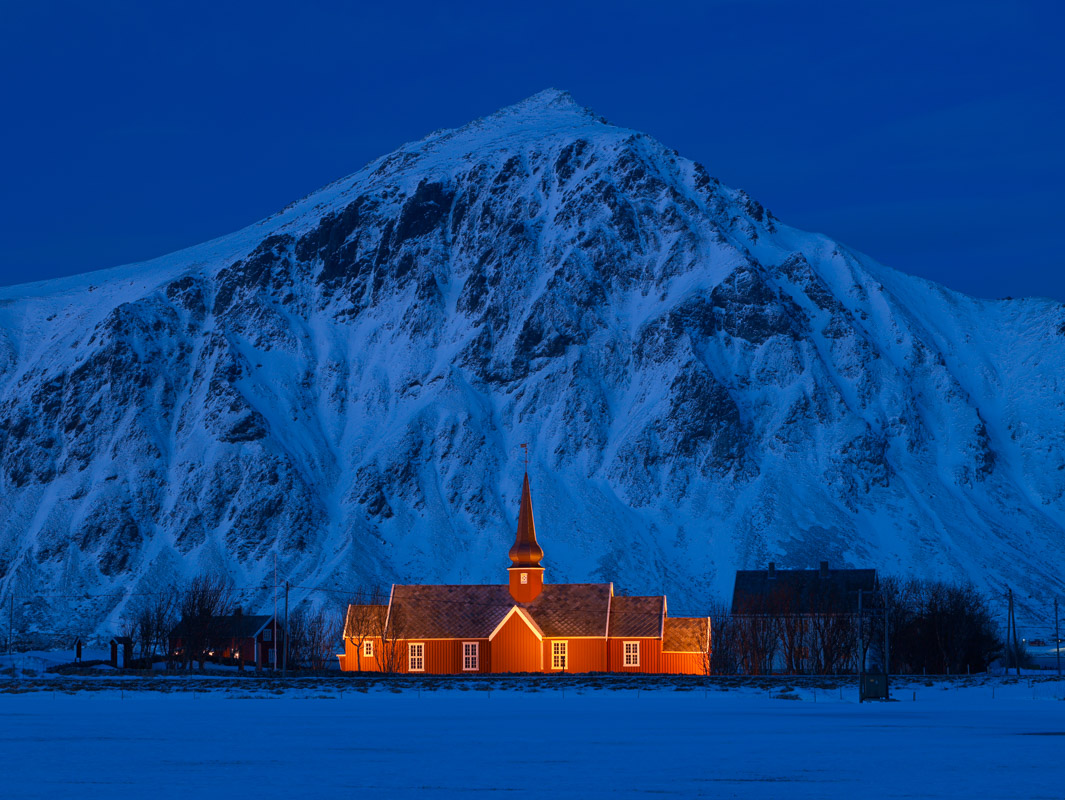
On 18 January, the eye of the sun looks over the Nissvasstinden peak on the island of Austvågøy in the far south of Vesterålen, and the solar rays shine on the churchyard beside Hadsel Church on the island of Hadseløya. Here it illuminates the top of a tall stone column that is thought to have been erected as long as 1500 years ago, while the rest of the churchyard and church are still in shadow. The remains of fires and animal bones have been found here, which indicates sacrifices were made, so the stone may have been used by a sun-worshipping cult, a local version of Stonehenge. And it’s probably no coincidence that the new religion decided to build its own church on the old sacred site.
100,000 doughnuts
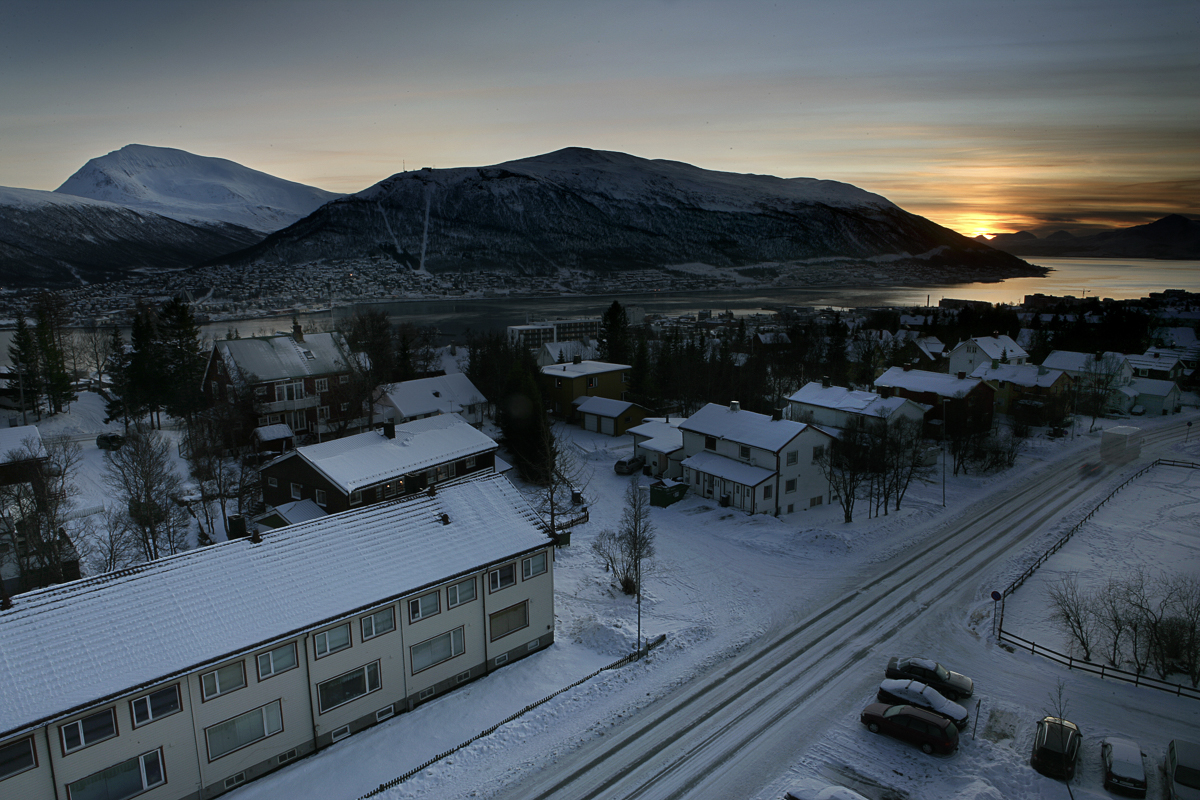
In Tromsø, it’s traditional to eat doughnuts on 21 January, although these have recently been renamed ‘solboller’, (lit. sun buns) in honour of the sun. If the doughnuts are sugared, this means that they do not have a filling. If they are iced, they are oozing with raspberries. Icing and powdered sugar denote that the doughnuts are hiding the relatively recent innovation of a vanilla filling. The town’s bakeries work all through the night, and it’s almost a military operation to ensure that all shops, offices, schools and nurseries enjoy that aroma of fresh doughnuts. Wrapped up in warm clothes, and sustained by ‘solboller’ and flasks full of hot chocolate, thousands of Tromsø locals then wait at various viewpoints on the island to get a glimpse of the first rays of sunshine in two months.
Salute to the sun
Vardøhus Fortress marks the first sight of the sun across the Varanger fjord in the south by firing a salute to the sun with its old guns. The date varies depending on the weather, but as soon as you can actually see the sun, it is welcomed in grand style. Schoolchildren get the rest of the day off. In Vardø, the sun reaches its zenith before 11 o’clock in the morning, because the town is actually east of Istanbul and Alexandria, so that means the children have almost a whole day to throw snowballs and go tobogganing.
Full-scale solar festival
Naturally, the northernmost inhabited town, which is Longyearbyen on Svalbard, is the last to celebrate. On 8 March, most of the population march along to the stairs of the old hospital, and watch the sun emerge over the Longyearbyen glacier and mountains to the south. And that’s just the starting signal for dozens of events including concerts, children’s parties, outdoor church services, art exhibitions and parties where people wearing raffia skirts drink tropical cocktails. The people of Svalbard work hard and party hard.

Who will be first to see the sun?
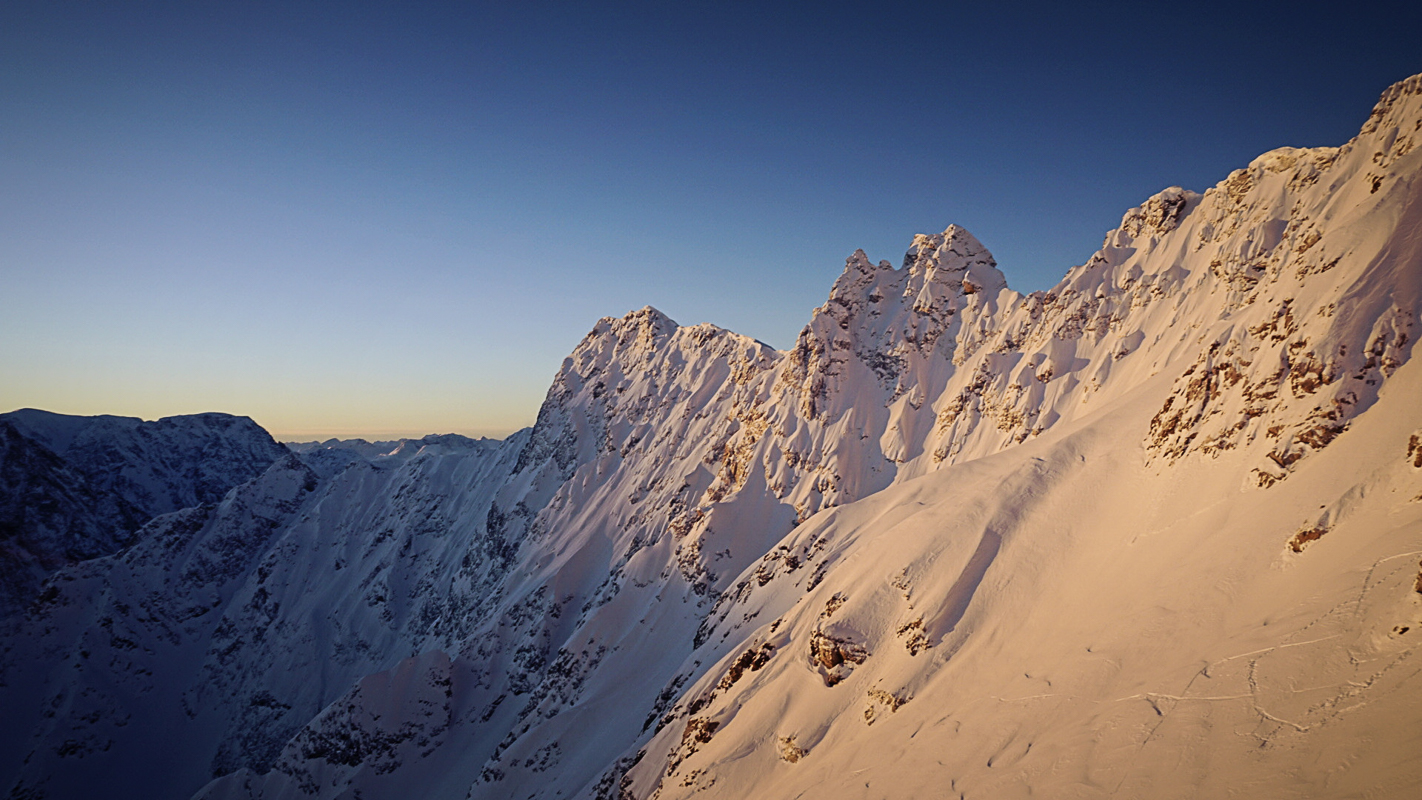
Northern Norway is mountainous, so there can be a huge difference between when the sun appears over the horizon and when it is actually visible in villages and towns. In the villages under the Lyngen Alps, being the first to see the sun is considered prestigious, so the best skiers head up to the rosy-tinted mountains to watch for the sun over the Alpine landscape. Then they head for home, sweeping down the mountainsides in the powder snow, while there’s still enough light to see where they’re going.
Celebrations all over Northern Norway
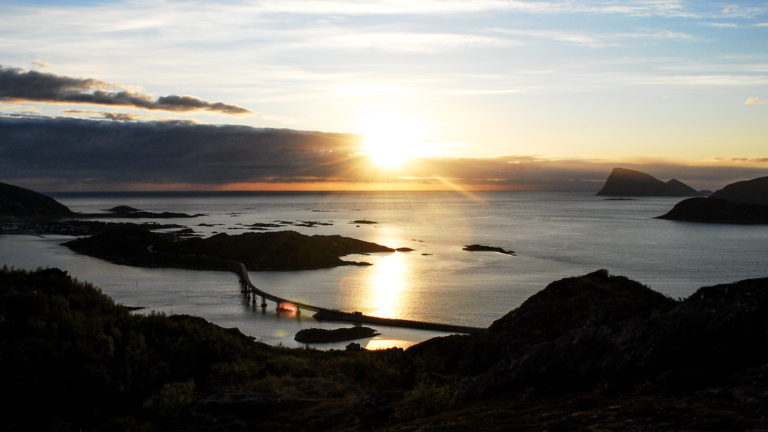
Schools, nurseries and workplaces all over the region north of the Arctic Circle celebrate the return of the sun with buns, fizzy drinks and concerts. In Svolvær, schoolchildren stand on Svinøy Bridge and watch the sun climb over the Vestfjord. At the Montessori school in Narvik, they release balloons that the children have made themselves. In Honningsvåg, they celebrate with the Sunshine cultural festival, with everything that this small but active community in the High North can throw at it.
What is the Return of the Sun
By this we mean that the sun appears over the horizon at mid day after having been below the horizon for a period of time around mid winter. Locally this is called “soldagen” – litterally “the sun day”, or better in English “the day of the sun”.
Sure. Keep in mind that we don’t see the sun at all for a while. So when we see the sun for the first time after winter solstice, it carries the promise of more daylight and, eventually, spring and summer.
This is actually more difficult. In Vardø, the celebation takes places the first day they actually see the sun itself. Then it is highly weather-dependent. In Tromsø, the day is always celebrated on the 21st of January, be it clear, a blizzard or heavy rain. In the Tromsø suburb of Kvaløysletta, the sun is visible two days earlier, and is celebrated on the 19th. Longyearbyen celebrates it on the 8th of March, an event that is well-organised and orchestrated. How do you know where to go? You simply have to ask locally.