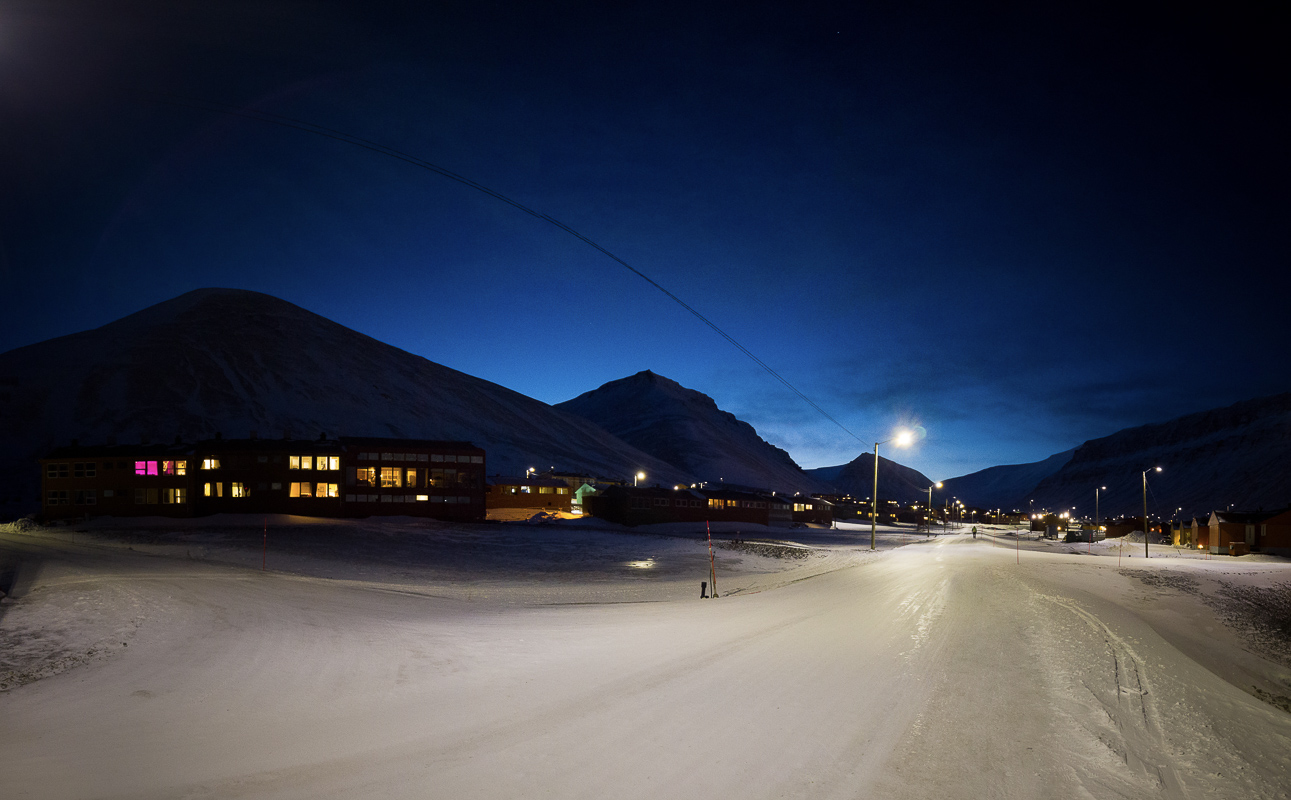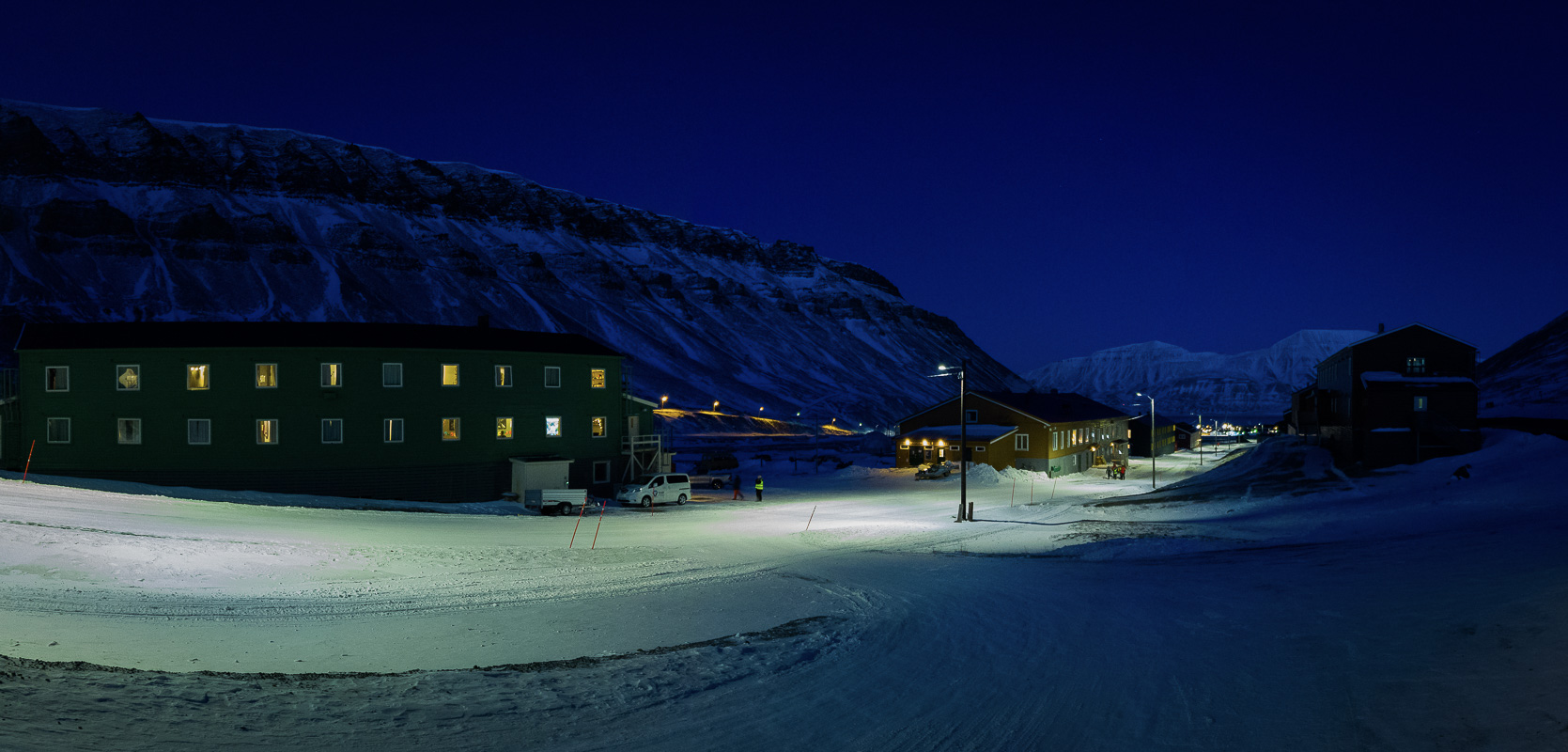
Svalbard is an archipelago midway between Norway and the North Pole. The islands are part of the Kingdom of Norway yet have a special international status. Thus, the close to 3000 inhabitants are from many nationalities, but the islands don’t have any indigenous inhabitants. One of the planet’s most remote inhabited territories is, however, easy to reach and can provide a holiday in style and comfort. You can even go there in the middle of winter, when it is at its coldest and darkest. And you’ll love it.
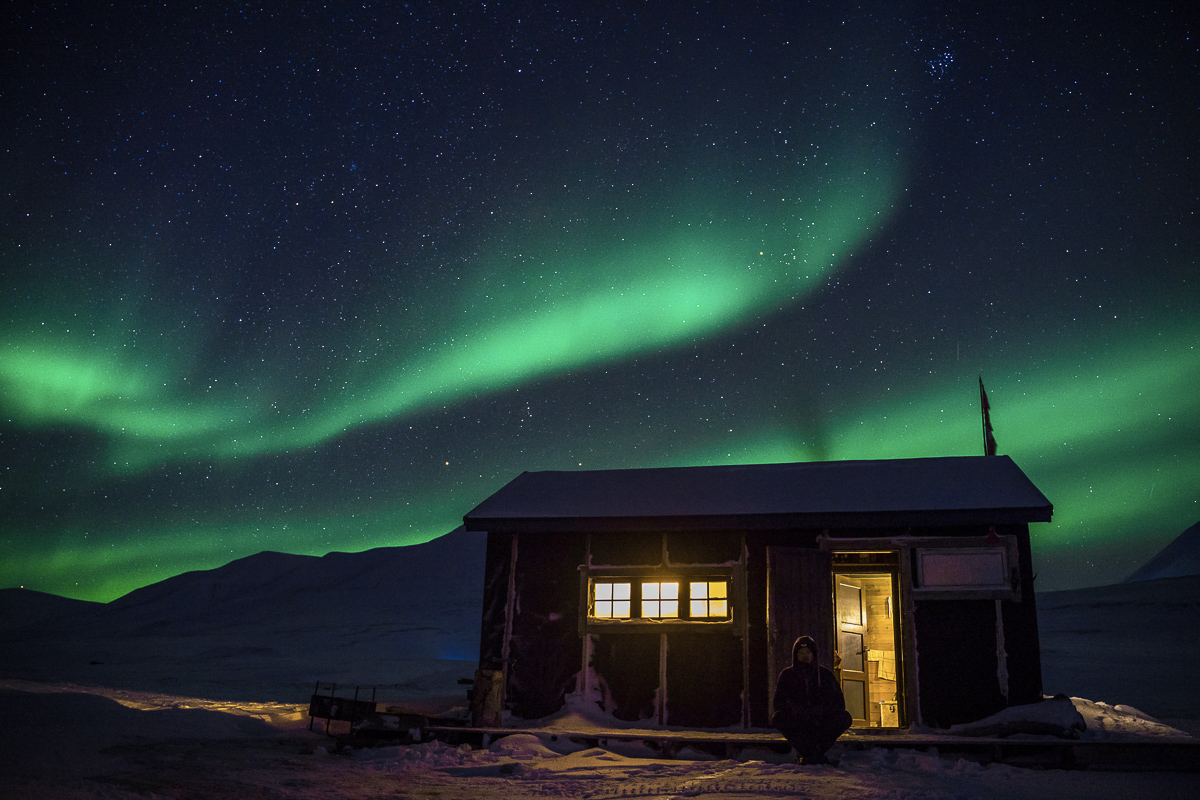
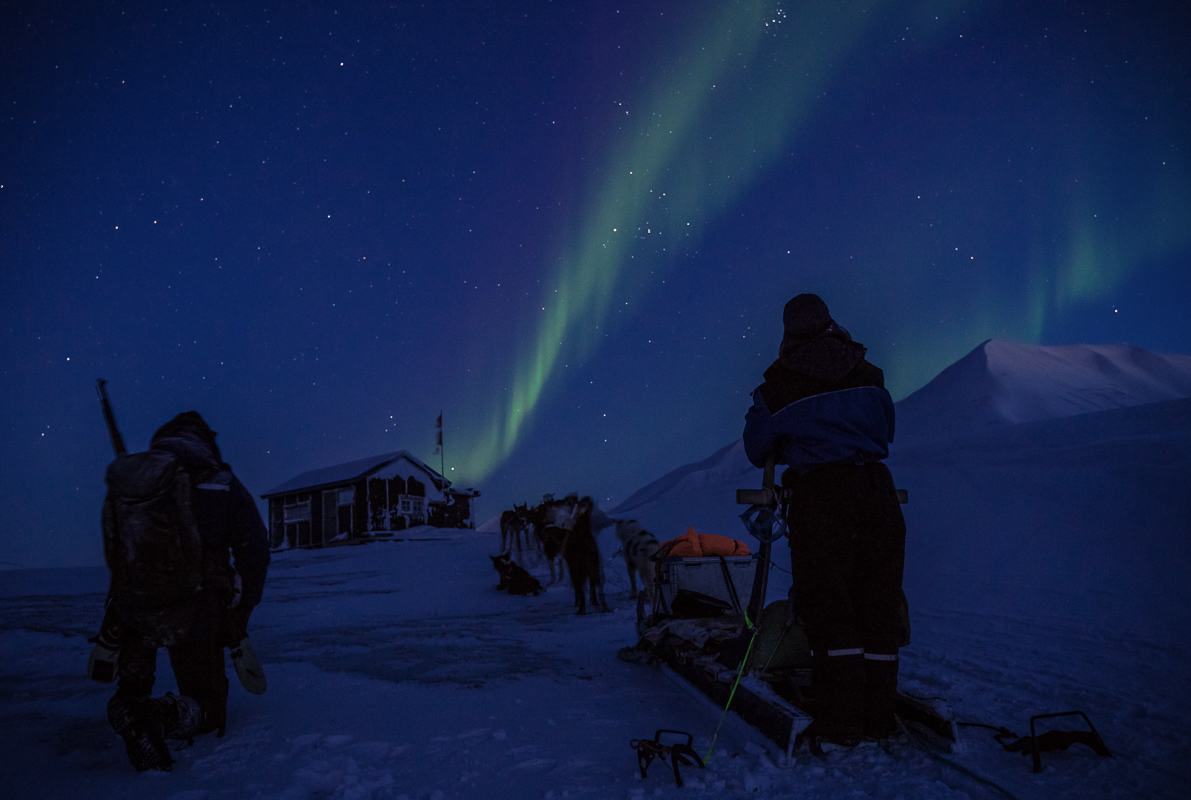
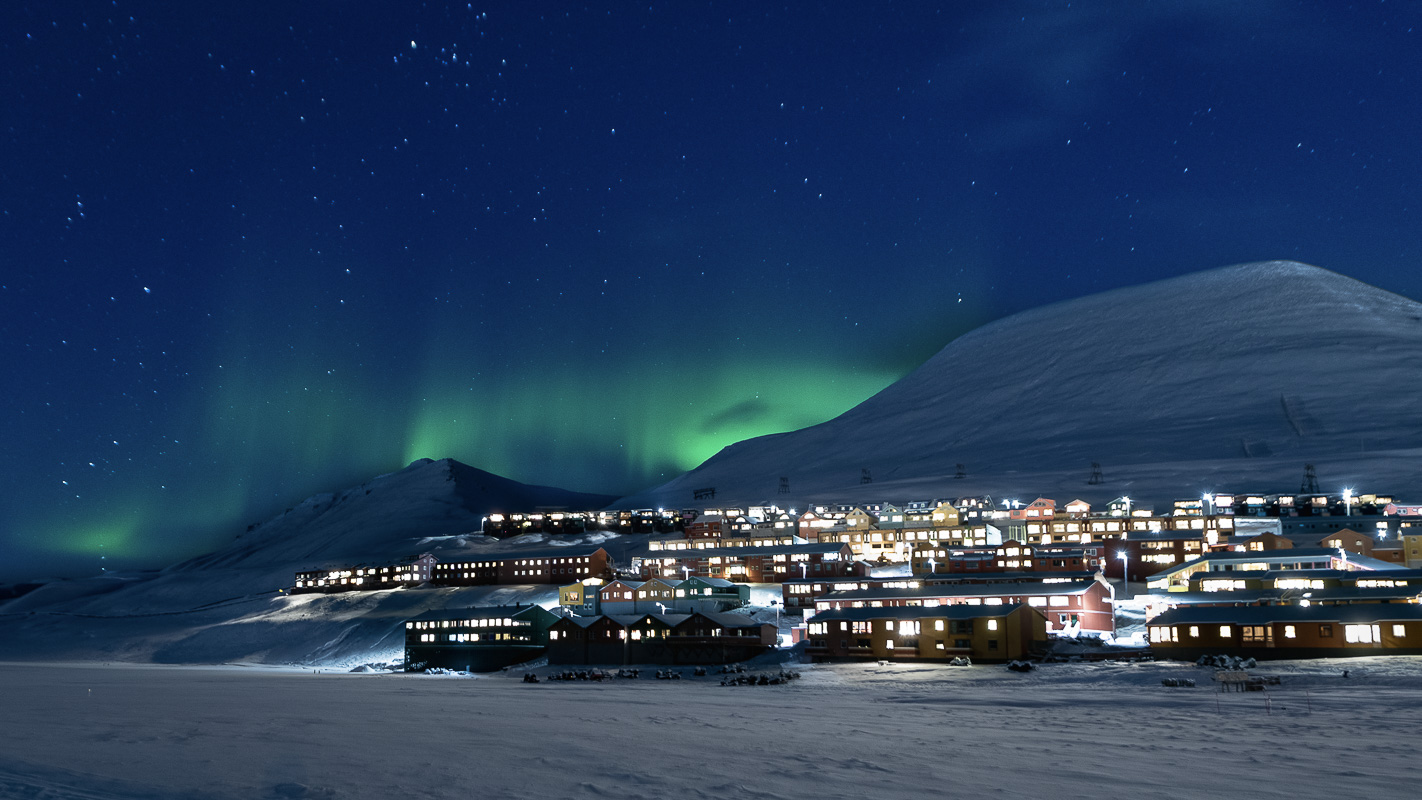
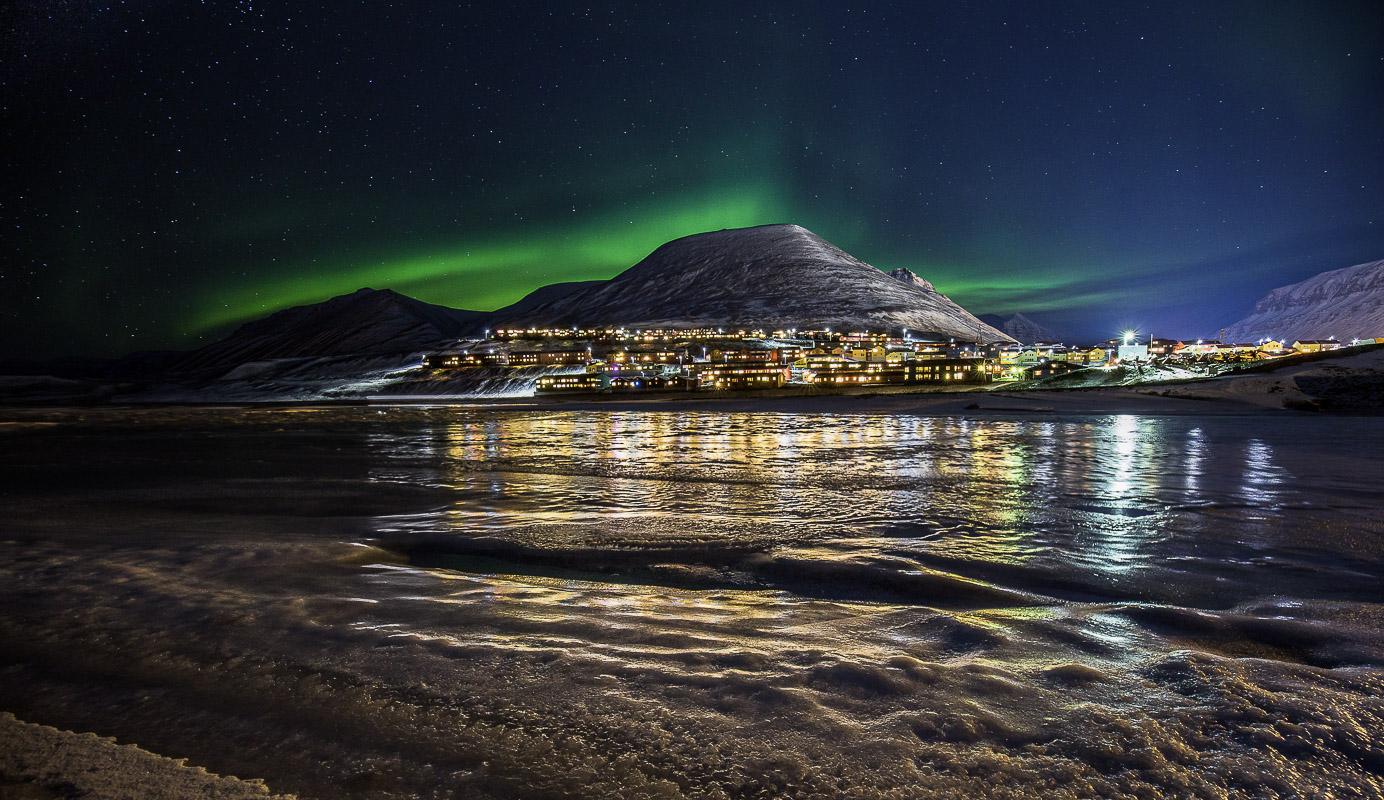
Why go to Svalbard to see the aurora – Northern Lights?
Is it so that the further north, the more aurora borealis, Northern Lights? We asked Professor Fred Sigernes at the Kjell Henriksen Observatory (KHO) in Svalbard. “No, it’s not quite like that. In fact, it all depends on where the solar wind particles ignite our upper atmospheric atoms and molecules. The impact zones are belts centred around the magnetic poles. They are known as the aurora ovals. At night with normal solar wind conditions, the oval is located over northern Scandinavia. But here in Svalbard, we observe a bit of a goodie, the dayside aurora.”
In Svalbard you can see the Northern Lights in the middle of the day
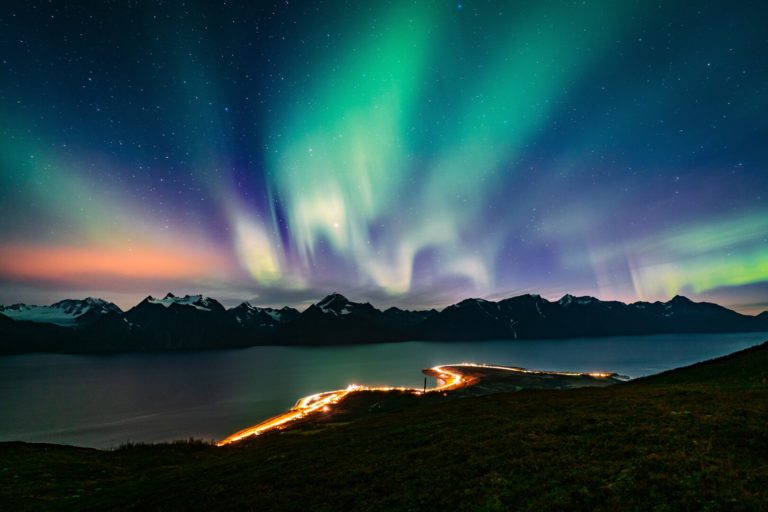
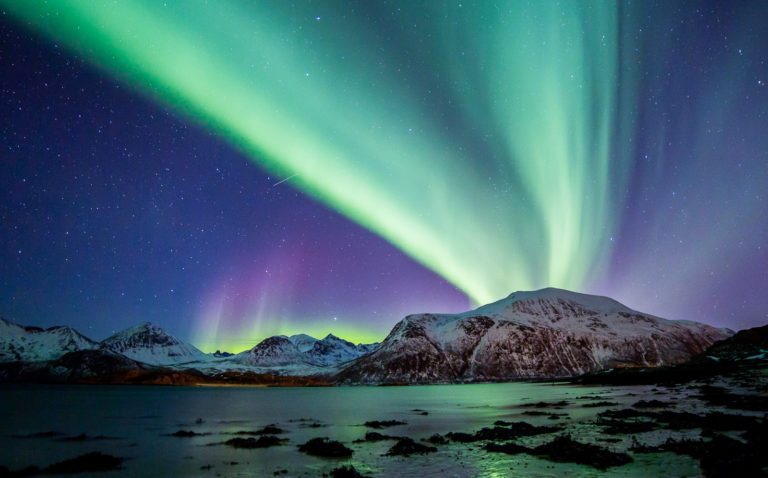
From November to the end of February, it is dark the whole day or most of the day in Svalbard. This means you can see the aurora even in the middle of the day. This is, however, a slightly different phenomenon. The aurora observed on the Scandinavian mainland consists of particles that have made the detour to the nightside of our planet – the nightside aurora. In Svalbard, you can also see aurora where the solar wind particles come directly in from the Sun – dayside aurora.
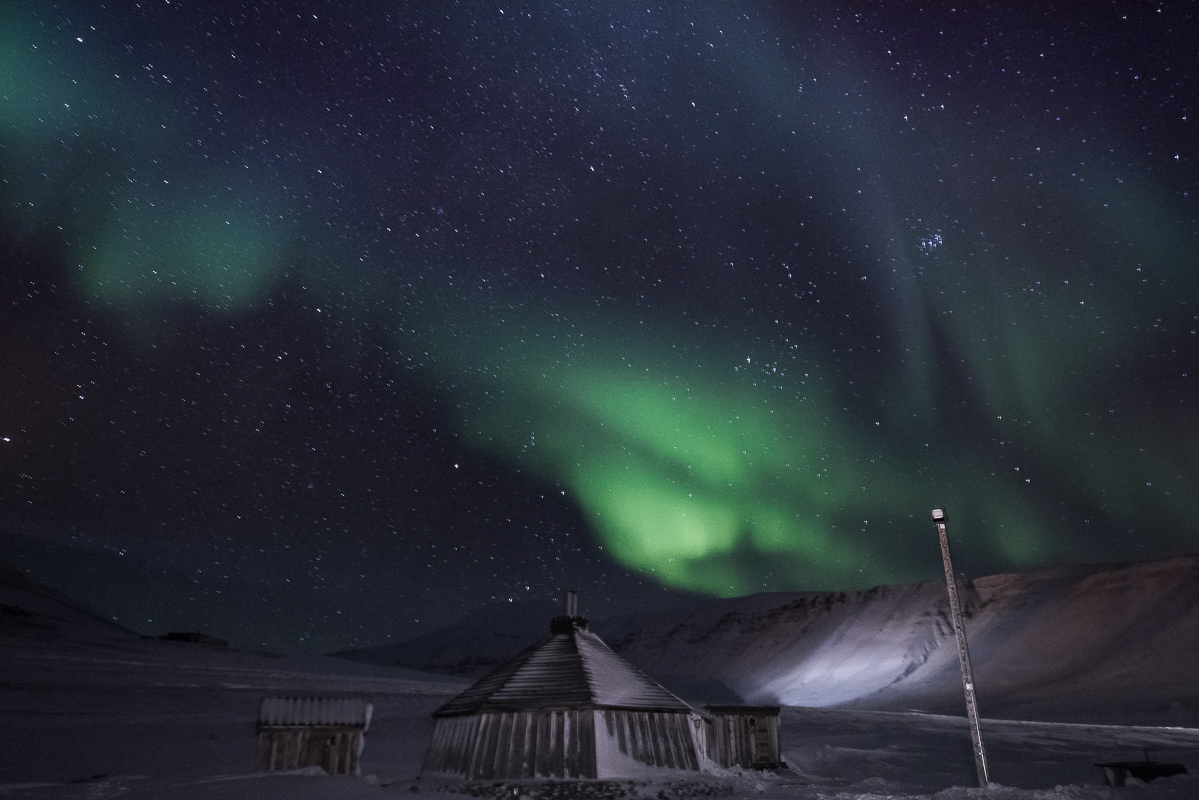
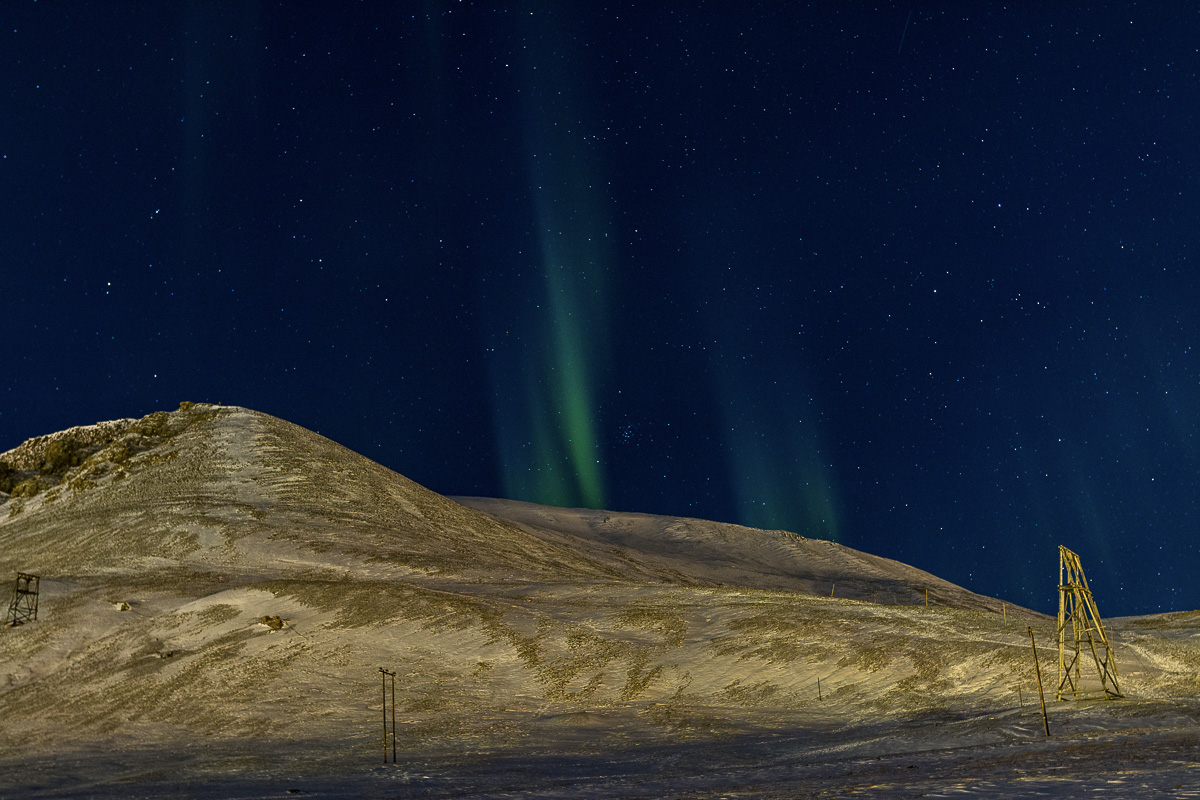
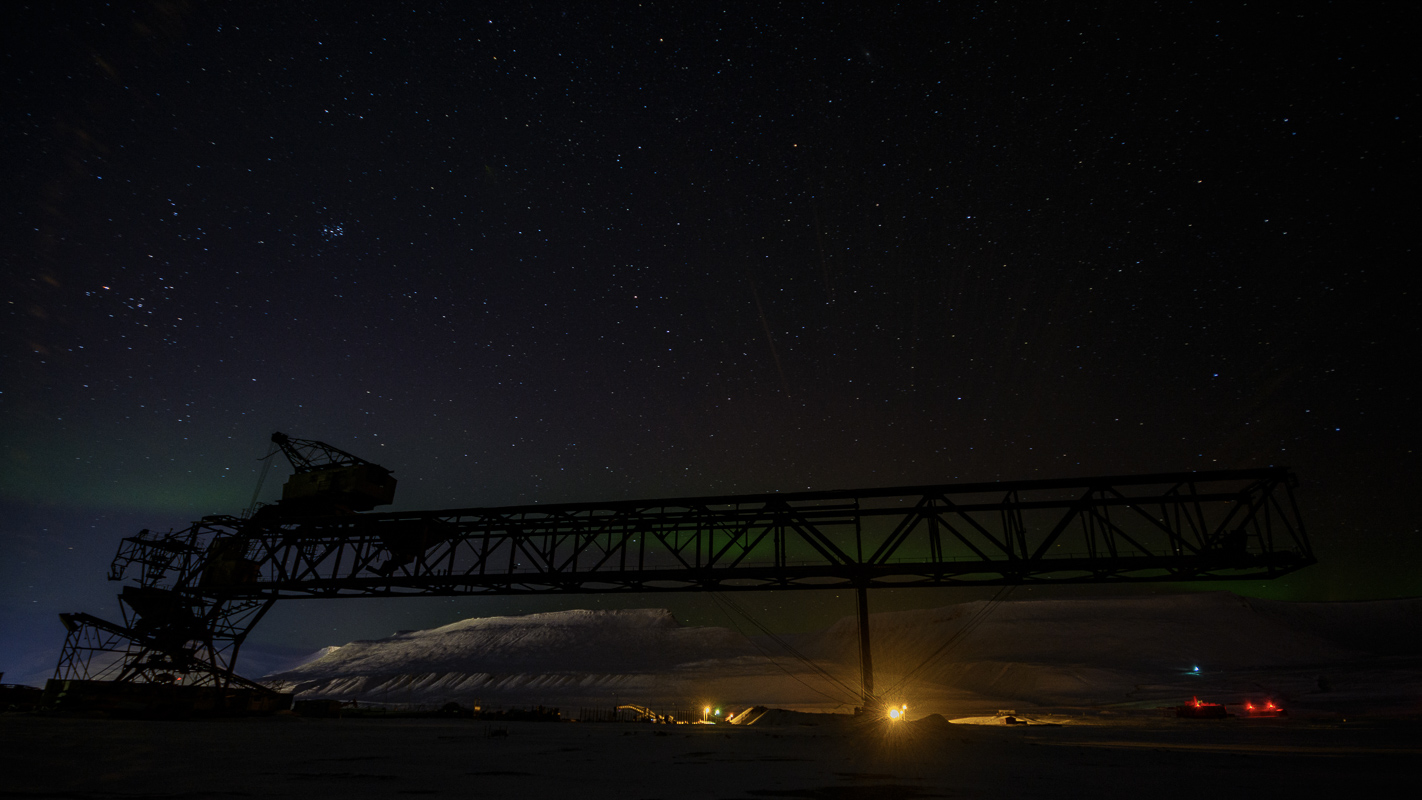
The Earth versus the aurora oval
The aurora oval goes around the magnetic pole at 2500 km from the Magnetic Pole. However, the globe spins around, meaning that at different times of the day, different areas find themselves directly under the oval. Imagine the aurora oval as stable, and the solid ground under us as the moving unit. At midday, Northern Norway is quite a bit off the oval, whereas Svalbard is right under it.
Download the Aurora Forecast 3D app for observations
Fred Sigernes suggests downloading the Aurora Forecast 3D app. Here you can clearly see the position of Svalbard and every other part of the Arctic world and follow the rotation of Earth and the aurora oval, and which parts of the globe that are currently under the oval. “It’s midday right now” he says, “do you see that we’re straight under up here, and down on the mainland they’re a fair bit off”. We checked; the app shows clearly where we are related to the aurora, and there are plenty of facts and explanations. Recommended, also for absolute beginners.
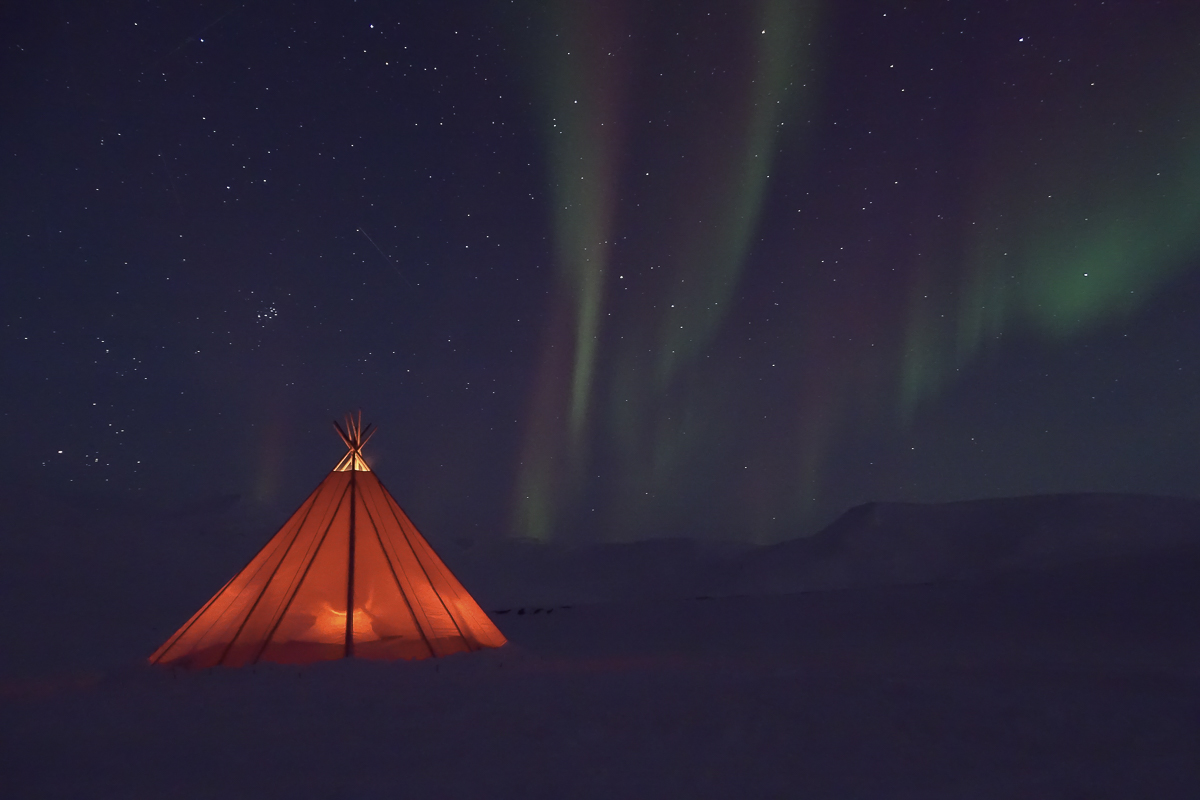
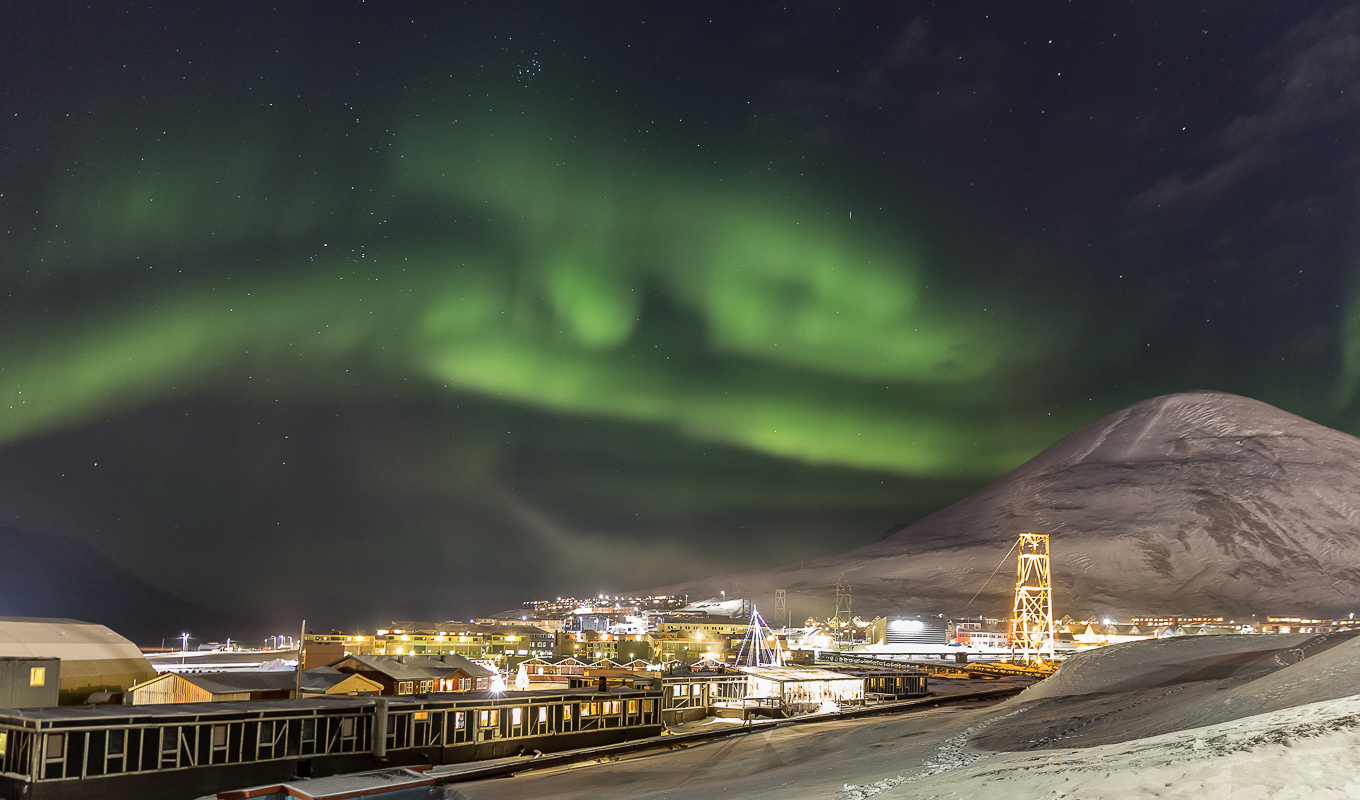
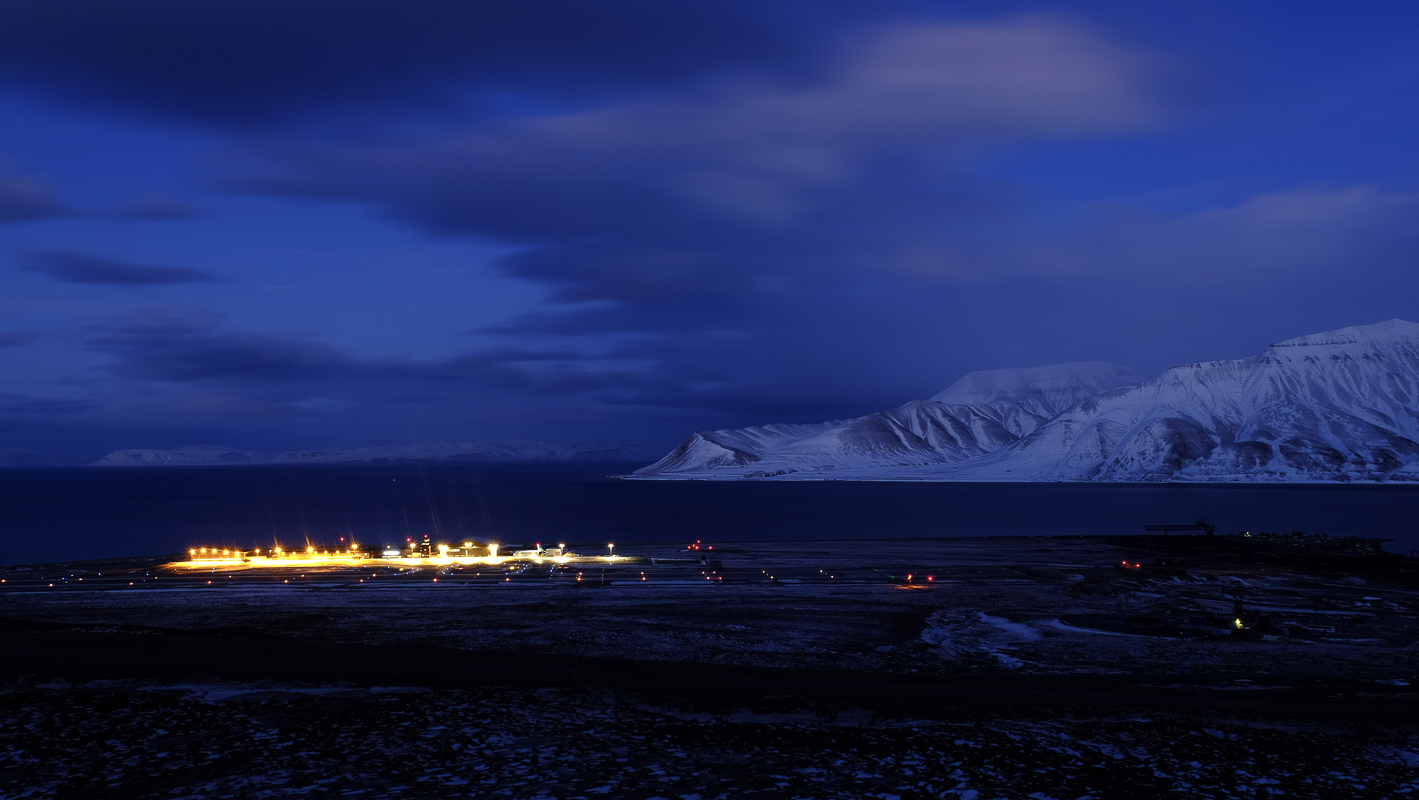
Dayside aurora looks different
The dayside aurora solar wind comes in at a slower speed than the regular nightside aurora. This means it is a bit less explosive and intense. The speed and different density give it a redder hue than the greener aurora observed in the evening or night. For a Northern Lights connoisseur, it is a bit of a sensation, attracting scientists and Northern Lights aficionados alike.
You can also see the night-side Northern Lights in Svalbard
In the evening, from around 4pm, when Northern Scandinavia is found under the aurora oval, Svalbard is slightly more distant from the action. However, the oval usually expands to at least Bjørnøya (The Bear Island, midway between the North Cape and Svalbard). The lights have an altitude of around 100-600 kilometres, meaning they are visible all over the southern sky in Svalbard. A solar storm that is visible on the northern sky in Southern Scandinavia will be visible all over the sky in Longyearbyen. Add the usually dry, desert like weather conditions that are not always prevalent on the Northern Scandinavian mainland, and you have yourself some good observation conditions.
Why do they do Northern Lights research in Svalbard?
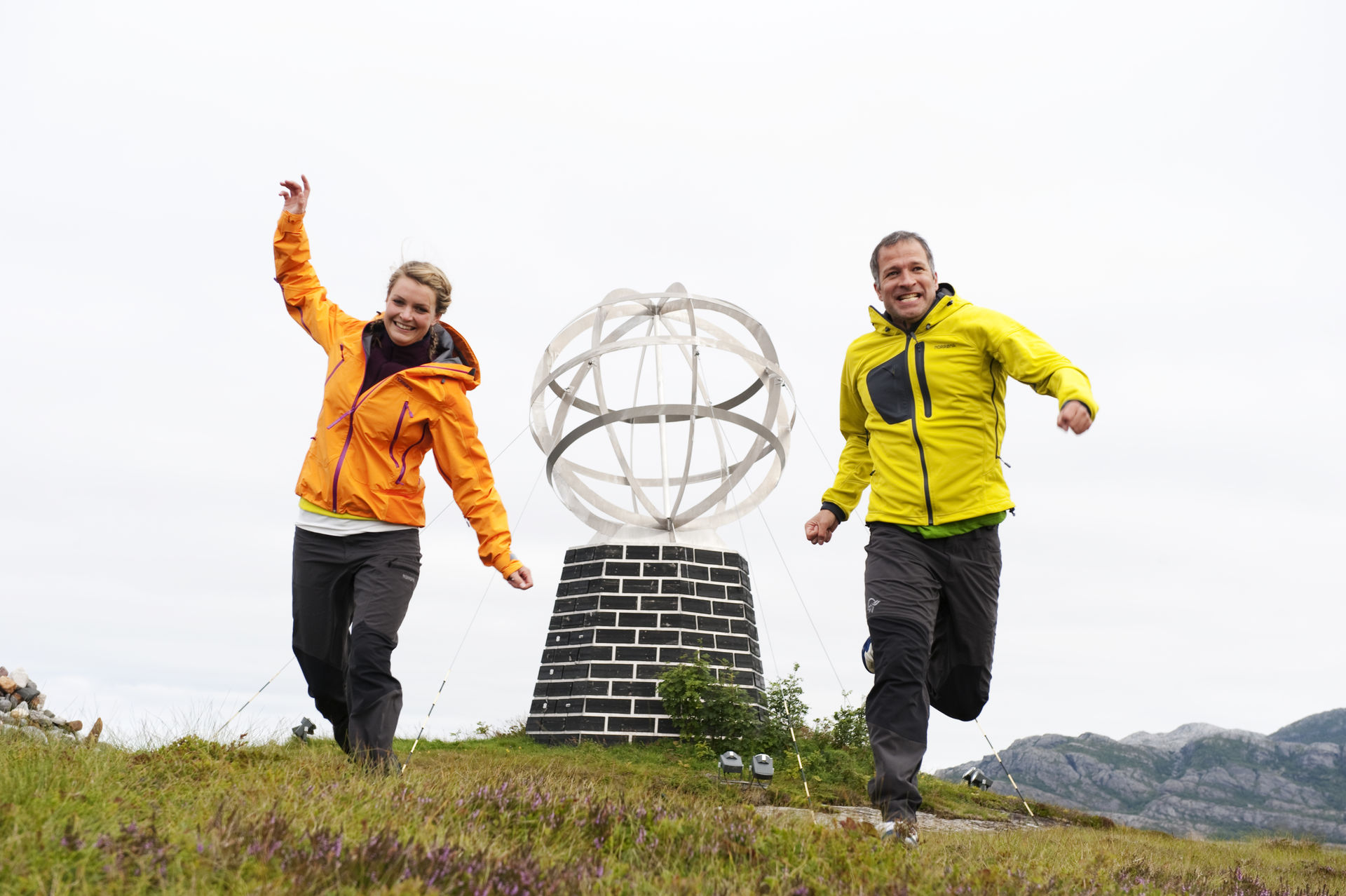
If you shoot out a satellite, winds caused by the daytime Northern Lights may affect its course. It is therefore of importance to be present in that area where the solar winds come directly onto the globe. Svalbard is the only place in this zone that can be reached trouble-free for scientists. The Kjell Henriksen Observatory employs 10 scientists, co-operating closely with Northern Lights researchers around the Northern Lights oval.
The real polar night is in Svalbard
The Arctic circle marks the extent of Midnight Sun and Polar Night on the globe. Roughly… read our article on the Arctic circle for the details. On the Norwegian mainland, from the southern tip of Lofoten and northwards, the sun is below the horizon at mid-day from a few days up to around 2 months at the North Cape. It is, however, not completely dark. Due to the high latitude, dawn, and dusk meet at mid-day to create a period of daylight to semi-daylight. Svalbard is much higher up on the planet, though, and from the 12th of November to the 30th of January, the sun is constantly at least 6 degrees below the horizon at midday. This means it is pitch dark even at mid-day. There is not even a hint of daylight, and you’ll have no idea whether it’s noon or midnight. The scientific term for this phenomenon is Civil Polar Night, and Svalbard is among the very few inhabited places to live through it.
The Polar twilight time is full of colours
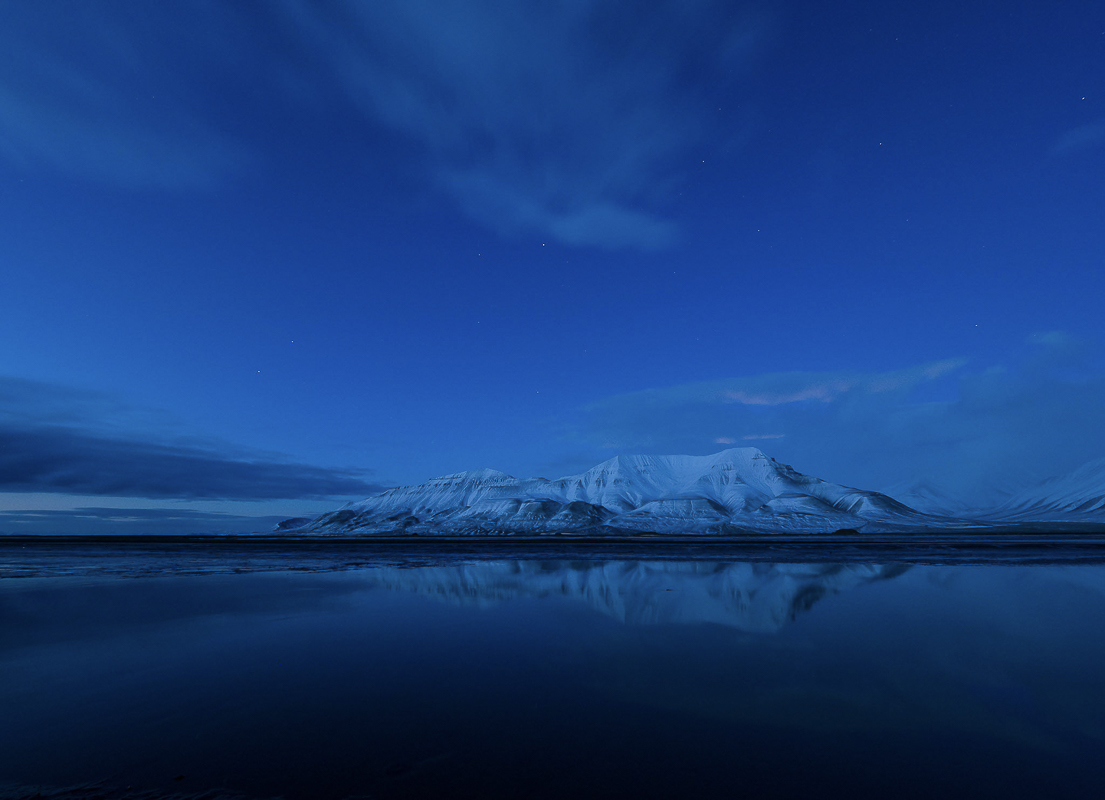
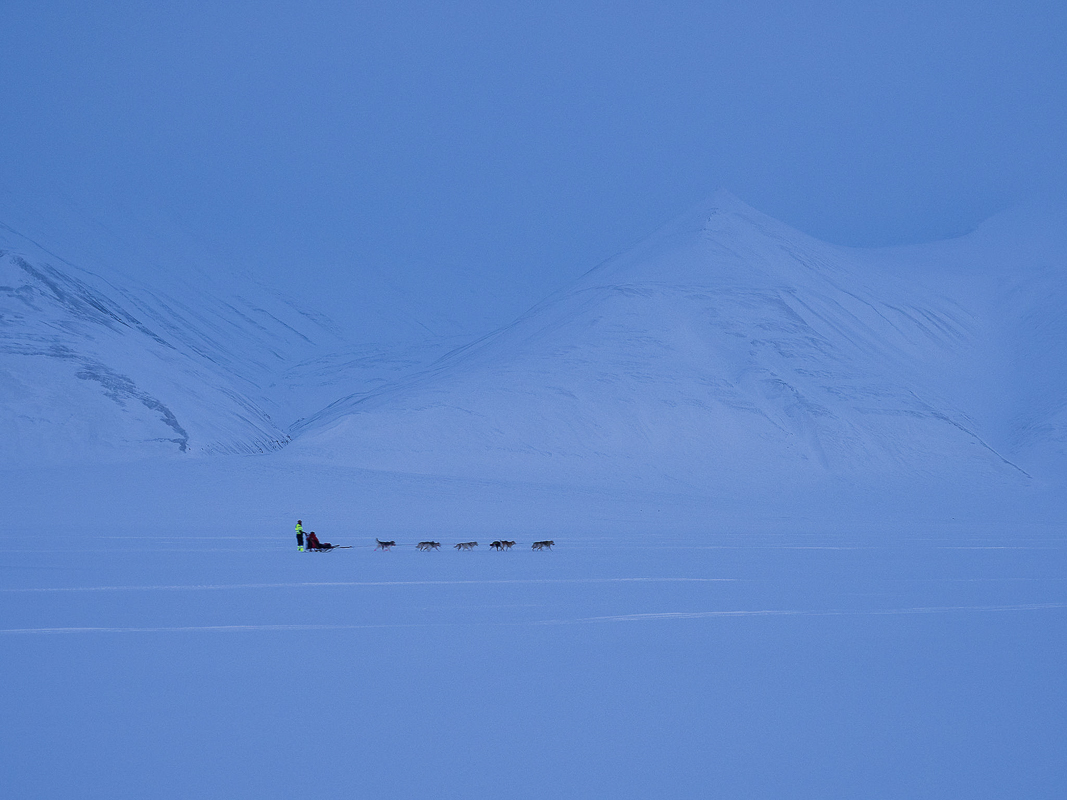
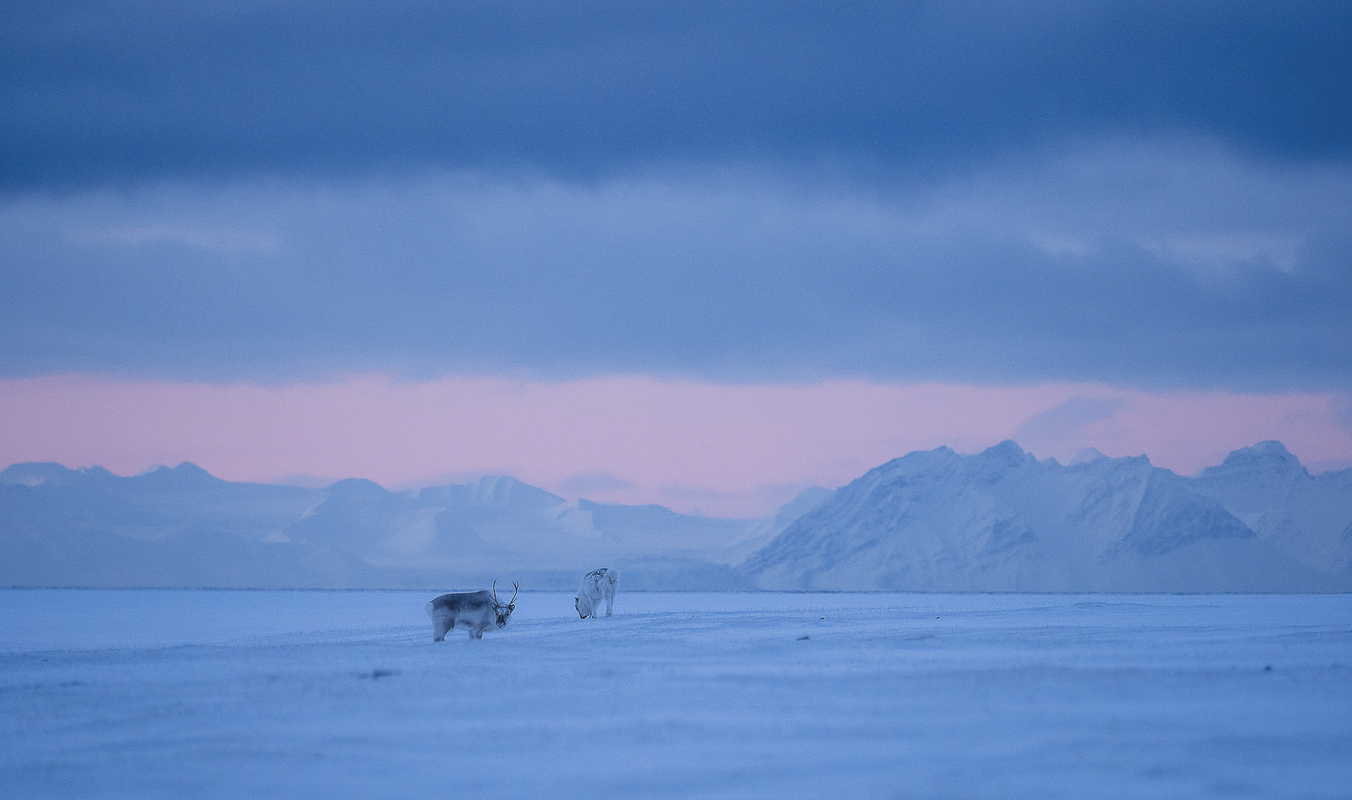
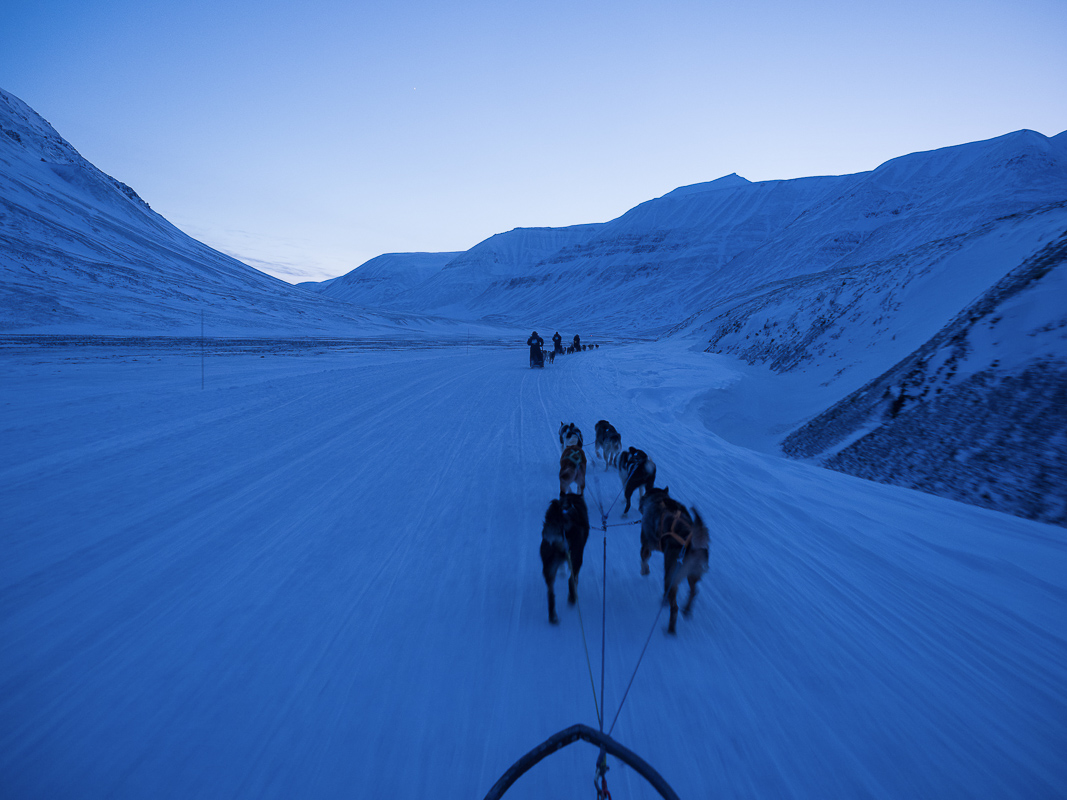
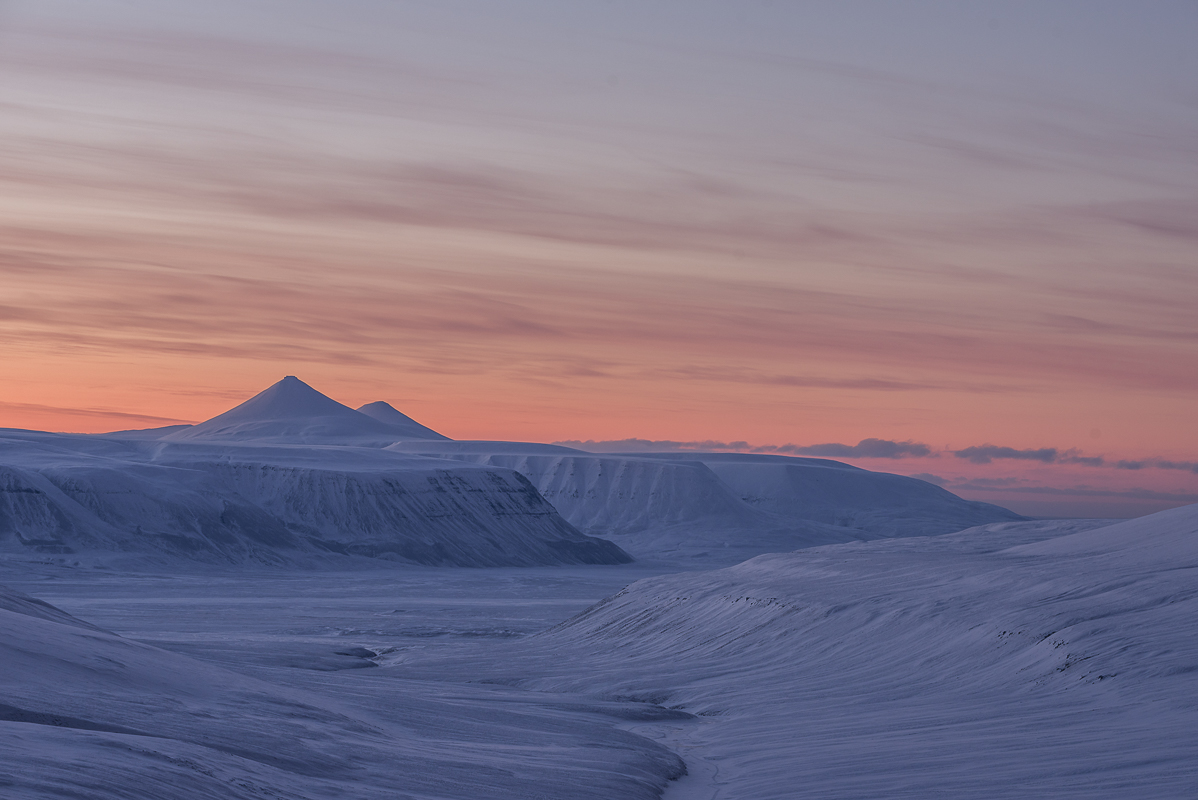
The Polar twilight time is the transition time. Then there is some daylight or twilight, at mid day, but no sunshine. On the 26th of October, the sun sets for the last time beyond the horizon in Longyearbyen. But in the first weeks, there is still a lovely blue, transparent light in the middle of the day. The same happens the first two weeks of February, before the sun rises above the horizon on the 15th. The twilight time in Svalbard has a lot of lovely skies that are a photographer’s delight.
Longyearbyen celebrates the return of the sun on the 8th of March
Strangely, the celebration of the sun is celebrated 23 days after the first sunrise above the horizon. This is because Longyearbyen is surrounded by mountains that the sun must surpass. But on the 8th of March, less than two weeks before spring equinox, the sun manages to climb above the mountain tops in the south. And when it does, almost the entire population of Longyearbyen is gathered at the staircase of the old hospital. The return of the sun is celebrated a whole week on end, with parties, concerts, and an outdoor church service.
How do you hunt the Northern Lights in Svalbard?
The key to seeing the Northern Lights in Svalbard is to go on an organised tour. You of course often see the lights in Longyearbyen itself, but if you go on tour, you’re under the open sky at all times, and usually a bit distant from the town lights. The array of tours in Longyearbyen is enormous, and should provide something for anyone, from the untrained urban coach potato to the fit wilderness survivor.
Snowmobiling is a fun way of exploring Arctic landscapes
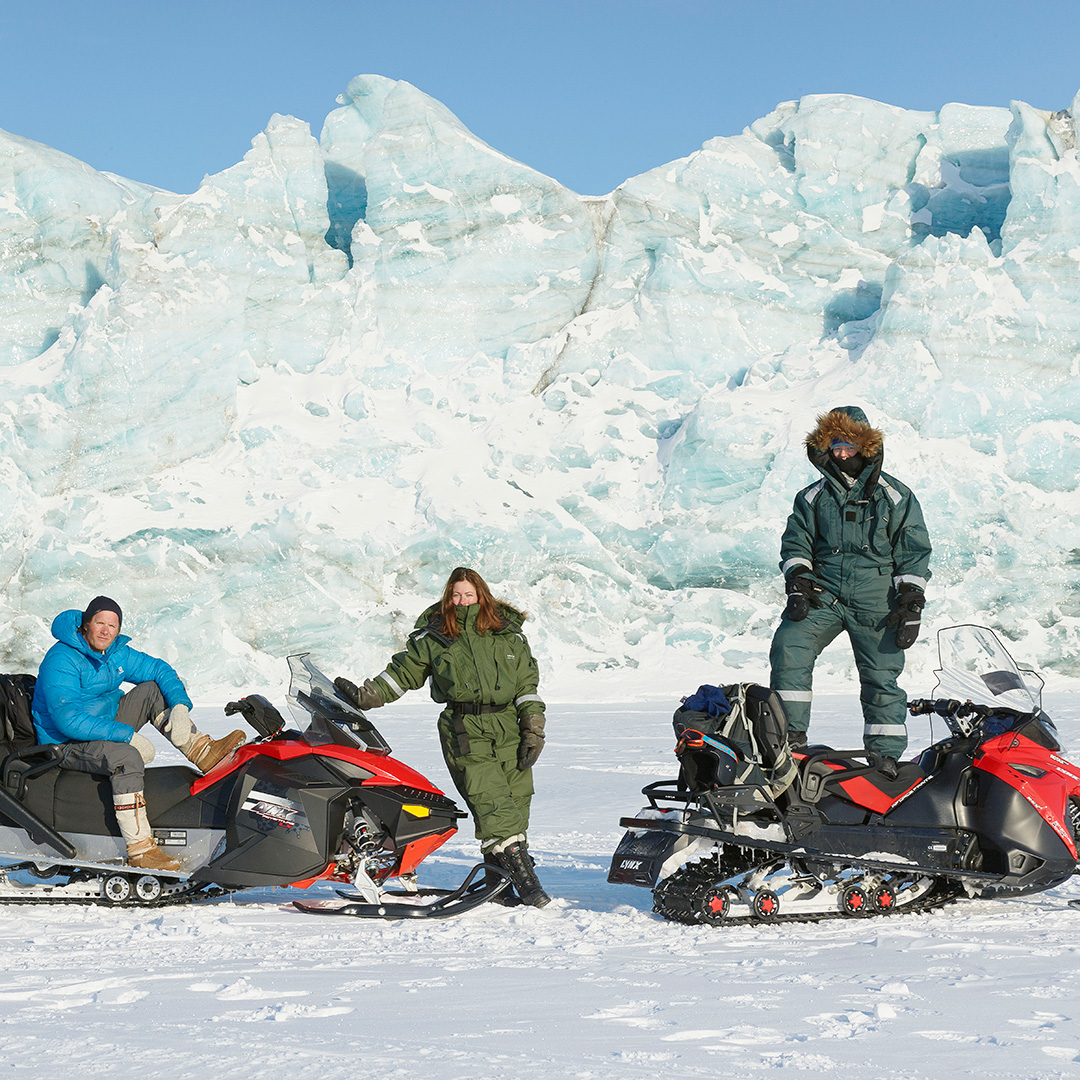
Snowmobiling can be anything from a brief tour to an expedition in Svalbard. If you have no experience with snowmobiling from before, we recommend a short tour in the immediate surroundings of Longyearbyen the first time. Experienced drivers, motorcyclist and urban vespa drivers often get the hang of it sooner than others. But after a good instruction and a safety brief, you should be able to handle it. If you have no drivers’ licence for a car, motorcycle or snowmobile, you can sit on the back seat of a friend’s snowmobile.
The nearby tours are available for most
If snowmobiling is new to you, go on a tour that doesn’t last that long. Some of the tours are specifically geared at seeing the lights, for instance by going to basecamps where you can wait for the lights to emerge in total darkness.
Go further on a snowmobile expedition
The further you go, the more you see. Drive to Isfjord Radio at the mouth of the fjord and stay the night in their boutique hotel. The east coast is even wilder than the west coast areas, with icier and colder conditions. We thoroughly recommend long expeditions for anyone in reasonably good shape that are used to being outdoors.
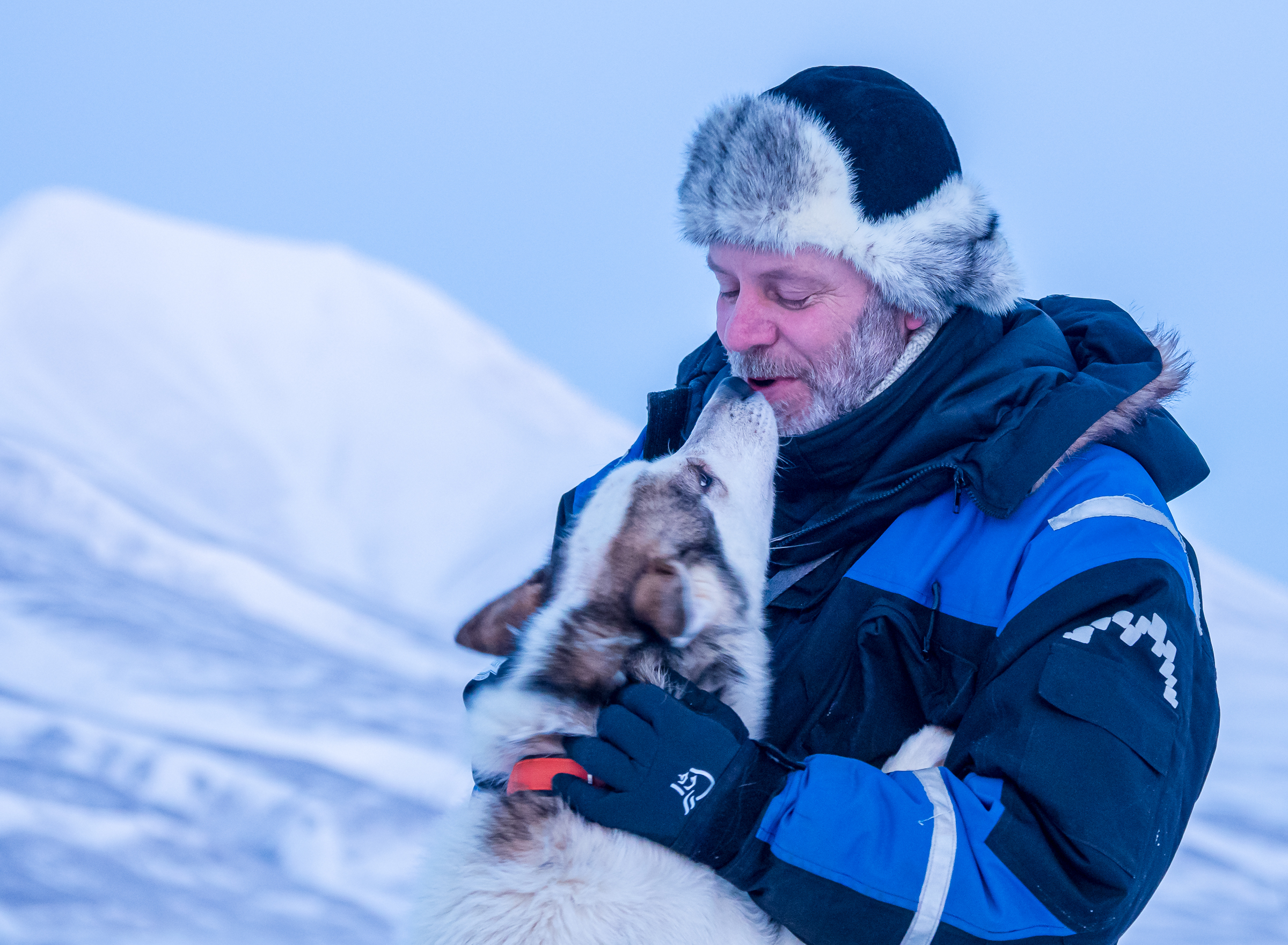
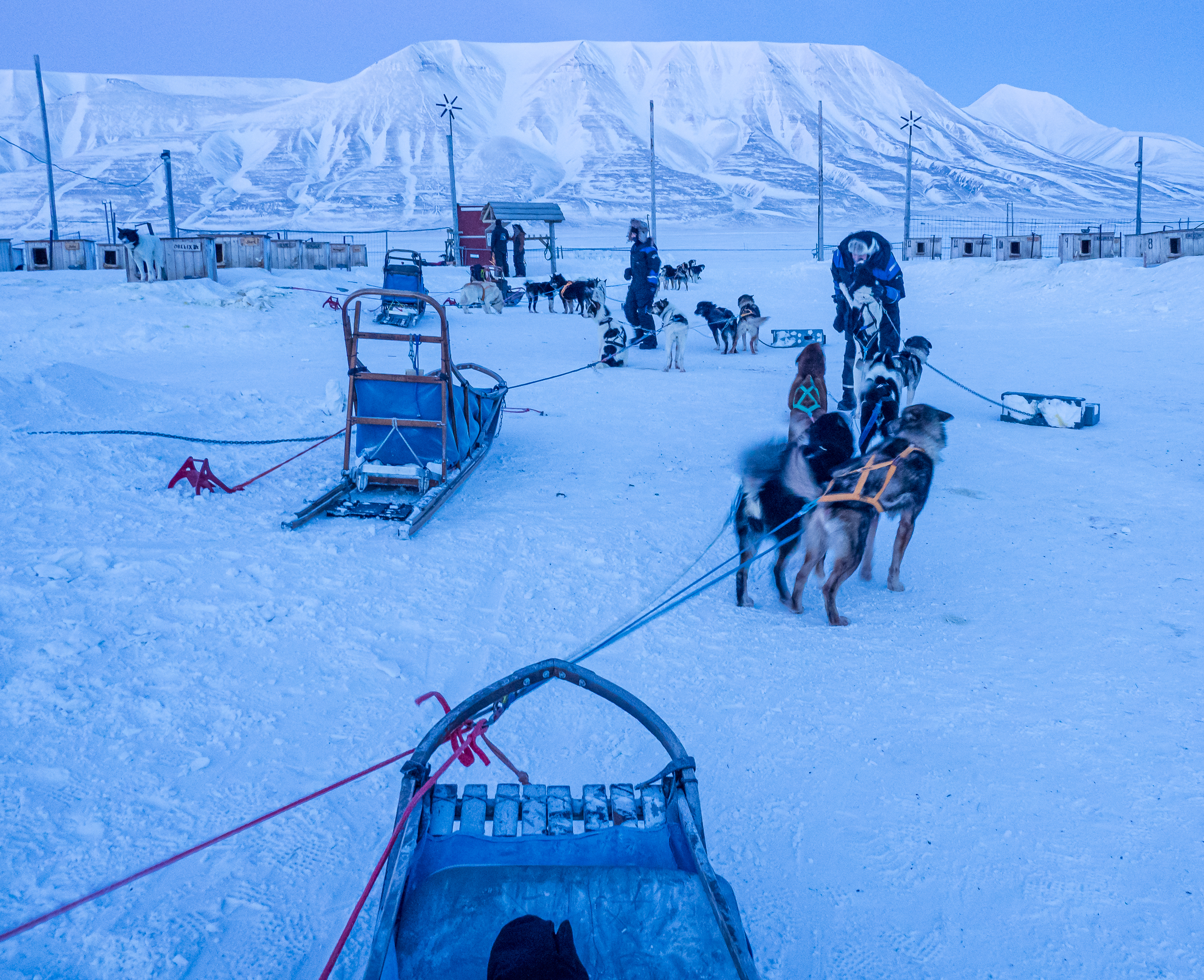
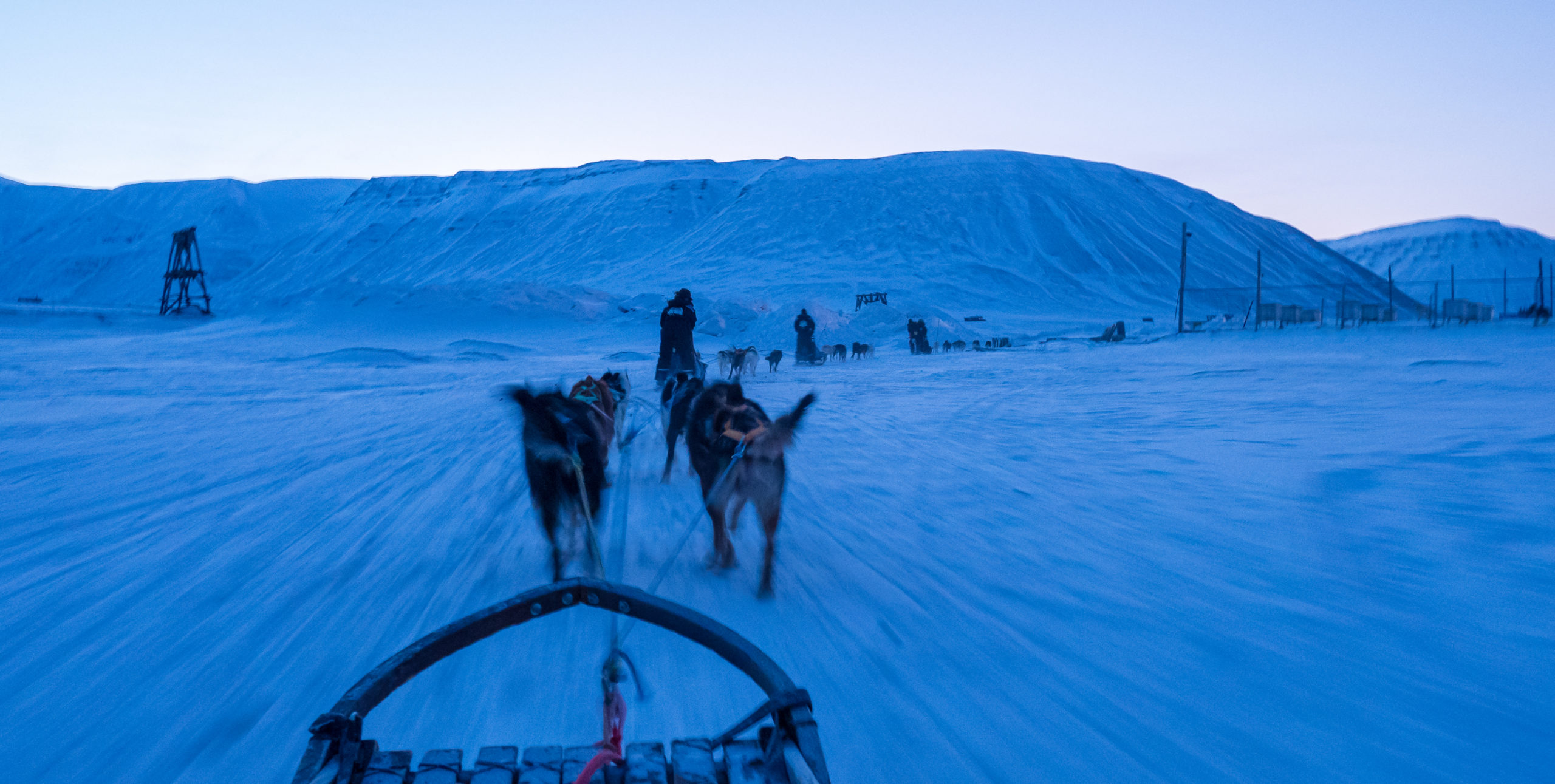
Dogsledding is the animal lovers’ alternative
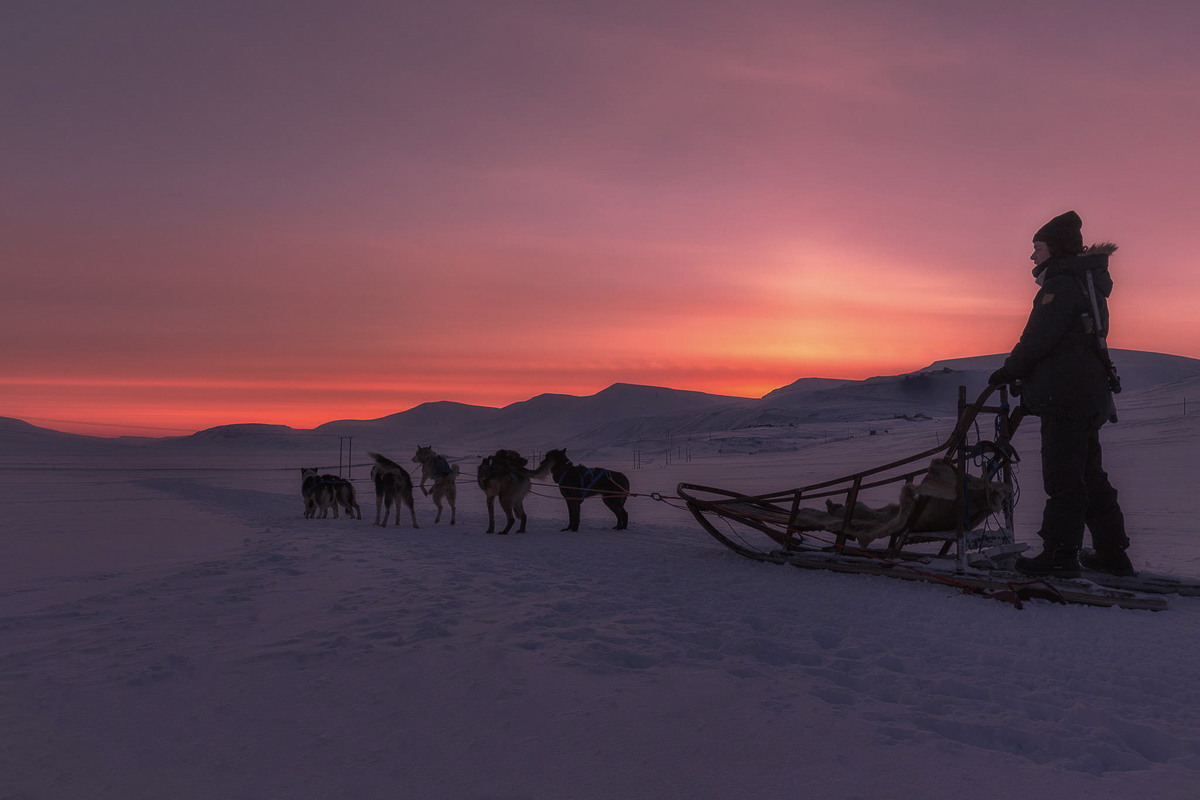
Dogsledding is formula one for animal lovers. You typically start the tour by harnessing the dogs and preparing the sled, before you head out into the wilderness. Usually two people share a sled, taking turns at driving. Driving is easy to master for anyone with normal walking skills and balance and is learned in a minute or two. Pick a short tour if you’re not that used to being outdoors. If you’re of the outdoorsy, fit kind, you can safely go on a full day tour without having tried it before.
A long expedition means making friends with the dogs
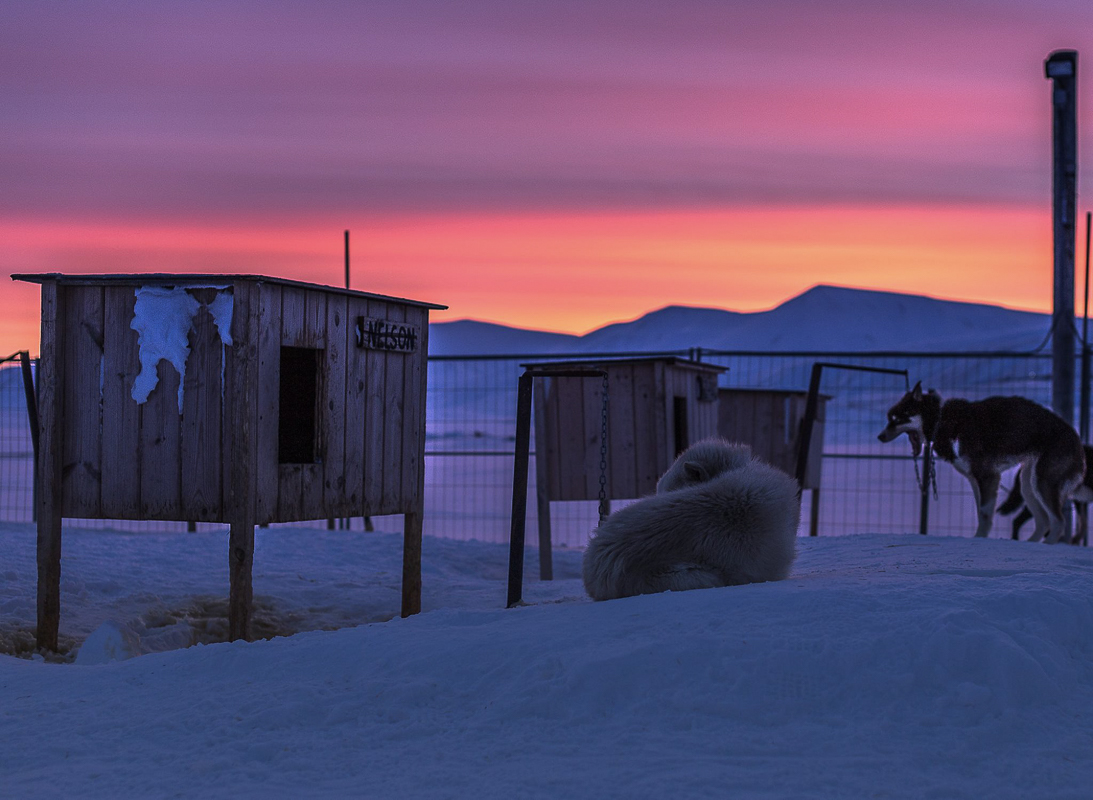
If you have a bit of stamina you can try a dog sledding expedition over several days. Then you explore the landscapes of Svalbard in a slow speed while covering large distances. The contact with the sled dogs, anything from sorting out entanglements to distributing lots of love for jobs well done, is in the centre of the experience. Of course, 24 hours under the open sky increases your chances to spot the Northern Lights greatly. Some dog sledding expeditions are for the toughest, others are actually suited for families.
Good to know about Svalbard
If you fly up to Svalbard, stay in a hotel or a guest house, move about in Longyearbyen and participate in guided tours, you are facing no particular dangers. However, do not leave Longyearbyen on your own, unless you’re well prepared and experienced. Read more about it on the Governor of Svalbard’s homepage
For a visit, you should definitely have good winter shoes, woollen underwear, a good winter jacket, a scarf, solid mittens and a hat. For excursions like dogsledding and snowmobiling, survival suits are usually included.
We are unable to find a favourite time of year, since each season is distinct. The Northern Lights winter, which this article is about, has Northern Lights, darkness and less tourists. More people come for the bright winter from March to May. Then the days are sunny and long, and you can do a lot of outdoor activities. The midnight sun shines already from late April. The summer is short, and has daylight 24/7. Then you can go hiking, kayaking and do boat trips around the archipelago. The autumn sees very few tourists, but the light is lovely, and it’s really atmospheric to be indoors and participate in local life.
Svalbard has no VAT on goods. That means you can buy things cheaper. However, the regular customs rules apply when you go to your home country. This is also the case when you continue to Norway proper.
The sun is below the horizon at mid day in Longyearbyen between the 26th of October and the 15th of February. The polar night comes in two periods; the Polar twilight and the Civil Polar Night. During the Polar twilight, there is some twilight, sometimes daylight at mid day, even if you don’t see the sun. During the Civil Polar Night, the sun is more than 6 degrees below the horizon, and it is more or less dark the whole day. The Civil Polar Night lasts from the 13th of November and the 29th of January. The Polar Twilight lasts from the 26th of October to the 13th of November, and again from the 30th of January to the 15th of February.
Svalbard has both comfortable hotels and budget friendly guest houses. There are also flats for rent. Consult Visit Svalbards website for the full overview.
The main season in winter is the sunny winter from March to May. Then accommodation and flights tend to fill up. The Northern Lights winter is considerably quieter.
Be imaginative when looking for the lights
Snowmobiling and dogsledding are not the only ways to see the lights. The array of tours that give you a chance to see the Northern Lights is indeed a fun read. You can go on a boat ride to the mining town of Barentsburg. A photographer can take you Northern Lights hunting, or you can explore the town with a camera aided by a guide. A snowcat through the snow is a fun and easy way of getting around. A fat bike, a bike with balloon tyres, is more suited for the medium fit people. You can hike to see the remnants of the mining settlement of Hiorthamn. Wellbeing and Northern Lights are combined in the sauna found in the port area of Longyearbyen.
Can I see the Northern Lights on my own?
In Svalbard, you should never leave the settlement of Longyearbyen on your own, because of polar bears and extreme weather. It is safe, though, to walk around the built-up areas in Longyearbyen. However, it can be very cold and quite tedious. More than anywhere else under the aurora oval, one should thus be ready to participate on a guided tour as opposed to looking around on your own.
An ice cave is the most certain way NOT to see the Northern Lights
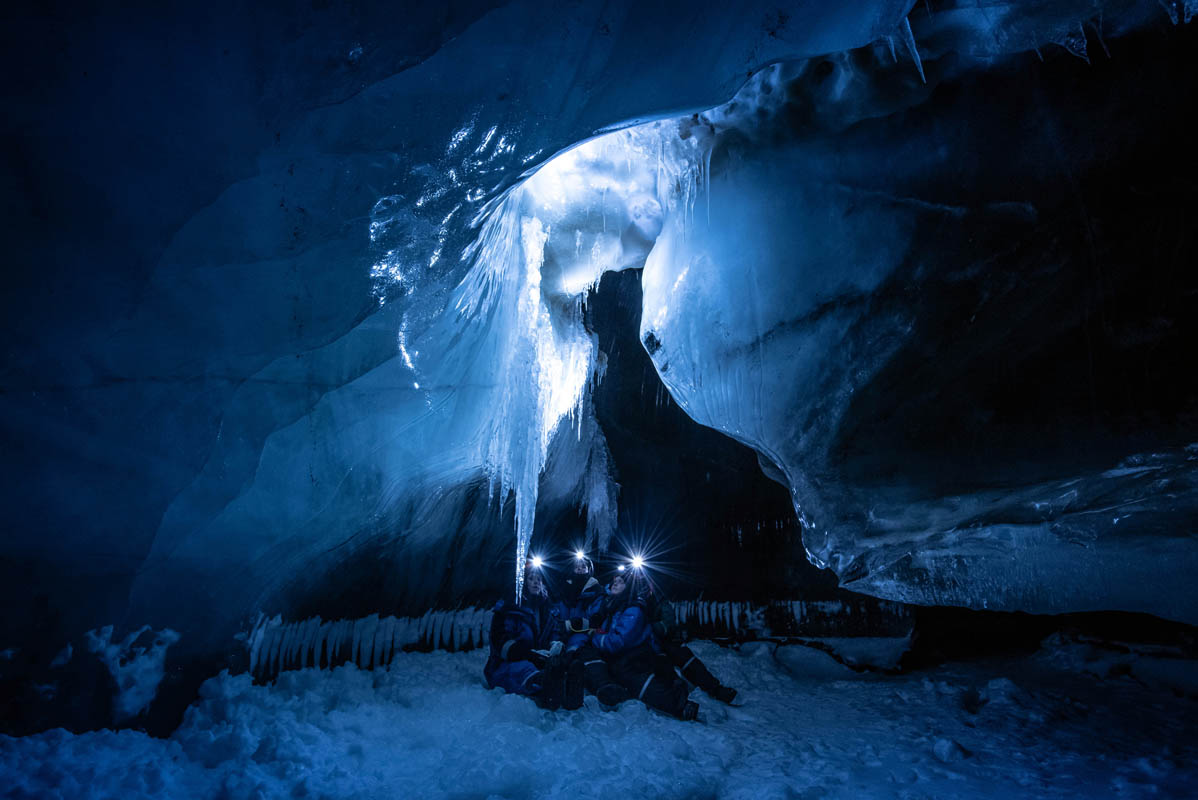
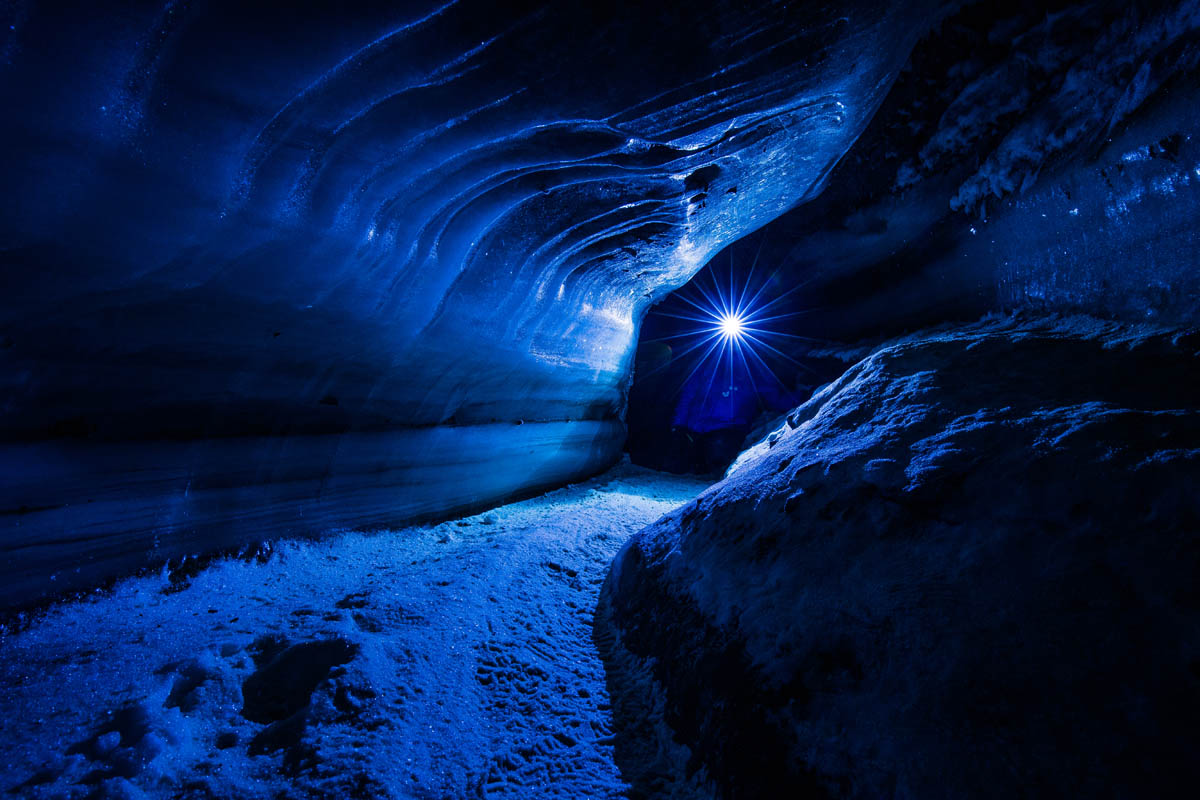
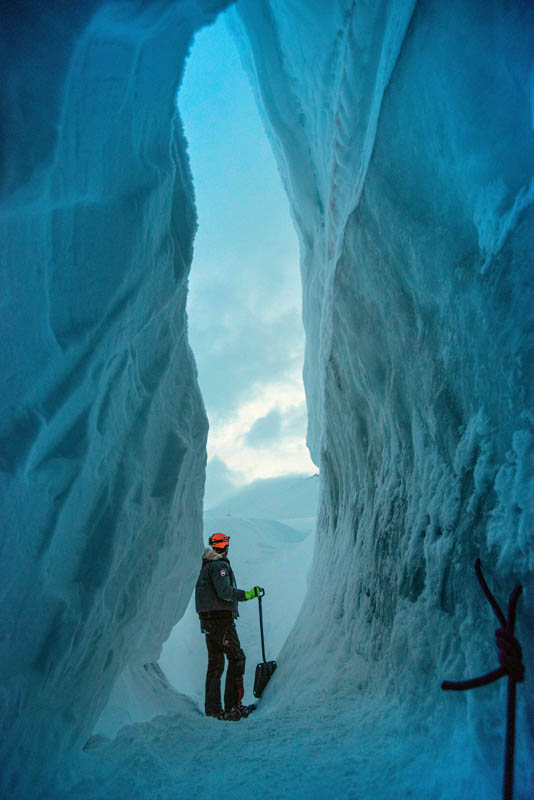
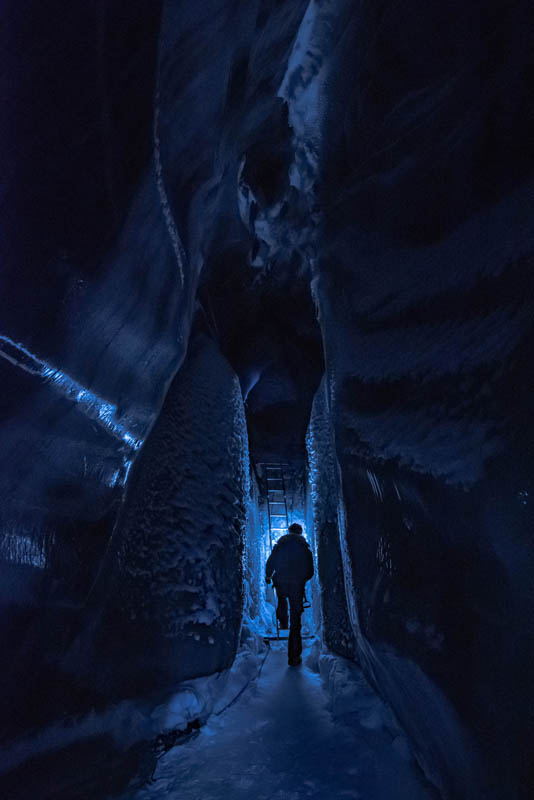
You can actually come in a position in which it is physically impossible to see the Northern Lights. That is if you go on one of the most particular excursions in Longyearbyen; exploring the ice caves under the Longyearbreen Glacier. Melting water in summer creates canals under the ice. These cavities are found between the bedrock and the glacier ice, and they are created anew every summer. The glacier is an amorphous, gliding entity in summer, but freezes to a solid block in winter. Then it is safe to explore, provided you go on a guided tour. Ice and snow create a world of strange shapes, revealed by the light of your headlamp.
Longyearbyen is the world’s northernmost city break
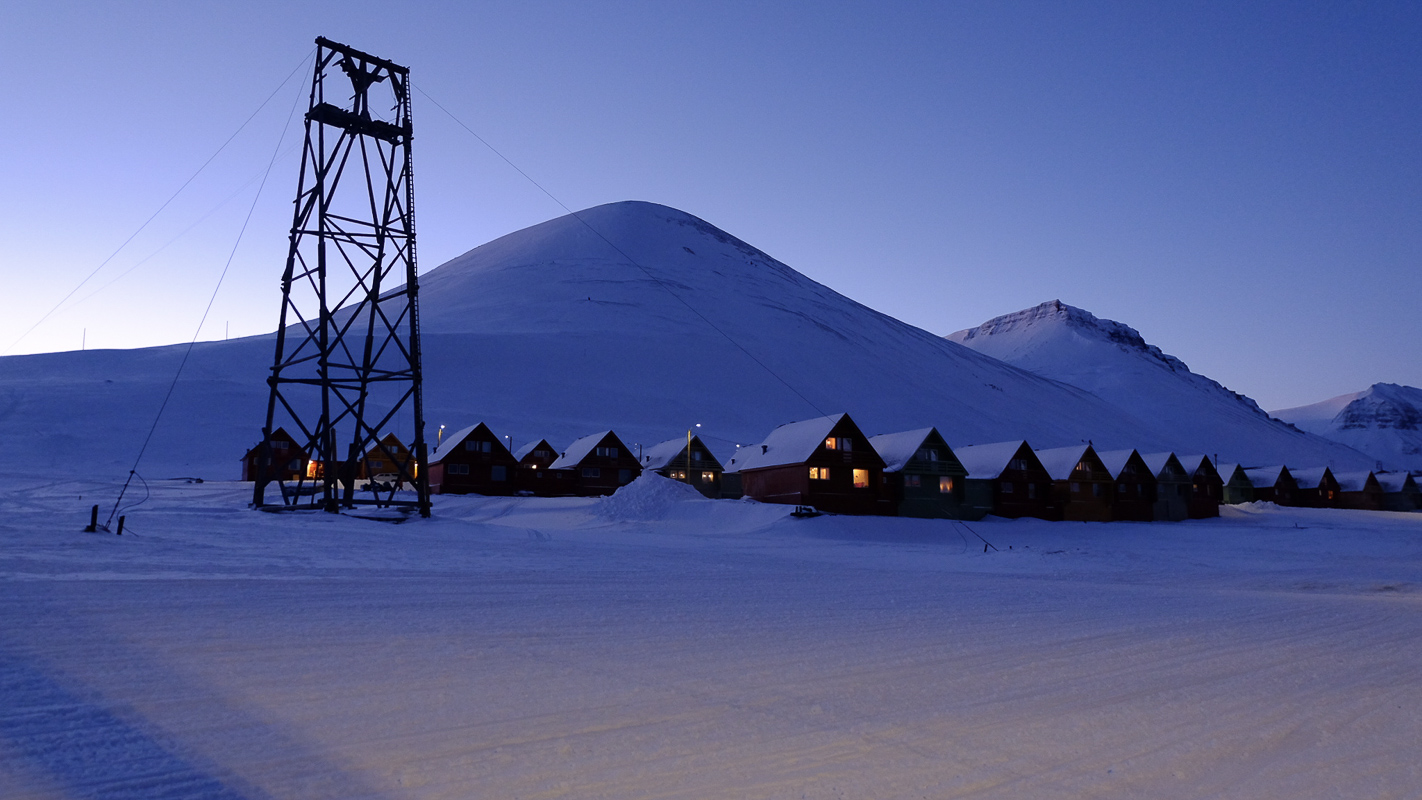
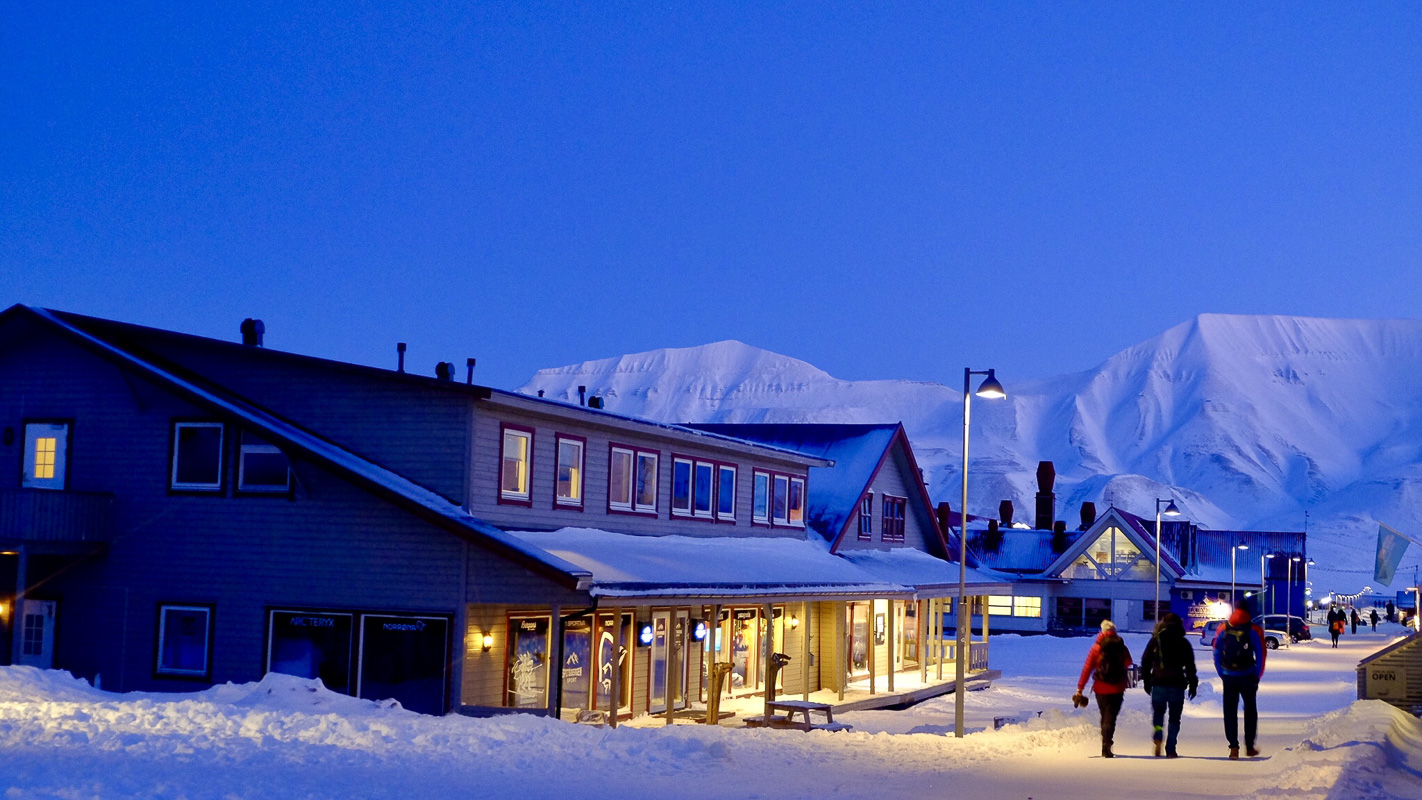
Incredible as it sounds, Longyearbyen is a fun place to visit even for city slickers. It actually has all the trimmings of a real city, albeit in micro format. There is shopping, sightseeing, hanging out in cafes, culture and festivals, a high-quality food scene and a lively bar scene. Hence, a winter visit to Longyearbyen doesn’t have to mean survival suits all the time, there is plenty of chance for the finer things in life.
Svalbard Museum gives you the whole picture
Attractions and photo motifs are plentiful along the main drag. We recommend the Svalbard Museum at the Svalbard Science Centre, which gives a full overview of Svalbard’s history from the age of the discoveries through the whale hunting period in the 17th c. and the mining period of the 20th c. Read the good explanations and climb through a mini mining shaft. There are also extensive exhibits on the geology, wildlife and flora of the archipelago.
Don’t forget the small museums and attractions
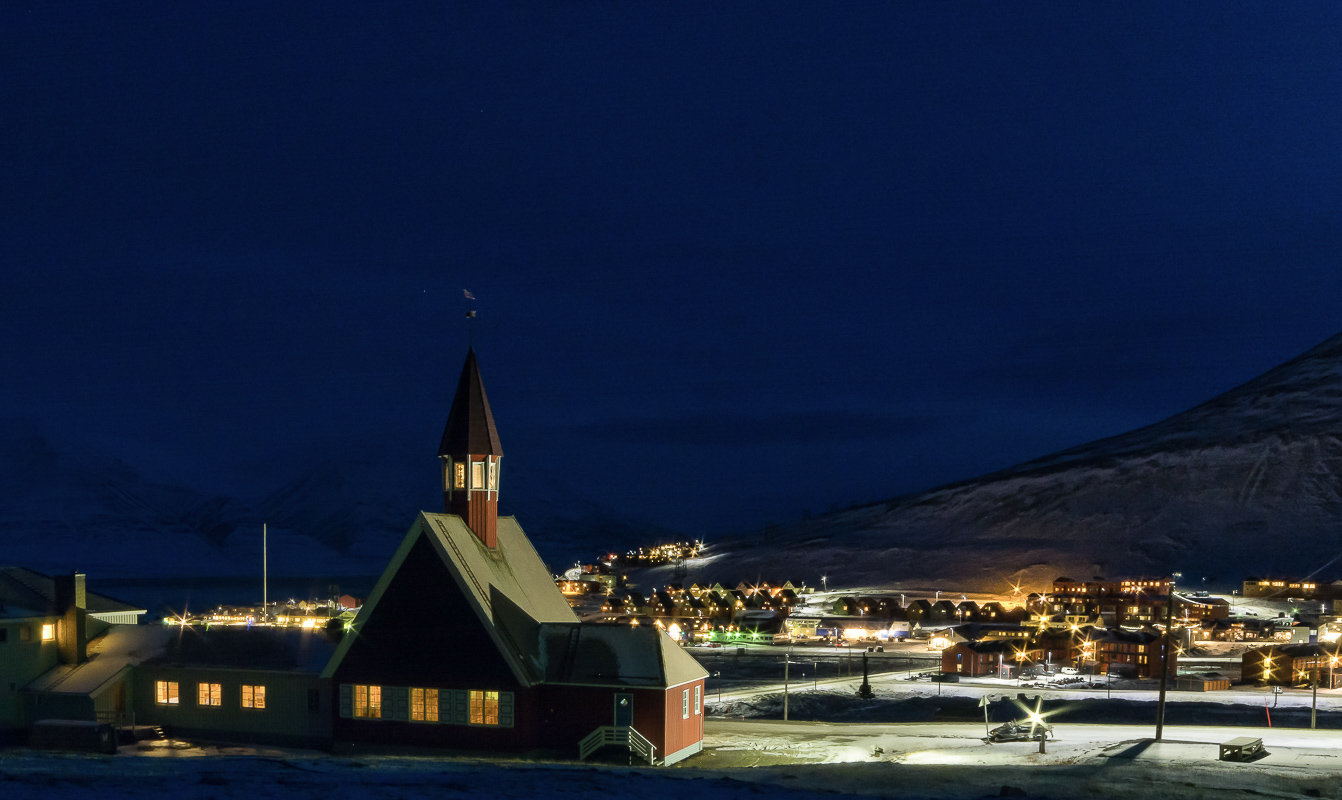
The North Pole Expedtion museum tells the story of the daring expeditions to the North Pole in the early 20th c, with names like Umberto Nobile and Roald Amundsen. Galleri Svalbard has the Svalbard Collection, with old maps, banknotes and books on Svalbard, a multi media show and art exhibits. At Wildphoto Gallery, you see the photos of wildlife photographers Ole Jørgen Liodden and Roy Mangersnes. The church of Svalbard is the northernmost regular parish church in the world, dating from 1957. Across the valley you see the graveyard where, among others, the victims of the Spanish flu in Svalbard were buried in 1919-20.
Go shopping in Longyearbyen
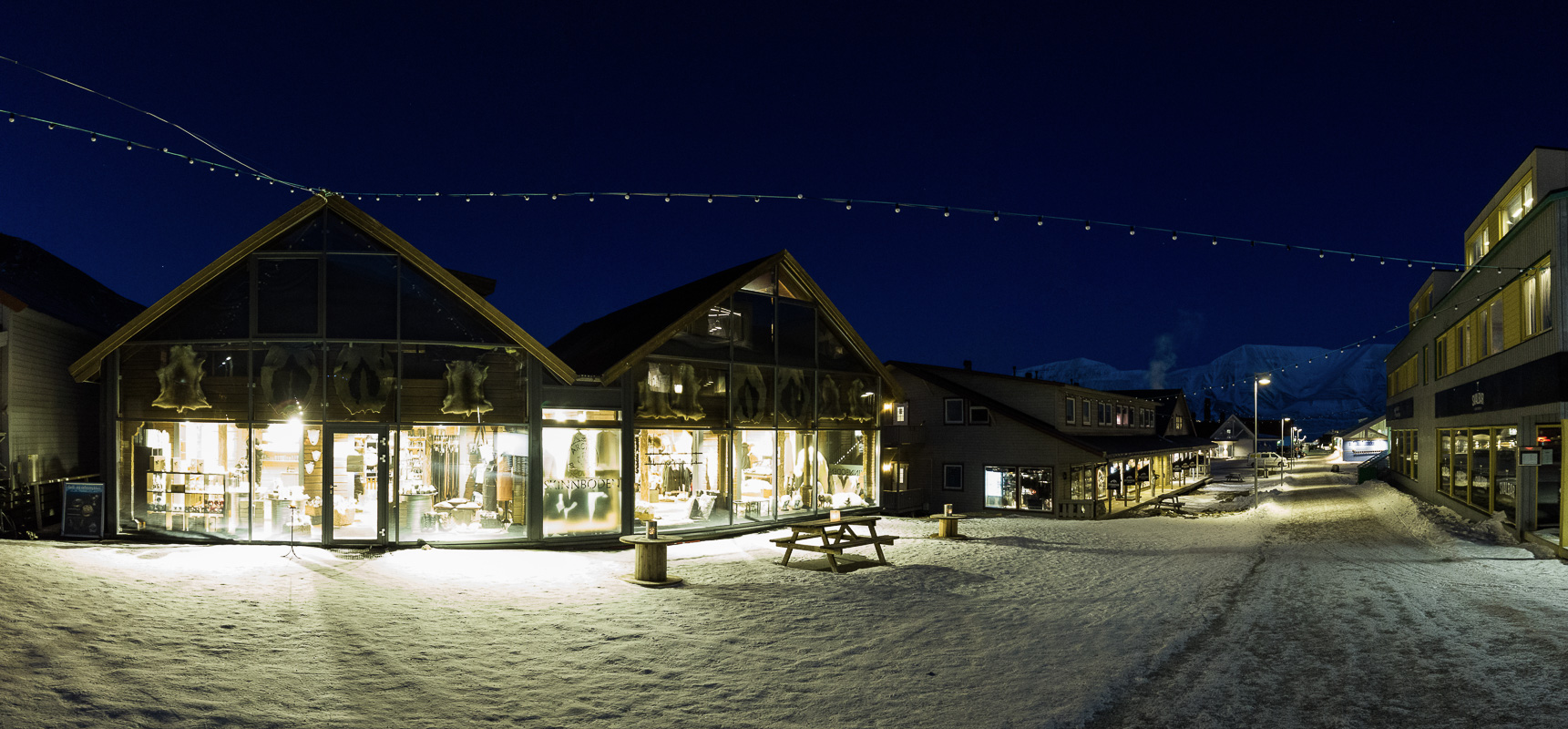
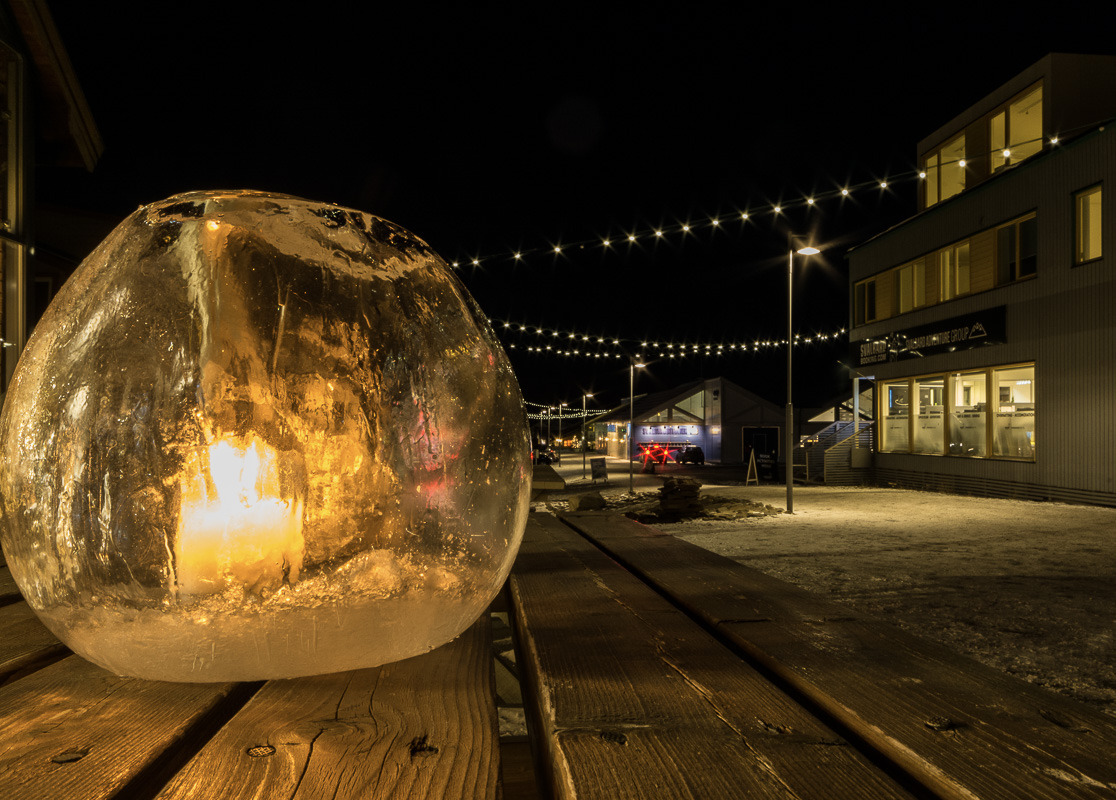
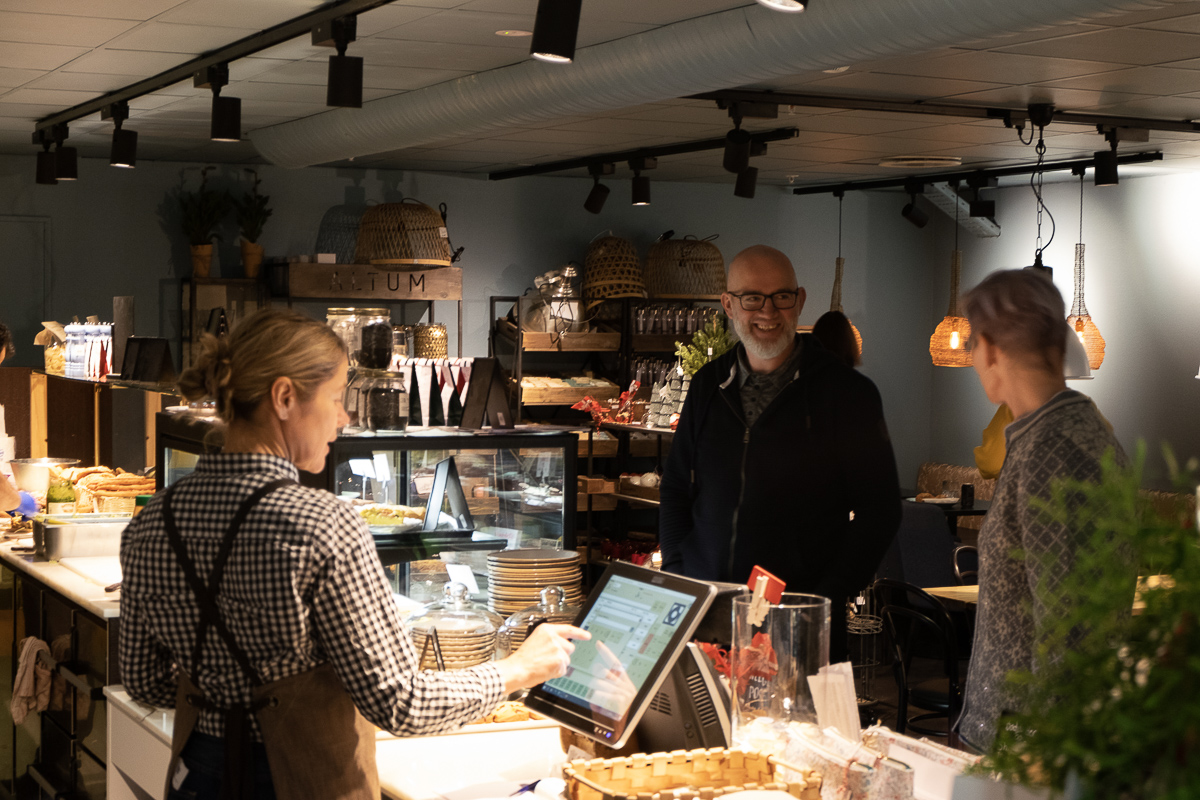
The main street in Longyearbyen actually has some good shopping on offer. One should remember that there is no VAT on goods here. Worth buying is notably outdoor gear; good quality shoes and outdoor clothes are in demand among the outdoorsy locals, and the knowledge locally is excellent. There is also handicraft, fur products and jewellery, so set time aside to nose around. The end of the shopping round is a visit to Fruene – the ladies – the world’s northernmost coffee shop, for a latte and a cinnamon bun.
Festivals and concert fill every week-end
Svalbard has its own culture house, with an ambitious culture programme through the year. Weekends tend to be busy with festivals catering to every need. The Svalbard Beer festival takes place in September, with sampling and suitable beer music. As Svalbard enters the blue light period in October, it’s of course time for blue tunes in the Dark Season Blues. Kunstpause – Art Break – in November mobilises the local painting, sculpture and photography scene, with some mainland reinforcement. The 8th of March, the return of the sun in Longyearbyen, serves as an excuse for a week-long programme of parties and concerts, but also an outdoor church service in the lovely sunlight.
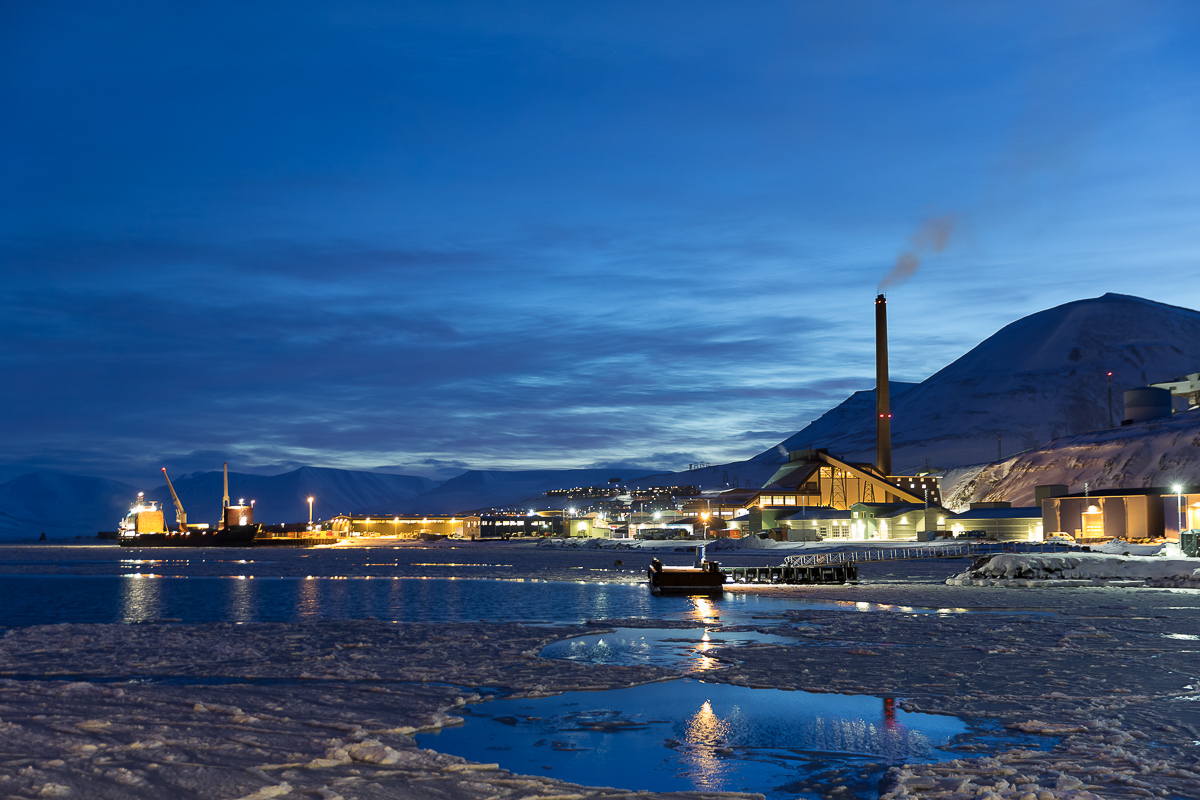
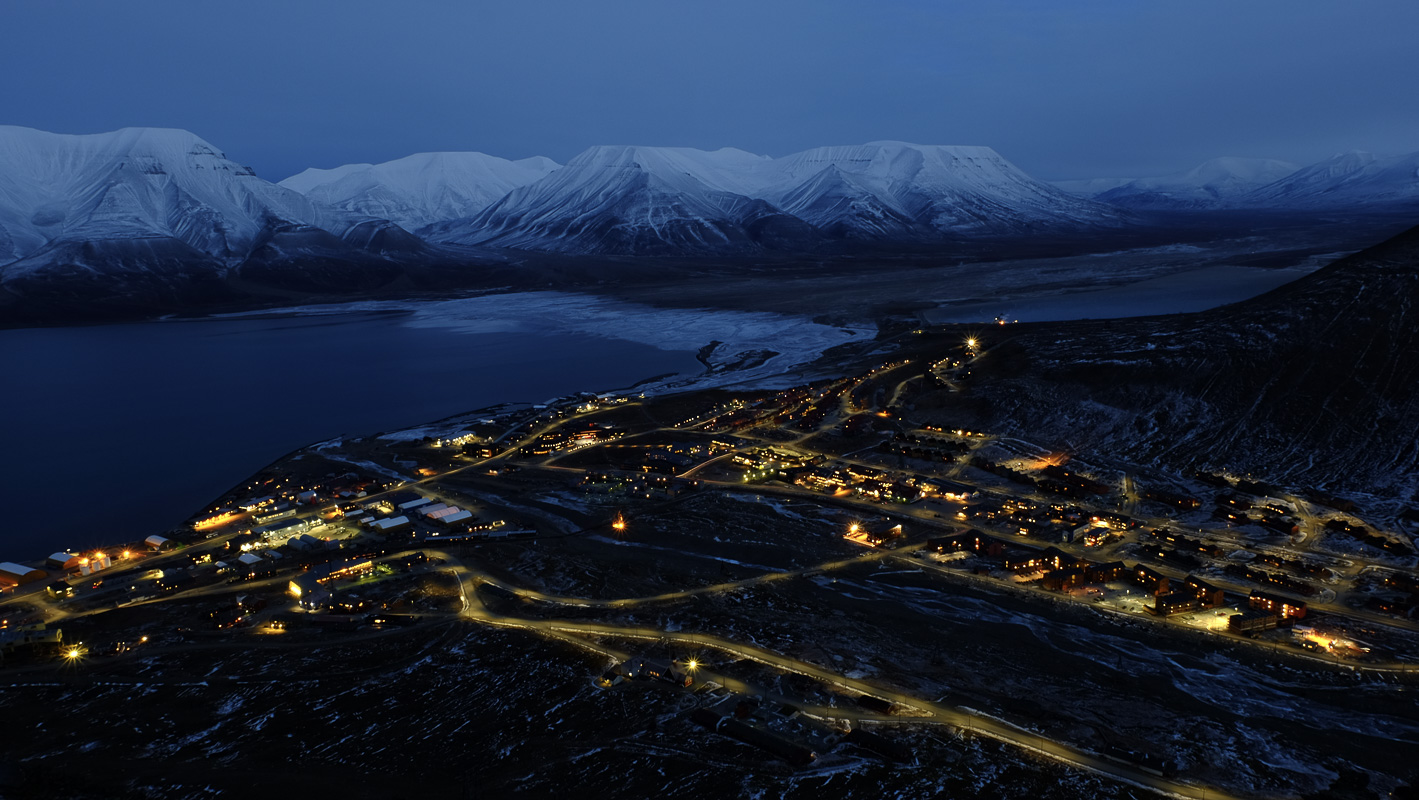
The world’s northernmost fine dining is in Longyearbyen
Maybe you thought you were going to eat in a canteen? Far from it, the selection of restaurants far exceeds that of any 2400 people strong community anywhere. Huset – “the house” was built as a community hall in 1951, complete with a stage. The restaurant here is legendary, with a wine cellar with 20 000 bottles. Funktionærmessen Restaurant is where the white-collar workers, administrators, engineers and the like, would dine in the erstwhile highly class-divided mining society of Longyearbyen. The menu reflects the classy past. Gruvelageret – the Mining storage – is housed in a historic storage building at the upper end of the town. The menu is new and imaginative. Polfareren – “The Polar expeditioner” – honours the young Arctic explorer Eivind Astrup. Not everything is fine dinging. There is also pizza, pub grub, steaks and other comfort food at affordable prices.

The brewery gets its water from the glaciers
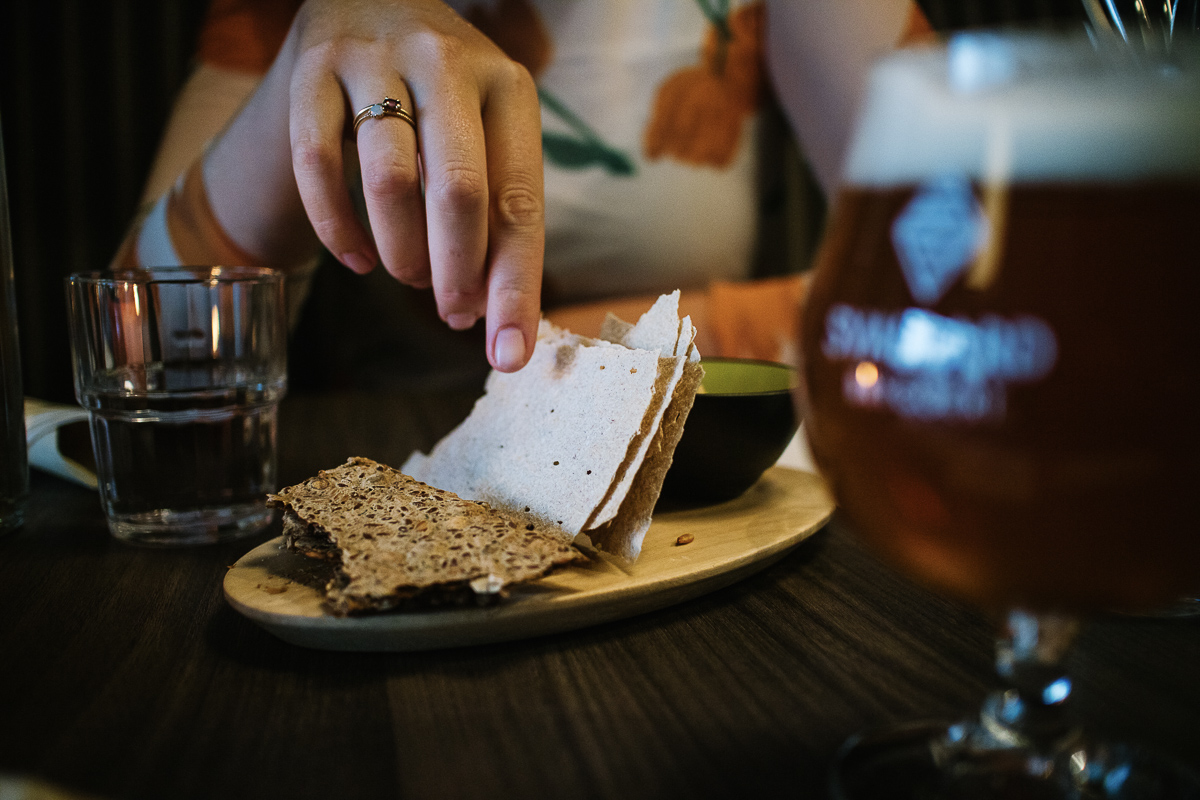
Svalbard has its own craft brewery, Svalbard Brewery – which of course is the world’s northernmost. The water needed comes from snow that turned into ice 2000 years ago. You can participate in guided tours through the Svalbard Brewery. Both beers are available in the local bars.
The nightlife is the best in the world – relatively
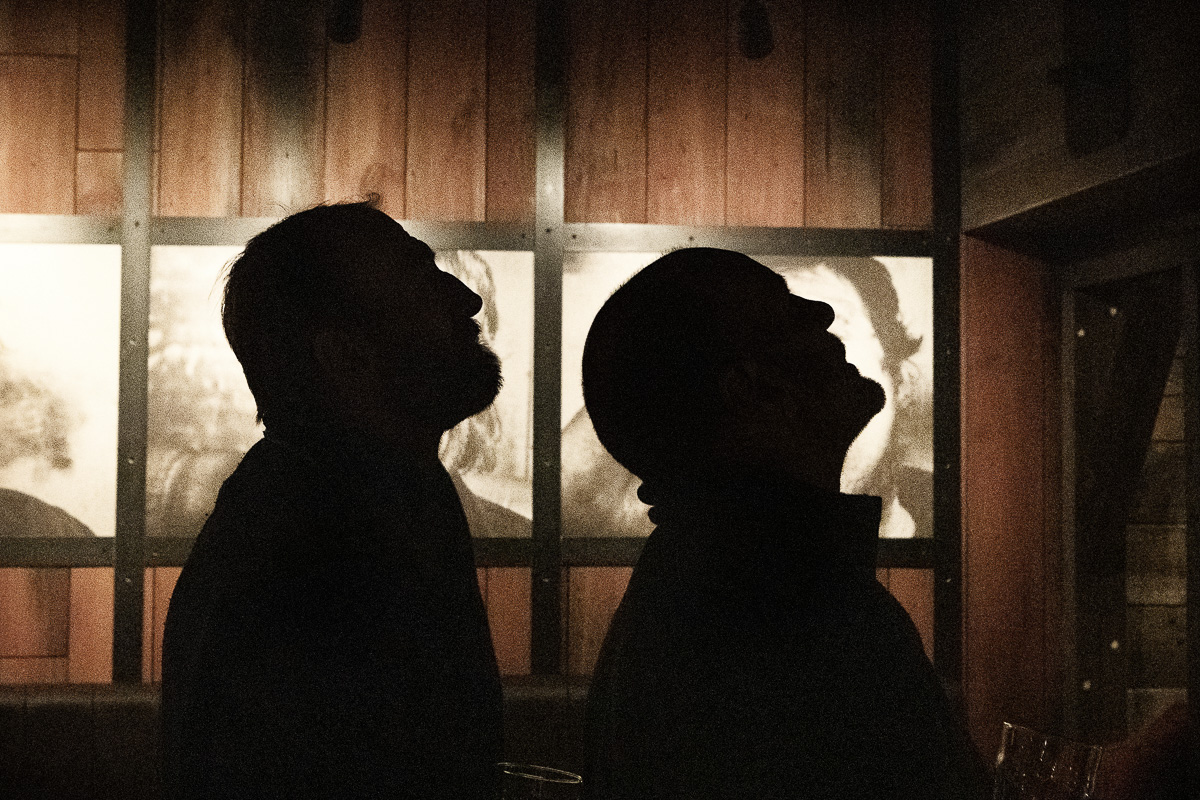
Many years ago, when Svalbard still was a mining community, I happened to stumble upon a group of miners that had just finished their shift. My liver still panics when thinking about it. The bar where it all happened, Karlsberger – “KB” for short – is still around. However, as there are fewer trawler crews and miners around and more researchers and tourist guides, nightlife has become slightly less rowdy. What is kept from the good old days, however, is the inclusive atmosphere and chances for a good conversation. After all, the Svalbardians are an interesting lot, they have come to live up here by choice, and they have a lot of good stories to share. There are several bars along the main drag, and good old Huset – “the House” – acts as the nightclub.
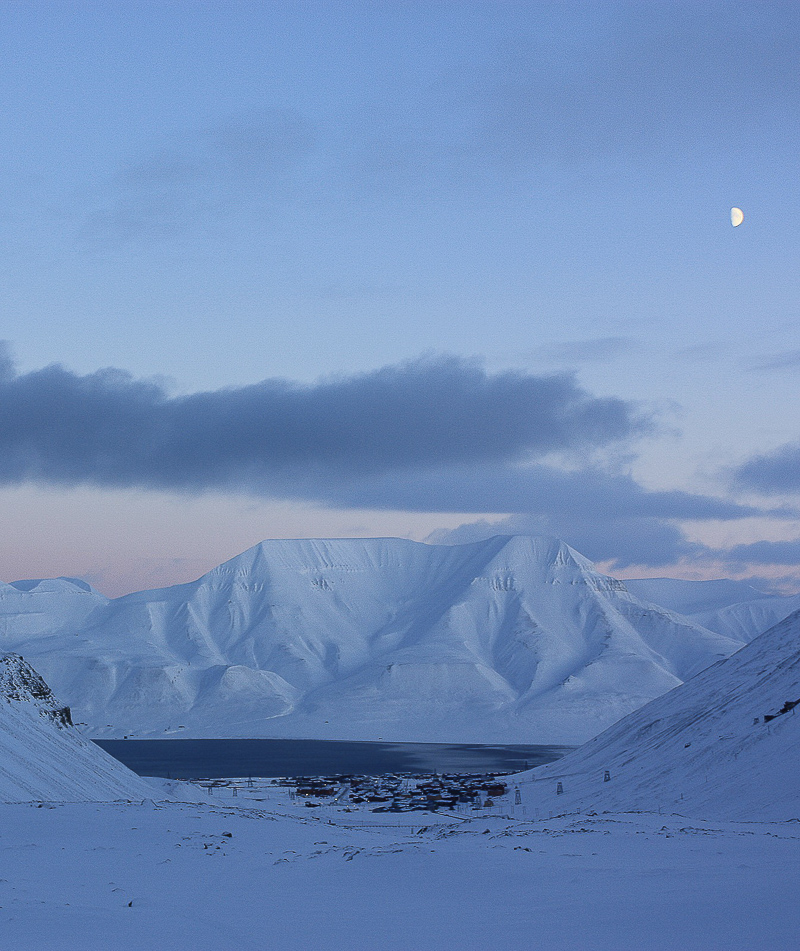
What is the weather like?
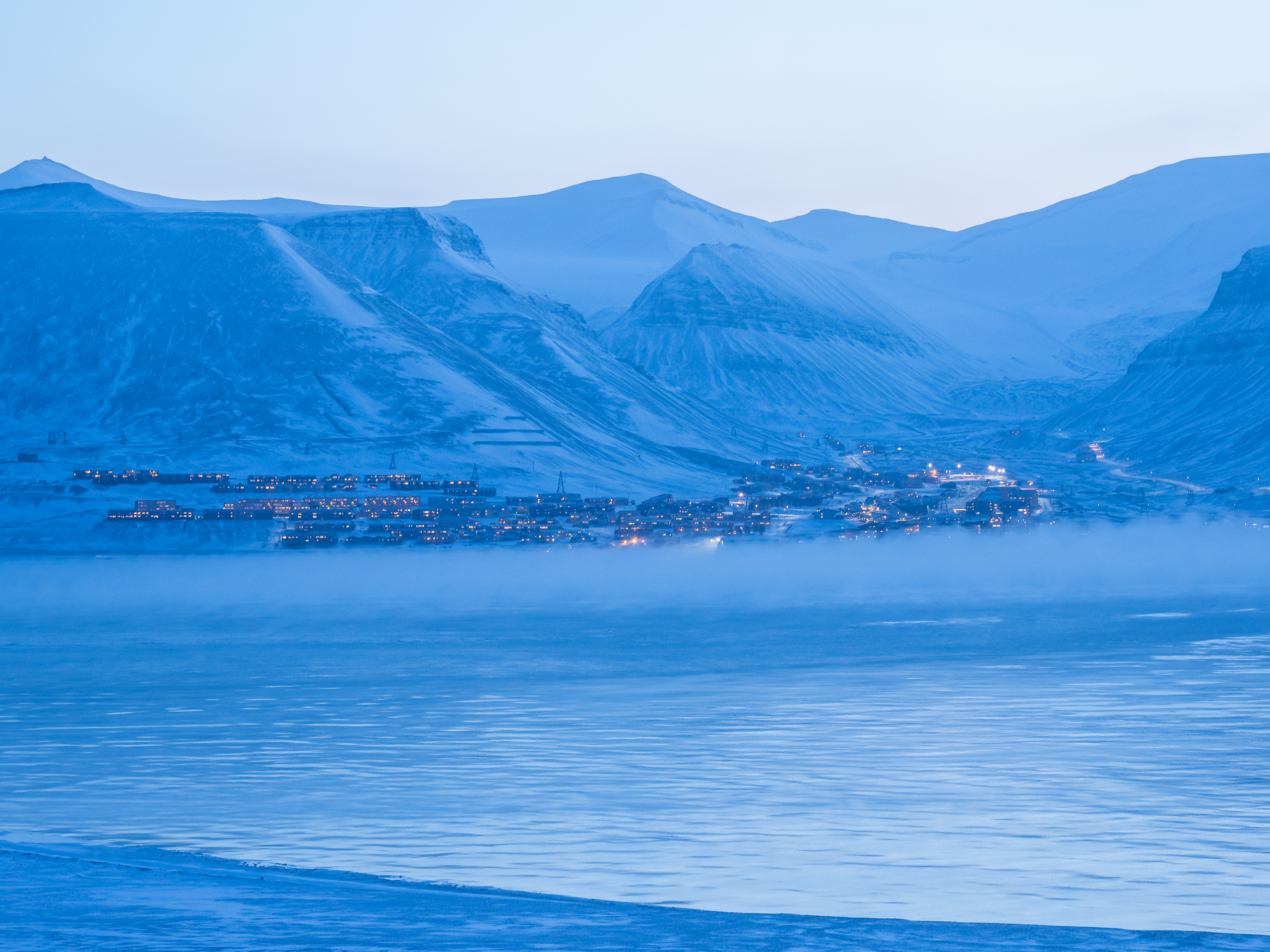
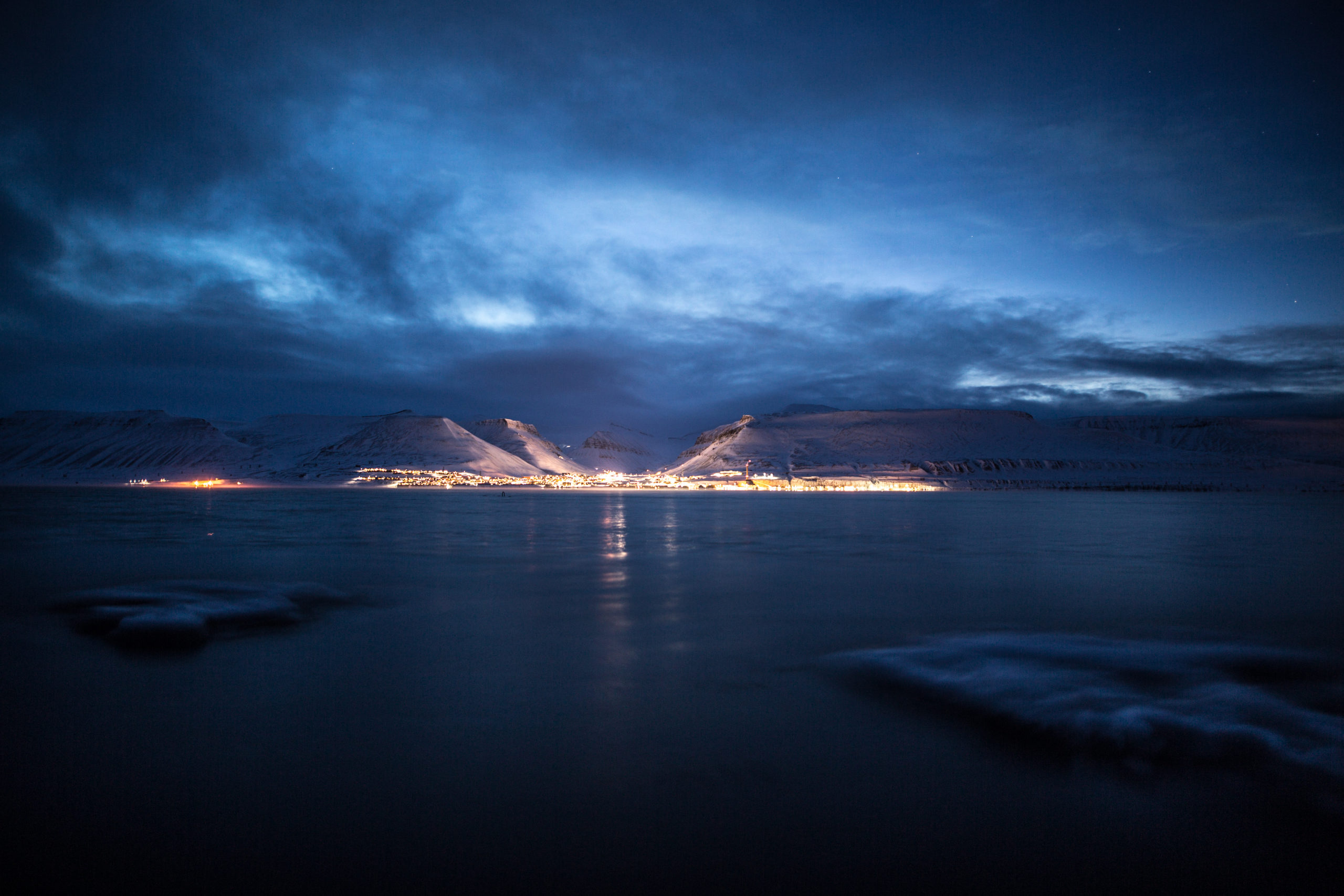
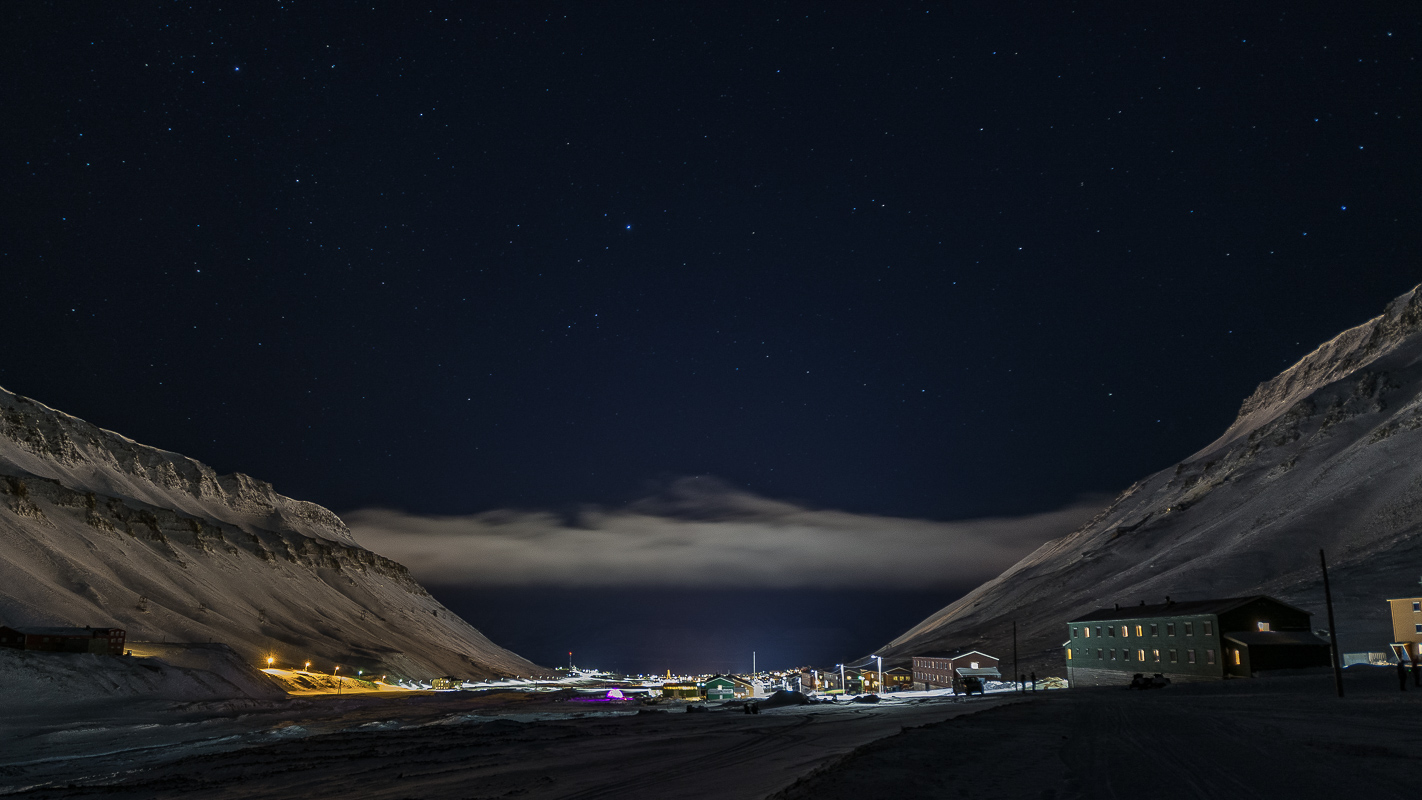
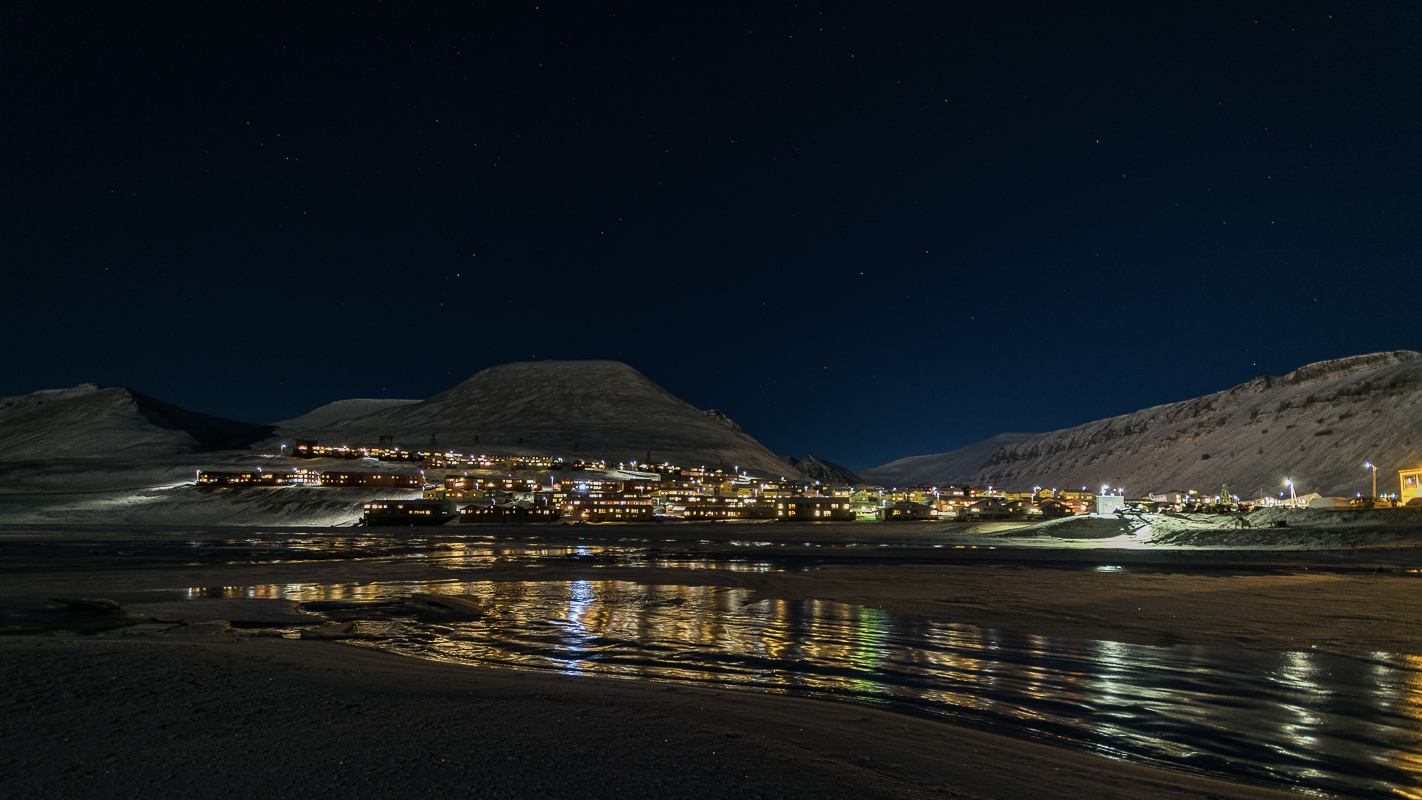
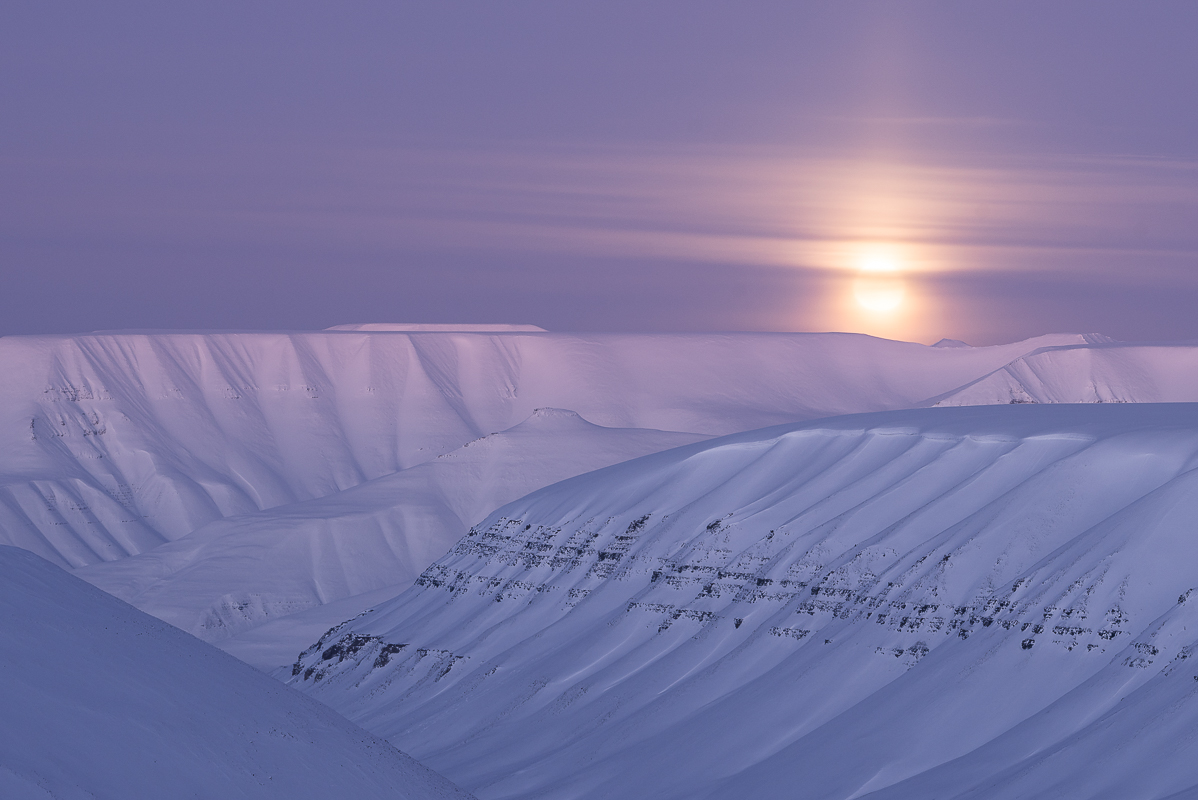
Often times, one can go up to Svalbard in January, experience temperatures of -20 with no wind, clear skies, moonlight and Northern Lights. Despite darkness 24/7, you see the snowy mountains and the fjord out there, and the lights from Longyearbyen shine warmly and inviting. Wrapped up in a survival suit, you feel like you’re in winter wonderland. Does Santa live beyond the next mountain? 1100 kilometres from the North Pole, however, this is not guaranteed. Ferocious Arctic lows can engulf Longyearbyen in heavy snowfall and strong winds, cancelling your dogsledding trip right there. There is also no hiding that the winter temperatures in Svalbard have risen more than almost anywhere on the globe, and rain in the middle of winter can happen. Come with a flexible attitude, you will find the locals very helpful in adjusting your programme to the weather.
Beware of Svalbard’s safety regulations
If you fly up to Svalbard, stay in a hotel or guesthouse, eat in the restaurants, walk a bit around town and participate in guided tours, you should face no problems. The guides in Svalbard are excellently trained, and in case of an accident or health emergency will be able to give assistance until the doctors at the hospital can take over. The problems arise when you decide to do things on your own. The first that comes are attacks by polar bears, which can be fatal. Weather conditions can also be extreme. Anyone venturing out of the settlement of Longyearbyen alone should thus be extremely well prepared. Well prepared starts with reading the safety instructions by the Governor of Svalbard.