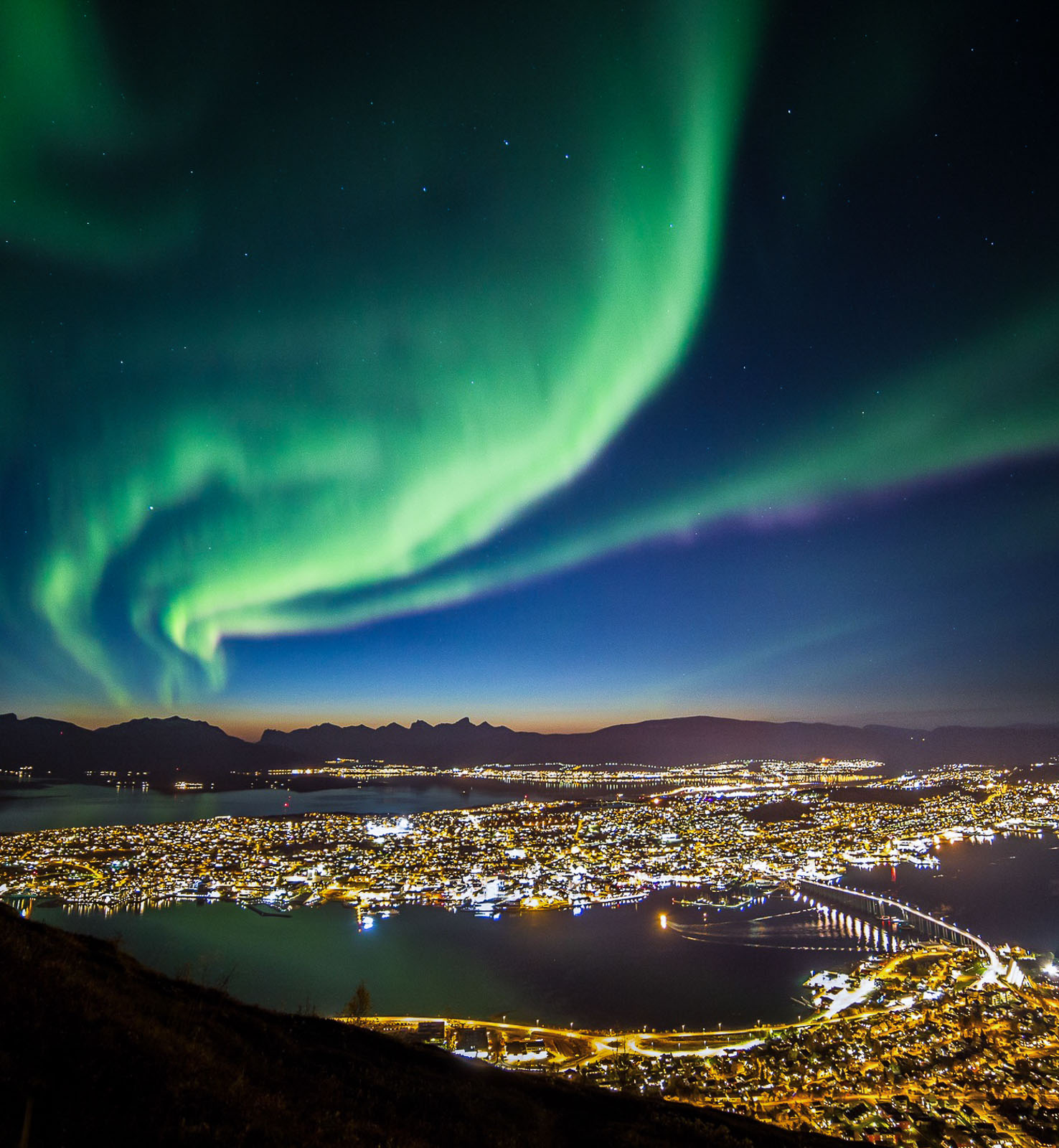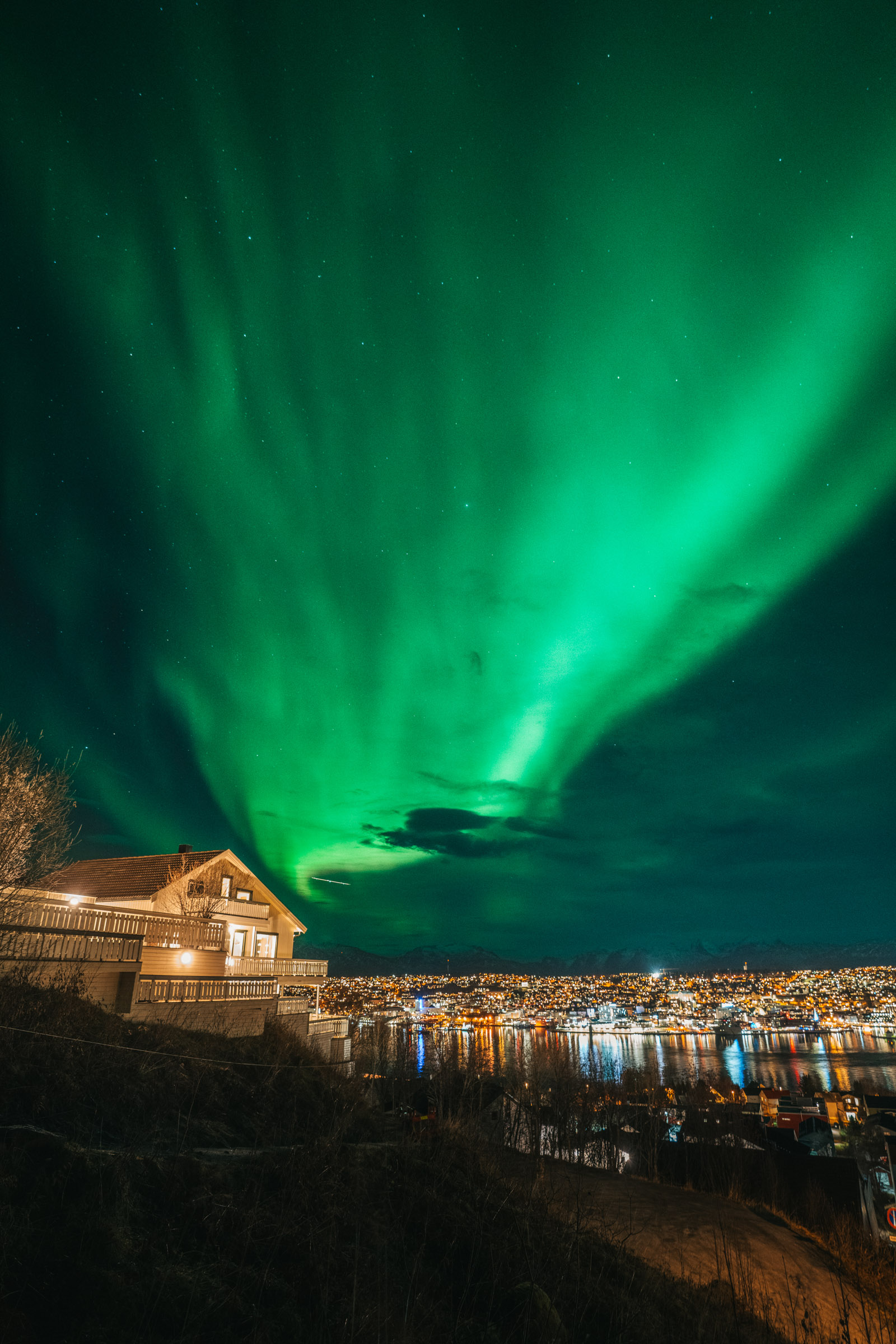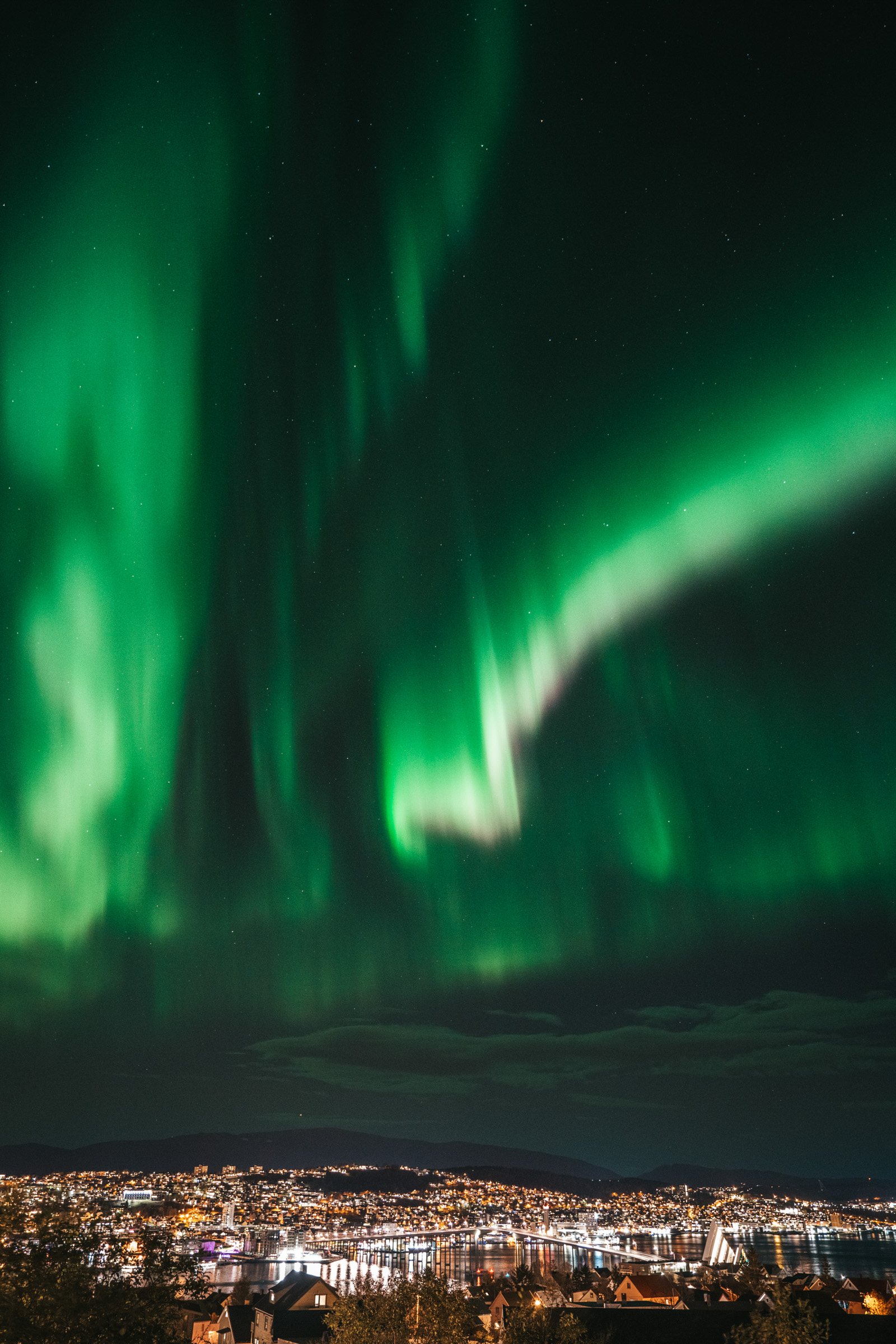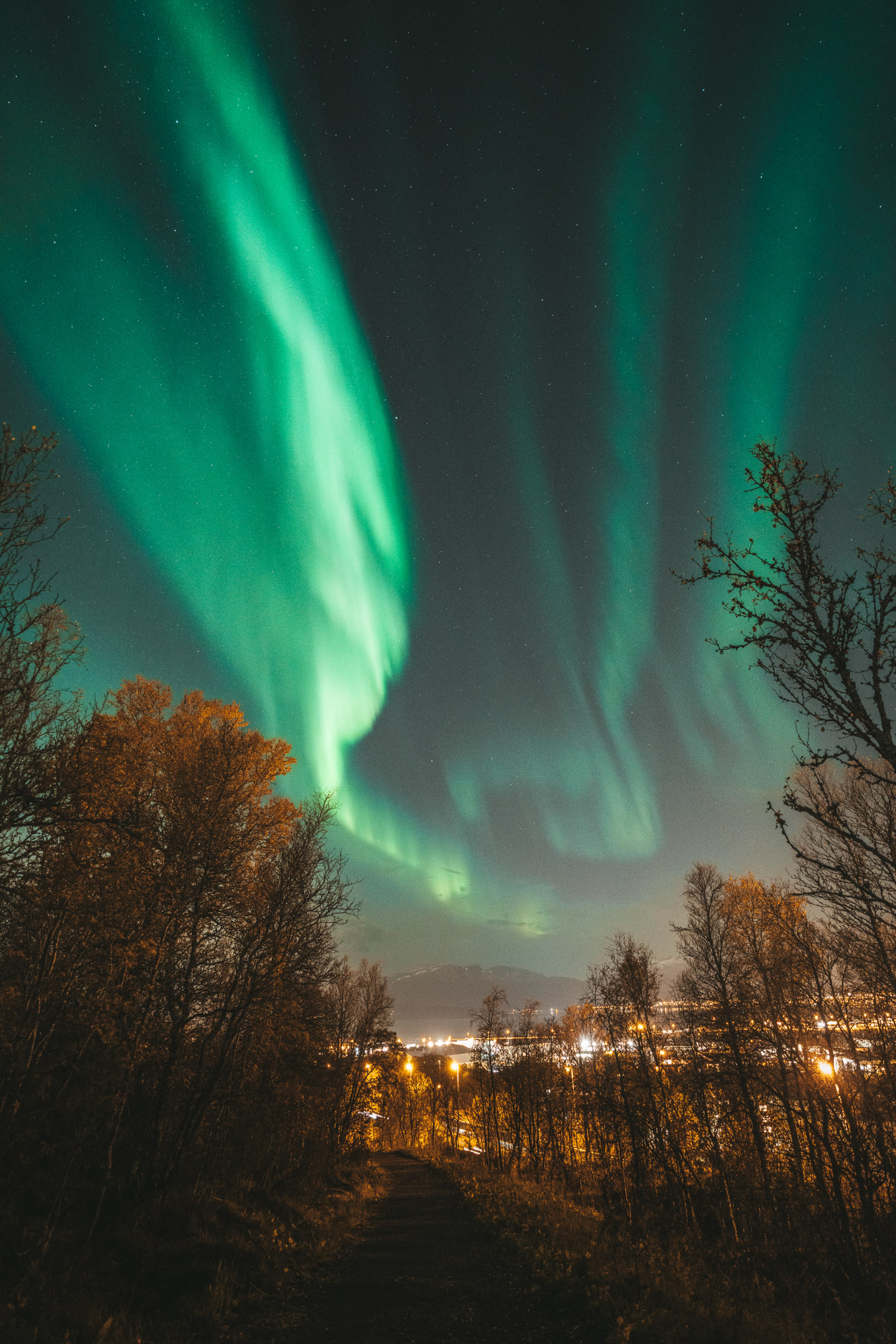
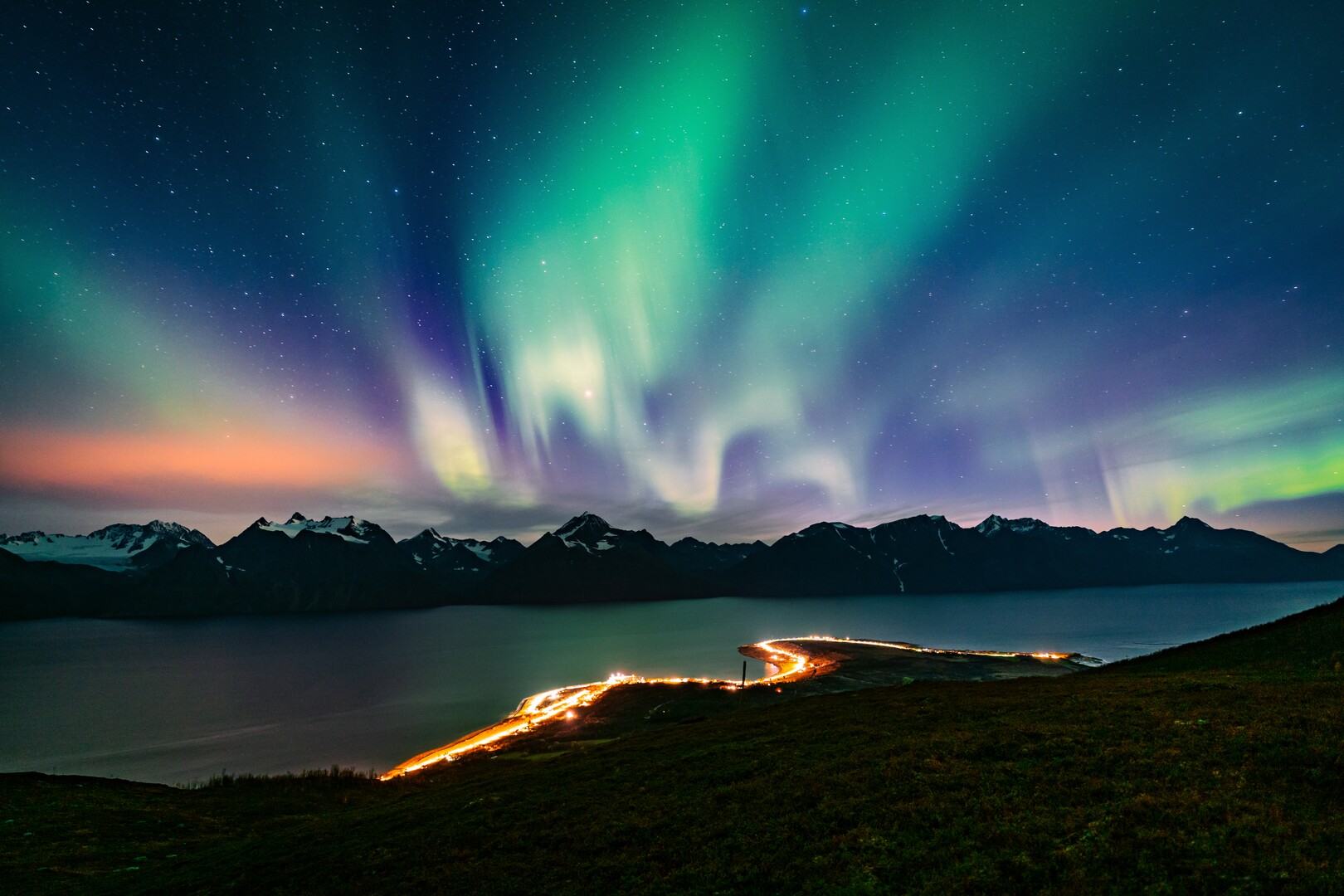
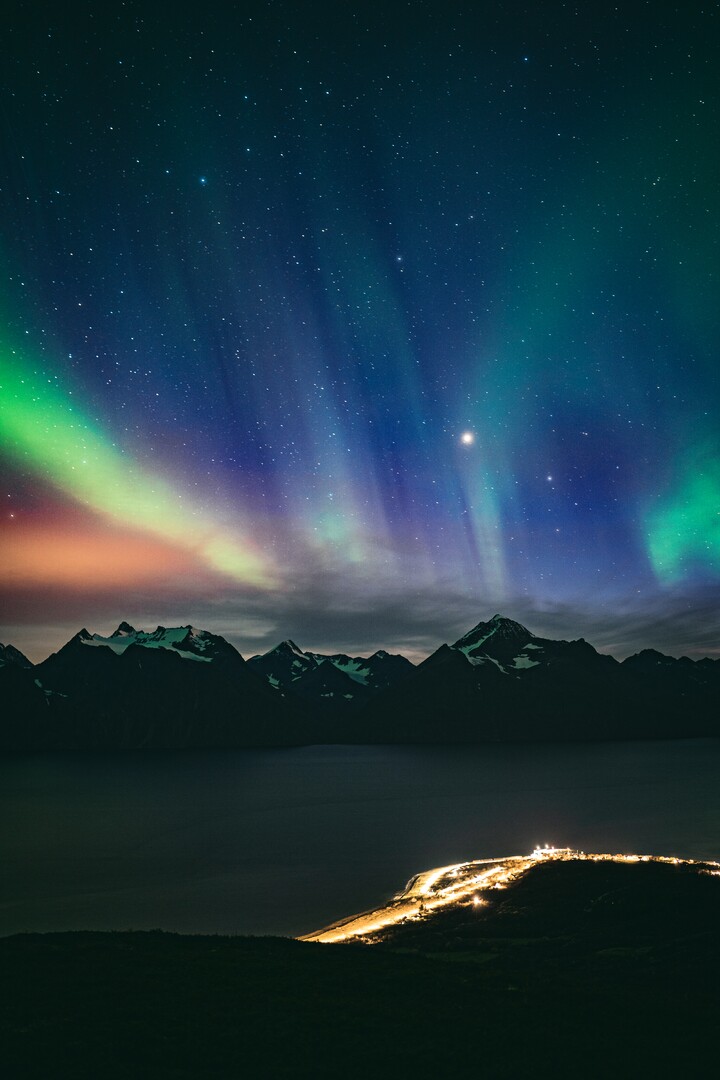
The fall aurora season starts with a bang. Late September and early October offer some of the best chances to experience strong northern lights. Around the autumn and spring equinoxes, auroral activity is usually more frequent and intense due to the interaction between the solar wind and Earth’s magnetic field.
From mid-September, the nights also become significantly darker. Together, these factors make autumn an excellent time to visit Northern Norway and experience one of nature’s most spectacular light displays.
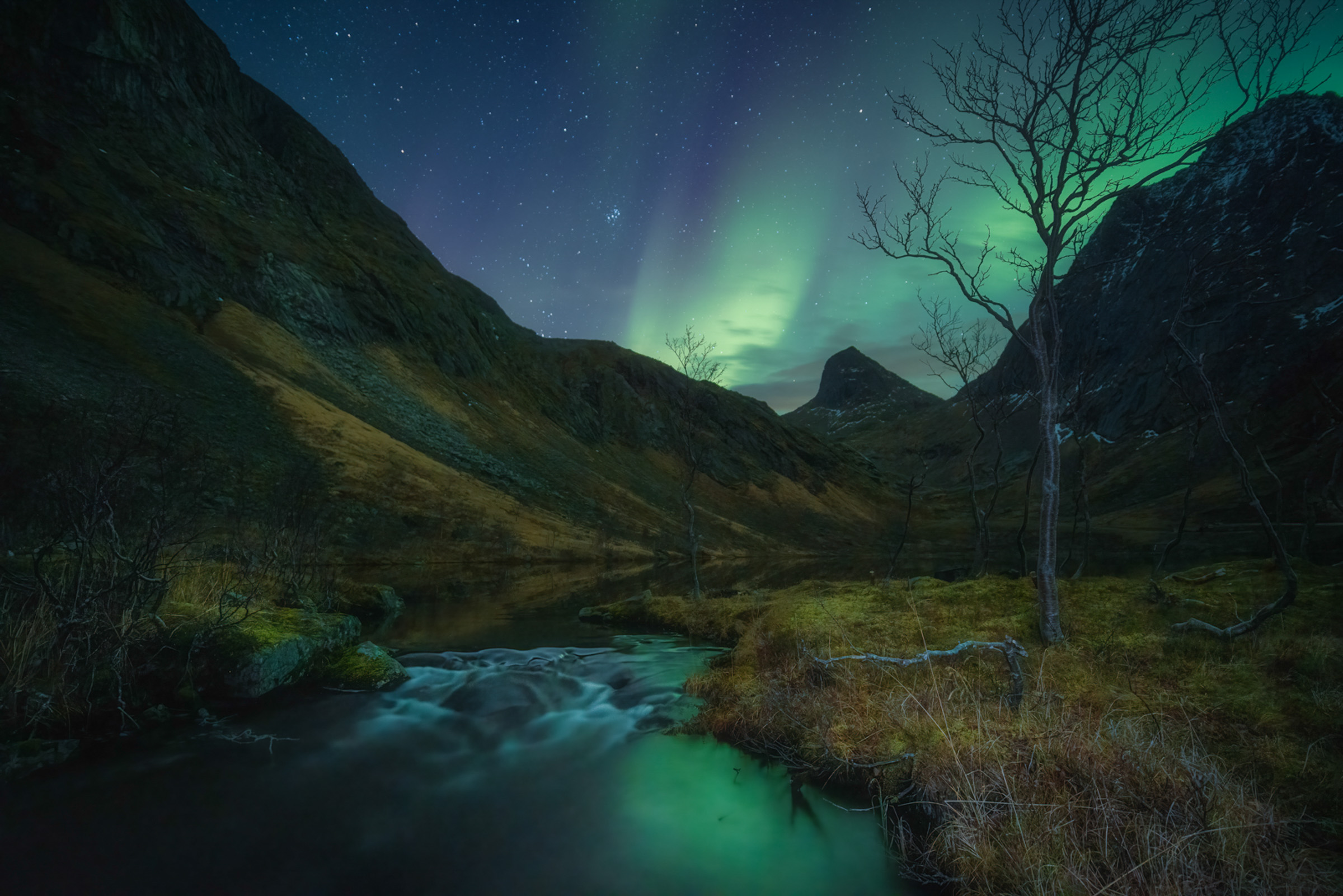

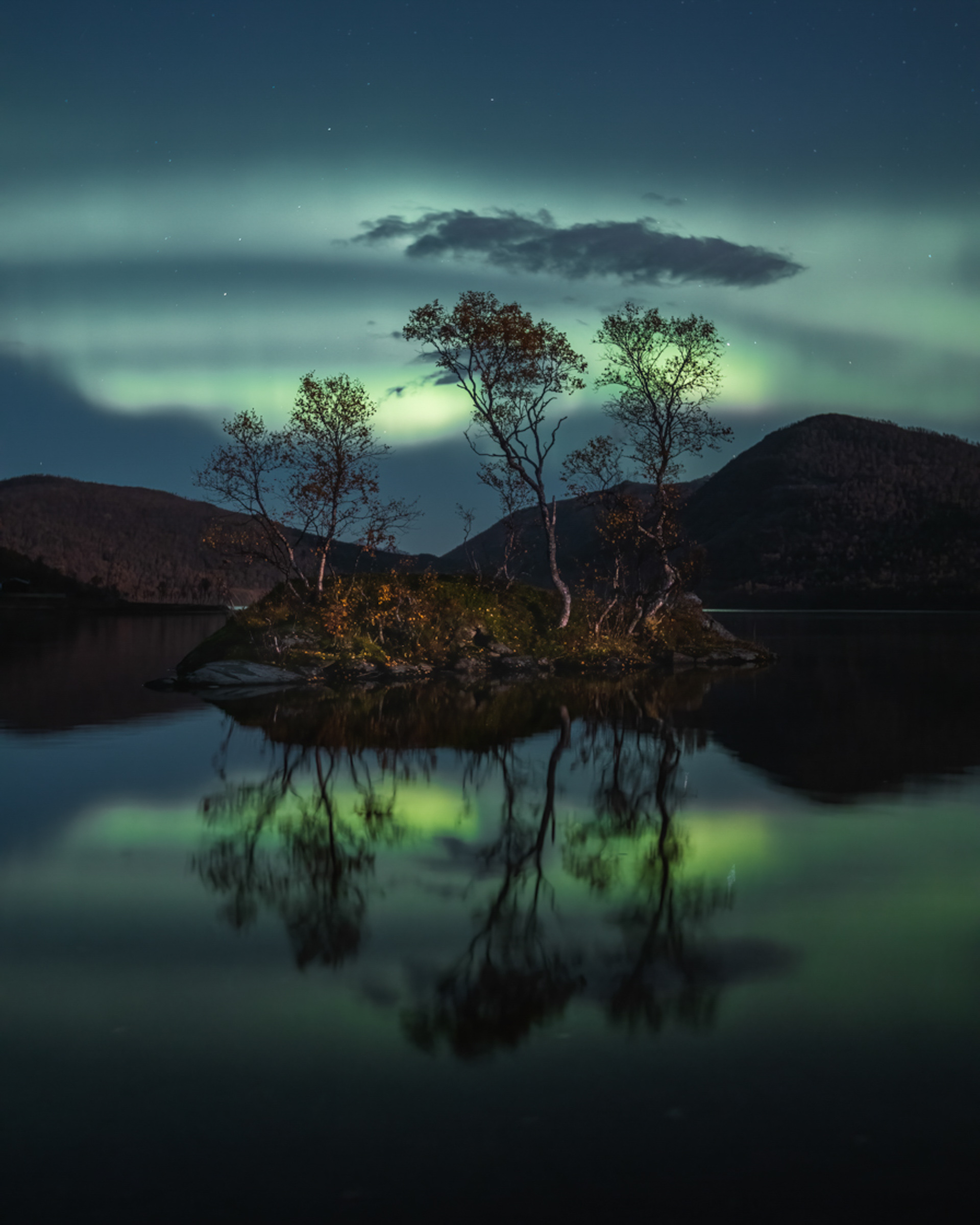
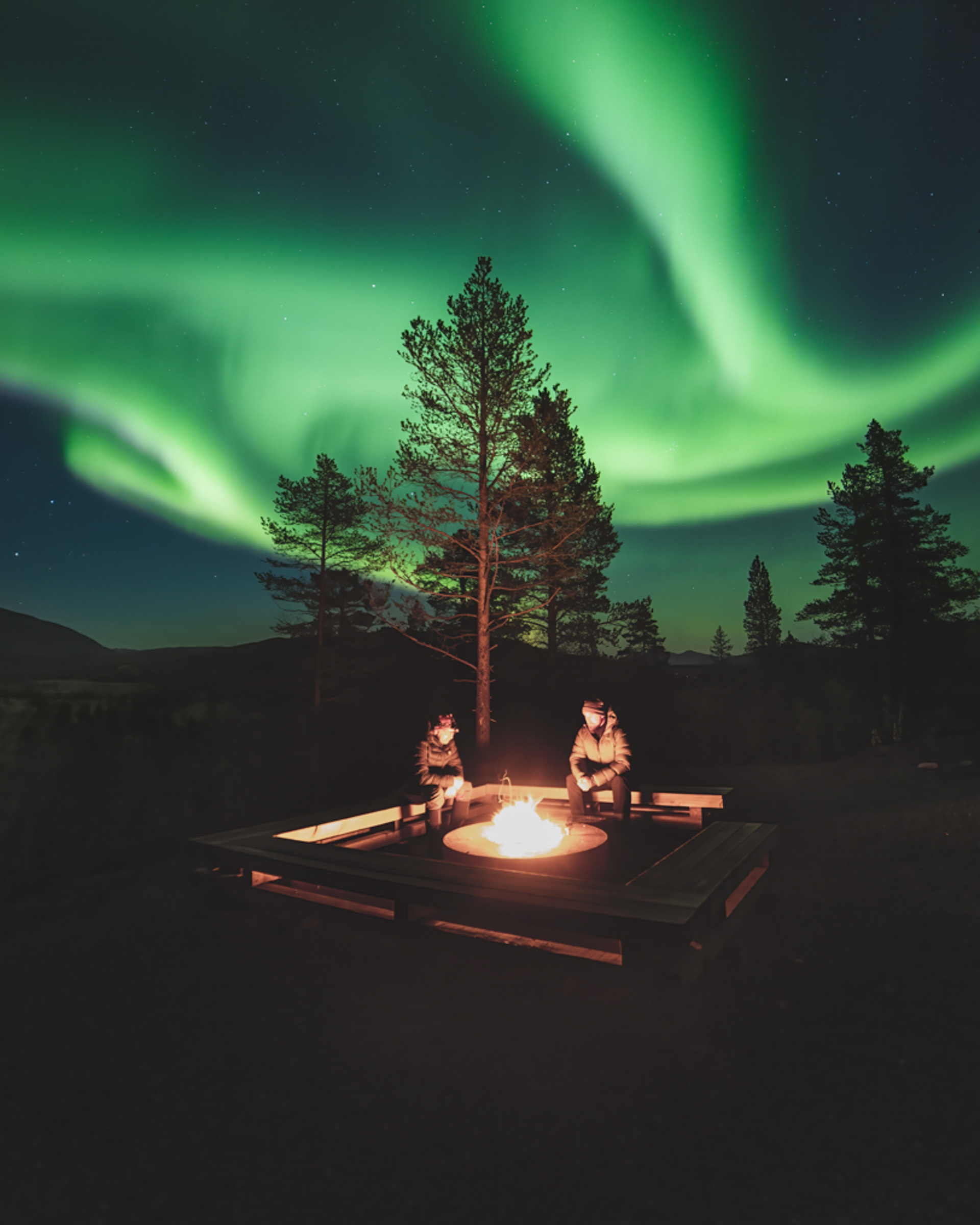
The auroras are born on the surface of the sun
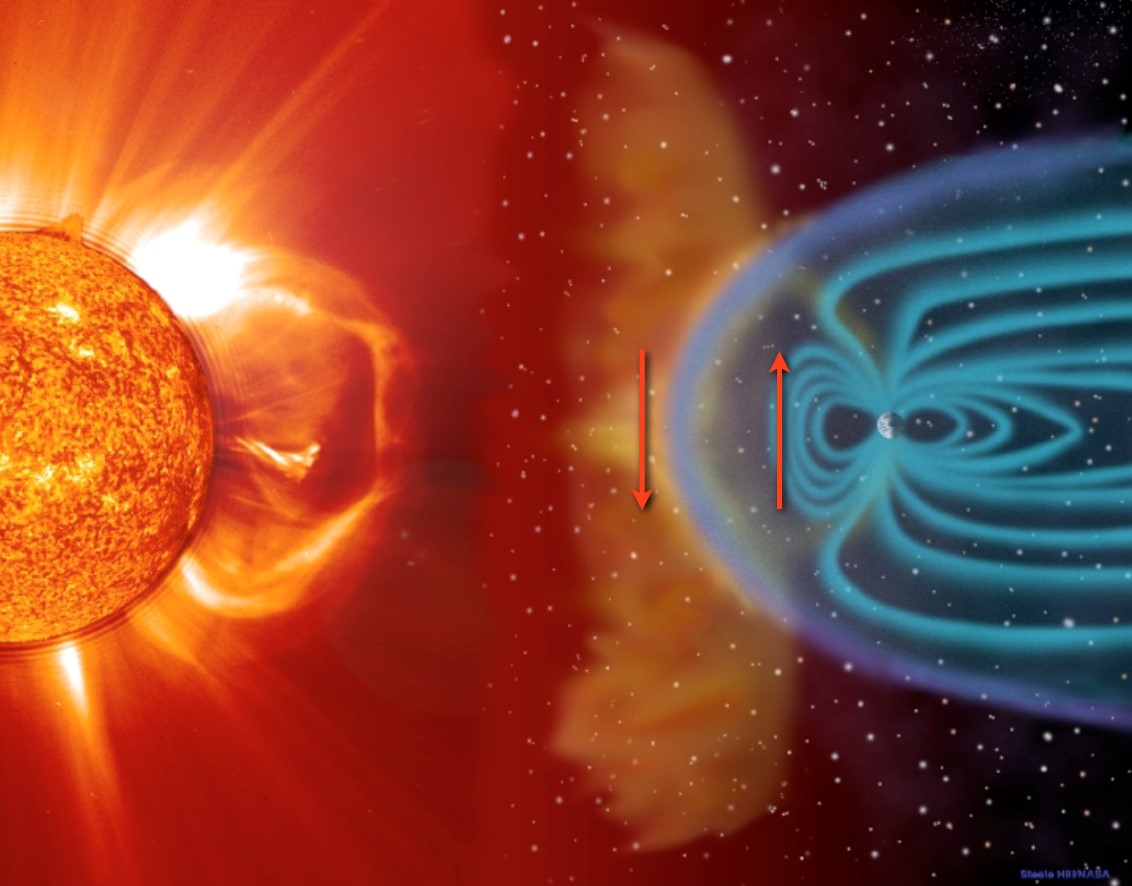
The source of the aurora was first explained by the Norwegian scientist Kristian Birkland more than 120 years ago. He was the first to argue that the Sun sends out a stream of charged particles that interact with Earth’s magnetic field. These particles, consisting of protons and electrons, are called the “solar wind”. The Earth’s magnetic field creates an invisible shield around the Earth that prevents our atmosphere from being bombarded with solar wind particles. We call this magnetic cocoon engulfing Earth the magnetosphere which normally protects us from solar particles.
Geomagnetic storms are brewing
The solar wind and solar storms also carry with them the magnetic field of the Sun. This magnetic field will interact with Earth’s magnetic field and create what we call a geomagnetic storm which will fuel strong auroras. Here lies the key to understand why there is more strong and frequent auroras around the equinoxes.

Opposite magnetic fields create the magic
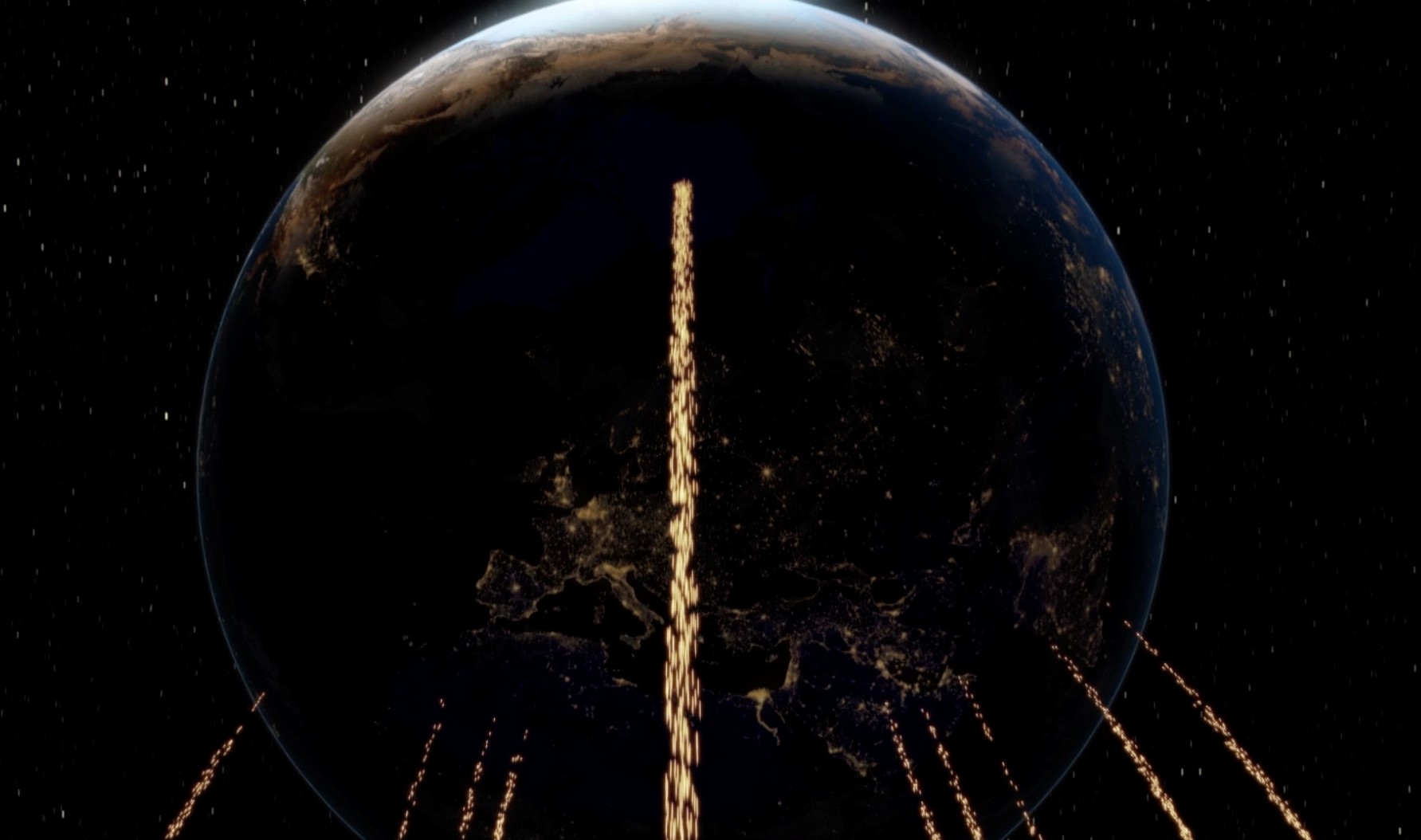
You know that a magnet always comes with to poles: a north pole and south pole – just like a compass needle. Solar magnetic fields – carried to Earth via the solar wind – also have a north and south pole. South-pointing magnetic fields inside the solar wind oppose Earth’s north-pointing magnetic field. The two oppositely directed magnetic fields partially cancel each other, weakening our planet’s magnetic defence. This opens up holes or cracks in the magnetosphere allowing solar particles to flow more easily towards the polar region where they eventually collide with atoms and molecules in our atmosphere, creating the dazzling northern lights. However, if the magnetic field in the solar wind has a north directed orientation, there will typically be a very weak interaction and low aurora activity.
The model dates from the 70’s
The scientists Christopher Russell and Robert McPherron explained this cancellation effect in the 70´s. The cancellation of the magnetic fields can happen at any time of the year, but it happens with greatest effect around the fall and spring equinoxes. They put forward a model to explain why these holes in the magnetosphere opens more frequently around the equinoxes. Thus, the effect is today called the “Russell-McPherron effect.”
It’s about tilting the right way..
Their model points to the alignment of Earth’s magnetic field. Just like the tilted rotation axis of the Earth, it is slanted with respect to the Sun and our orbit around it. Twice a year, around the equinoxes, Earth’s orbit then brings this tilted field into prime position to receive charged particles from the Sun to generate strong auroras. Furthermore it is known that, at the equinoxes, the Earth’s magnetic poles fall into a right angle to the direction of the solar wind’s flow, making the solar wind more potent. This also gives more frequent geomagnetic storms and more auroras. This effect is called the “equinoctial effect”. To add to the above mentioned affects related to the equinox the current high activity on the Sun will fuel even more northern lights this and coming years.
Every eleven years, the sun’s heart beats
The Sun has a heartbeat. Every eleven years or so it beats, and it beats hard. This is known as the solar cycle and is measured by the number of sunspots visible on the sun. Thus, every 11 years the sun undergoes a period of high activity called the “solar maximum,” followed about five years later by a period of quiet called the “solar minimum.” During solar maximum there are many solar storms, and during solar minimum there are few.
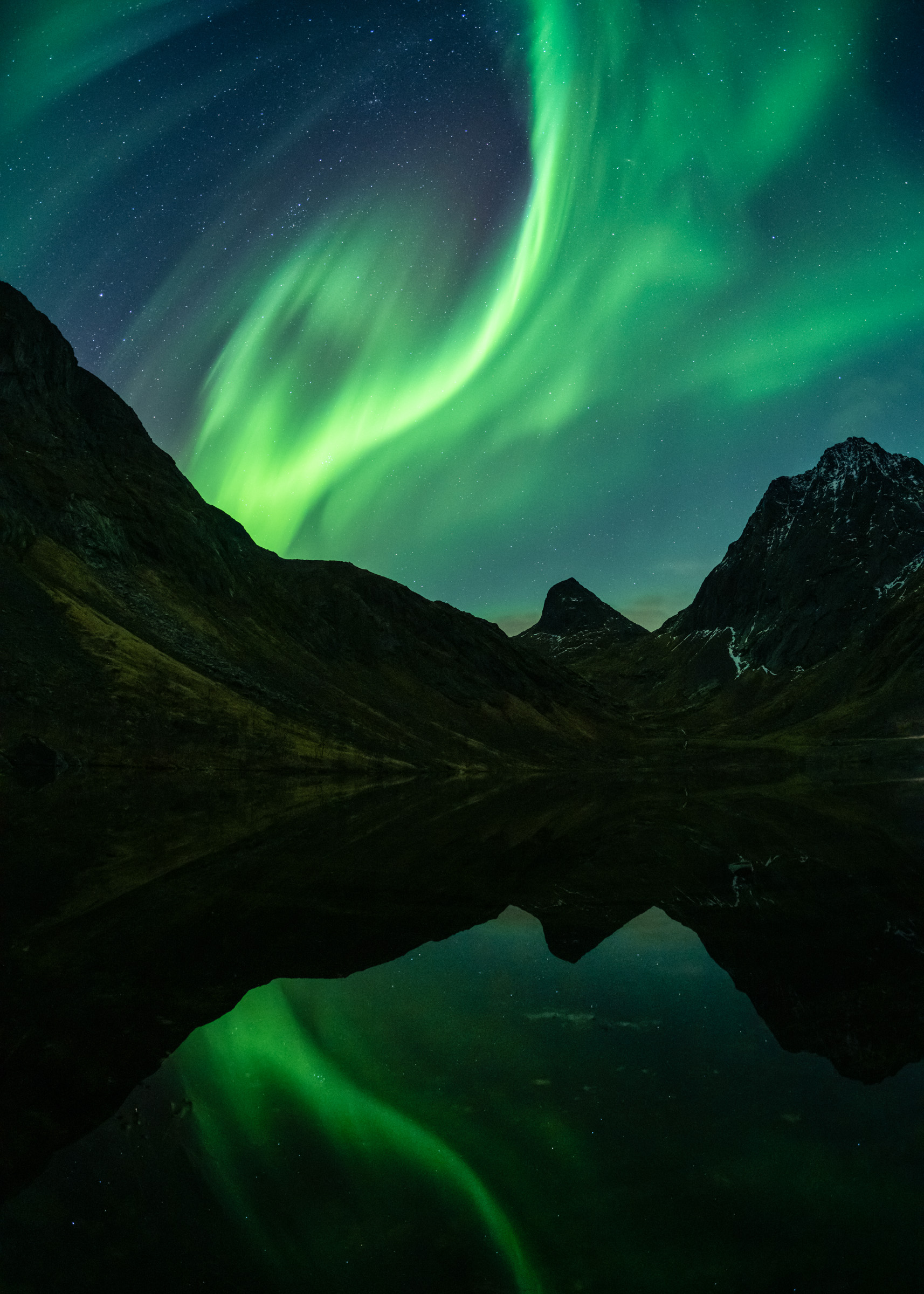
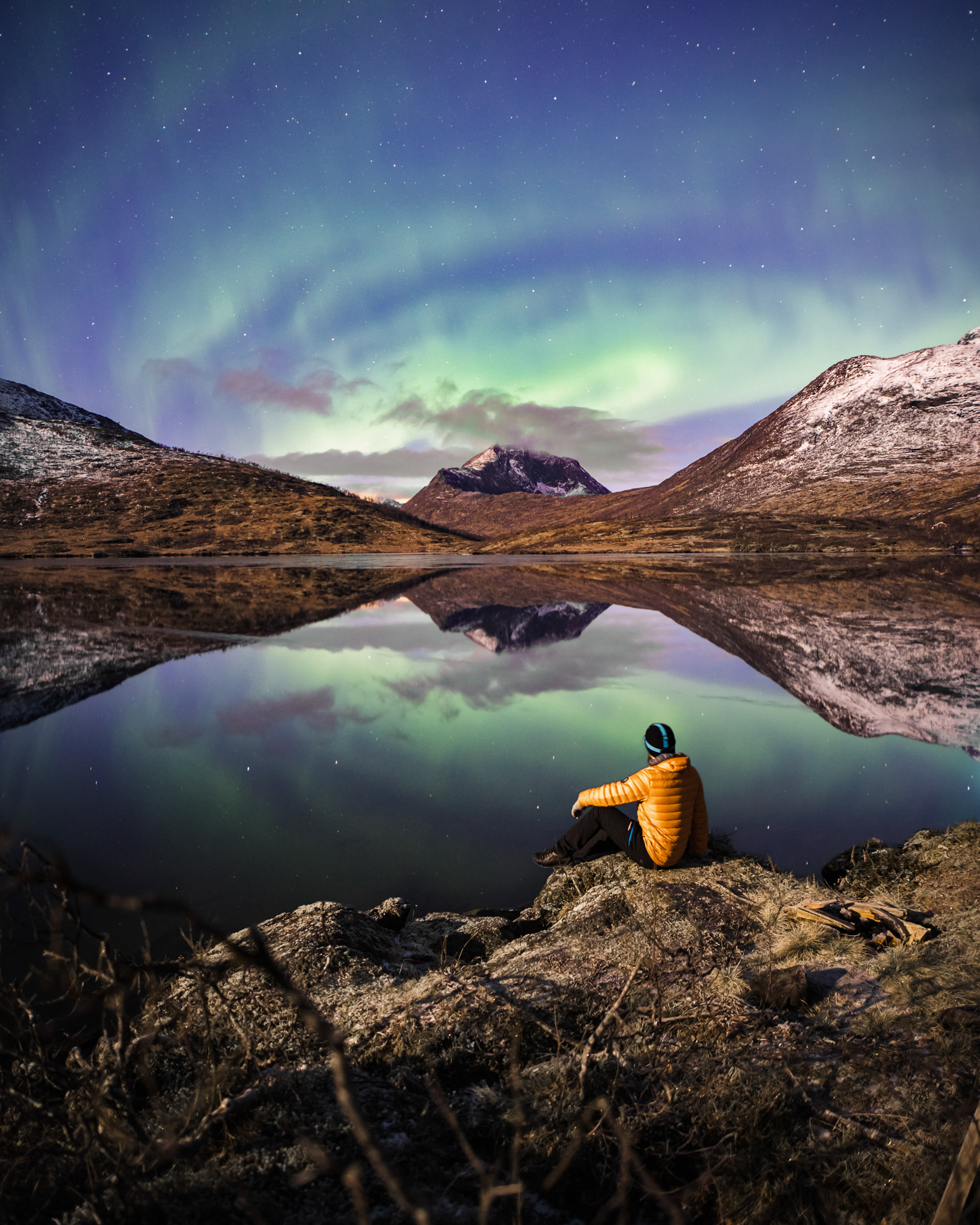
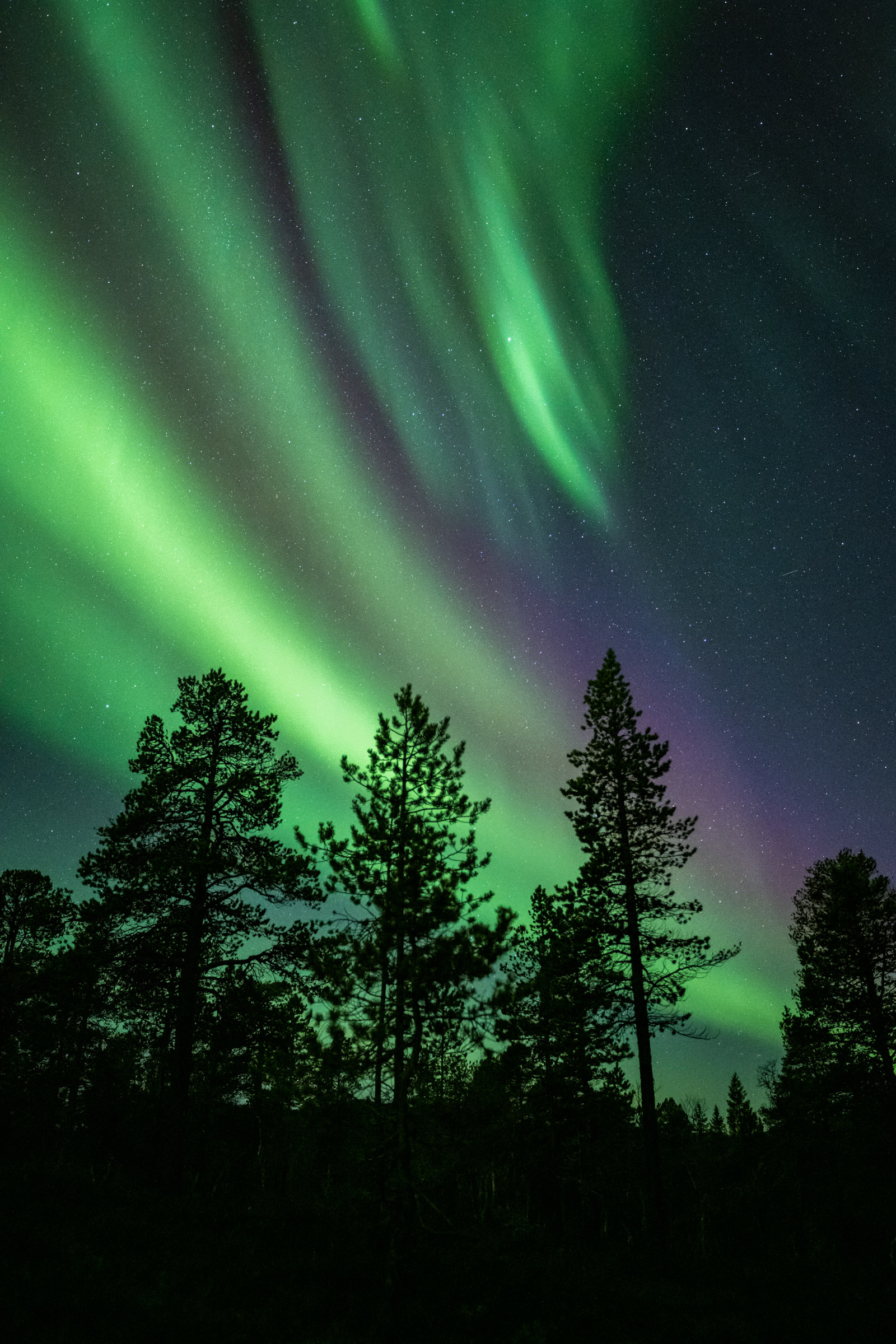
The first auroras dance in late August
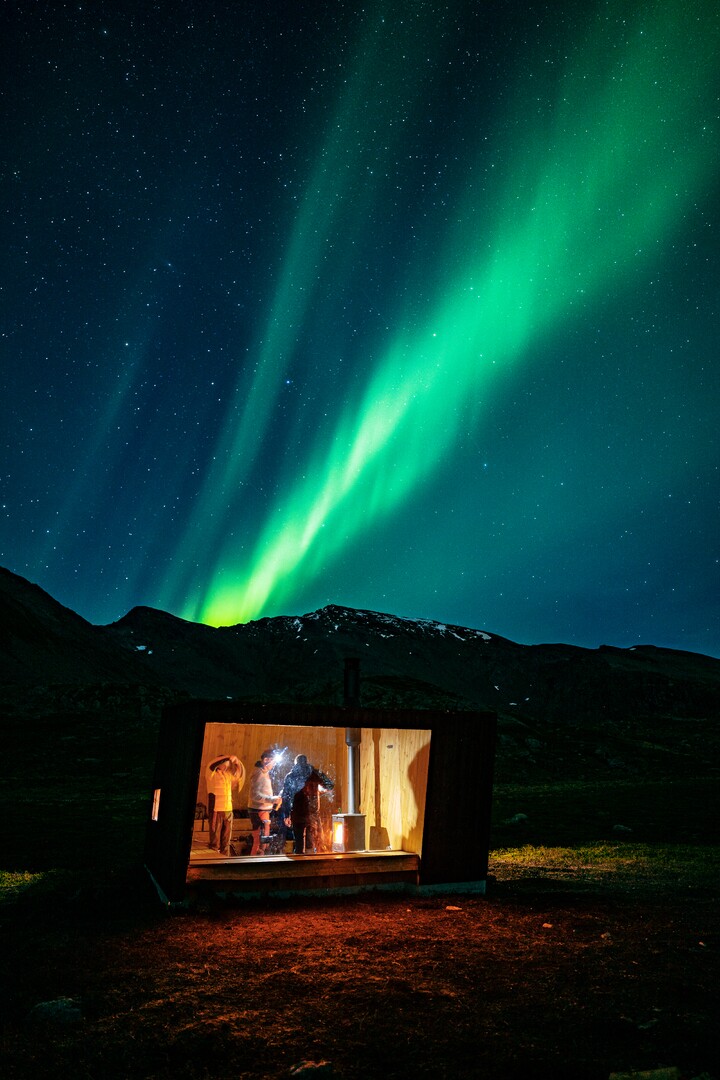
Thus, if you travel to North Norway this fall you will have a great chance to see more northern lights than in many years. The aurora season starts already in late August when the polar nights are getting dark enough to see the northern lights. Watching the northern lights dancing overhead on a clear night is one of the most spectacular and awe-inspiring sight the natural world can offer.
Pål Brekke is a solar physicist with a PhD in astrophysics from the University of Oslo. Ha has worked for many years at NASA. He is currently lead space science at the the Norwegian Space Agency. Pål Brekke also takes an interest in popularising astrophysics and Northern Lights, and is a much used lecturer and author of Northern Lights publications for a wider audience. He has also produced an award-winning documentary about the northern lights. Read more about his work on the northern lights at www.solarmax.no
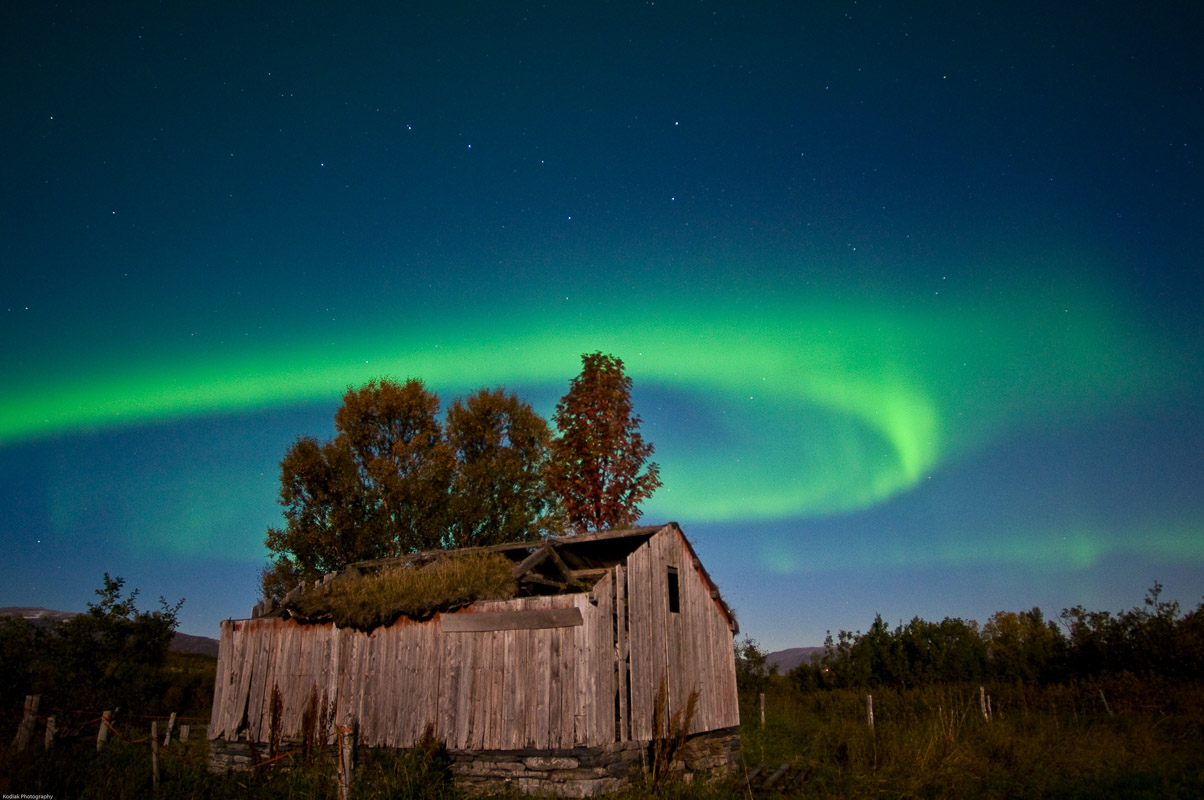
FAQ – Autumn Aurora
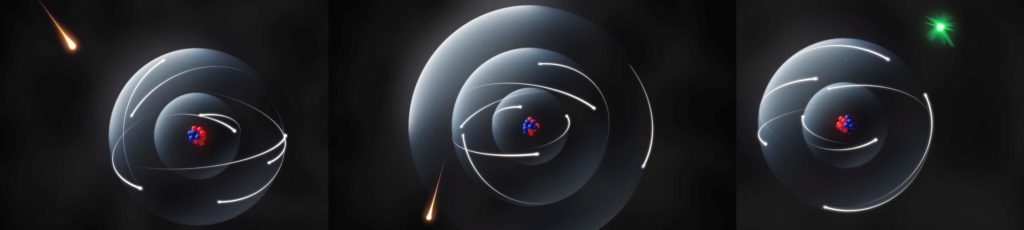
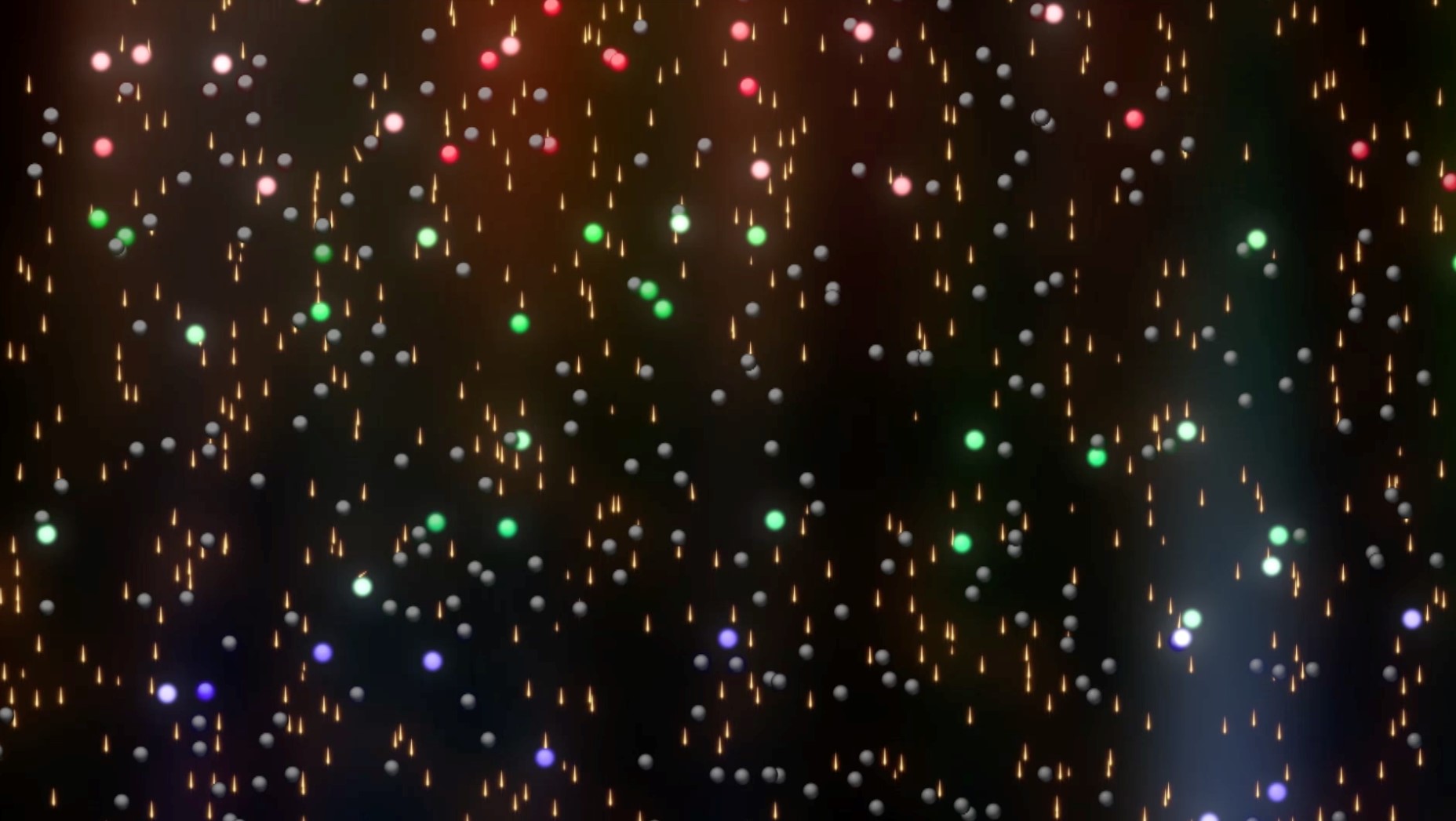
The solar particles that manage to enter Earth’s magnetosphere are guided along the magnetic field lines down towards the polar regions. When they hit Earth’s atmosphere they collide with oxygen and nitrogen. These collisions, which typically occur at altitudes of between 80 to 300 km, transfer some energy to these atoms (they get excited), and immediately send out light on a certain frequency or color. When billions of such small flashes occur each second, the cumulative effect is a spectacular glowing atmosphere with green, red, white, and blue colors. The mechanism that makes the sky glow is very similar to what happens in a light tube, neon sign, or an old-fashioned TV set. The mechanism behind the aurora is well described in this book (The Story about the Northern Lights” and the documentary “Norther Lights – a Magic Experience” and can be downloaded here (www.solarmax.no)
You can be lucky to see them from mid-August, and they are frequent from early September. However, by mid-September you have as good chances, sometimes better, than in mid-Winter. This is because the most important Northern Lights hours are dark by then. The Russel-McPherron effect – increased Northern Lights activity around Autumn Equinox – furter increased your chances of spotting the lights.
Autumn nights can be surprisingly mild, or they can be frosty. In late August and into mid-September, mild föhn southeasterlies can make the night pleasant and mild. Northeasterlies, however, can bring frost. Be sure to dress correspondingly.
Clear skies are required to see the Northern Lights. Autumns can be wet in the north. This is particularly true in coastal areas. Inland there are very dry pockets, with good chances of spotting the lights close to every day. If the weather is iffy, being mobile is a good idea. This you can do by joining an organised Northern Lights hun, or by renting a car.
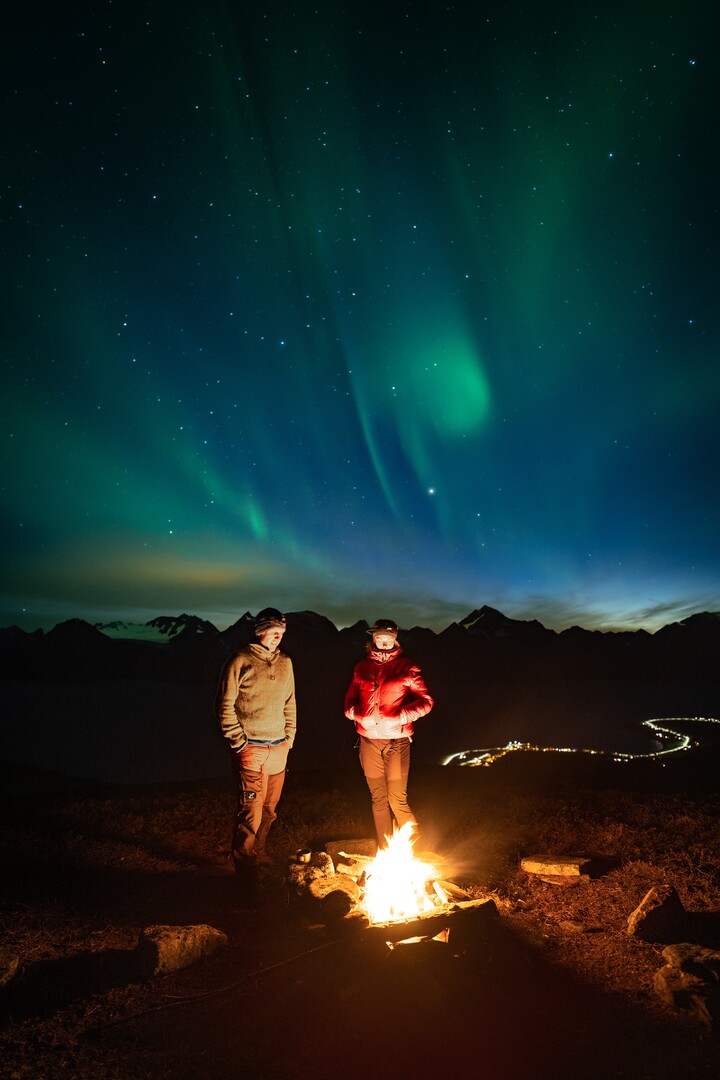
Autumn – fall – is excellent if you want to do things on your own, as it isn’t so cold. In a clear night, go for long walk in the hours before and around Midnight. If you go around in built-up areas, bring a reflective so that you are observed by passing cars. You can also walk along the beach or up to a viewpoint in the forest. Then you should bring a headlamp, and ask the locals where to go. Usually, there is a footpath used by the locals to excercise. Climbing high mountains in the dark, however, should be left to the experienced hikers.
Most of Northern Norway is under or near the Northern Lights oval. This does not only mean that most areas have equal chances. It also means that you can spot the same Northern Lights eruptions in Lofoten, Tromsø and Alta, notably. This is because of the altitude of the Northern Lights, most occur in excess of 100 km, occasionally up to 800 km up. It thus makes no sense to move locally to a place with better chances.
Light pollution can diminish your experience. Try to move away from the downtown areas of cities and towns, and avoid roads with a lot of traffic. However, the light pollution effect is often exaggerated; lights from houses and streetlamps in the distance are not a big problem. A big eruption is also easily spotted in downtown Bodø or Tromsø.
As the planet is in exactly the same position at spring equinox in relation to the sun, the chances of spotting big aurora eruptions are the same. So spring equinox is as good as fall equinox.