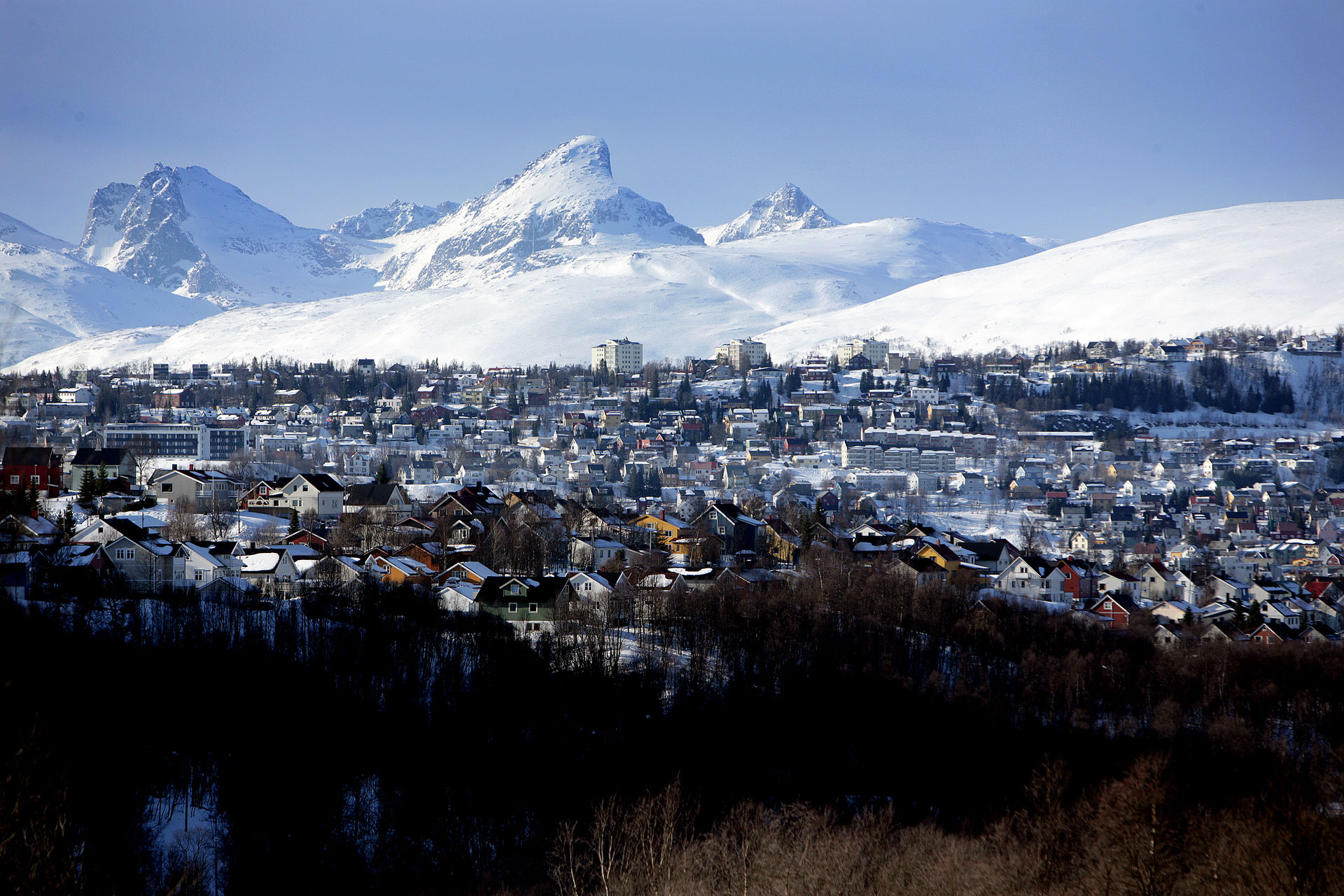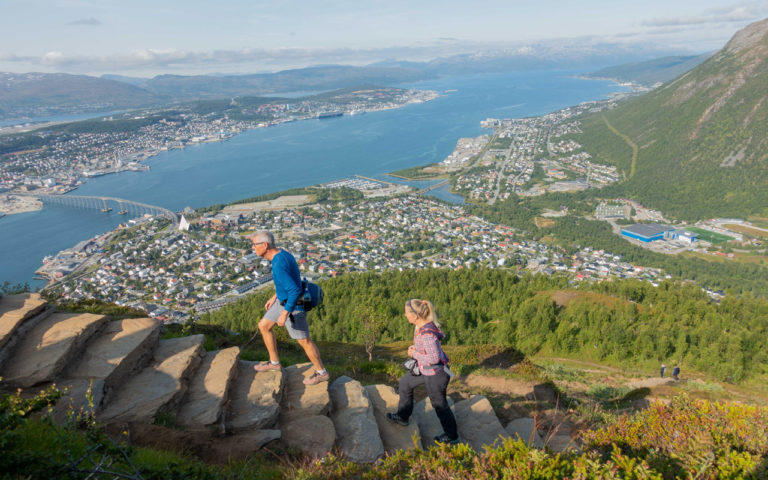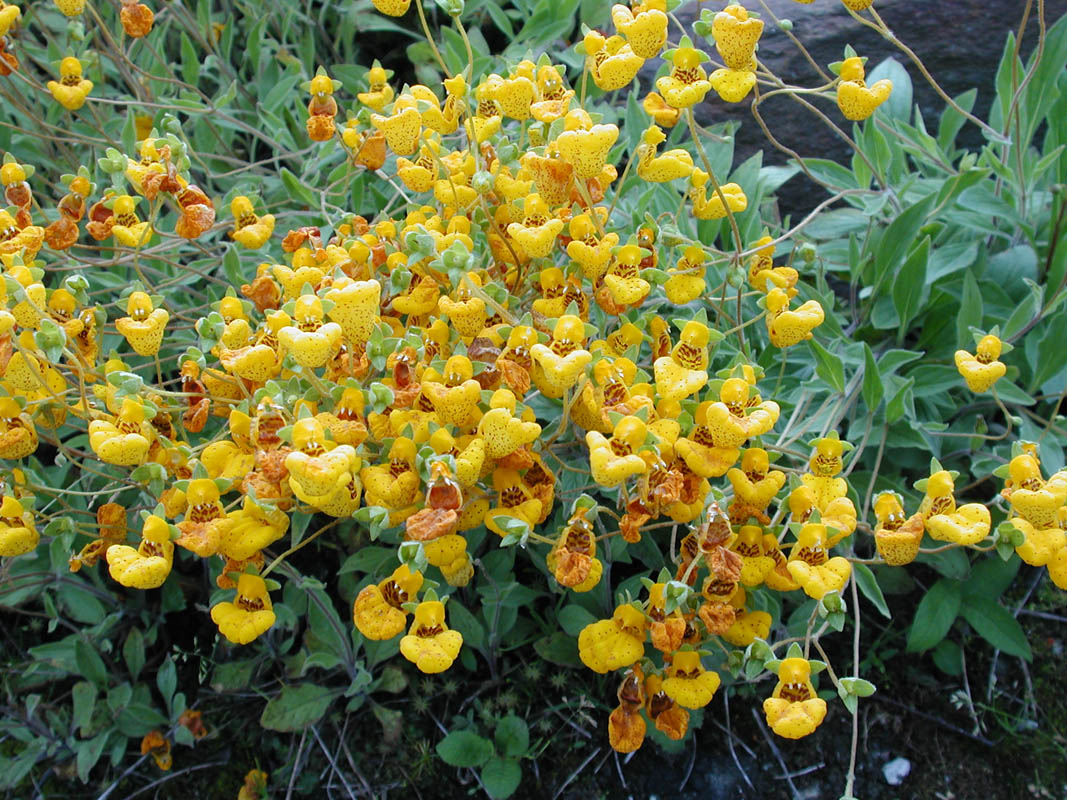
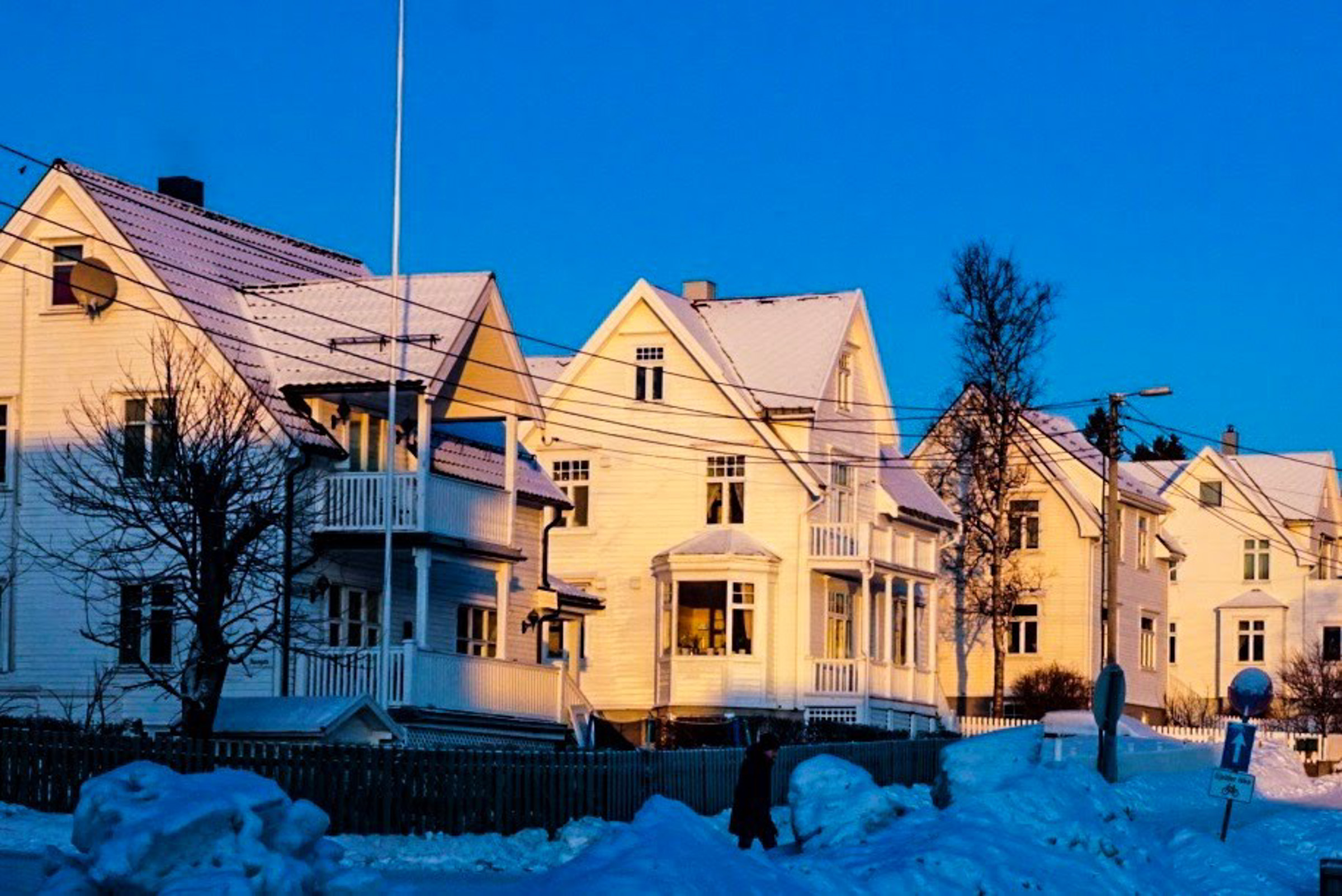
Found on a surprisingly green island in the Arctic, with views of waterways and mountains, the eastern slopes around Tromsø’s downtown are a teeming, unruly area. Tromsø has grown in fits and starts, with periods of prosperity alternating with economic downturns. This is reflected in its architecture, particularly in the residential developments on the outskirts of the city centre.
Visitors with a penchant for walking may enjoy exploring streets just minutes away from Tromsø’s bustling pedestrian street and highly-photographed waterfront. Peace and quiet, a rich architectural heritage and, above all, far-reaching views are your reward.How to find directions in Tromsø
How to Find Directions in Tromsø
The island of Tromsø is like a compass needle, running from south to north. The city centre lies on the eastern slope and shore of the island. This means that when you head north, the Tromsø Sound will be on your right, and when you head south, it will be on your left. “East” and “west” are rarely used in Tromsø’s downtown – you’ll always be going uphill or downhill. Once you’re there, it will become clear.
The Polar Museum and Skansen: The Oldest in Tromsø
We have to start somewhere, and we’ve chosen to begin in Tromsø’s oldest area, around Skansen. Skansen is the oldest house in Tromsø, built around 1790 to house the customs station. The Polar Museum was constructed around 1830 as its warehouse. The Polar Museum is a must-see, and the Skansen house looks particularly picturesque.
The latter is situated atop the remnants of a fortress from the Middle Ages. Back when the sea was a metre higher, the turf rampart would have been directly on the Tromsø Sound. The cannons were placed there during the Napoleonic Wars. Be sure not to walk on the ramparts, as they have been worn down by too many visitors.
Verftsgata: Old and Colourful
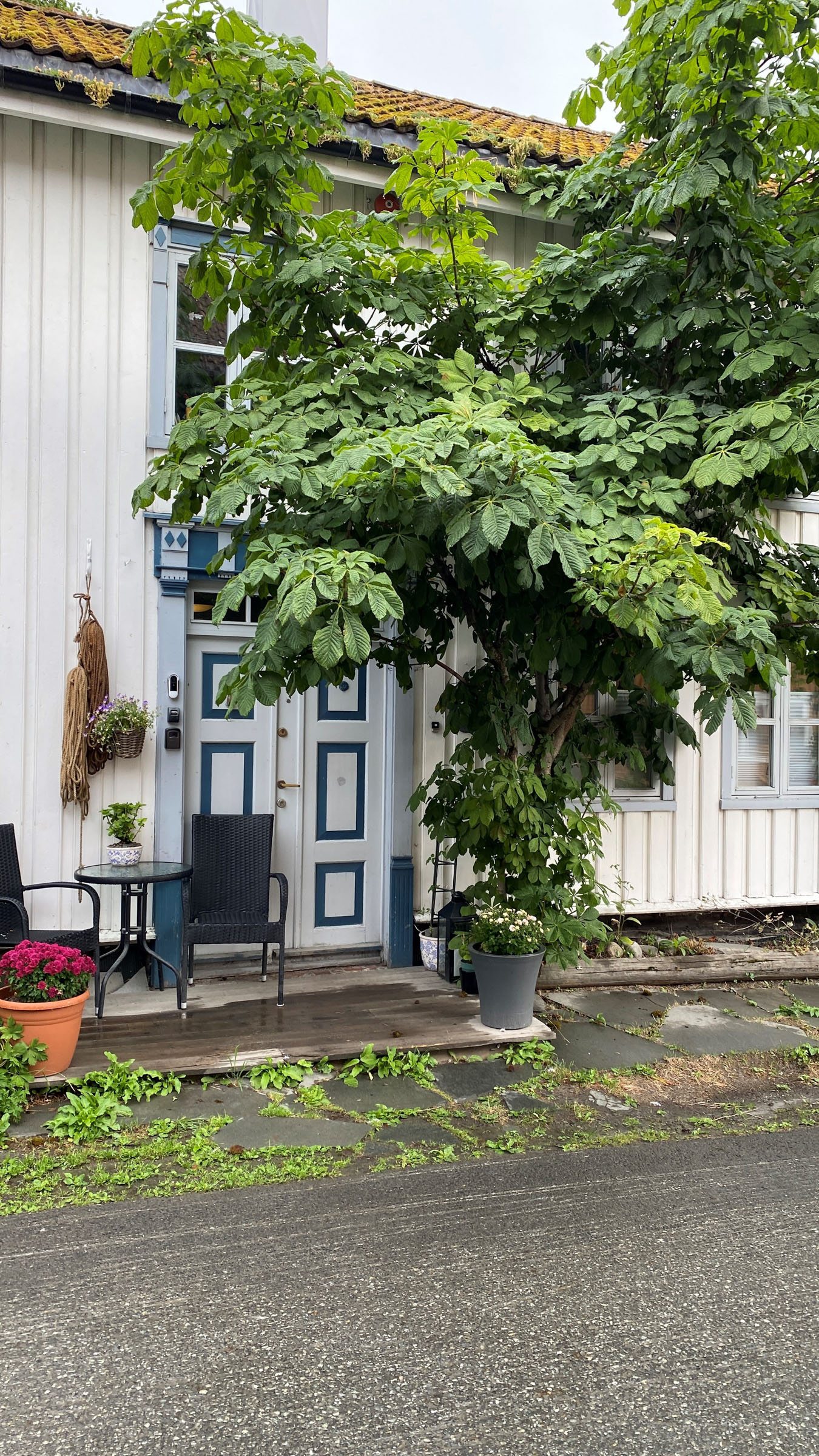
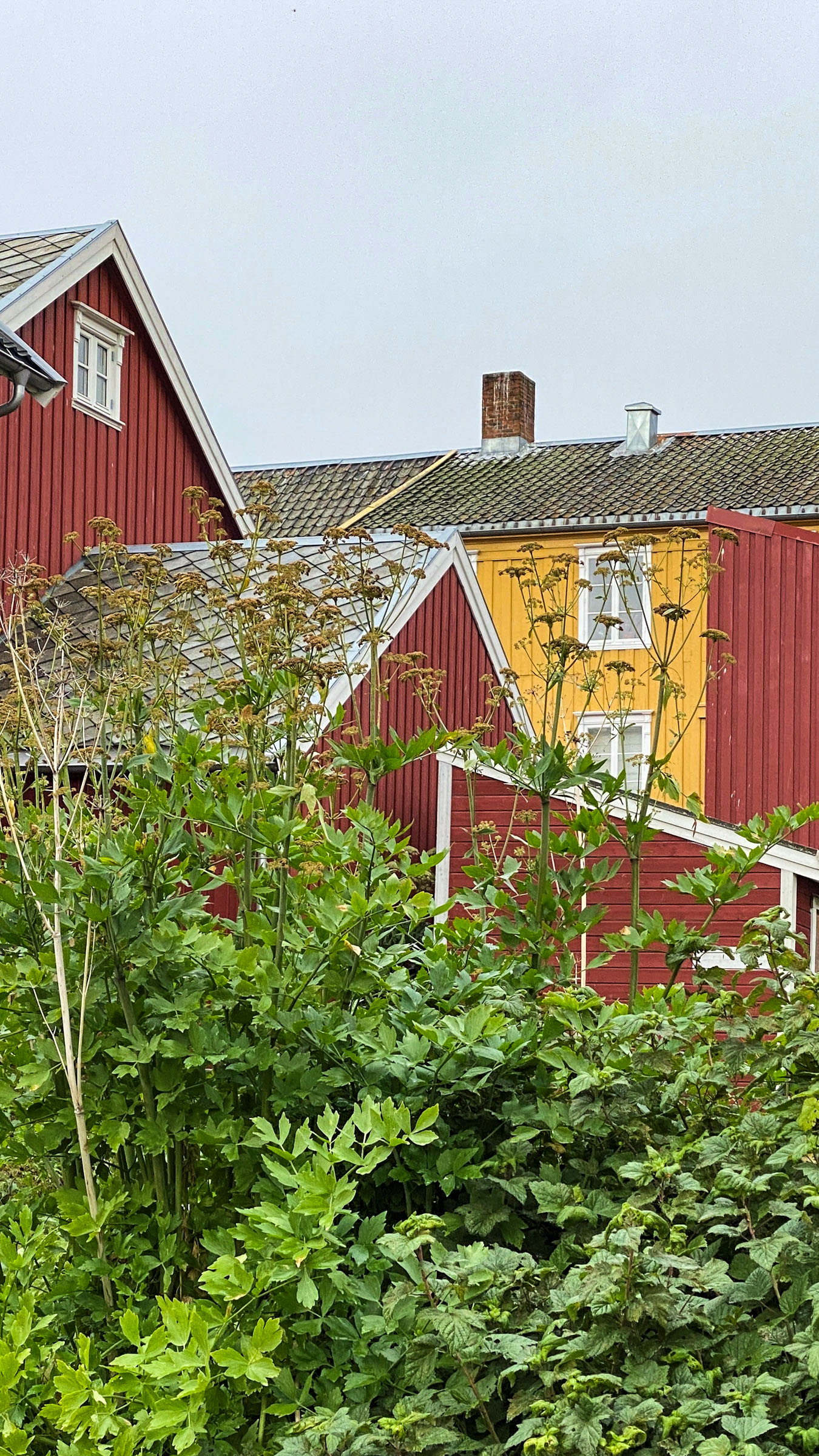
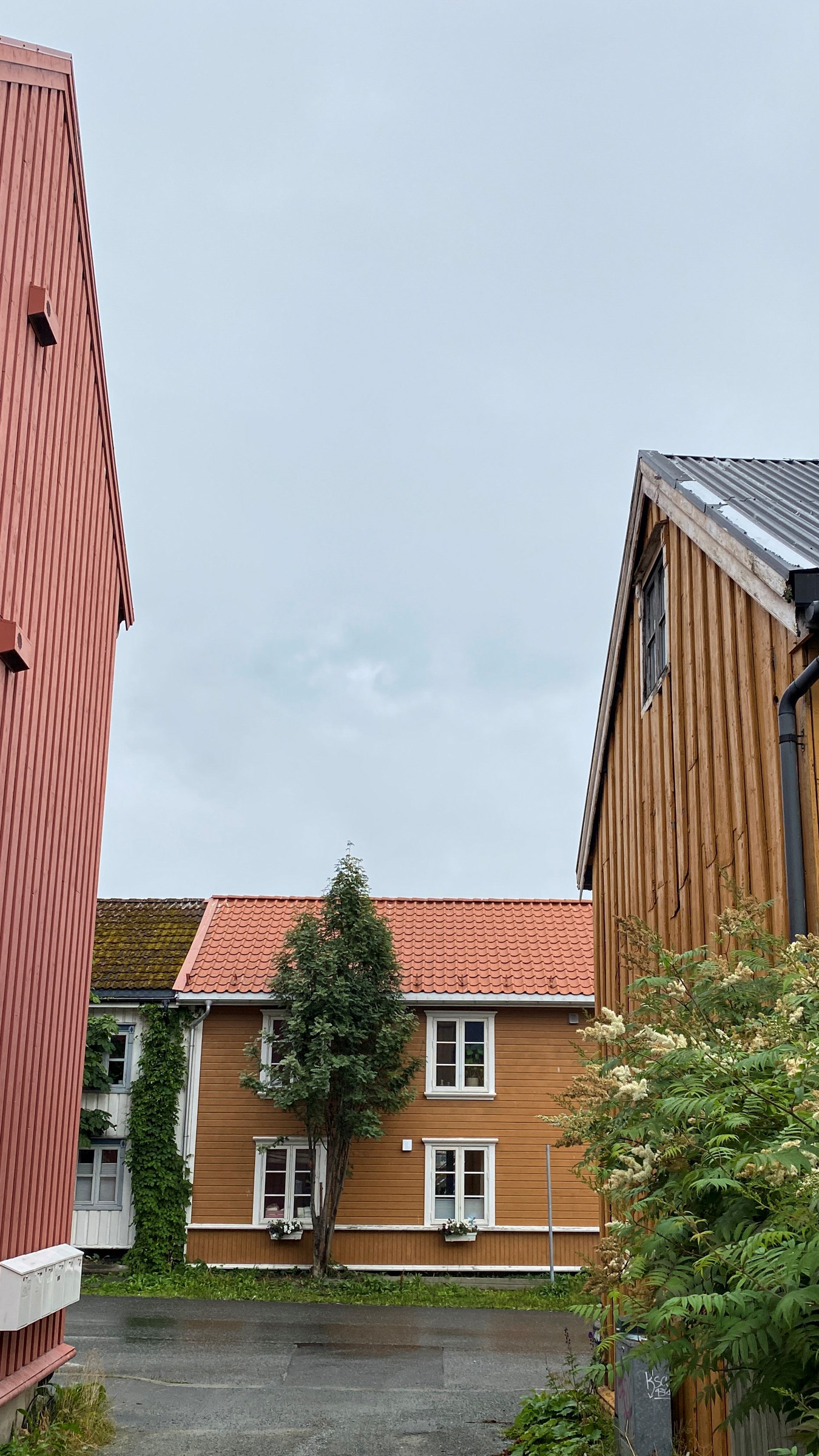
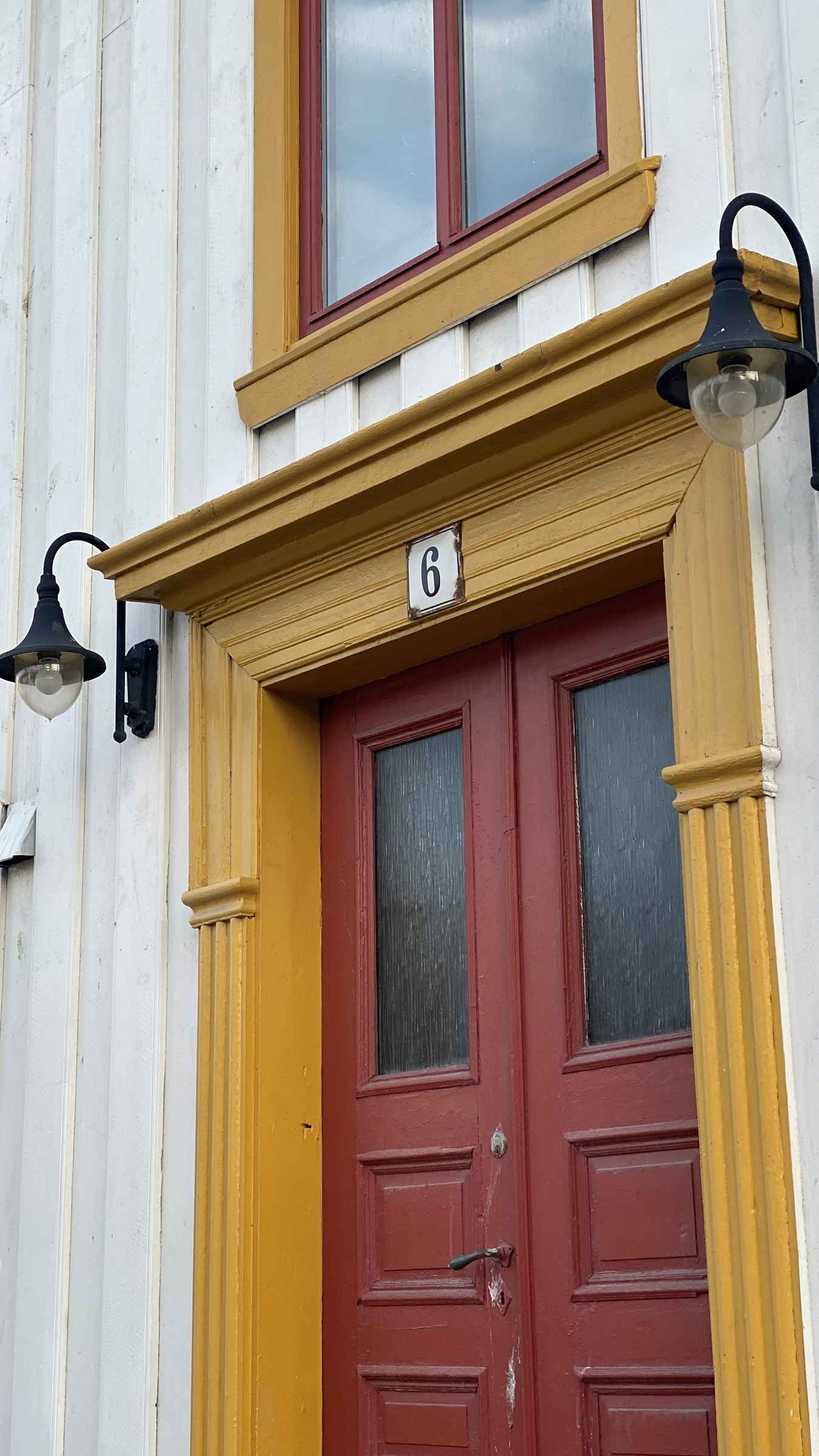
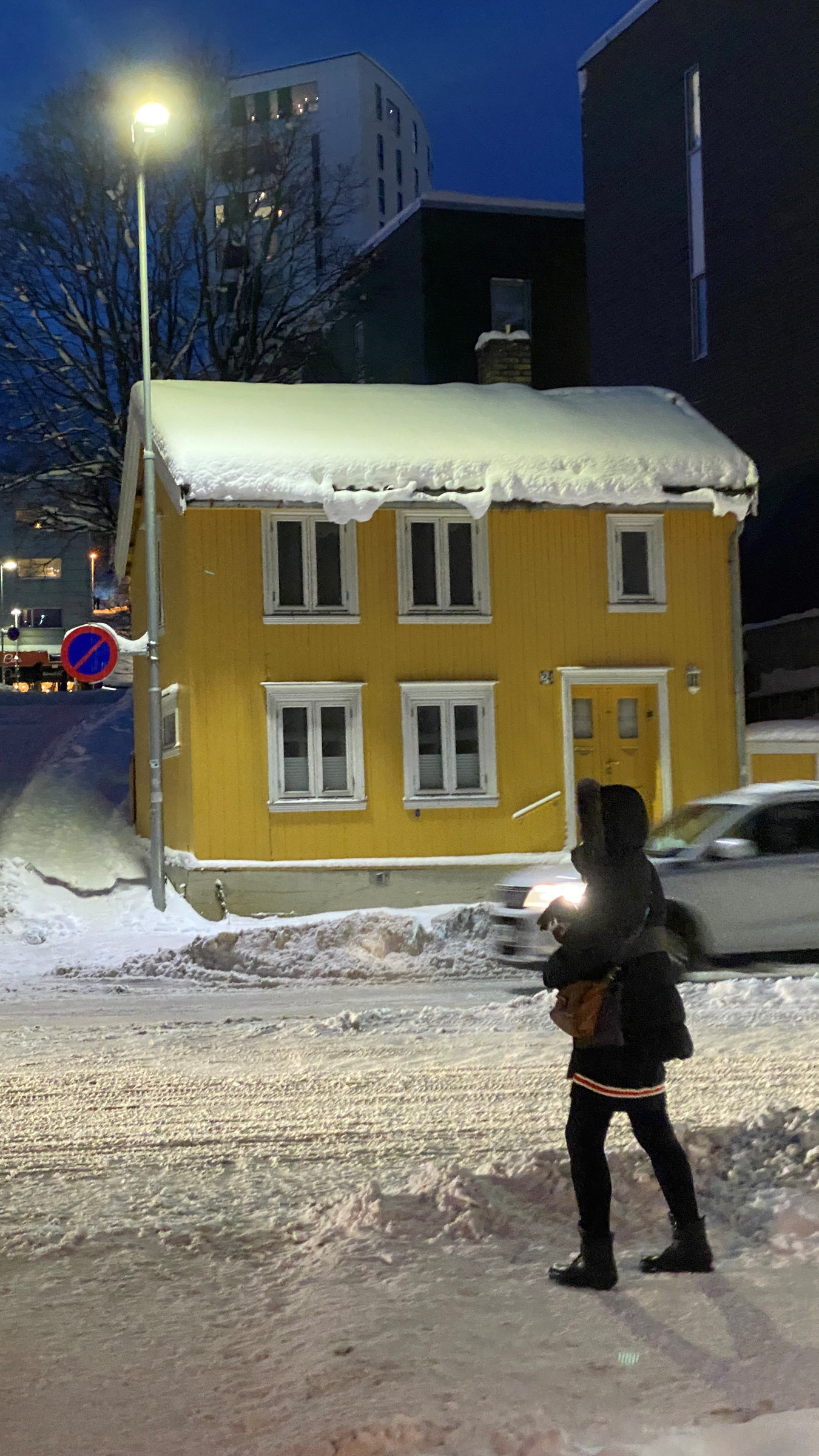
Walk a few metres towards the bridge, with the dominant Scandic Hotel on your right, and you will find the small street Verftsgata – “Shipyard Street”. The oldest houses here are the smallest, dating from before 1840.
In the 1980s, this street was more or less a slum, but it has since been restored and transformed into a residential street with small urban flats for singles. However, a hundred years ago, all the houses were packed from attic to basement with working-class families.
Skippergata: Both Big and Small Houses
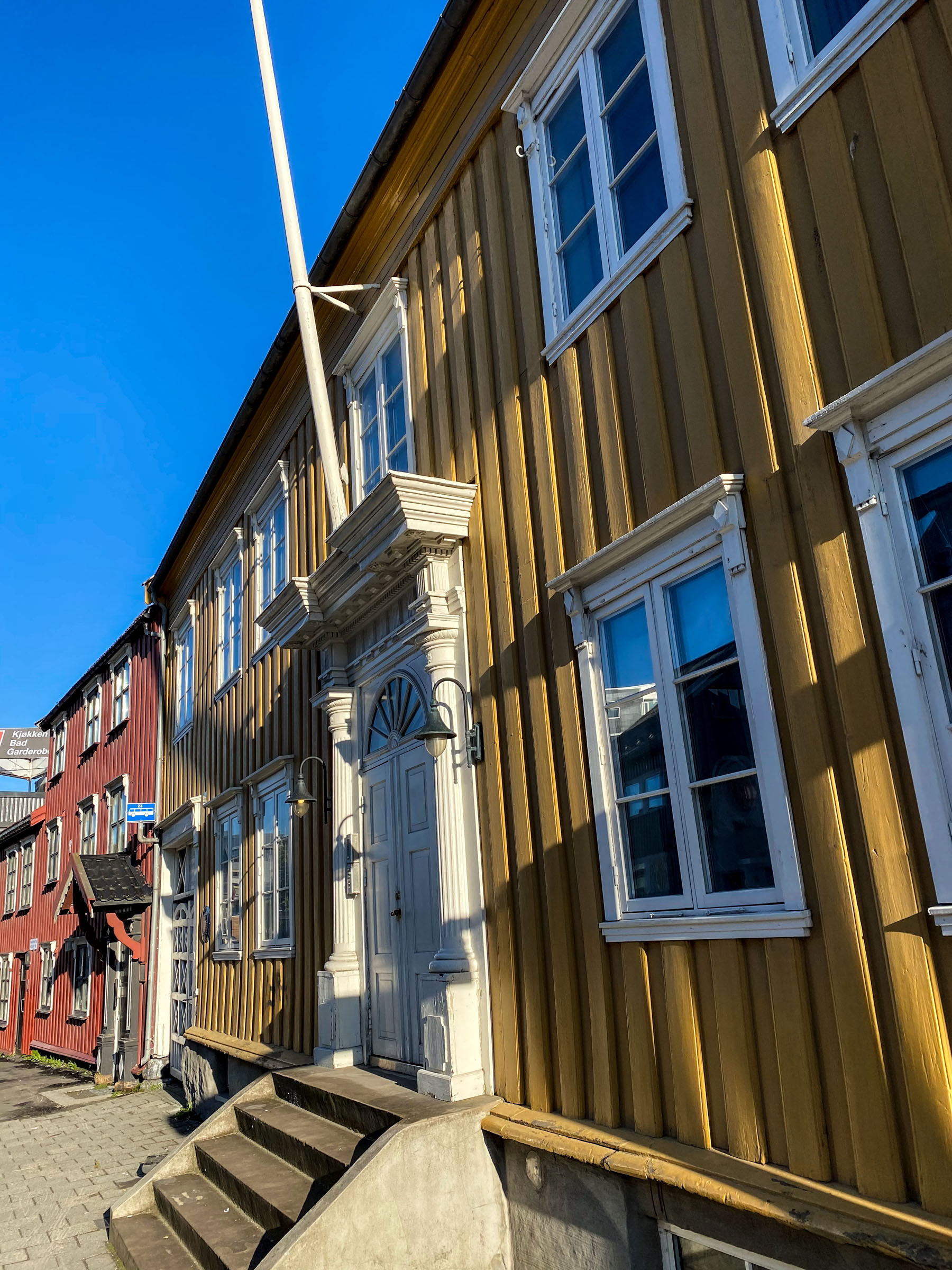
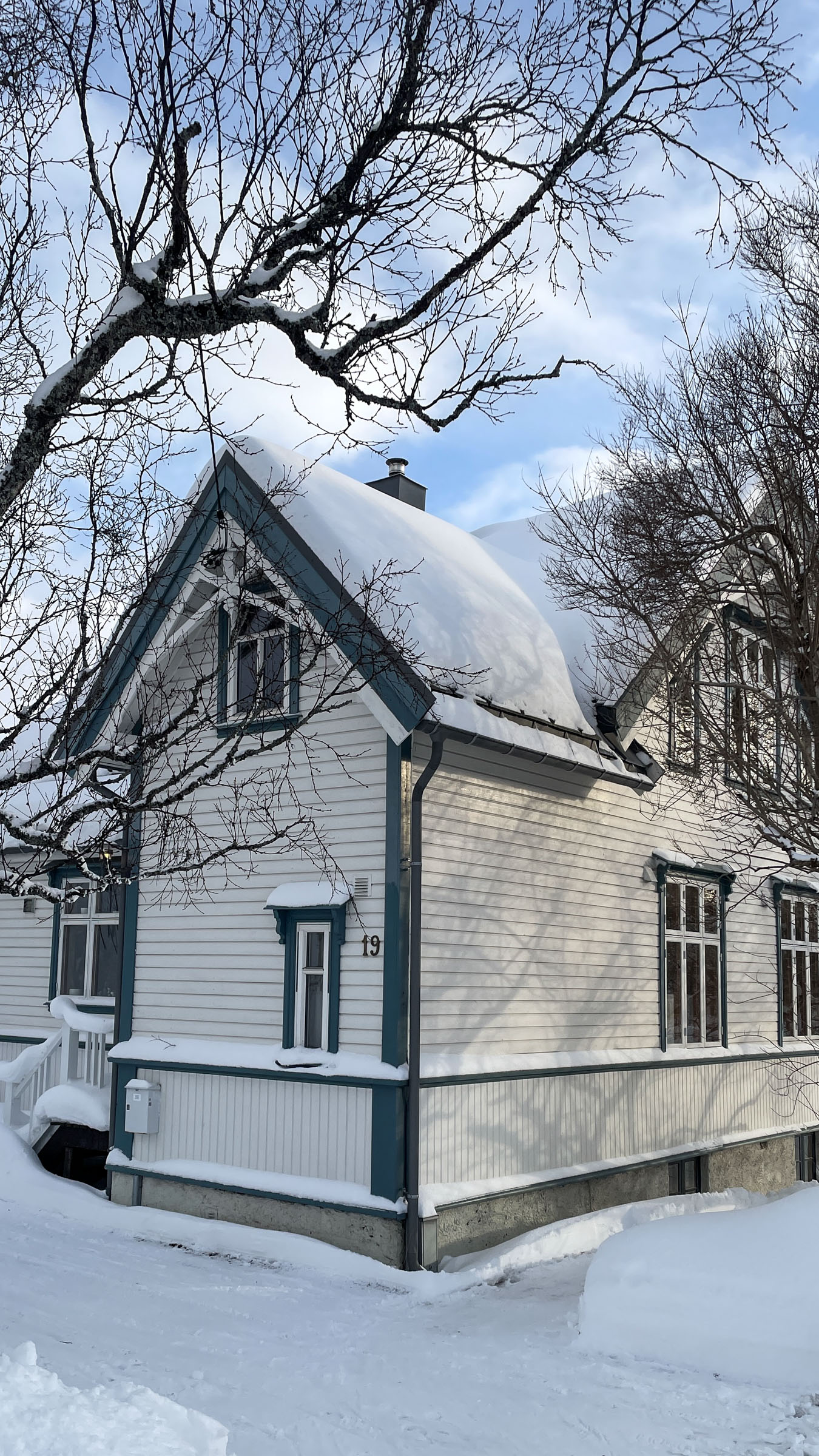
Head south into Skippergata. This street is somewhat busy with buses and traffic, but there are quite a few historic houses here that are real gems. Most notably, Skippergata 19, a rather grand house built in 1838.
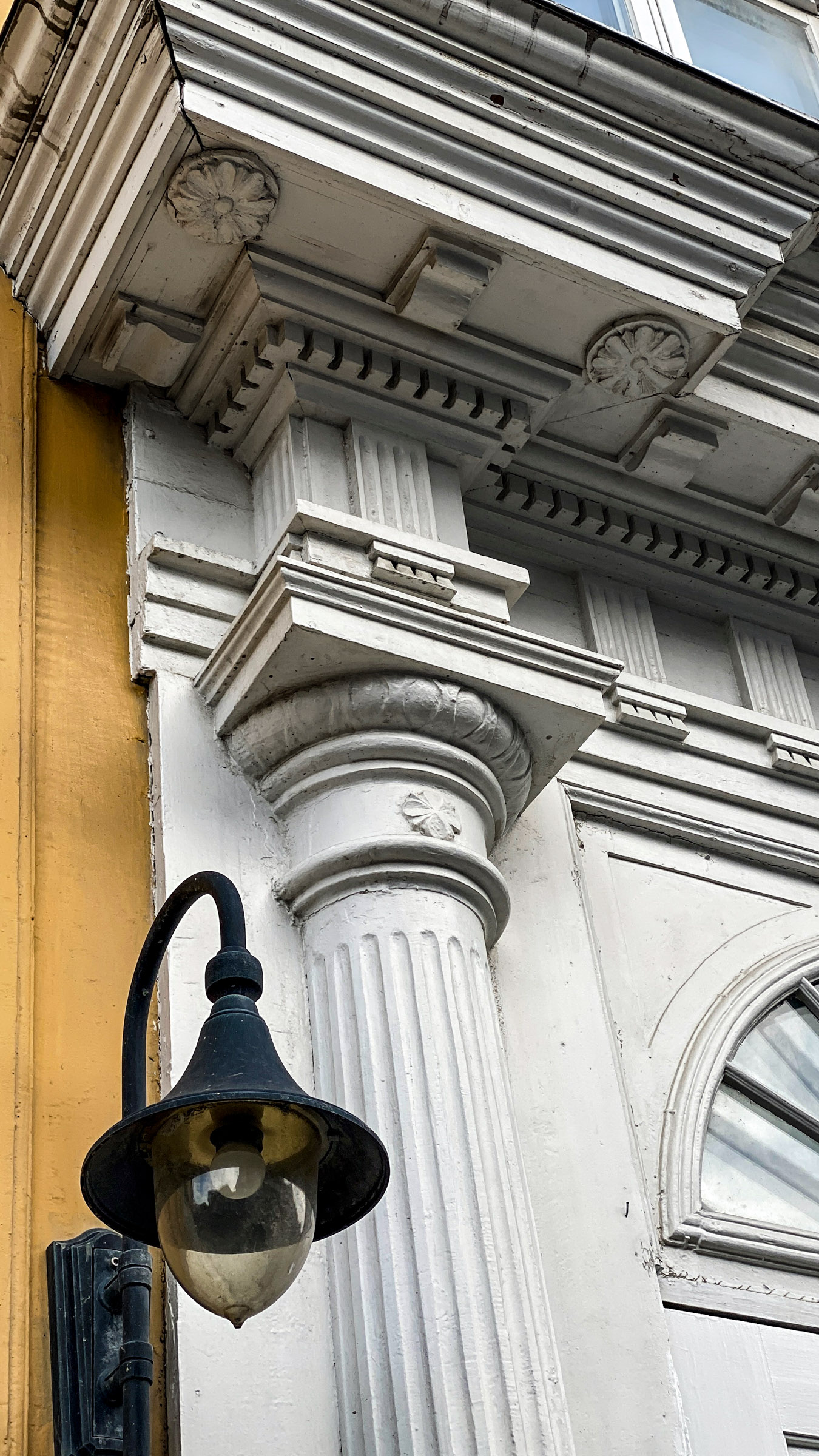
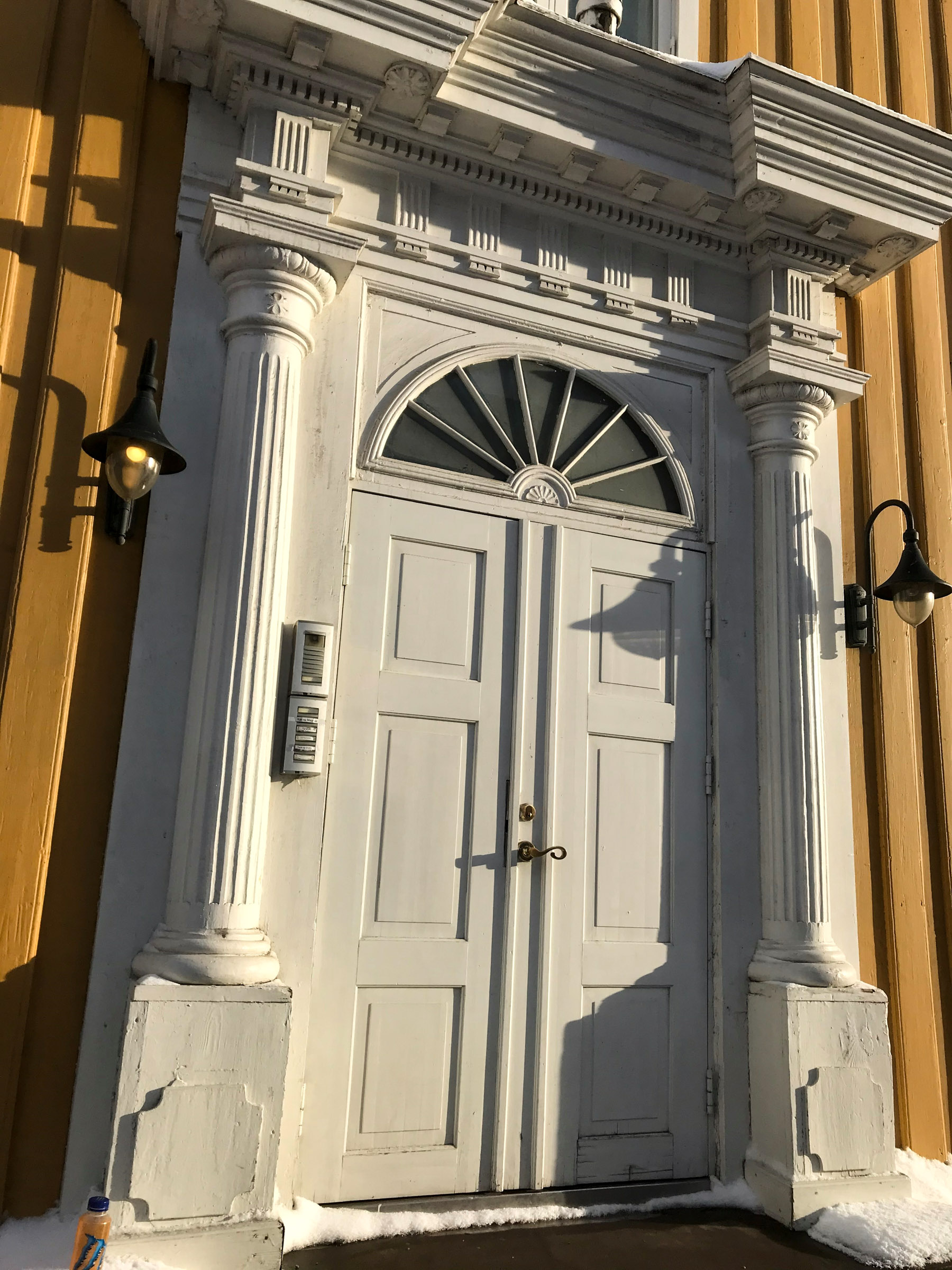
It features Trondheim panelling (vertical, that is) and classical window framing. The doorway is in classical Empire style, centred around a magnificent portal with classical pilasters. It’s worth crossing the street to see it from a distance.
Skippergata 11 is a whole Compound
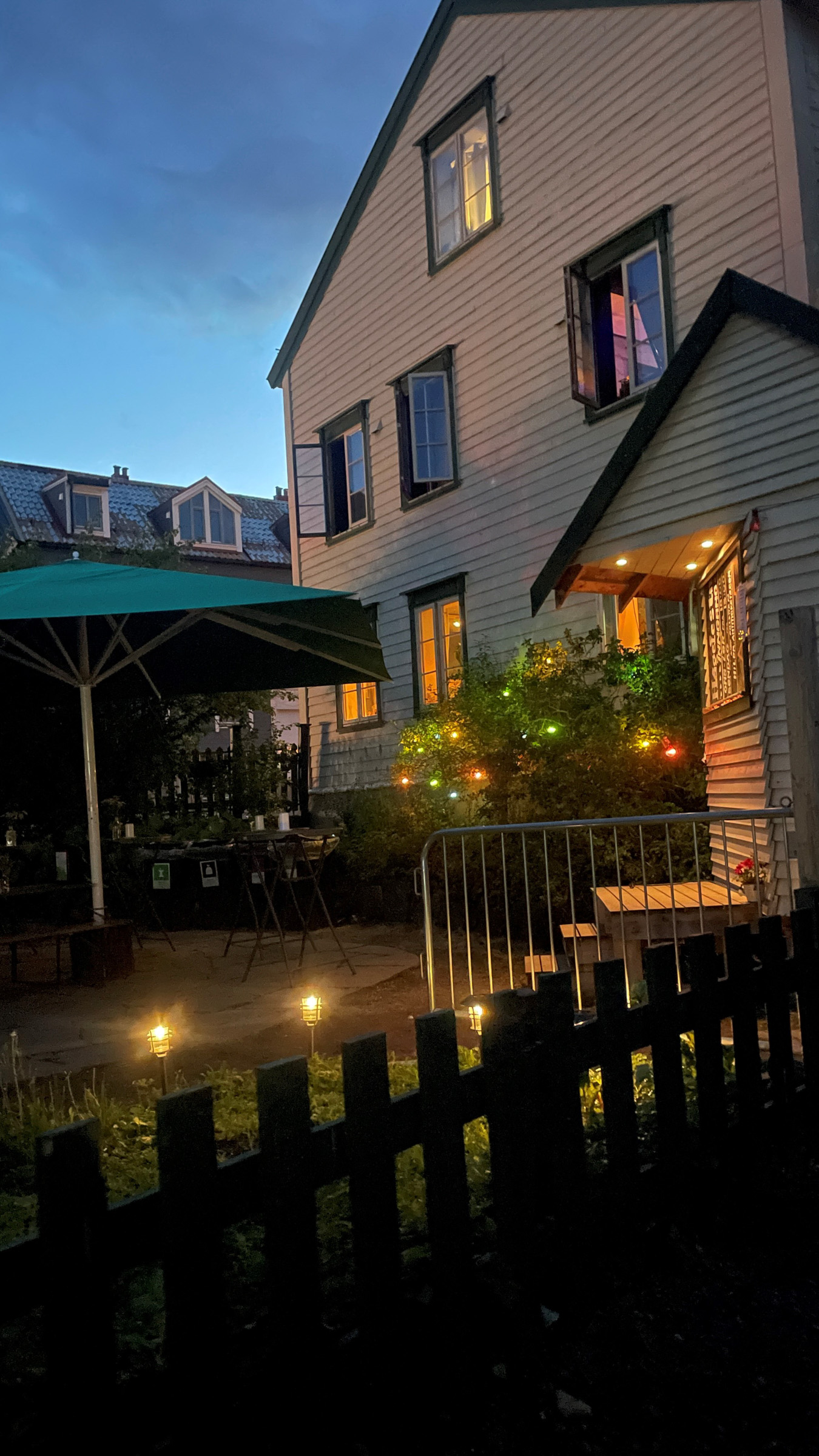
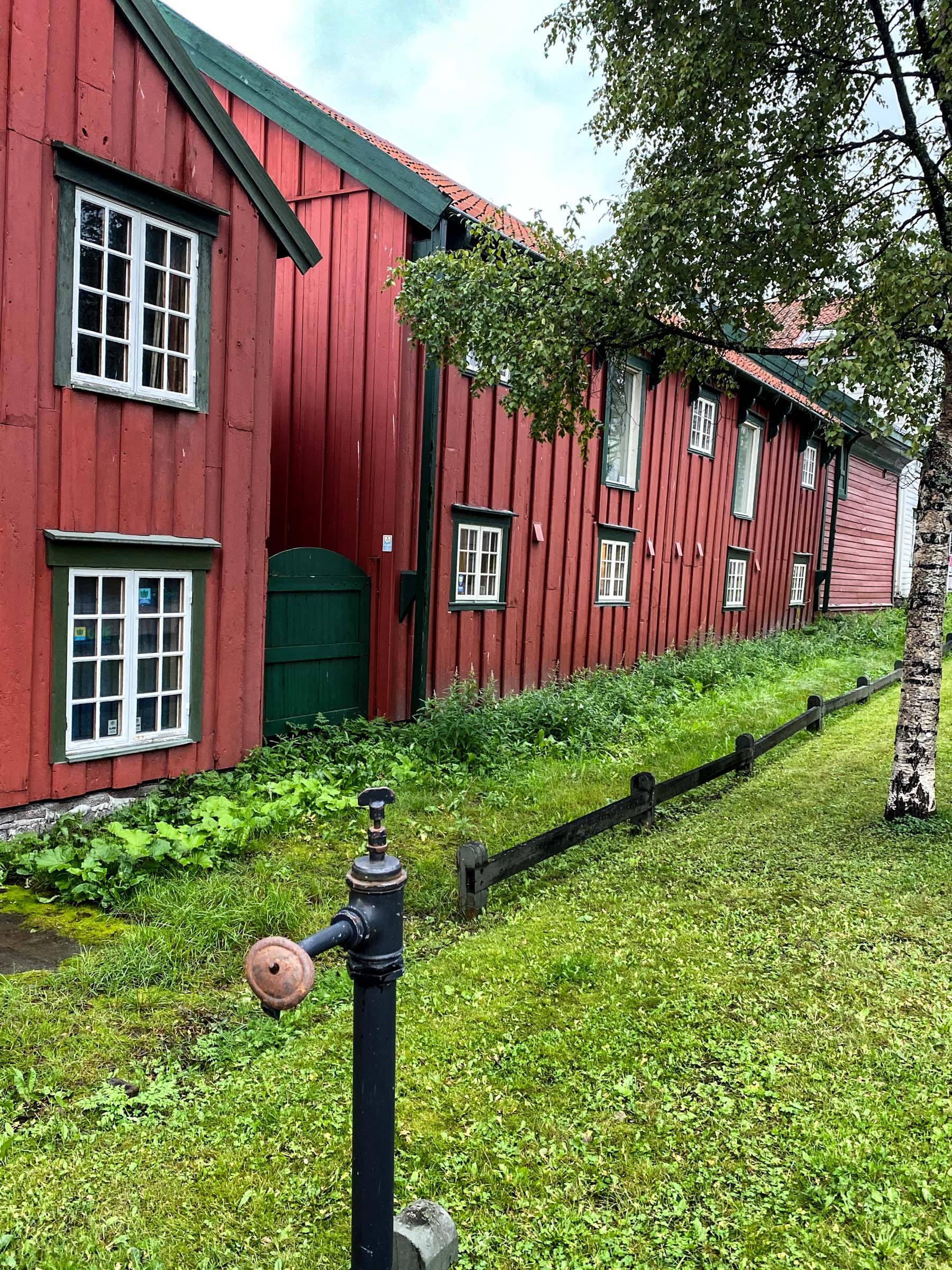
Continue south to Nordre Tollbugate and take a look at Skippergata 11. This is a fully preserved compound, with the main building painted in a distinguished grey and the outbuildings in the traditional, more affordable Norwegian barn. The garden is also preserved, with old perennials gracing the old-fashioned wooden fences.
The outbuildings housed livestock, first and foremost the cows that supplied the little city with milk. In summer, the cows would graze in fields around the island of Tromsø, with the family’s summer house situated in the middle. Families would move up in June and stay until August or September, with summers filled with both relaxation and haymaking.
Nordre Tollbugate Takes You Up to the View
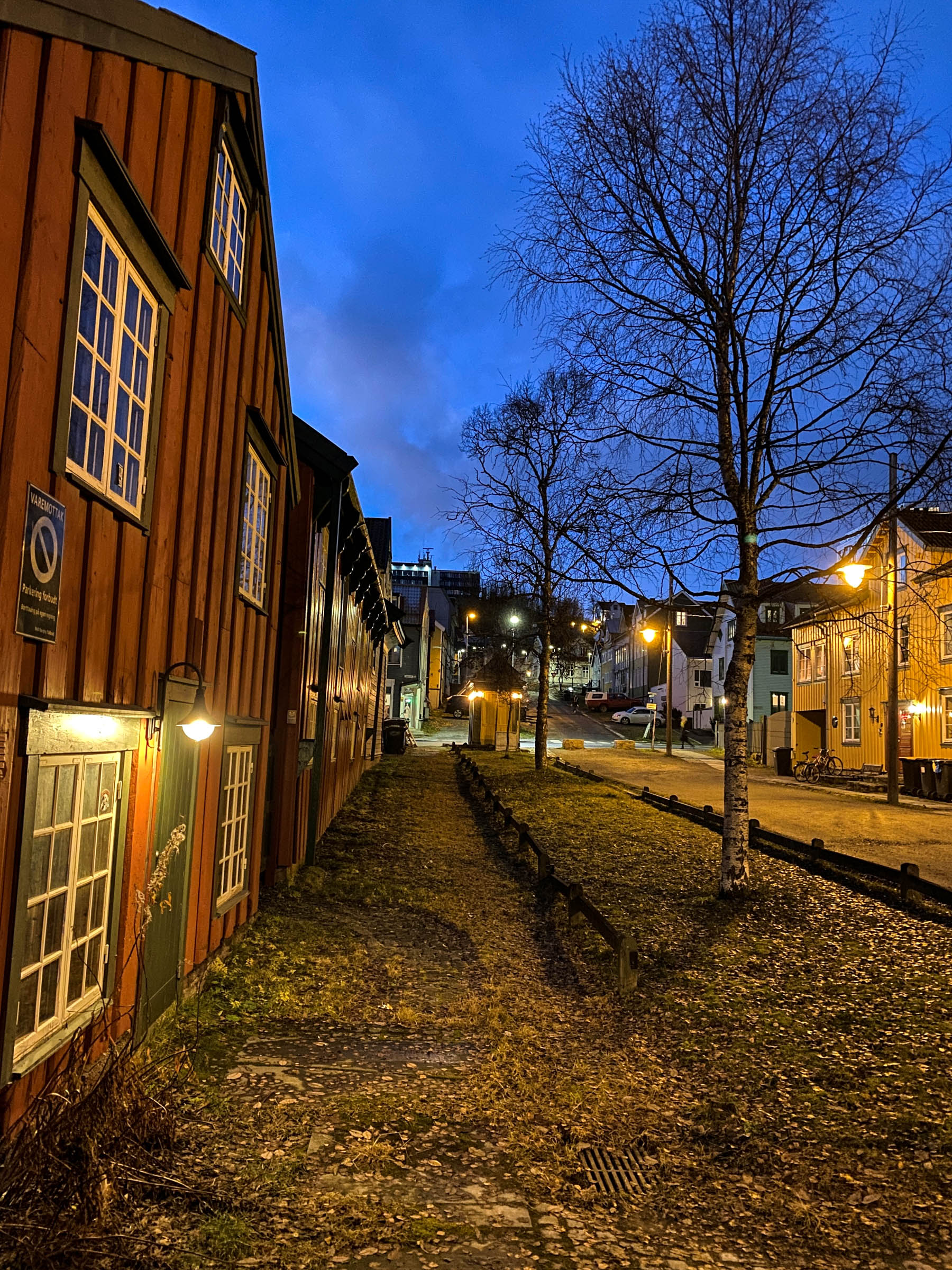
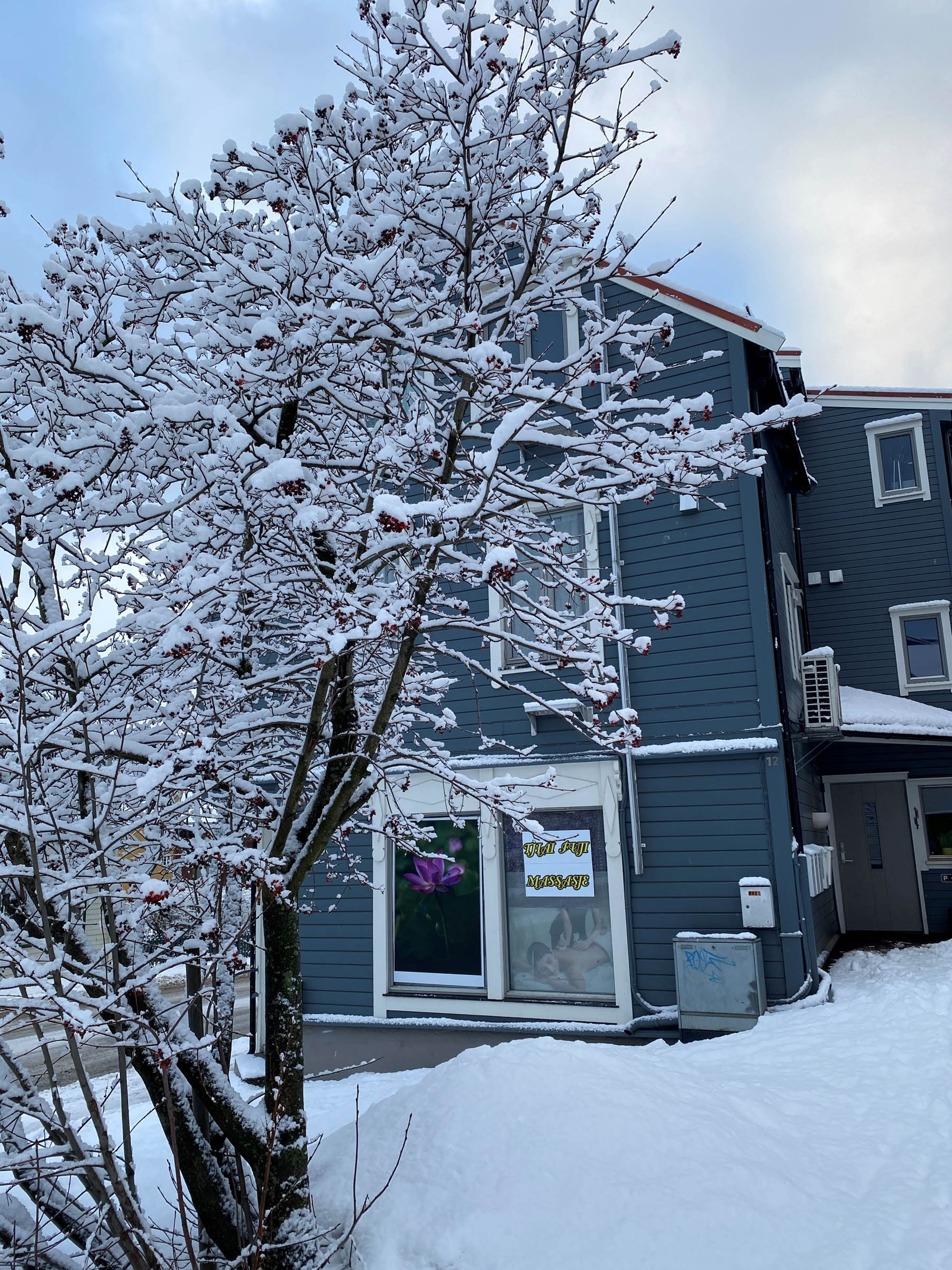
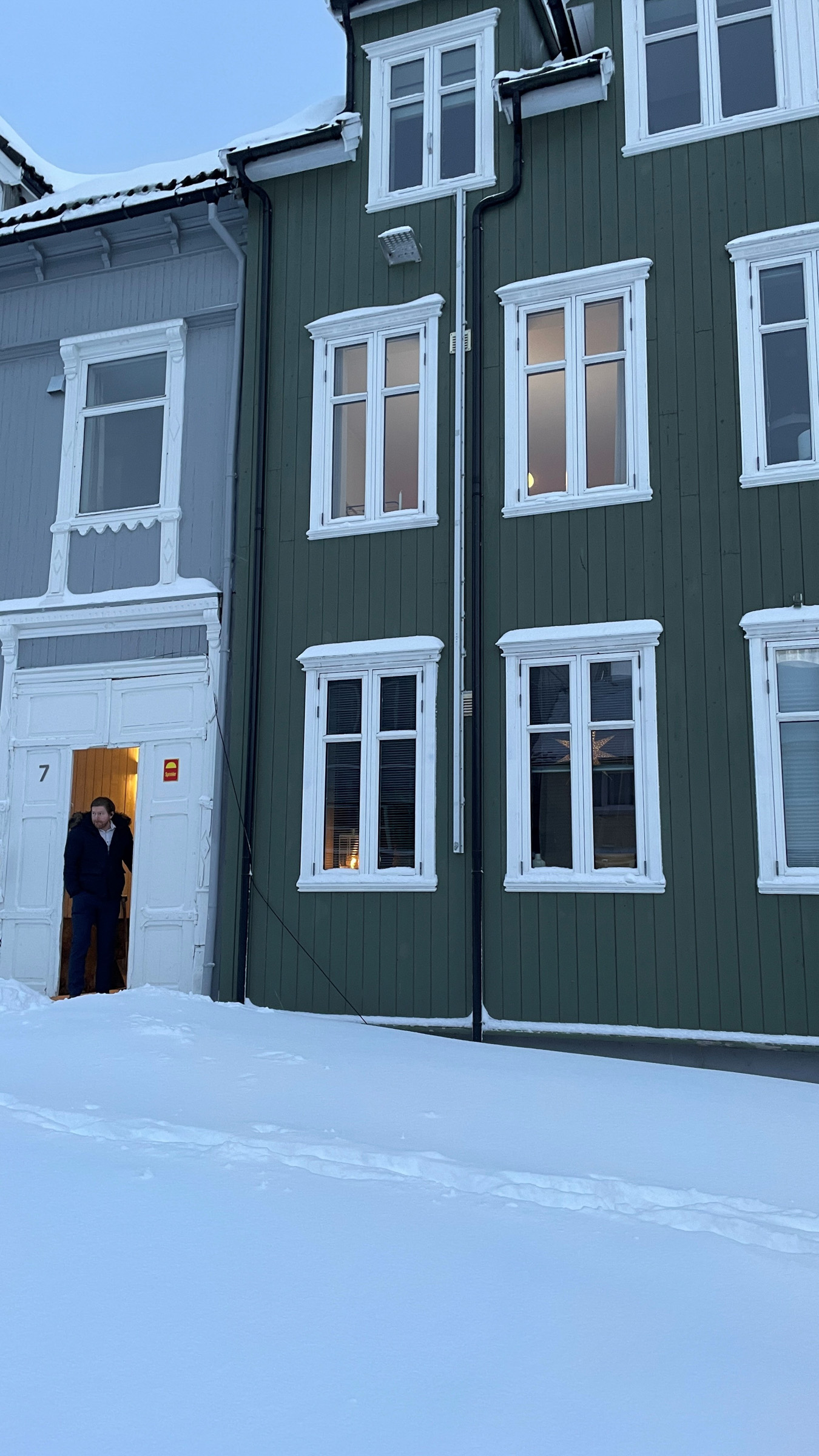
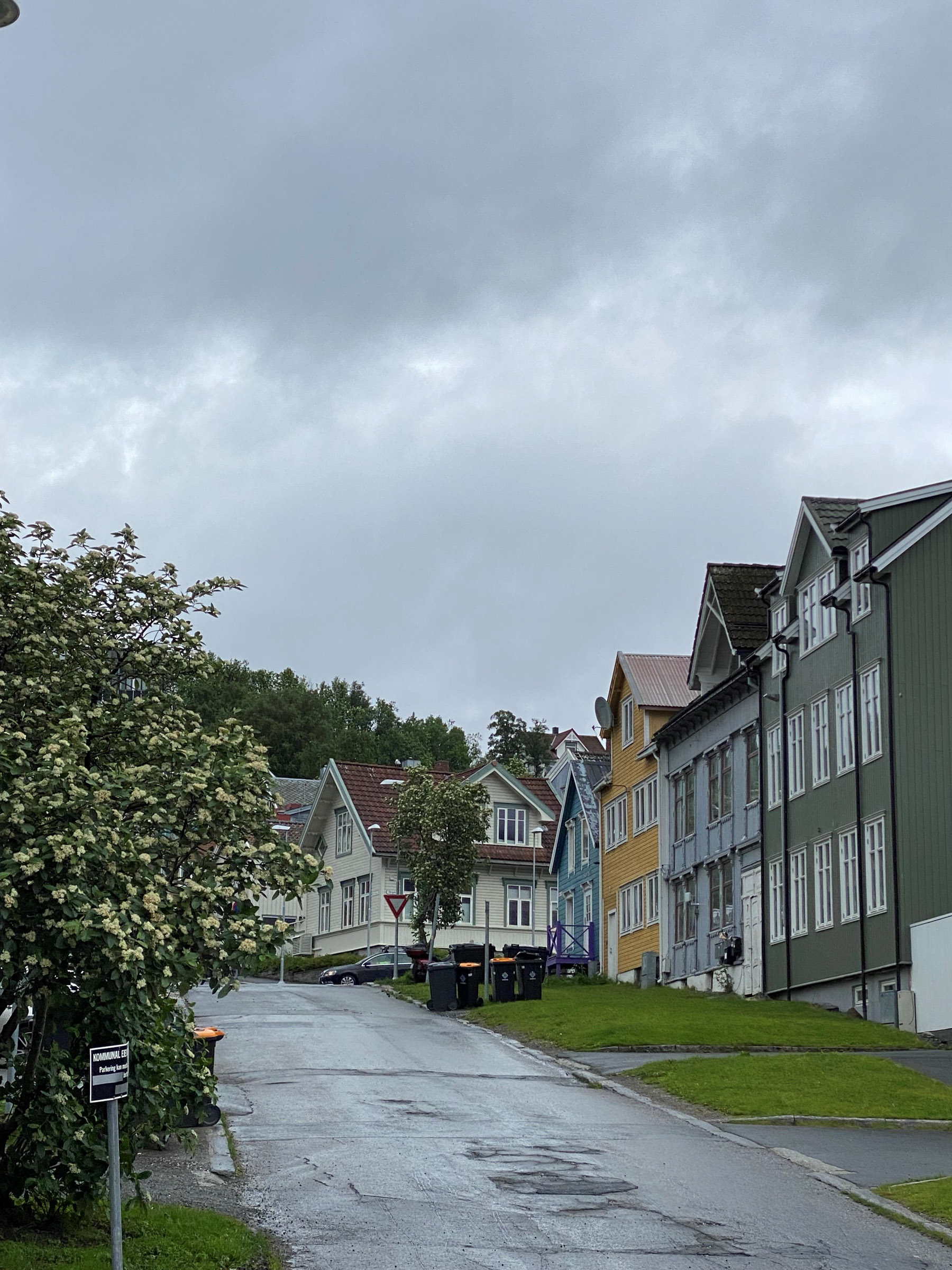
The steep cross street between Skansen, Skippergata, Storgata, Grønnegata, and Vestregata, Nordre Tollbugate, is a colourful mix of old houses. They date from the 19th century, with the oldest houses being the lowest.
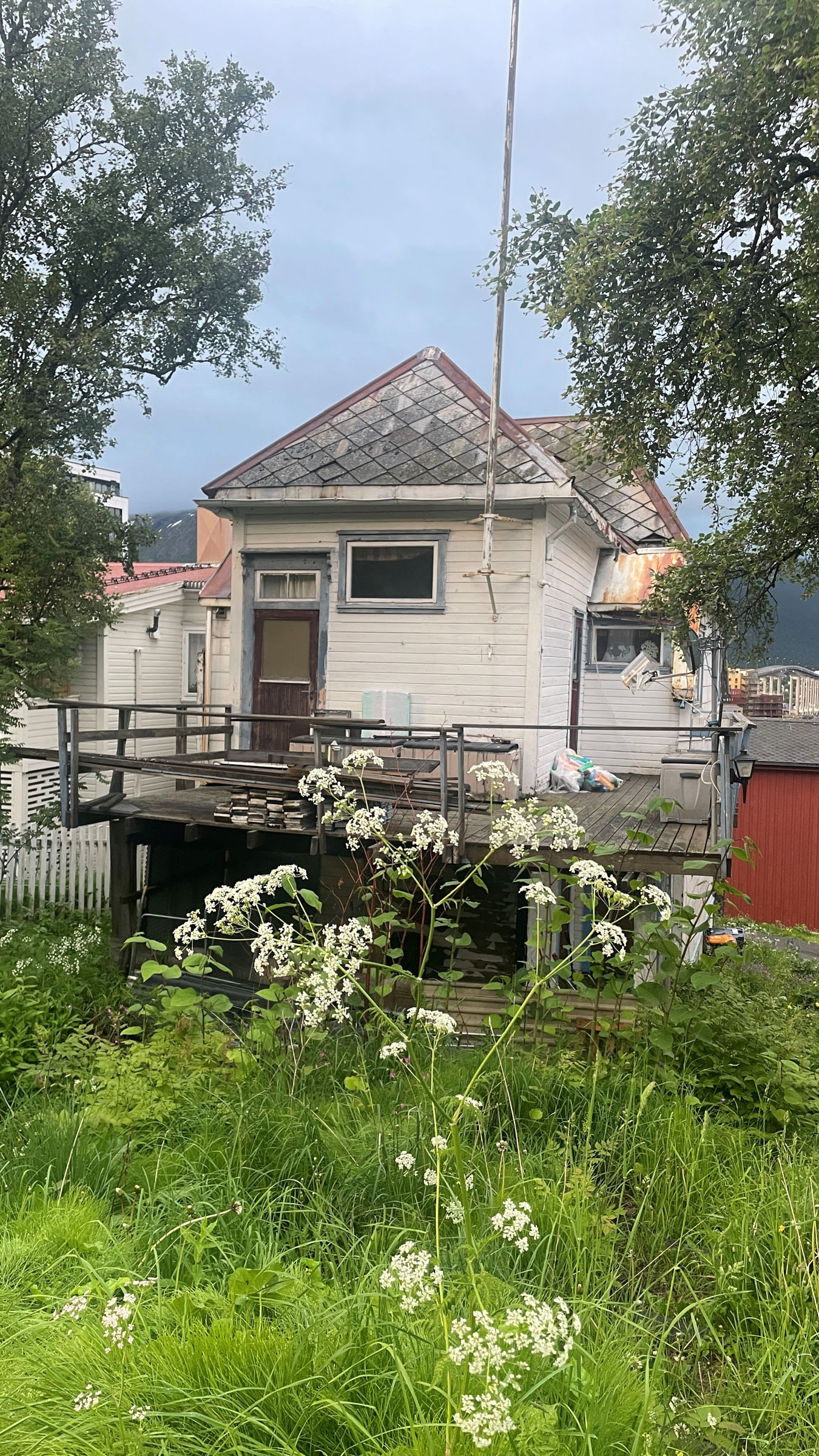
Many of the backyards are also preserved, or the old sheds have been replaced with flats that fit in nicely with the old buildings. The blue house on the corner of Storgata dates from the 1820s. Further up, more modest working-class houses dominate, often with modern extensions.
Make the Most of the Viewpoint
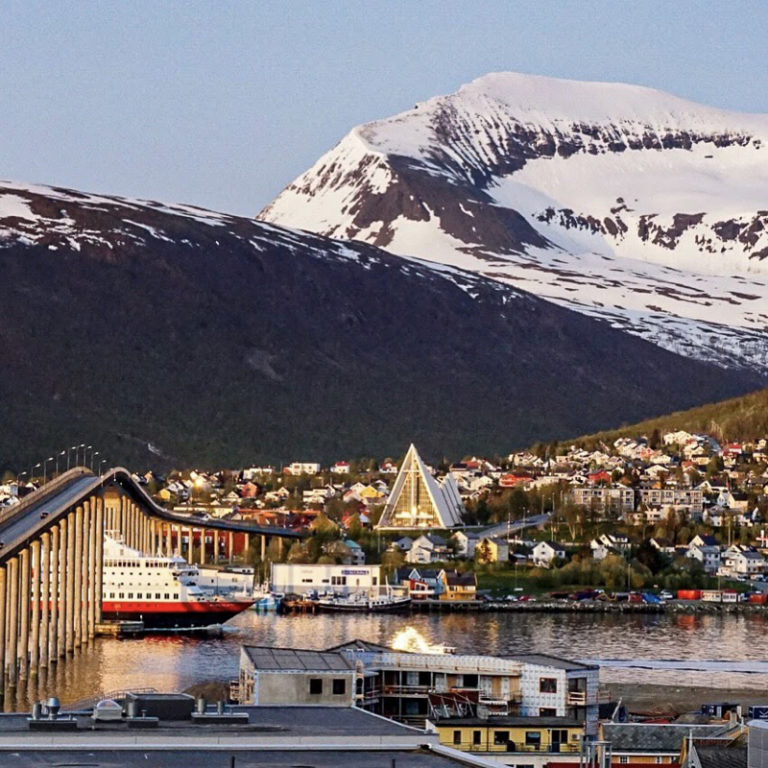
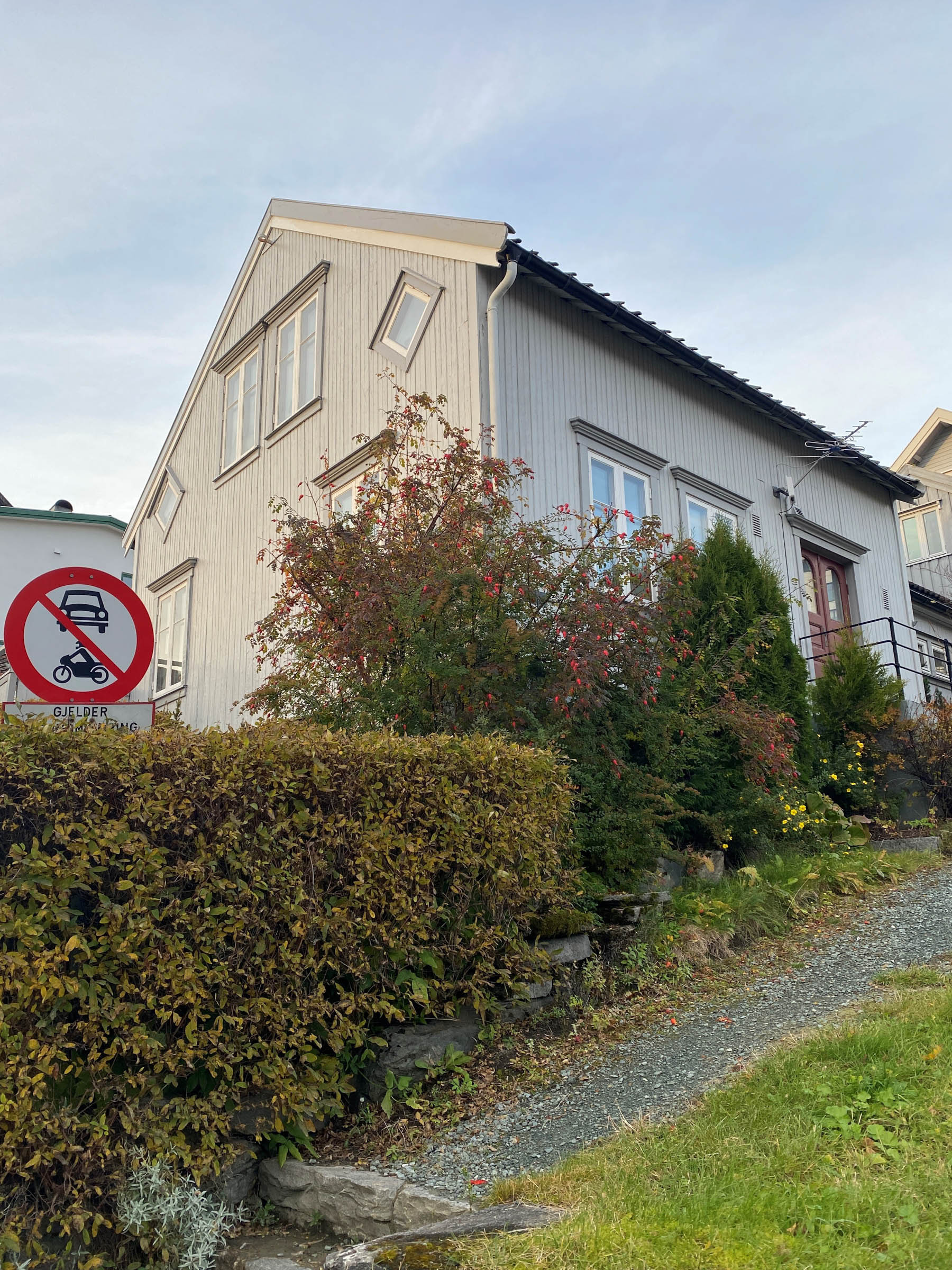
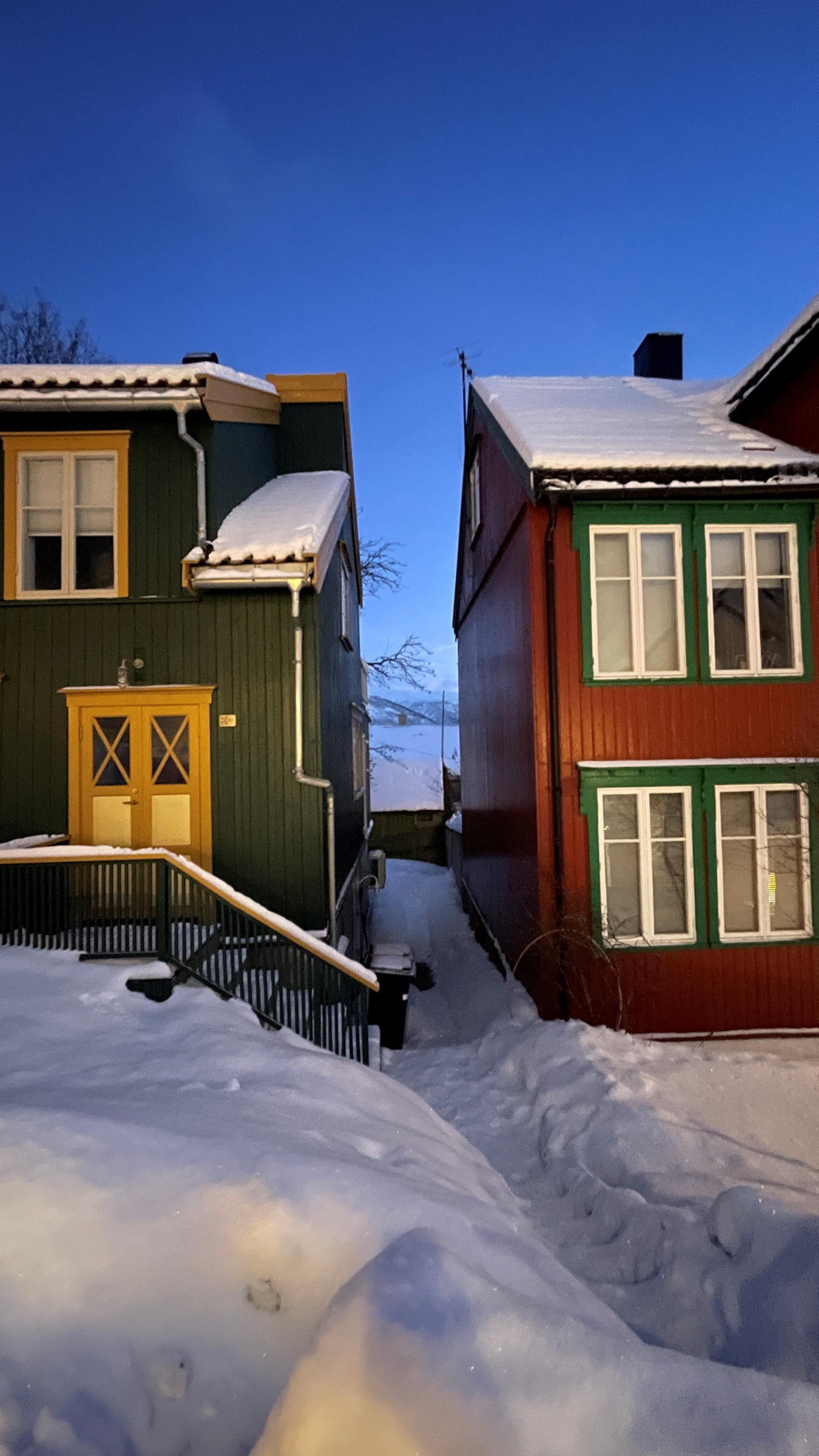
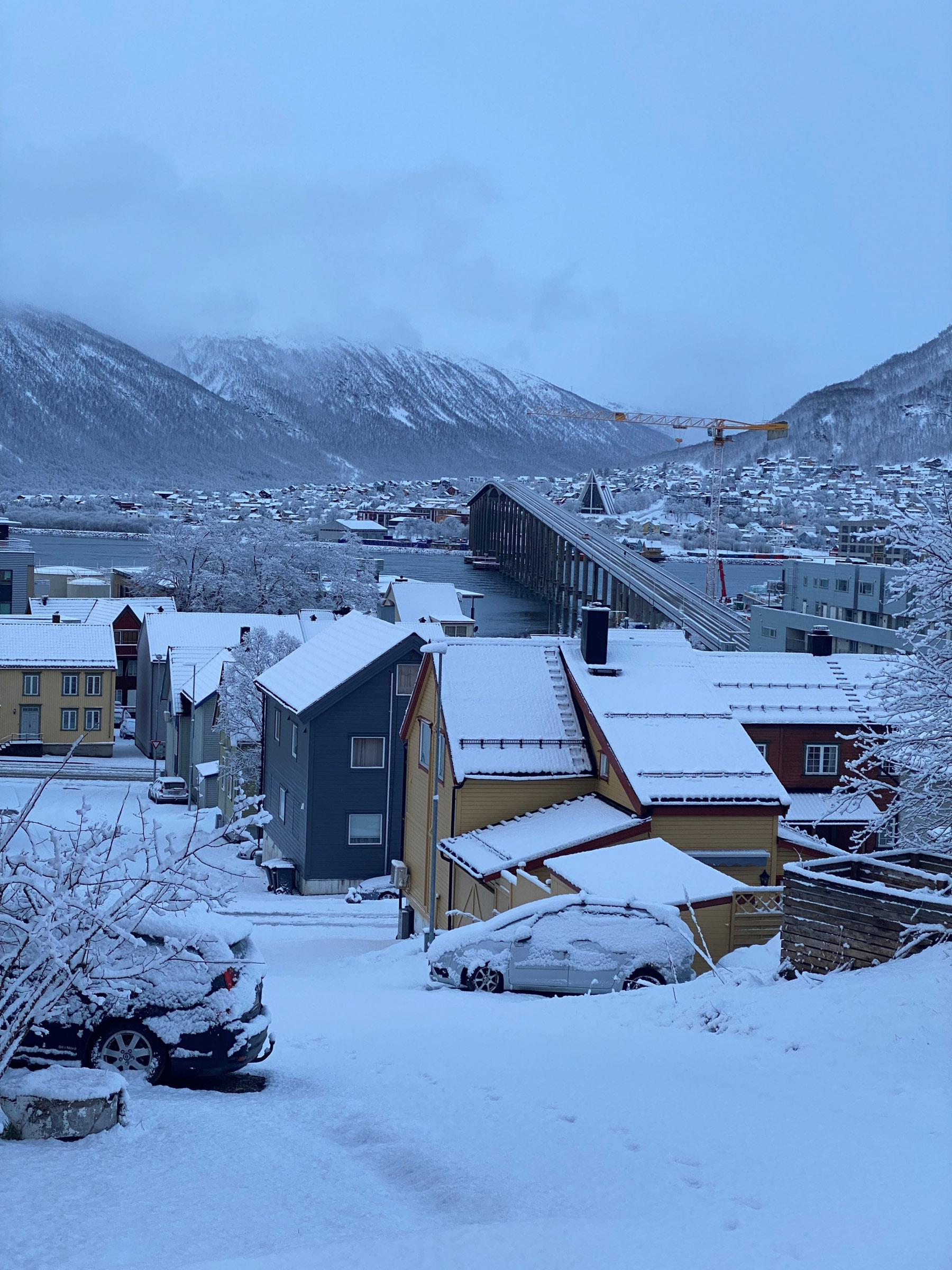
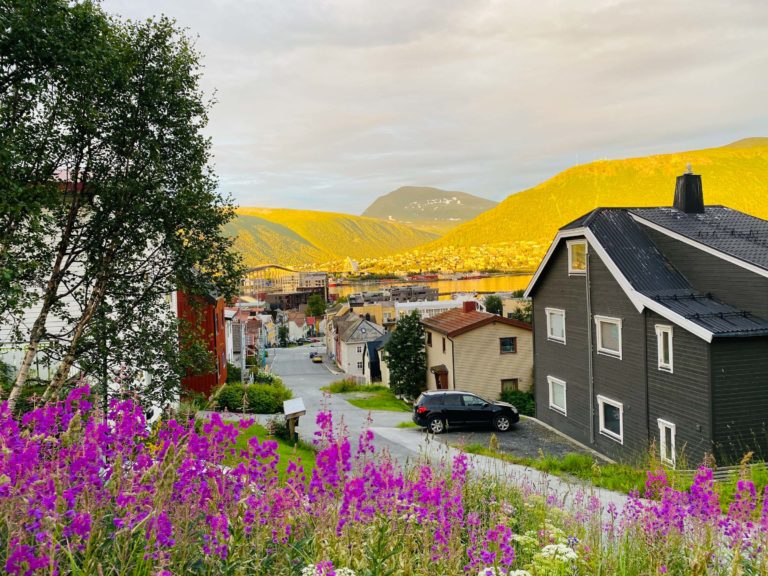
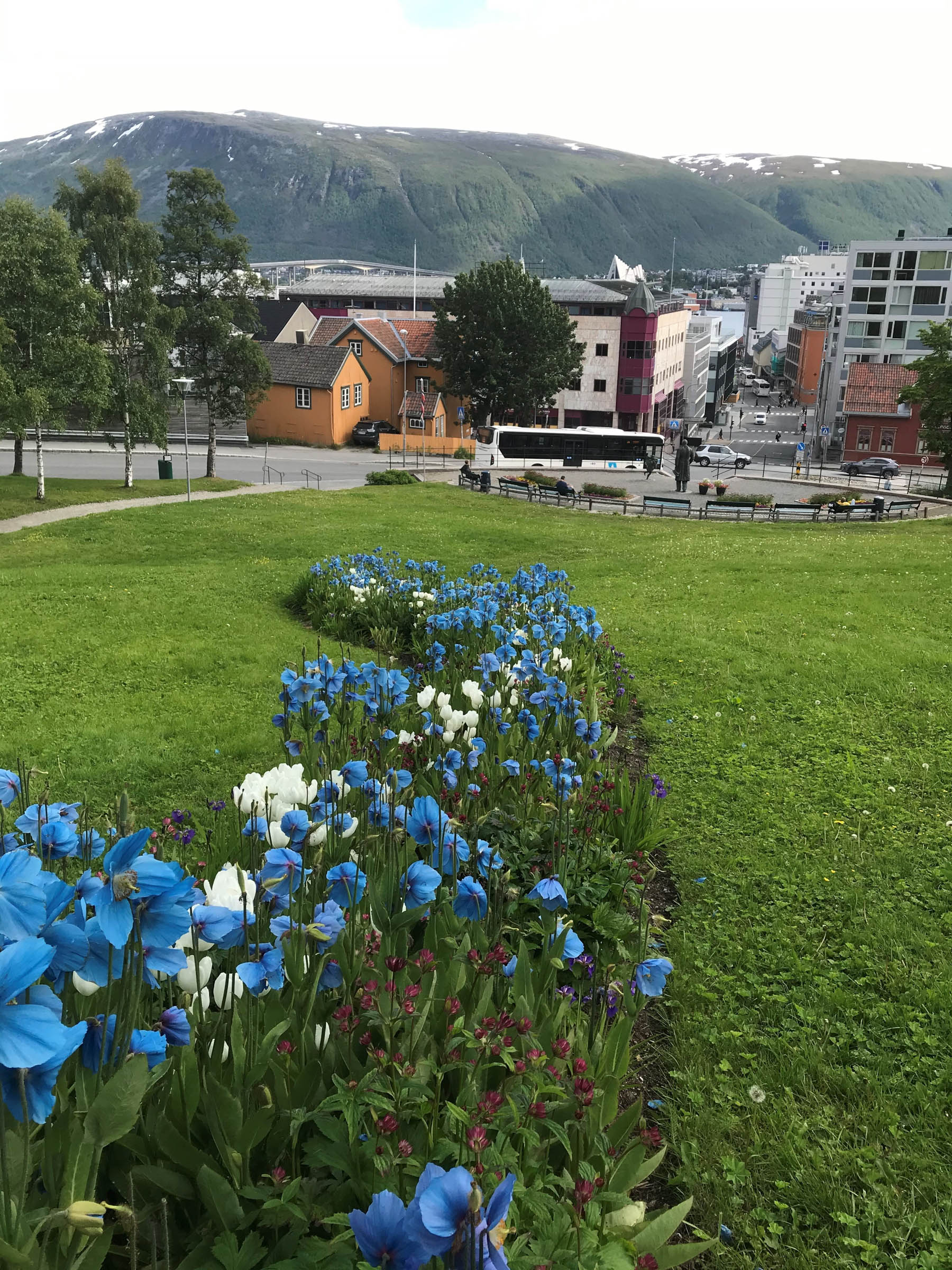
Once you’ve made it up to Vestregata, the view is wide and commanding. Turn around and look down, and you can see Tromsø Sound, the bridge, the Arctic Cathedral, and the dominating Mount Tromsdalstind.
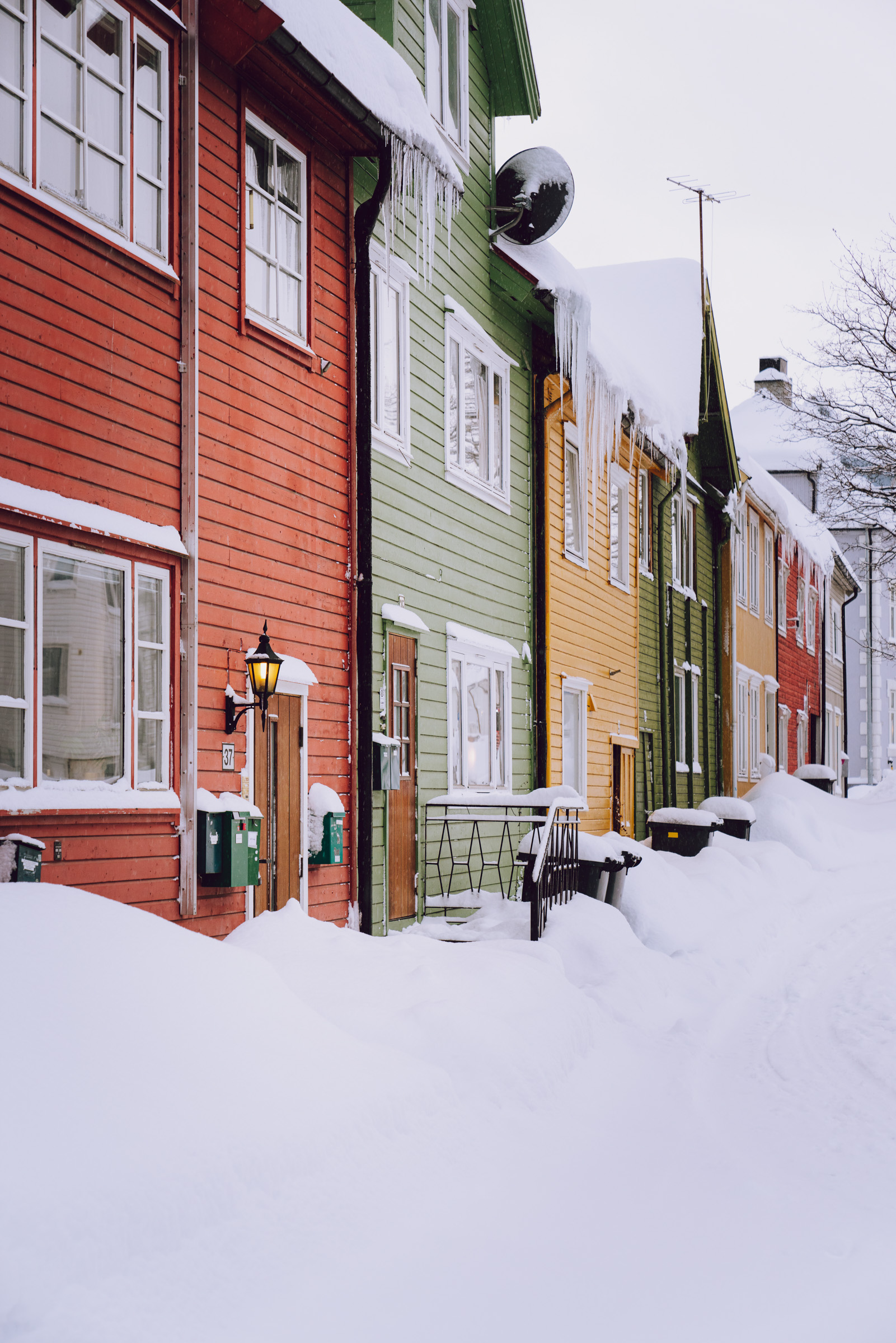
This far up, the houses are a true mix of old and new. However, three historic houses can be seen down the crossing Vestregata street—one green, one red, and one yellow. Now walk north—that is, to the right—and cross the small park-like area.
Hard-working People Built Their Own Homes in Fogd Drejers Gate
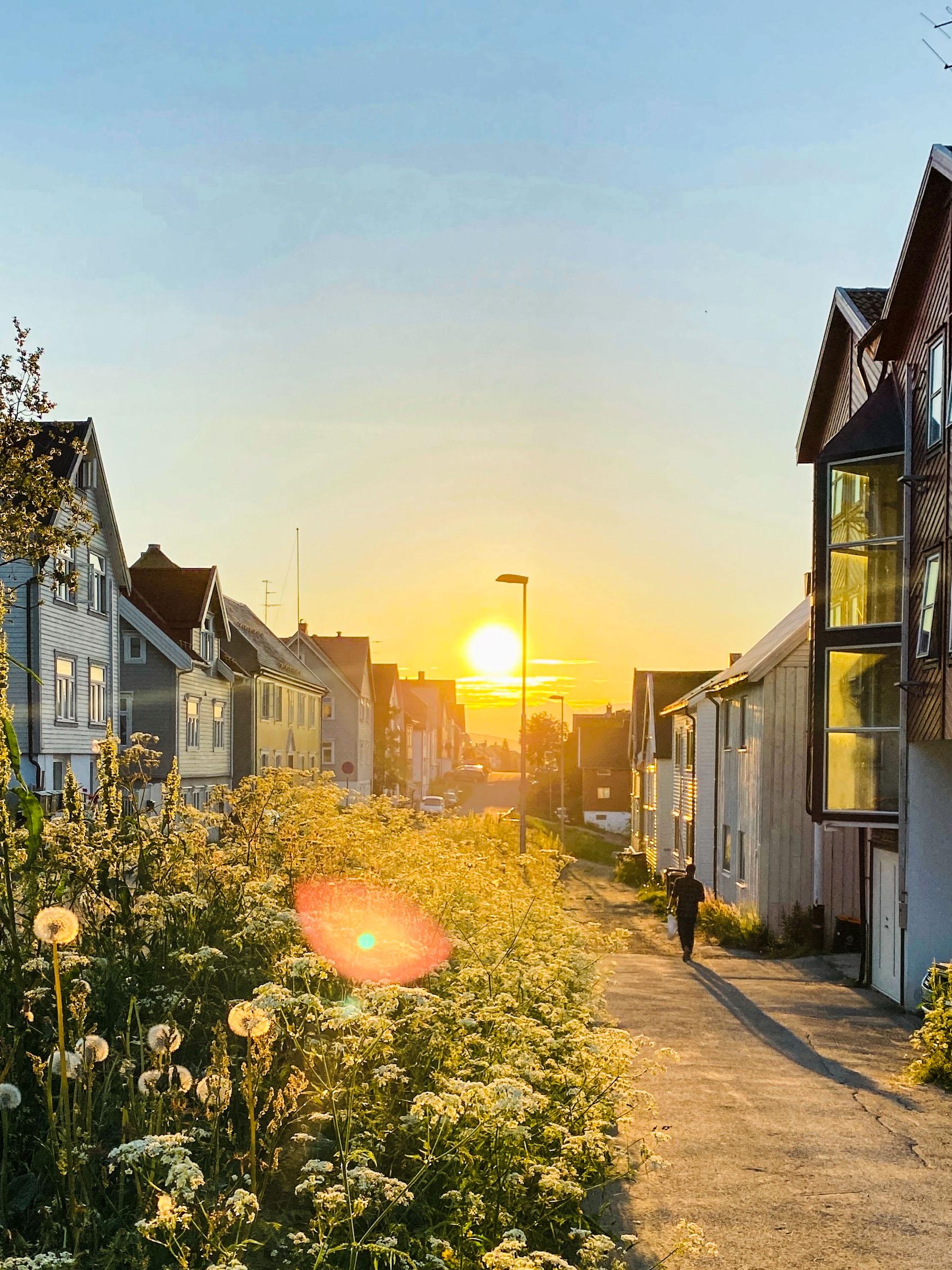
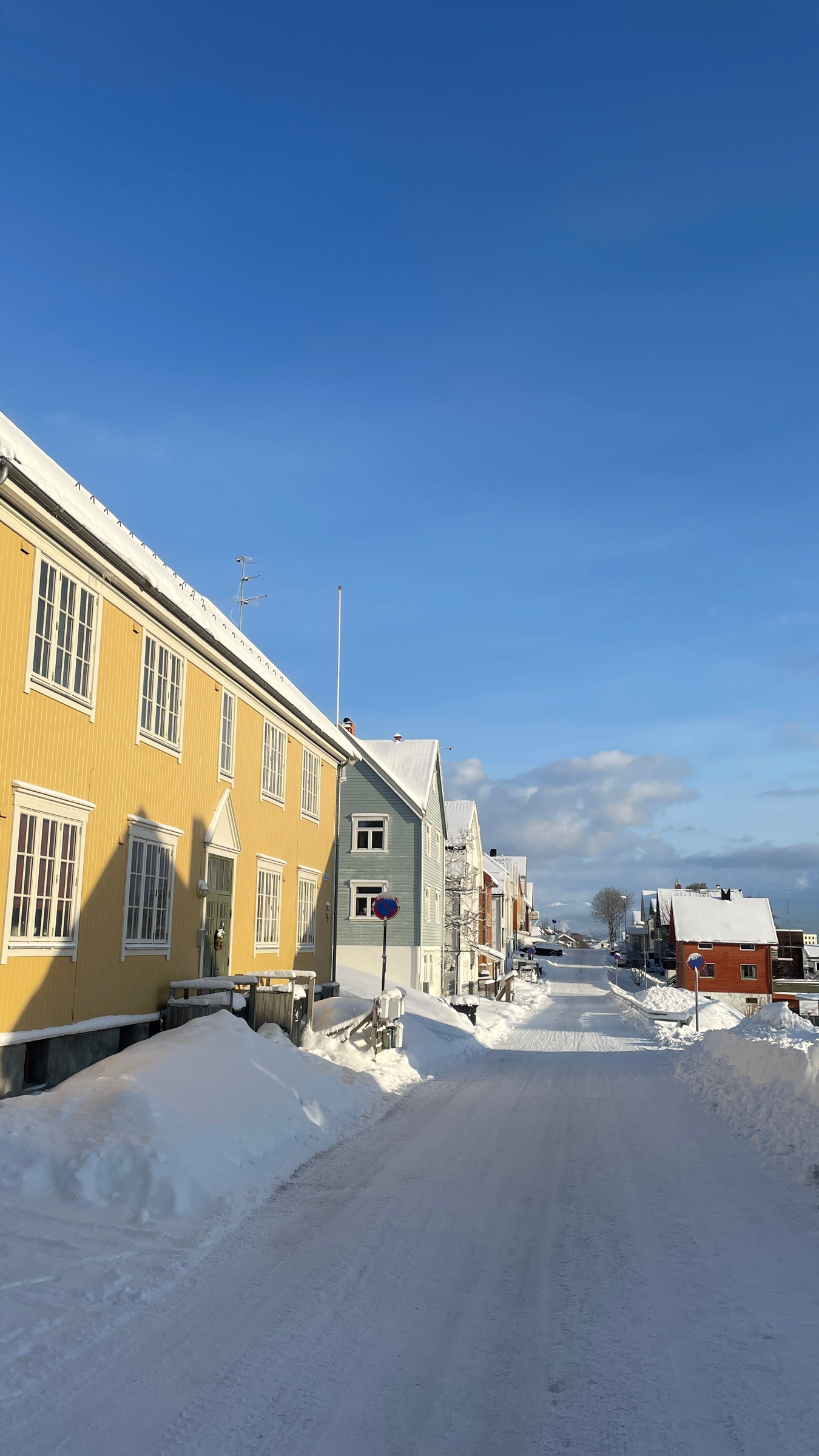
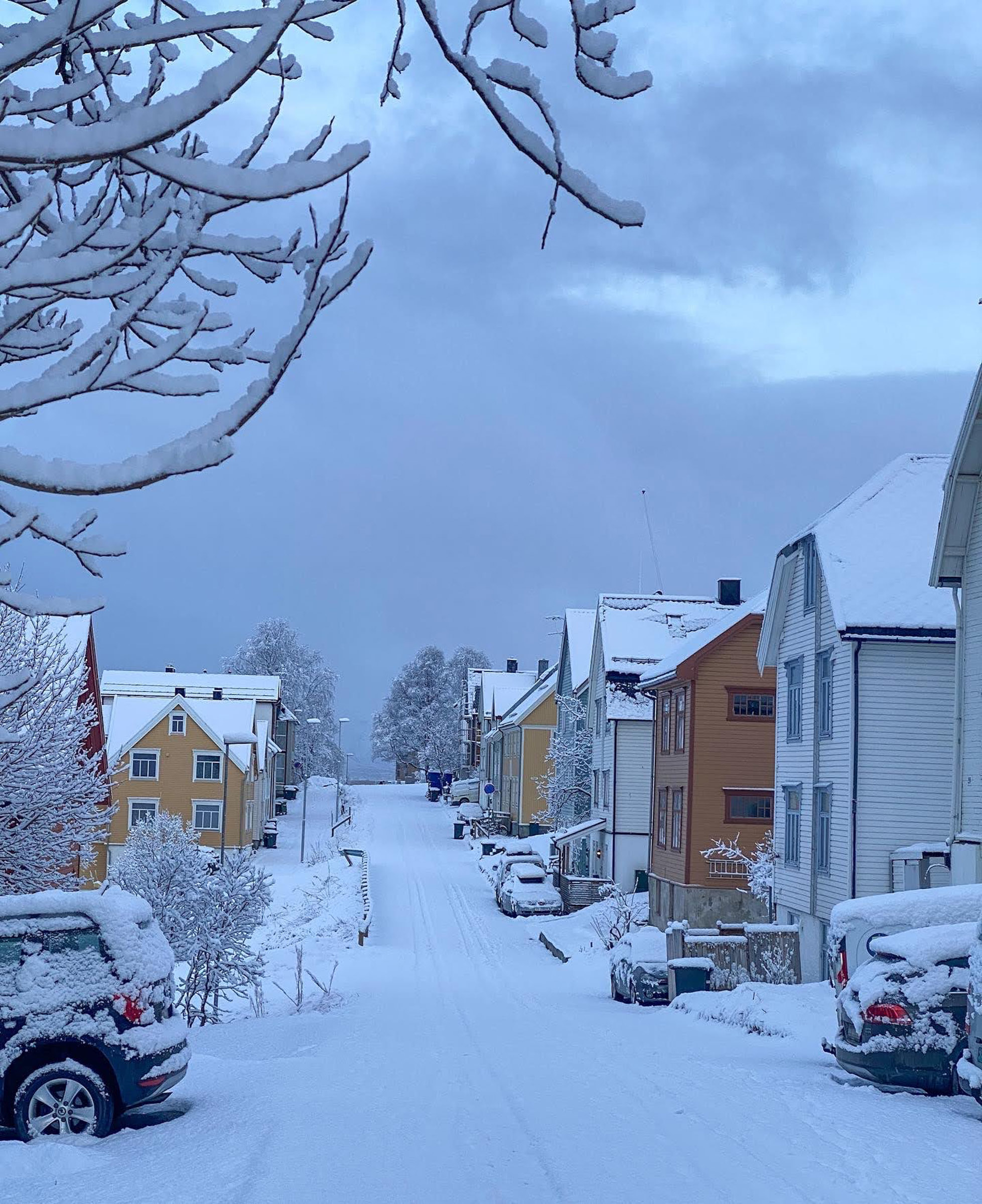
This street, where the houses mostly date from around 1910–1920, was laid out to ease the housing shortage during a time when Tromsø was growing quickly. A loan guarantee from the city allowed working people to build their own homes, often taking in lodgers to help cover the costs.
Do note that the houses are placed in the middle of their small plots, allowing people to walk around them, a novel idea at the time. The odd house out is number ten, a rather long tenement owned by the city.
Architectural styles on this walk
On this walk, you’ll encounter building styles you’re probably familiar with. However, in Tromsø’s climate, combined with the preference for wood construction, these styles take on a unique twist:
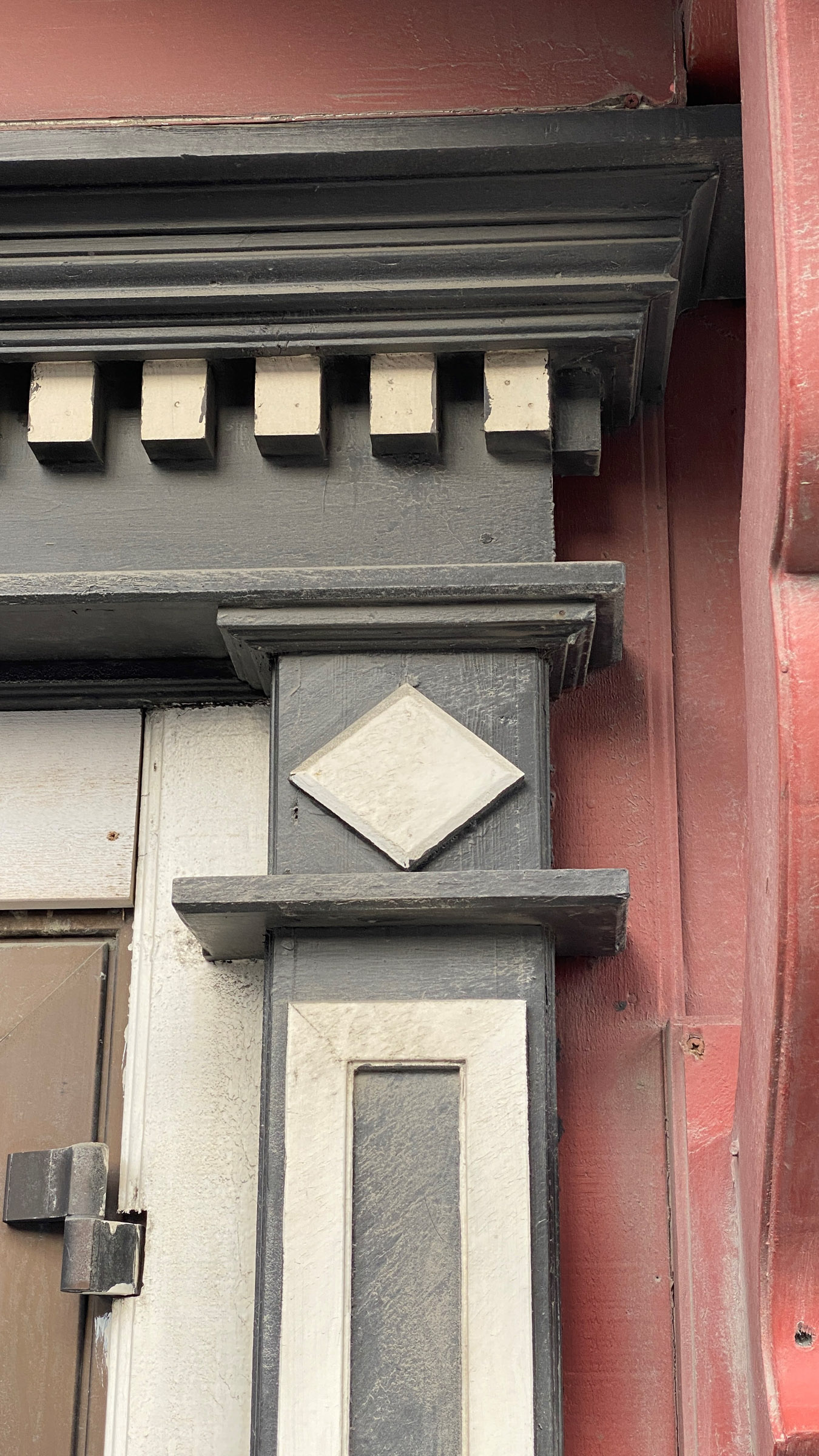
Inspired by ancient Greece and Rome, the Empire style dominated Western architecture in the first half of the 19th century. In Tromsø, the style is “translated” into wood, with window frames and door portals painted to mimic marble details.
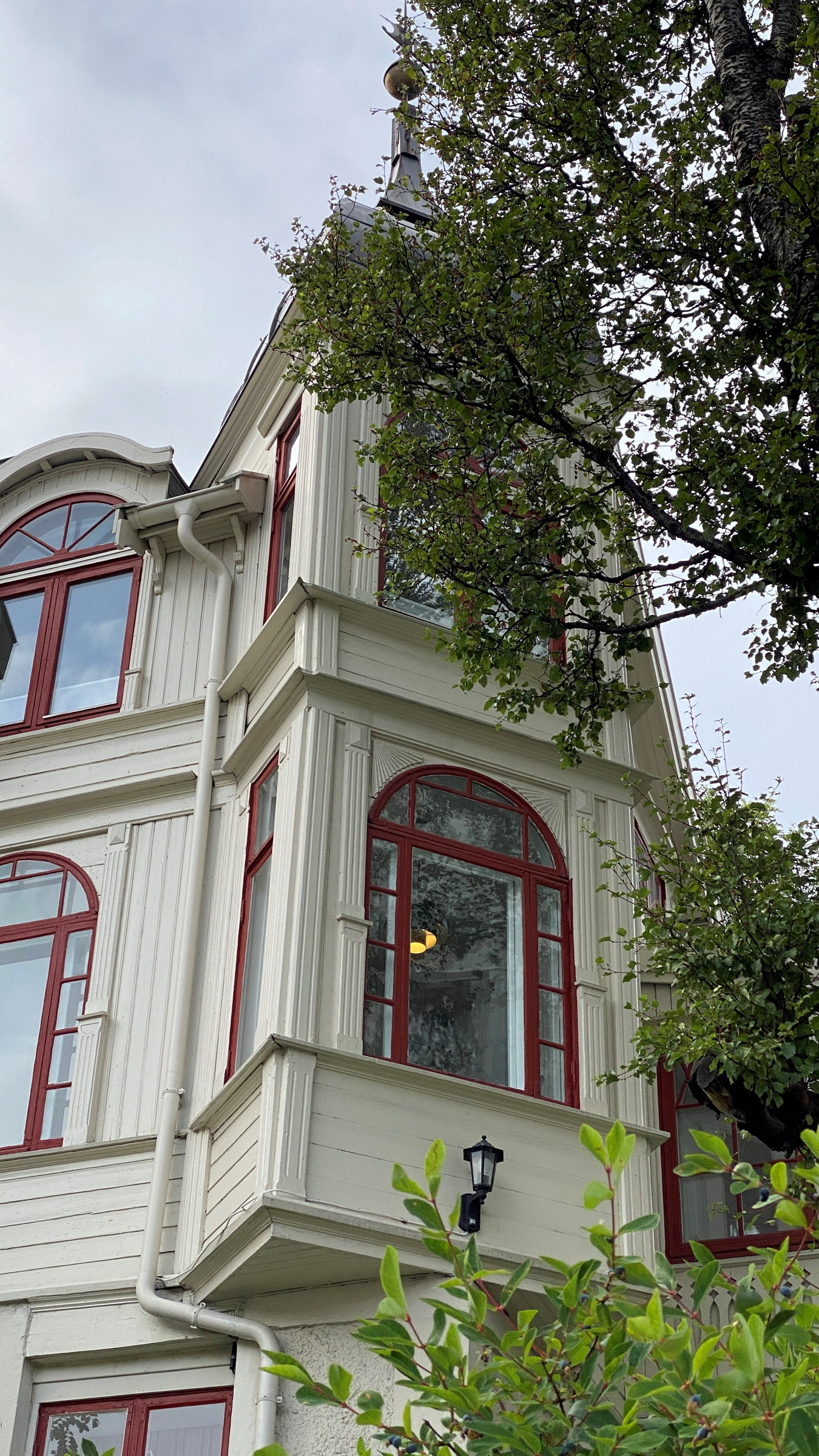
A style from the latter half of the 19th century that draws inspiration from past historical periods. In Tromsø, two notable variations of this style are:Swiss Chalet Style: Inspired by traditional Alpine houses, it became immensely popular for villas throughout Scandinavia.Dragestil (Dragon Style): Inspired by Viking ships and stave church architecture, this style is commonly used in wooden houses.
Popular around the turn of the century, this style features organic, nature-inspired forms, flowing lines, and decorative motifs, emphasising modernity and artistic expression. In Tromsø, you’ll find both wooden houses, stone buildings, commercial structures, and public buildings.
A simplified, modern interpretation of ancient Greek and Roman forms, focusing on symmetry, clean lines, and elegant proportions.
This style emphasised simplicity, practicality, and the principle that form should follow function, with clean lines and minimal decoration.
Following the housing shortage after the Second World War, architects designed simple, sensible, and bright houses with square forms, often referred to as the reconstruction style.
Make a Detour to Colourful Poorhouses
If you’re up for a few extra minutes, take a 5-minute walk north of Fogd Drejers gate, down to Bukta. Bukta was developed as a working-class area in the first three decades of the 20th century. In the very mixed architecture – both architecturally and in terms of maintenance – a compound of seven houses stands out.
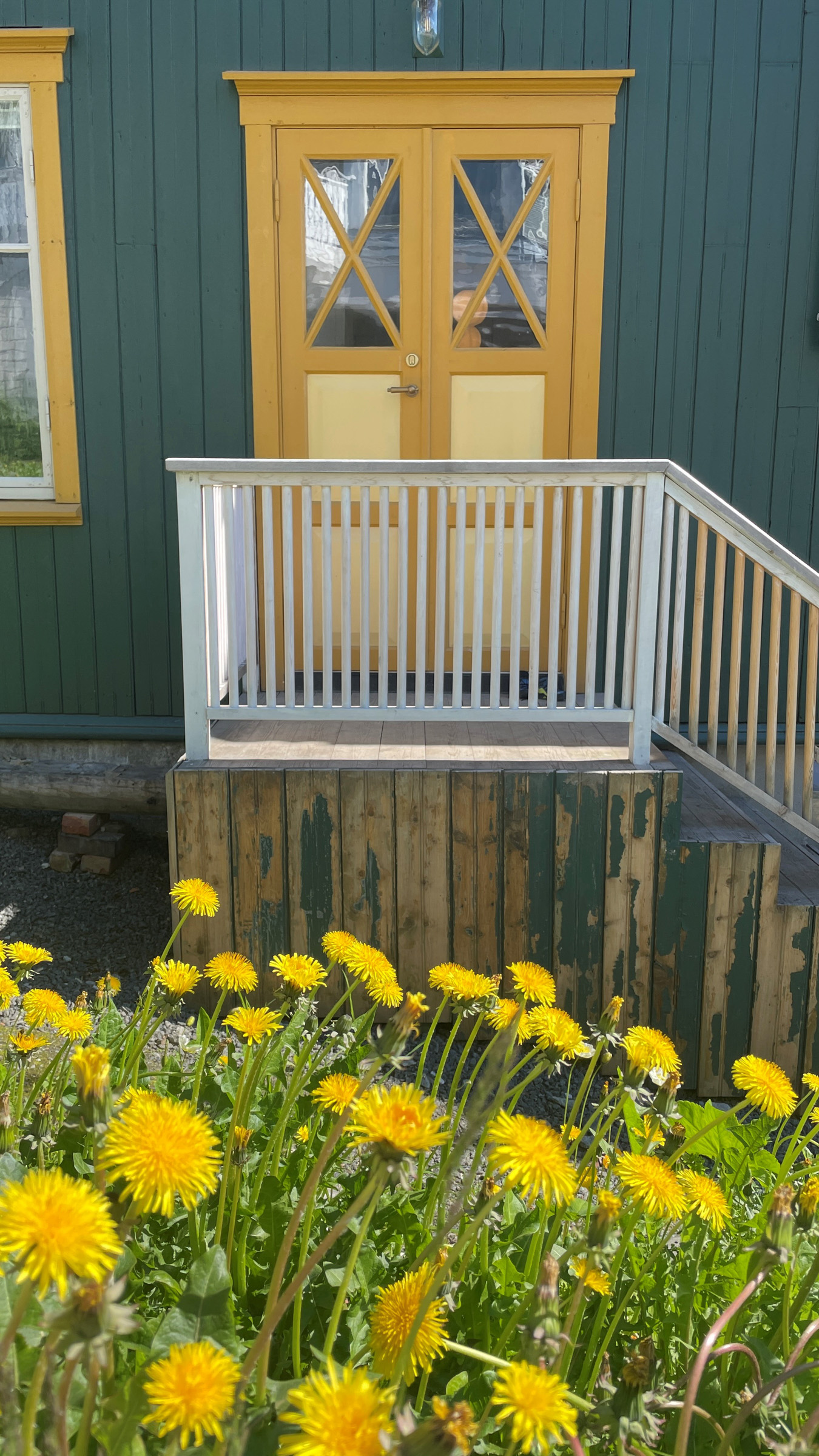
These houses were designed as council houses for working-class people during a period of rapid population growth in Tromsø, from 1917 to 1920. Some of the houses were relocated from the closed-down mining town of Salangsverket, but city architect Peder Arnet Amundsen brought it all together. A very successful colour scheme has been developed, and they are today a colourful and picturesque ensemble.
Dramsvegen Takes You South Again
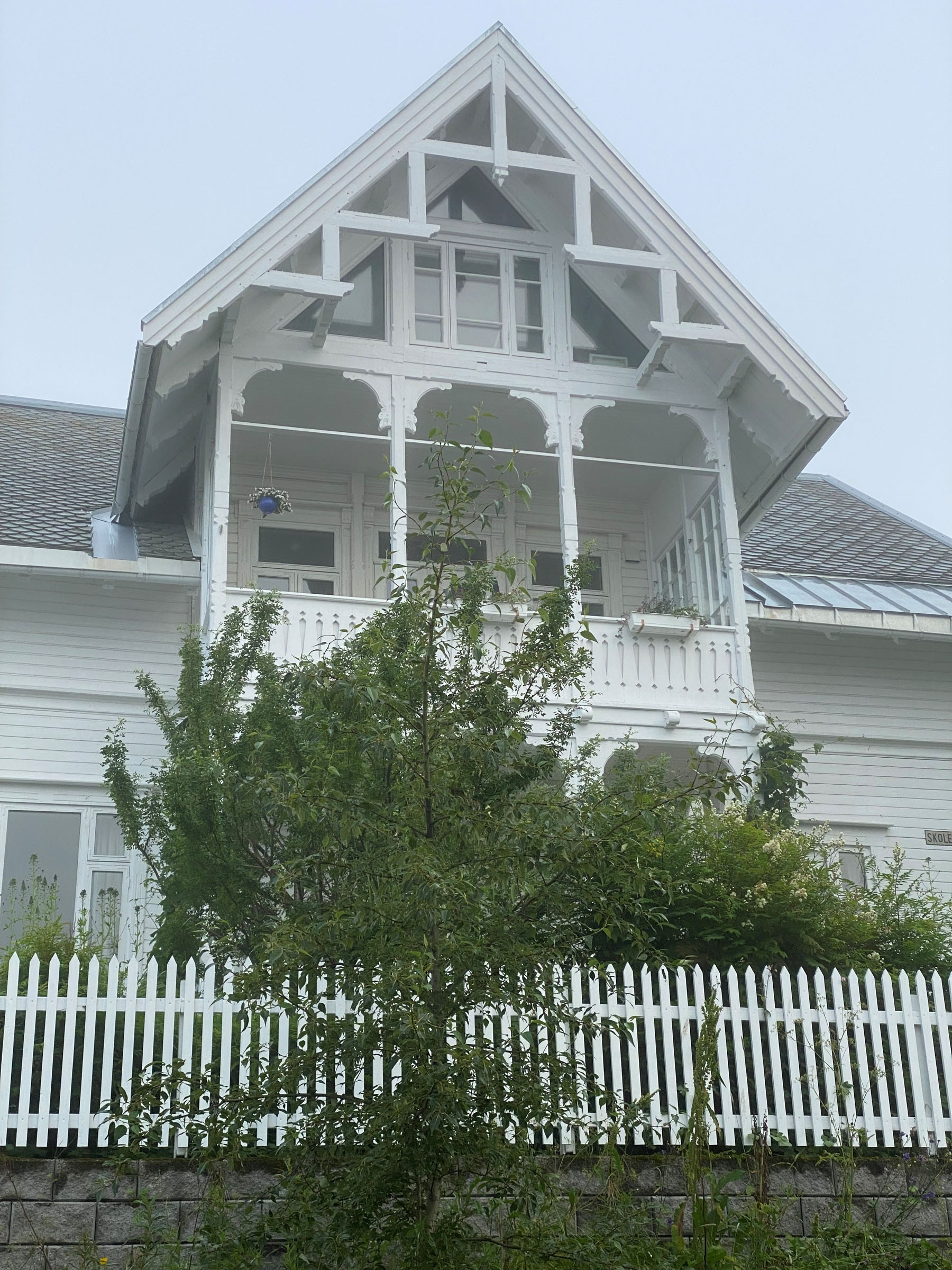
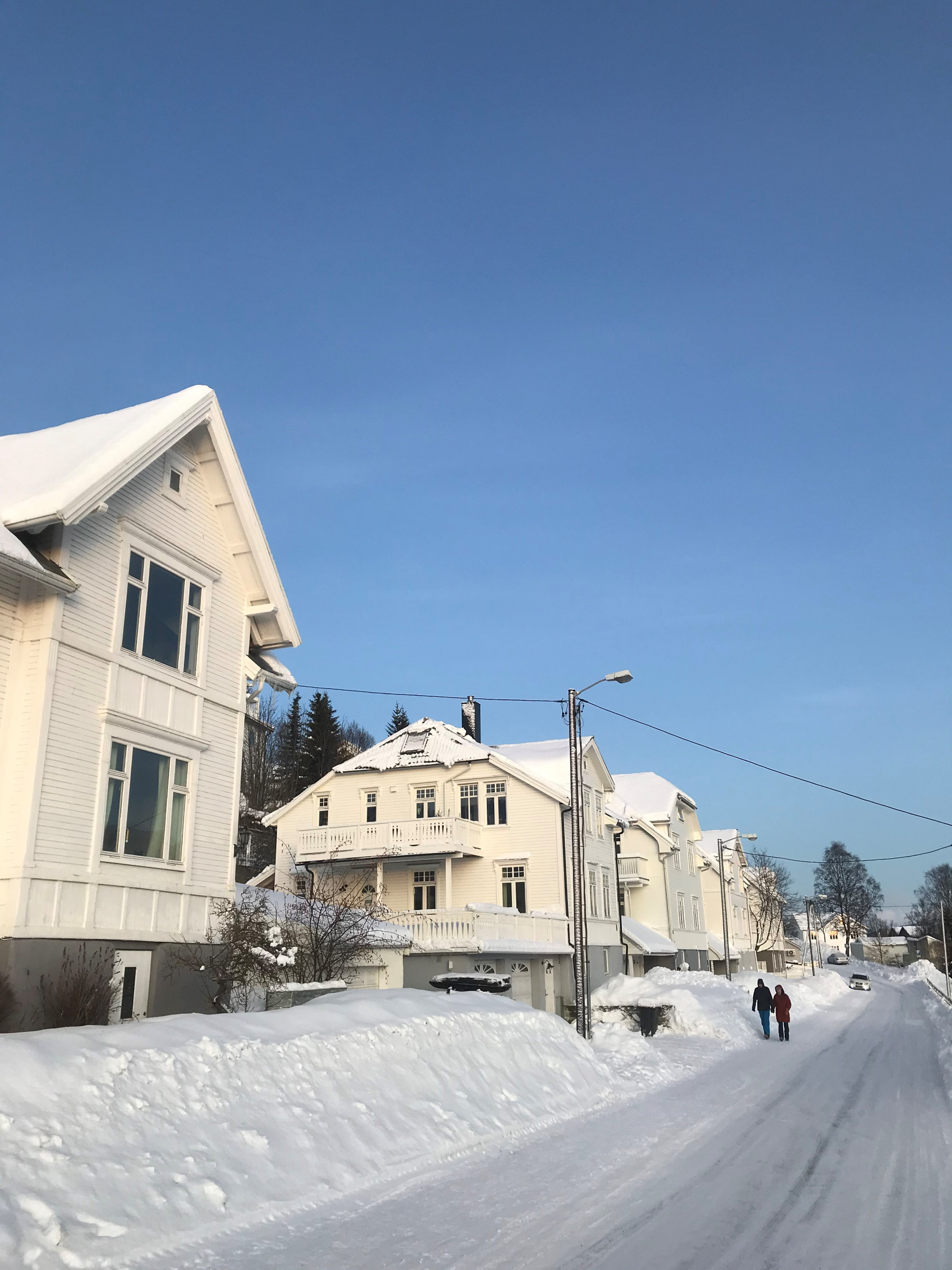
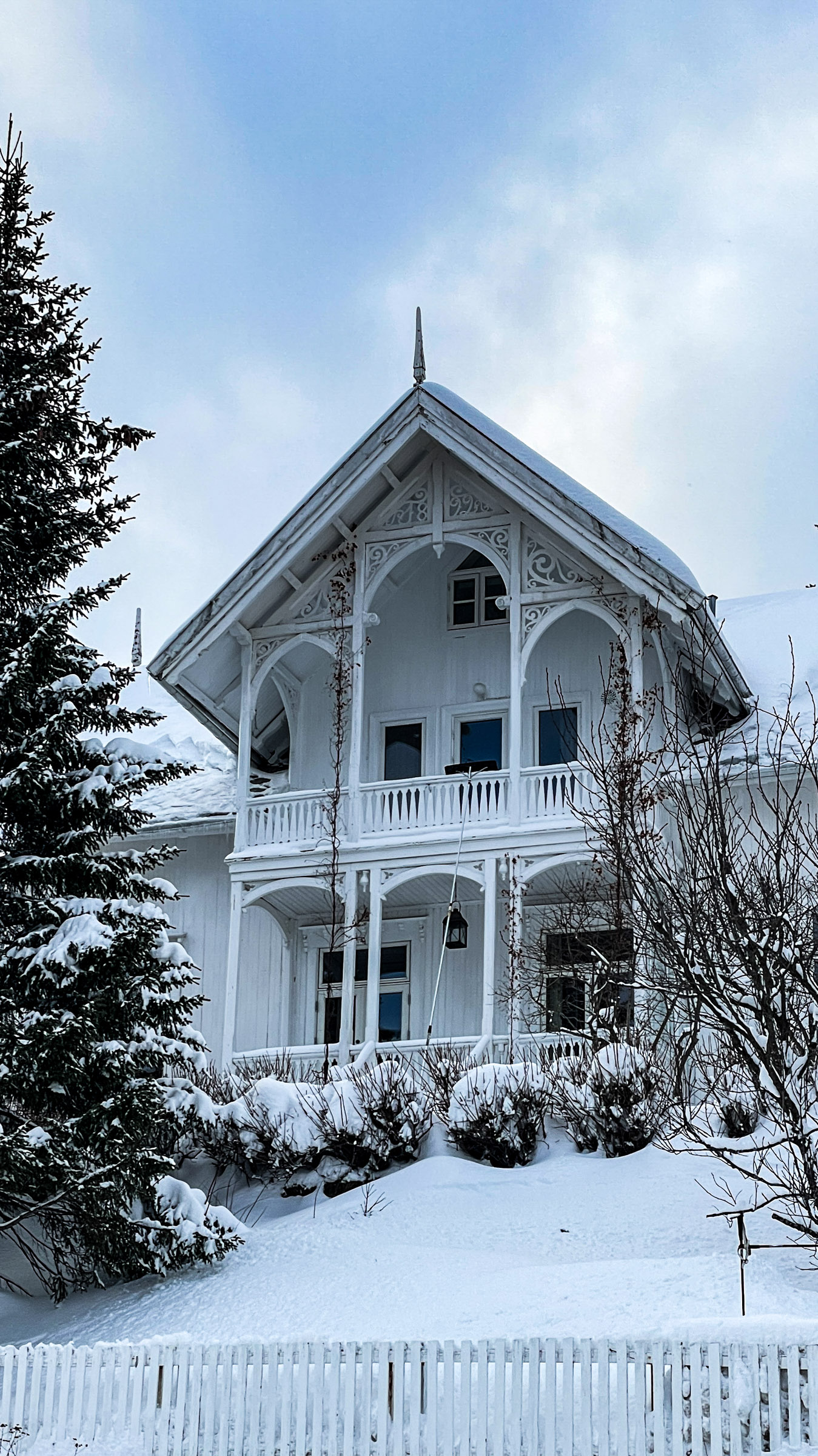
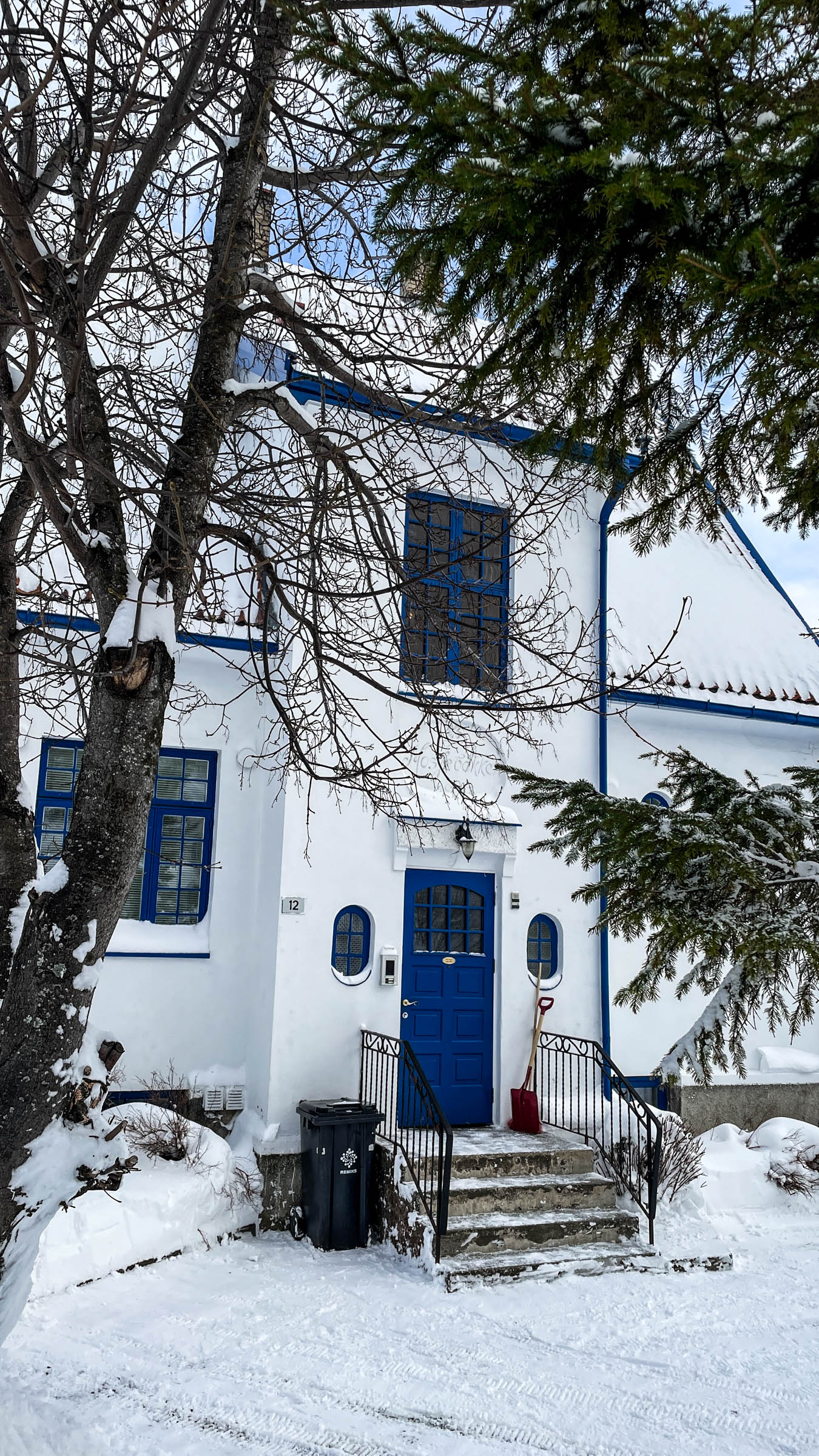
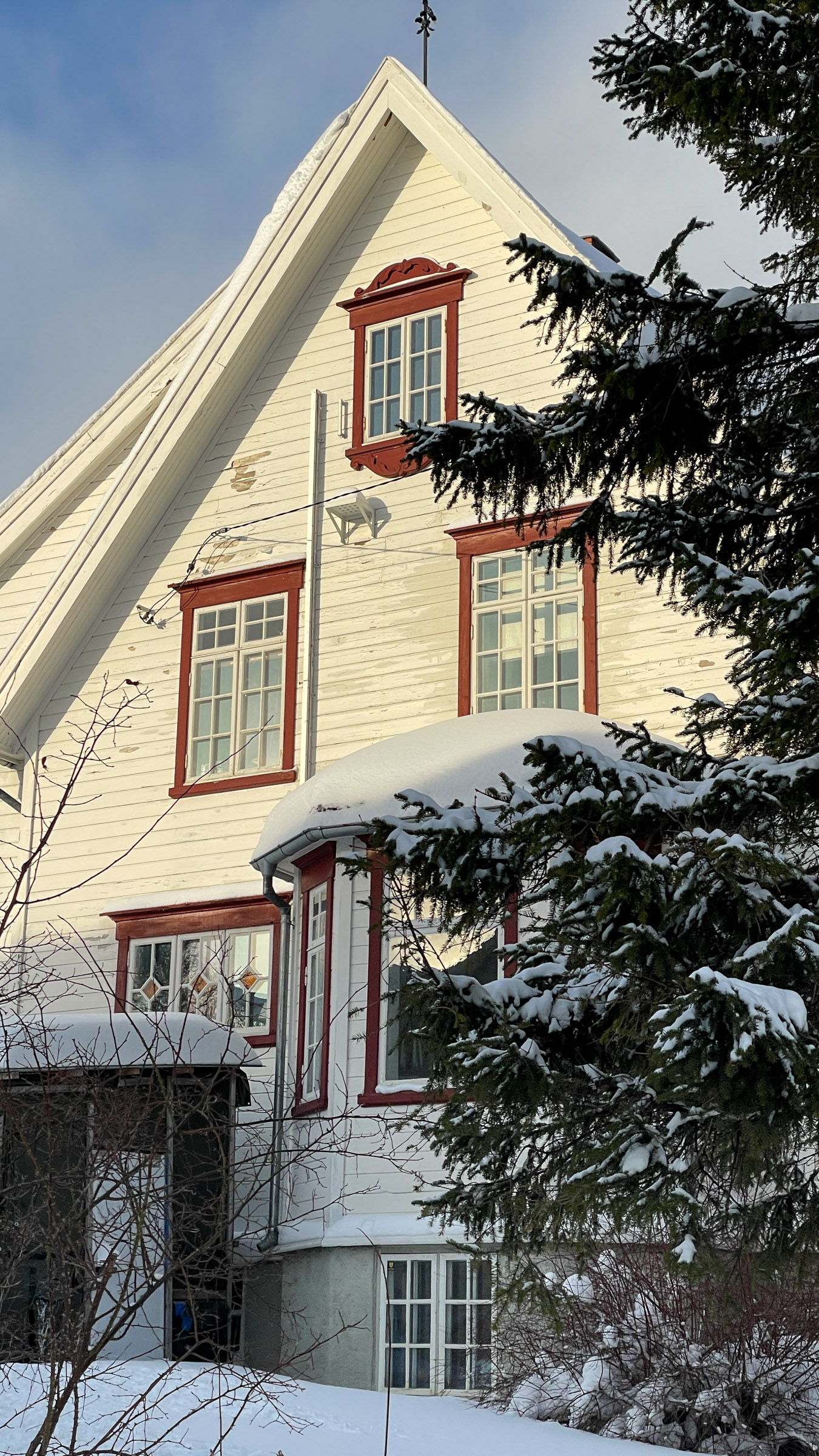
Back on track in Fogd Drejers gate, walk up Arbeidergata, head up to Dramsvegen, noting the nice house on the left corner, and head south again. Walk south past the rocky outcrop of Rambergan – another great view – before you come to a charming row of villas on the upper side of Dramsvegen-Skolegata. Skolegata 44 is a stately wooden villa in the Swiss chalet style, complete with a wonderful veranda. Its neighbour is an Art Nouveau stone house – the colourful mosaic by Tromsø artist Marit Bockelie was added much later.
The Andersontrappa Steps Take You to Lovely Wooden Villas
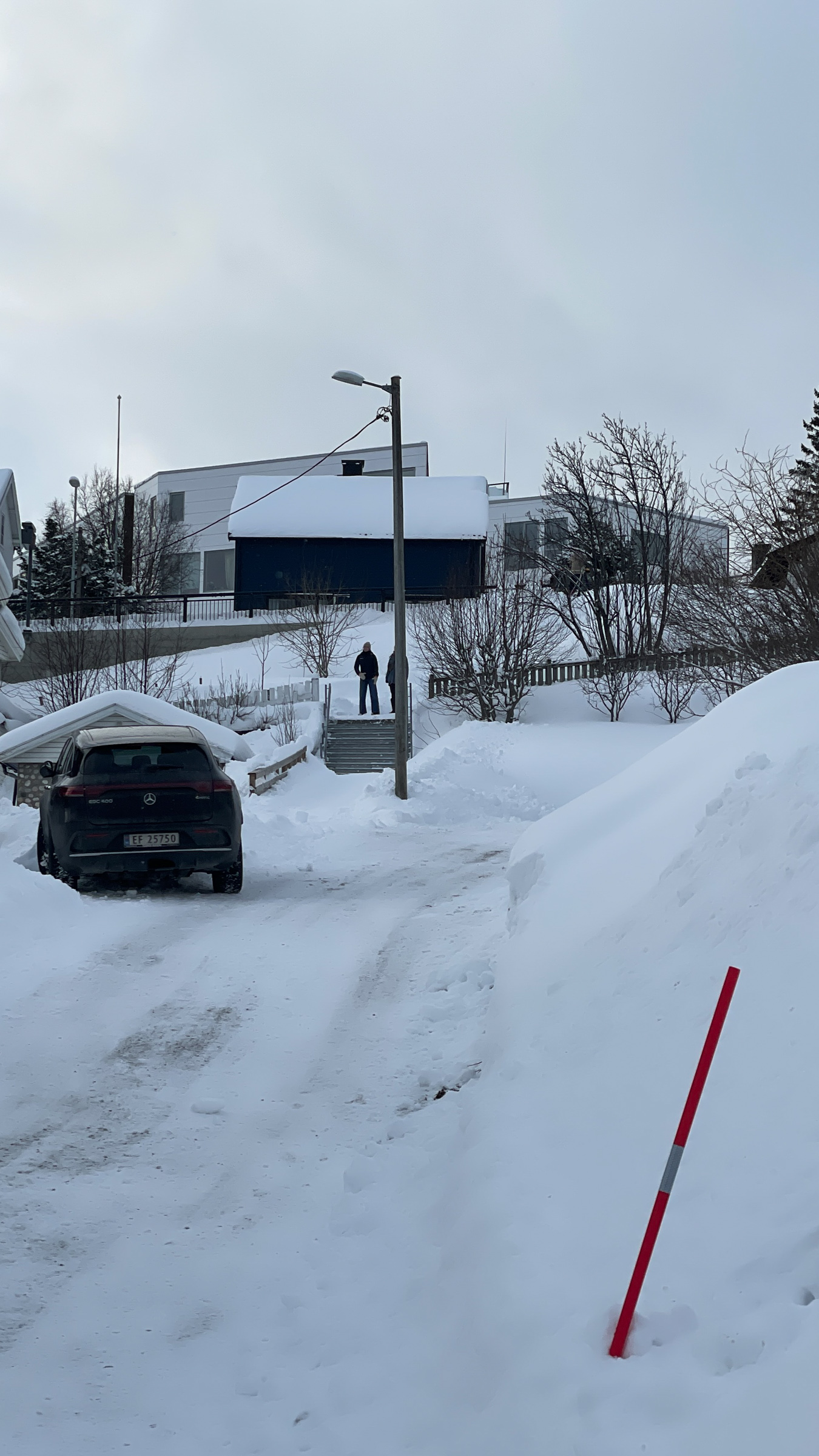
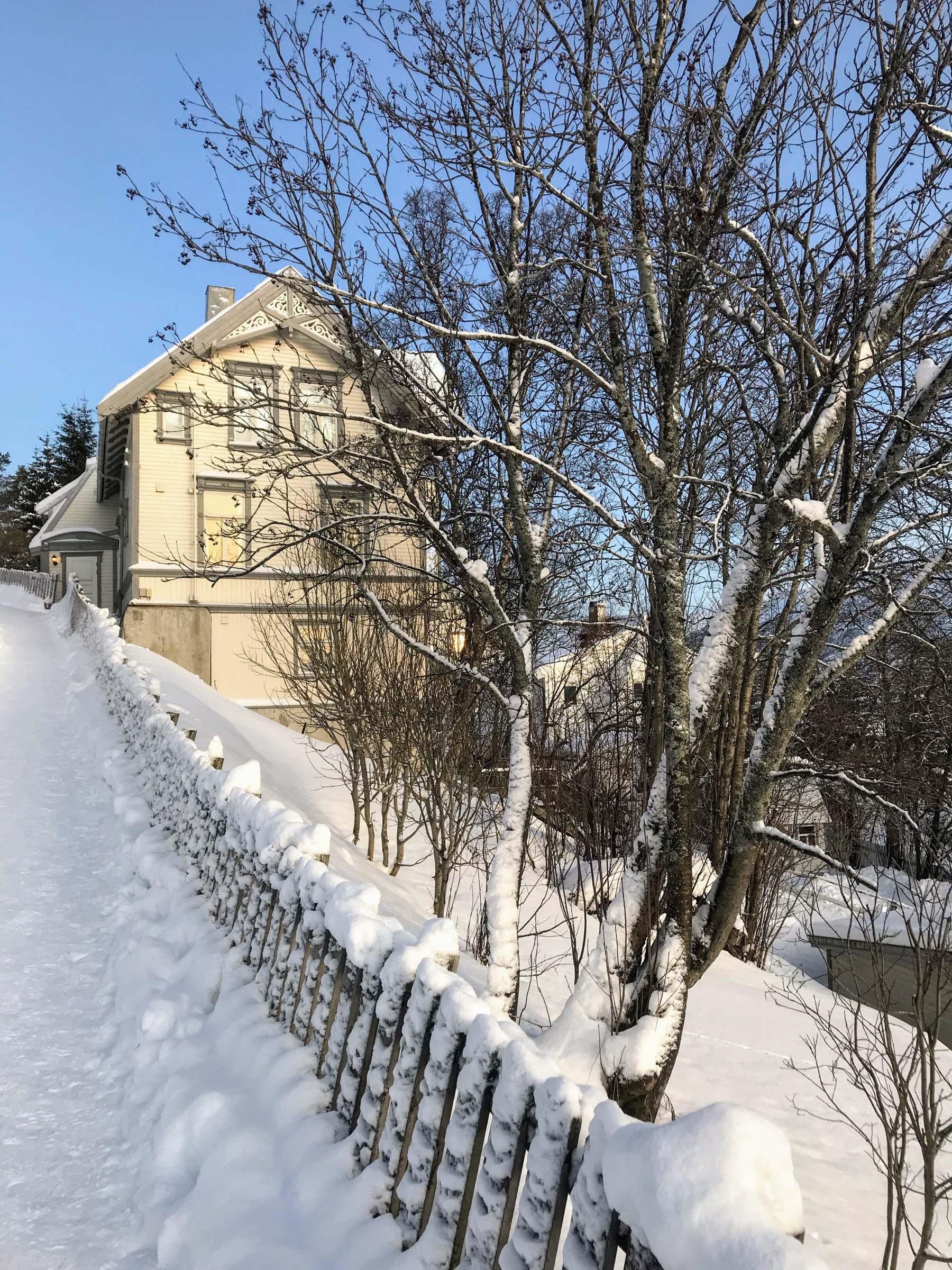
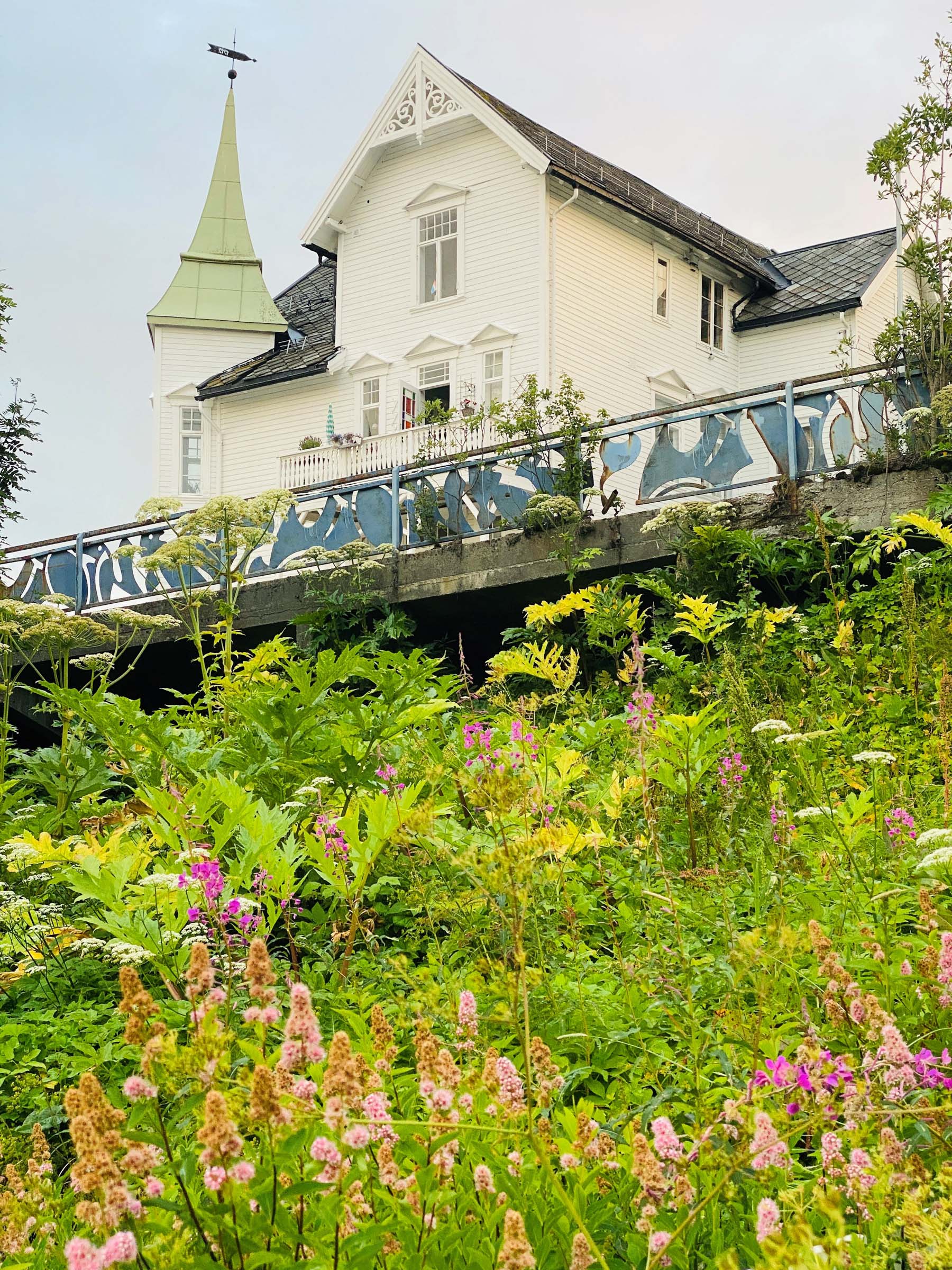
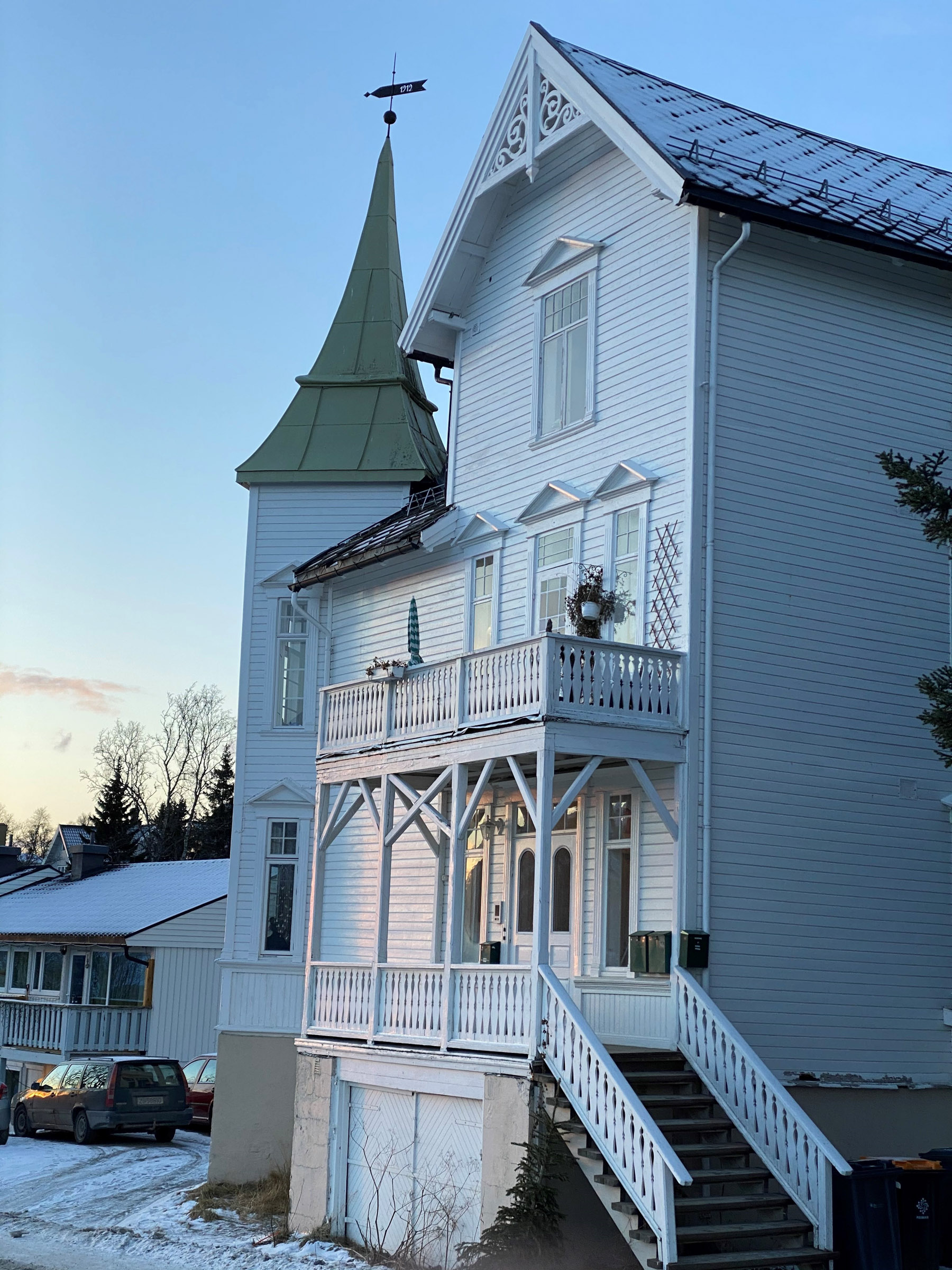
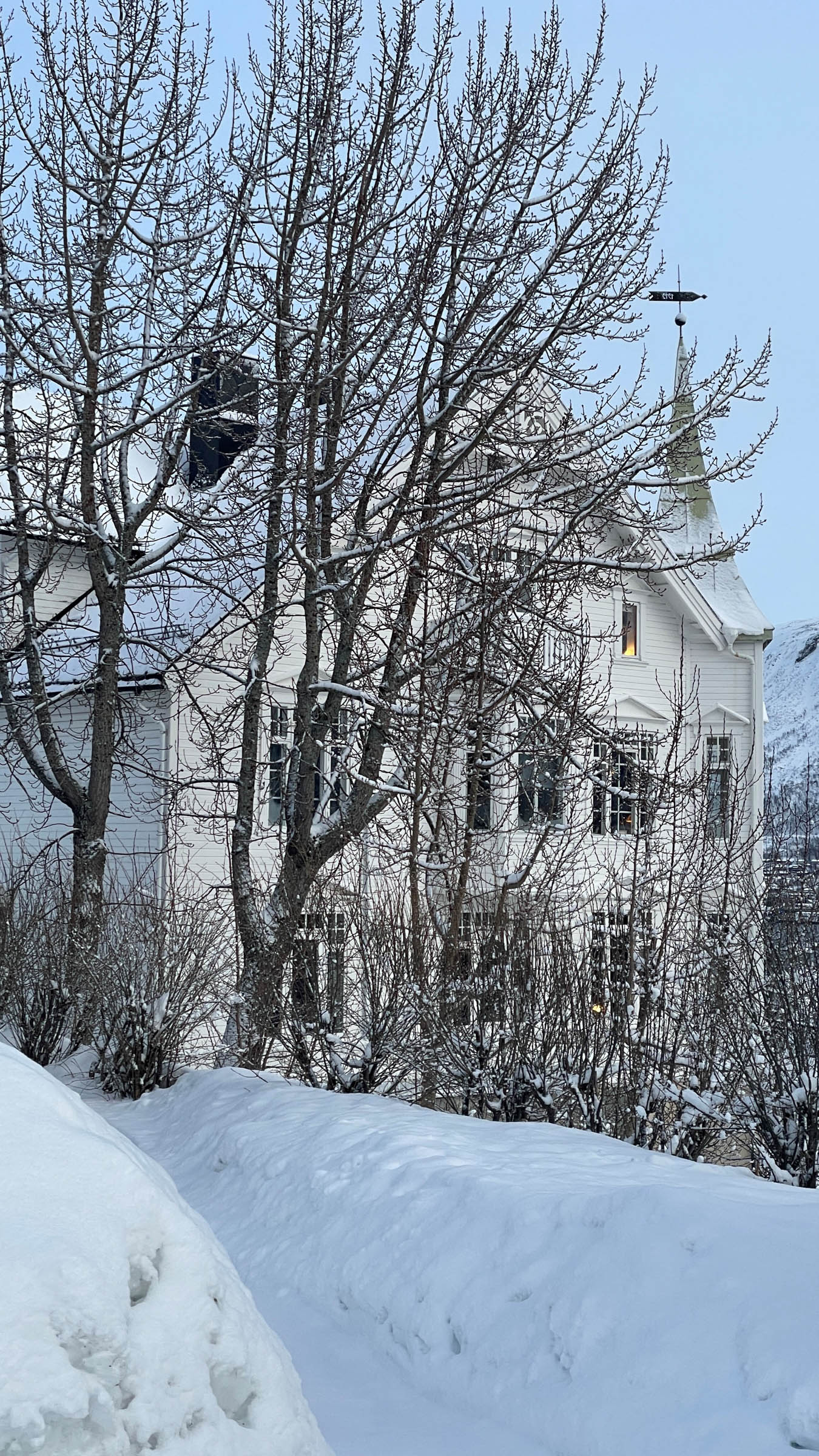
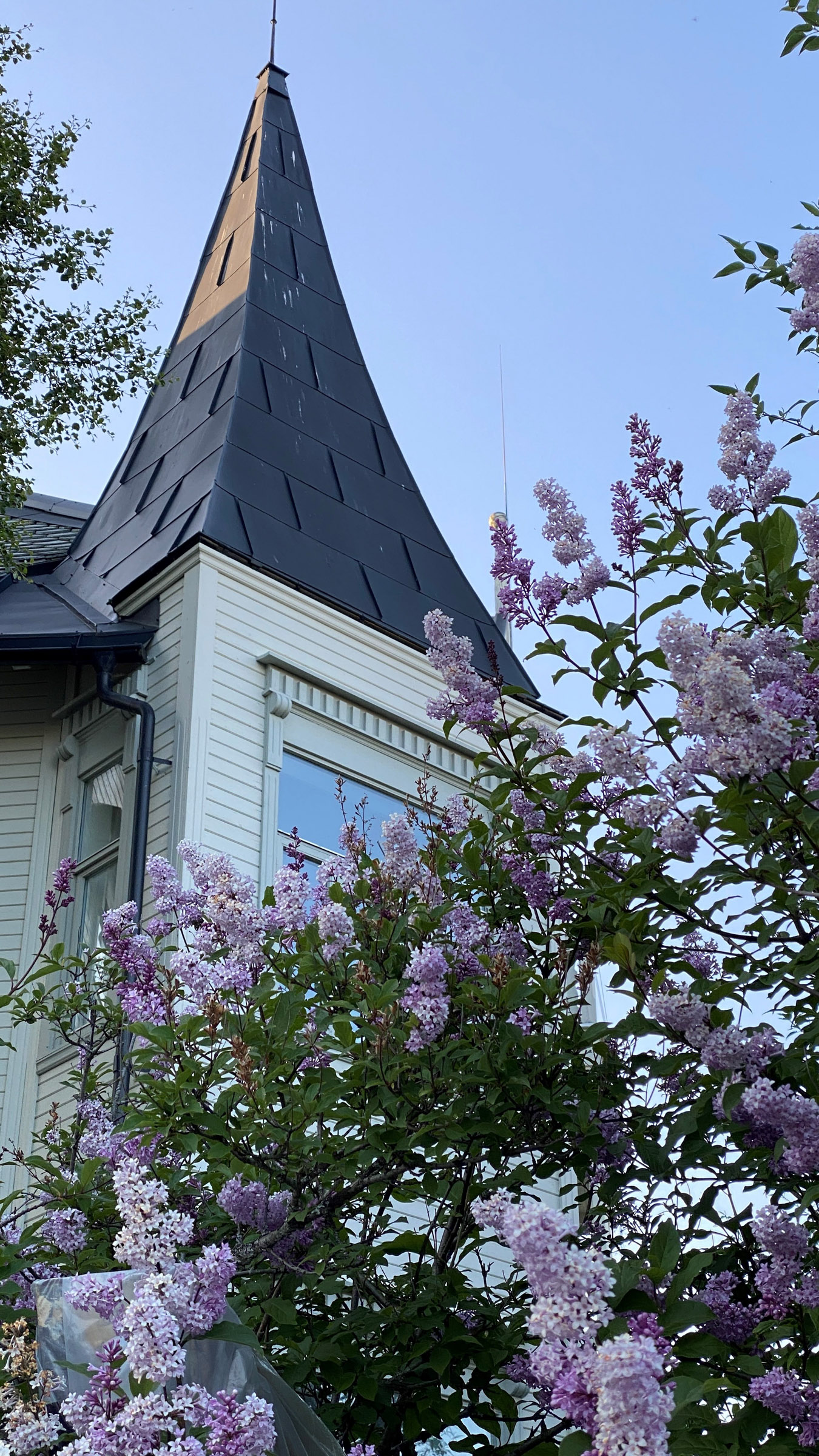
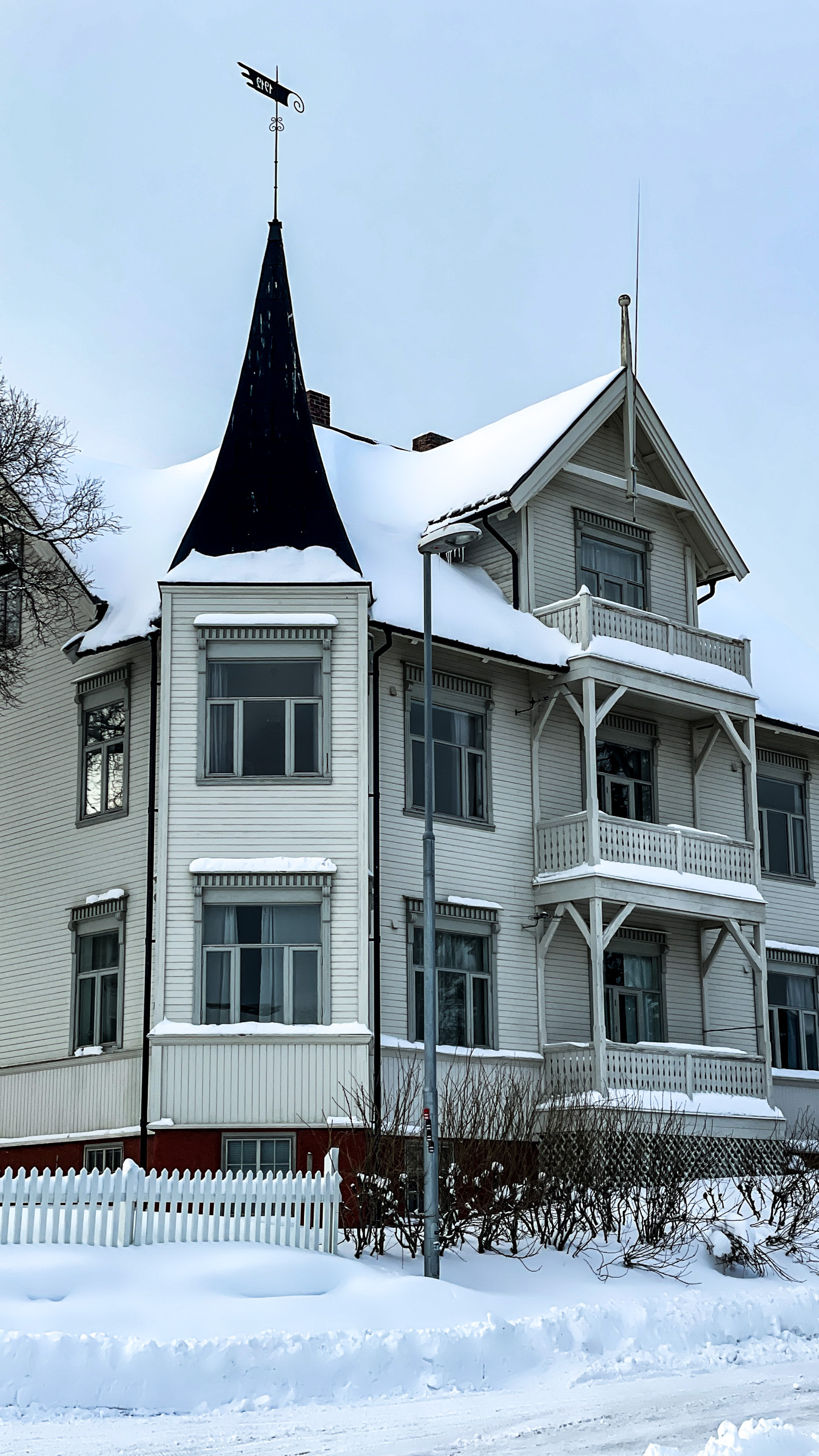
A little lane between the two houses on Skolegata takes you up to Petersborggata, via the small staircase, the Andersontrappa (make sure not to peek into people’s living rooms on the way). Here, a grand-style Swiss chalet villa, complete with a tower, overlooks the street. Further down, the functionalist-style villa at number 52 – albeit slightly altered – dates from 1937, standing out from the richly decorated surroundings.
Kirkegårdsvegen is the Villa Area of Town
A hundred years ago, the well-heeled would enjoy the view and fresh air at Kirkegårdsveien – a rather steep road leading up from the city centre. On the right (northern) side of the road, there is a row of Swiss chalet-style villas, the most prominent being Villa Kostersitz at Karl Pettersens gate 18. This villa was built after the owner saved the life of the Austrian count Kostersitz during a hunting expedition in Greenland in 1911. “Bikuben” next door is another grand villa. Across the road – we suggest crossing to the opposite pavement – there is a row of fine art nouveau stone villas from the 1920s.
The High School is a Palace
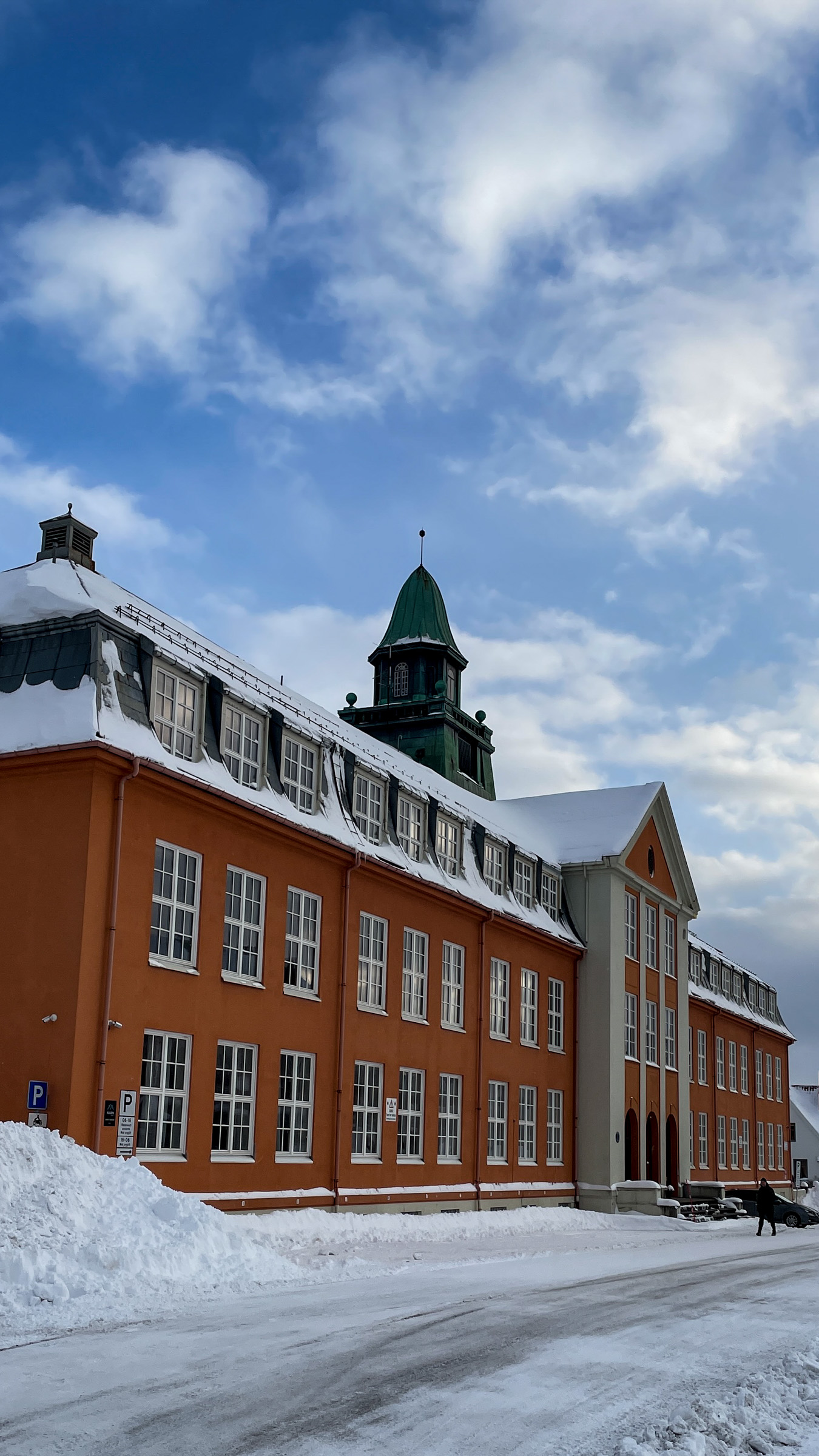
Kongsbakken Videregående Skole – the traditional upper secondary school or high school – was built in 1923 and designed by the city architect Peter Arnet Amundsen. It combines various elements: strict classical lines, a baroque-inspired mansard roof, and an octagonal turret on top. Head down the short Bernt Lies gate to Skolegata, overlooking the green expanses of Kongsparken. Walk to the lower pavement and look north, straight at the row of lovely houses overlooking the park. Then head south and glance into the southern end of Skolegata, before returning to Petersborggata and heading south with a couple of charming houses on the corner.
Tromsø Architecture and Panorama Walk
Our little walking tour takes you out of the busy Storgata – Tromsø’s main street – by a few leisurely steps – for great views and
We start at the Polar Museum
The museum the Tromsøites love the most themselves is the starting point
Verftsgata is an old street
Shipyard workers used to live in atmopsheric Verftsgata
Cross the street in Skippergata
Skippergata 19 is an empire style gem, feel free to cross the street to admire its symmetry. Skippergata 11 has preserved all the outhouses, and here one should snoop around a bit.
Admire the view from the top of Nordre Tollbugate
Walk slowly up the colourful Nordre Tollbugate, from stately houses at the bottom to workers’ houses at the top.
Make the detour to the colourful workers' houses
Bukta used to be the poorest area, but the council houses in Roald Amundsens gate are beautifully restored. Backtrack to Fogd Drejers gate, or lose yourself in the residential areas.
Fogd Drejers gate is colourful
Turn north and walk through Fogd Drejers gate, where honest workers built their own houses around 1920.
Southernmost Dramsvegen has some nice houses
A nice row of white, wooden villas overlook the city, the Tromsø sound and the mountains.
A couple of nice houses before the Anderson stairs
Between a lovely Swiss Chalet Style villa and a brick-and-mortar Art Nouveau house, you climb up and find the Andersontrappa steps, leading up to Petersborggata
Villa Fredheim is a palace on the hill
A stately Swiss Chalet Style villa
KIrkegårdsvegen is the premier villa area
Walk up one pavement and down the other for Swiss Chalet Style villas and cute Art Nouveau brick-and-mortar houses.
The big school and the big view
The Grammar School Kongsbakken is grand. Walk down to Skolegata for a wide view and some nice facades.
Petersborggata is the quiet street
The Skolegata area just south of the school, as well as a couple of places on the Petersborggata – Håkon den gamles gate look great.
Engenstykket is leafy and cute
“Plysjbyen” – The velvet district – is full of wooden villas from around 1920.
The Nurses Dormitory
A piece of great achitecture from the frugal post-war years.
The Art Gallery and the kittiwake hotel
The old museum, built for the city’s jubilée in 1894 has colourful hotels for endangered kittiwakes in the front.
Prestenggata
Houses from around 1900 in mixed shapes and colours. Watch out for playing kids.
End with a coffee
After this, you deserve a coffee somewhere downtown in Tromsø.
Engenstykket is a Neat Row of Houses
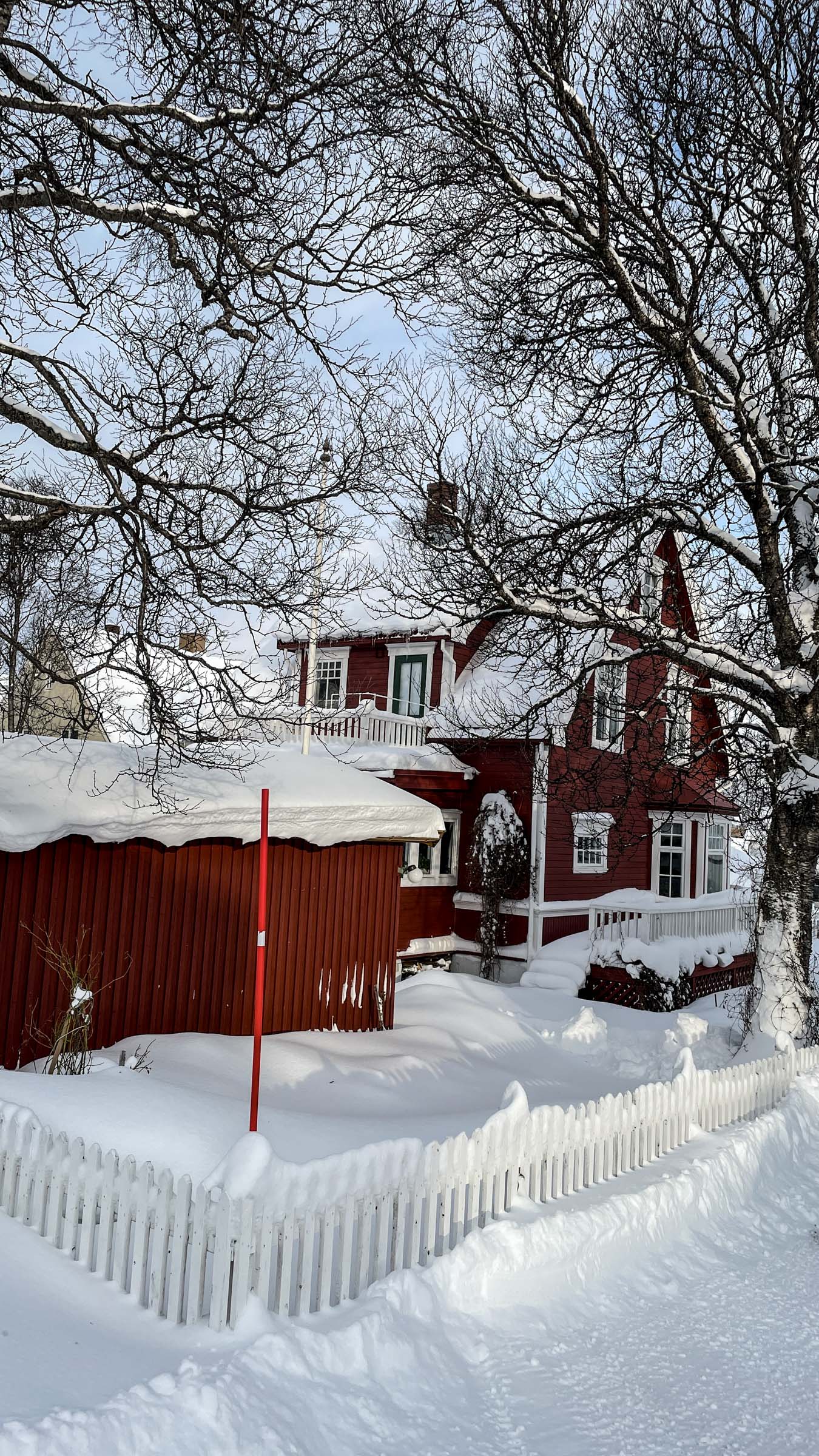
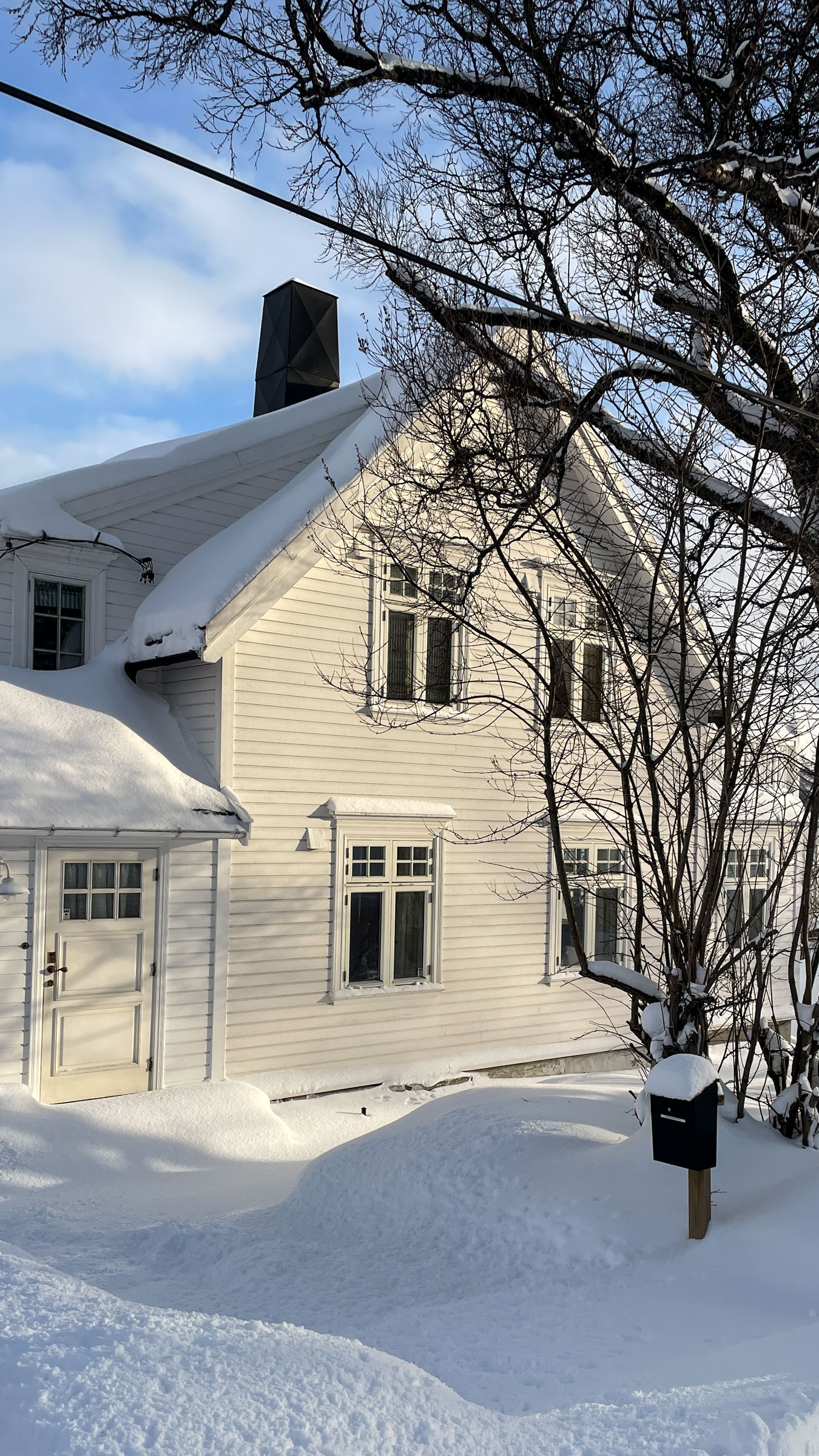
Engenstykket used to be a meadow just outside the city border. Between 1920 and 1925, a row of nine houses were built on this field, most of them by the same builder.
They combine the Swiss chalet style with Art Nouveau, in various combinations. Look for Art Nouveau-style windows, balconies, verandas, and dormers – all well-kept and surrounded by mature trees and lawns. Engenstykket is also known as Plysjbyen – liberally translated to the “Velvet district”, because it’s considered a nice address.
The Nurses’ Home is Simplistic Modernism
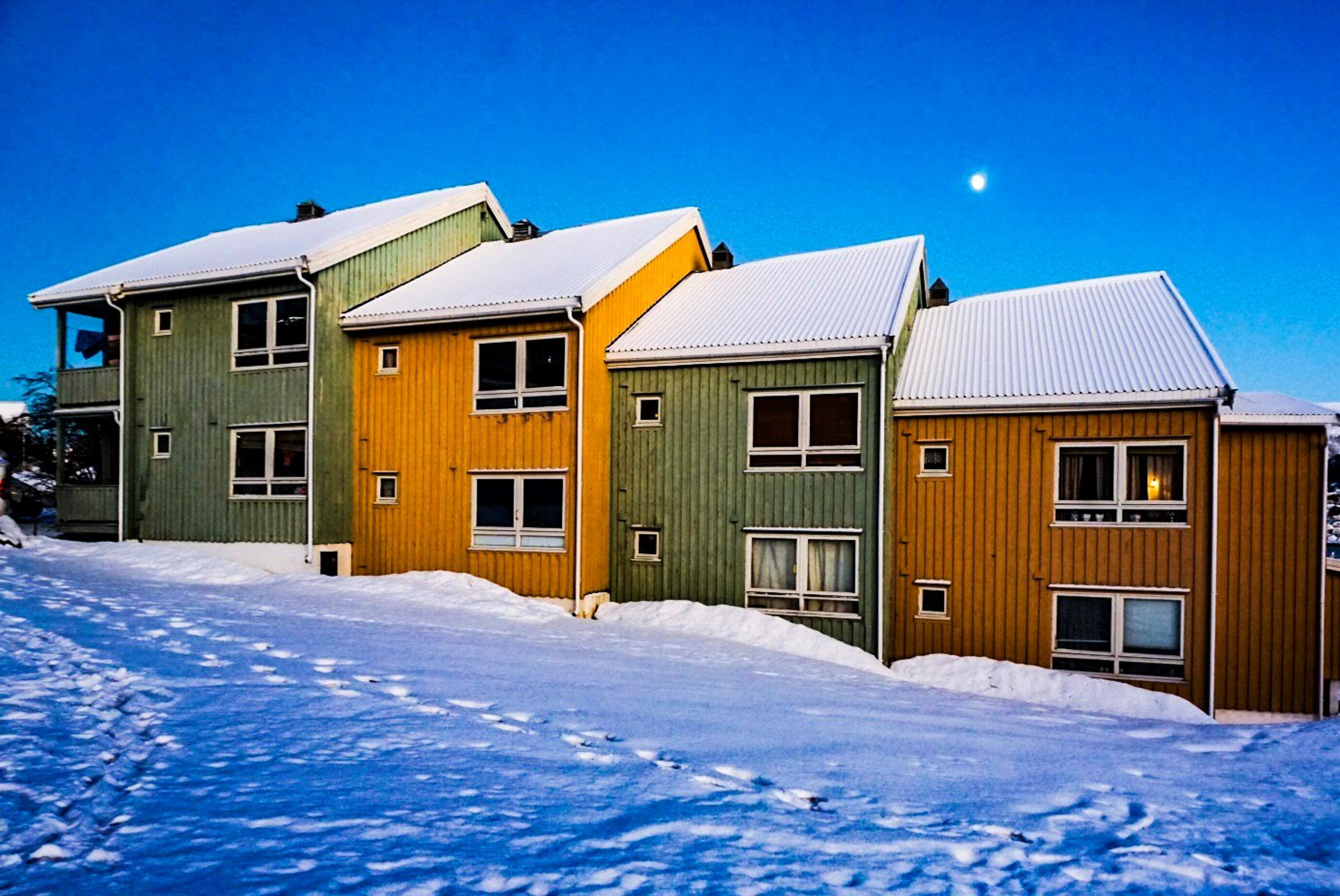
A short downhill walk, with the city centre always in view to your right, leads to a collection of houses with a distinct 1950s character. Originally built for nurses working at the nearby hospital—now the county hall—these modest studios and small apartments reflect the restrained post-war style of the era.
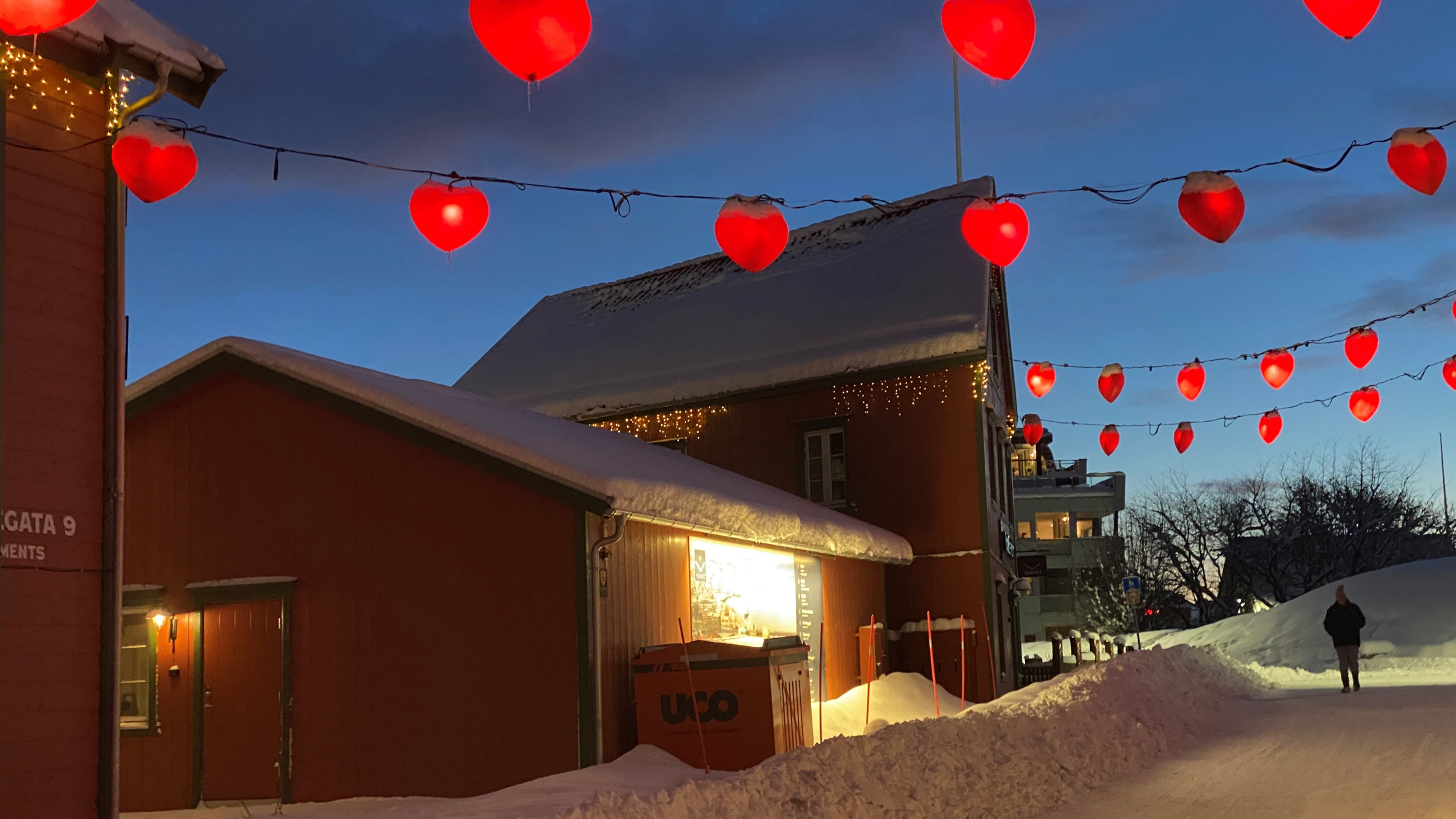
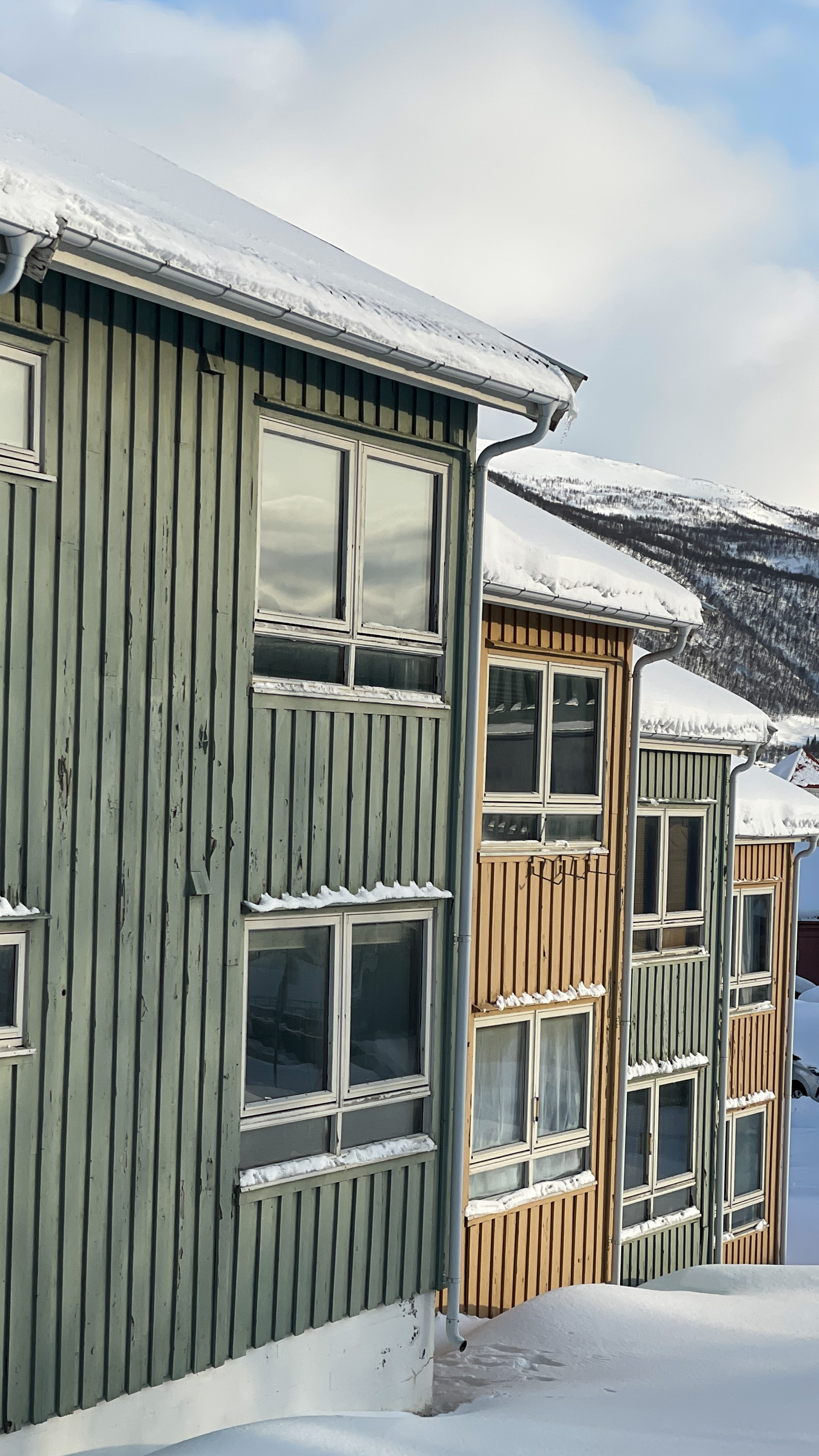
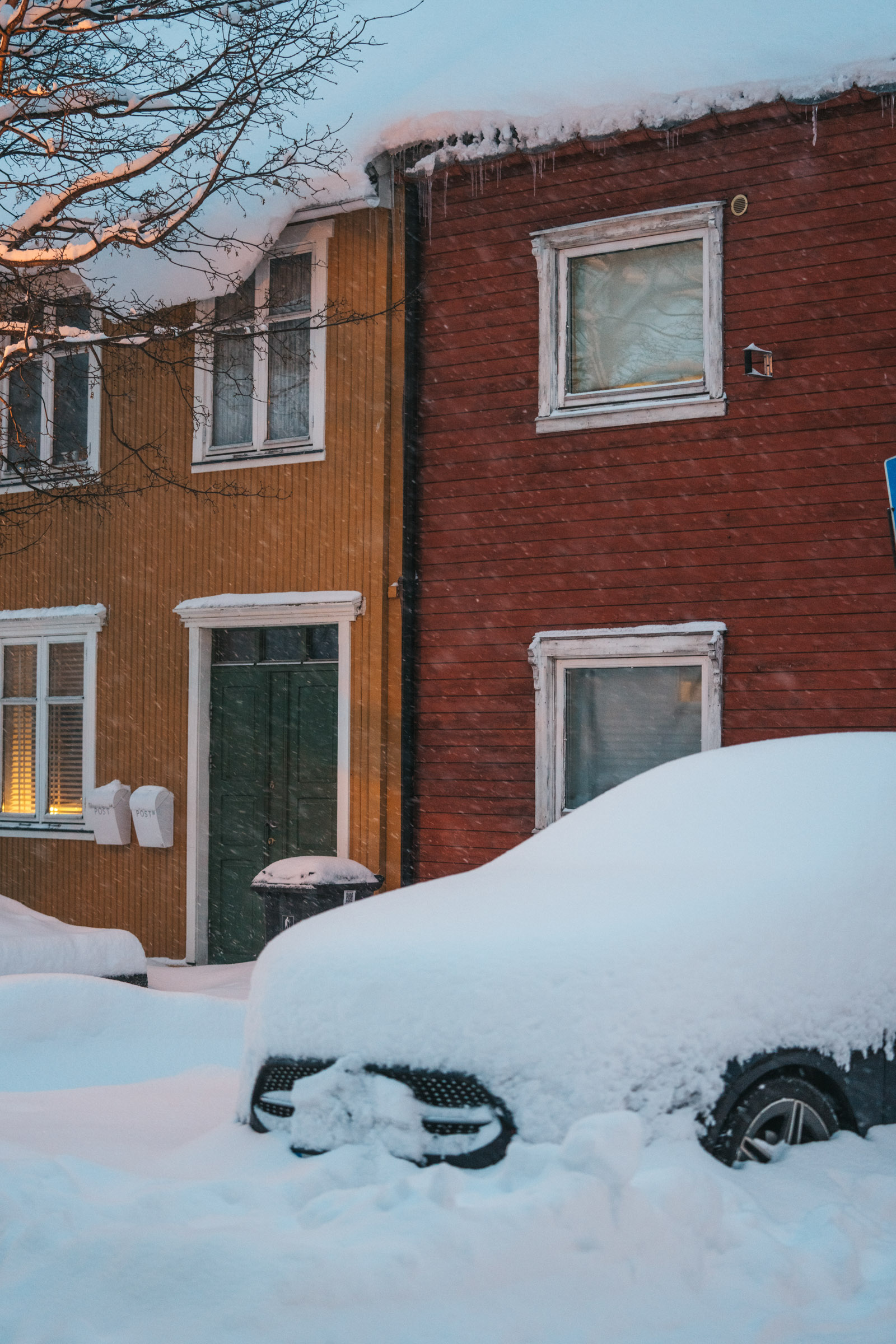
Later, they were painted in a tasteful colour palette that is particularly striking in winter and snow. ‘Tripptrappen’ – ‘The Tip-Tap’ – is its popular nickname, given for its staircase-like adaptation to the slope.
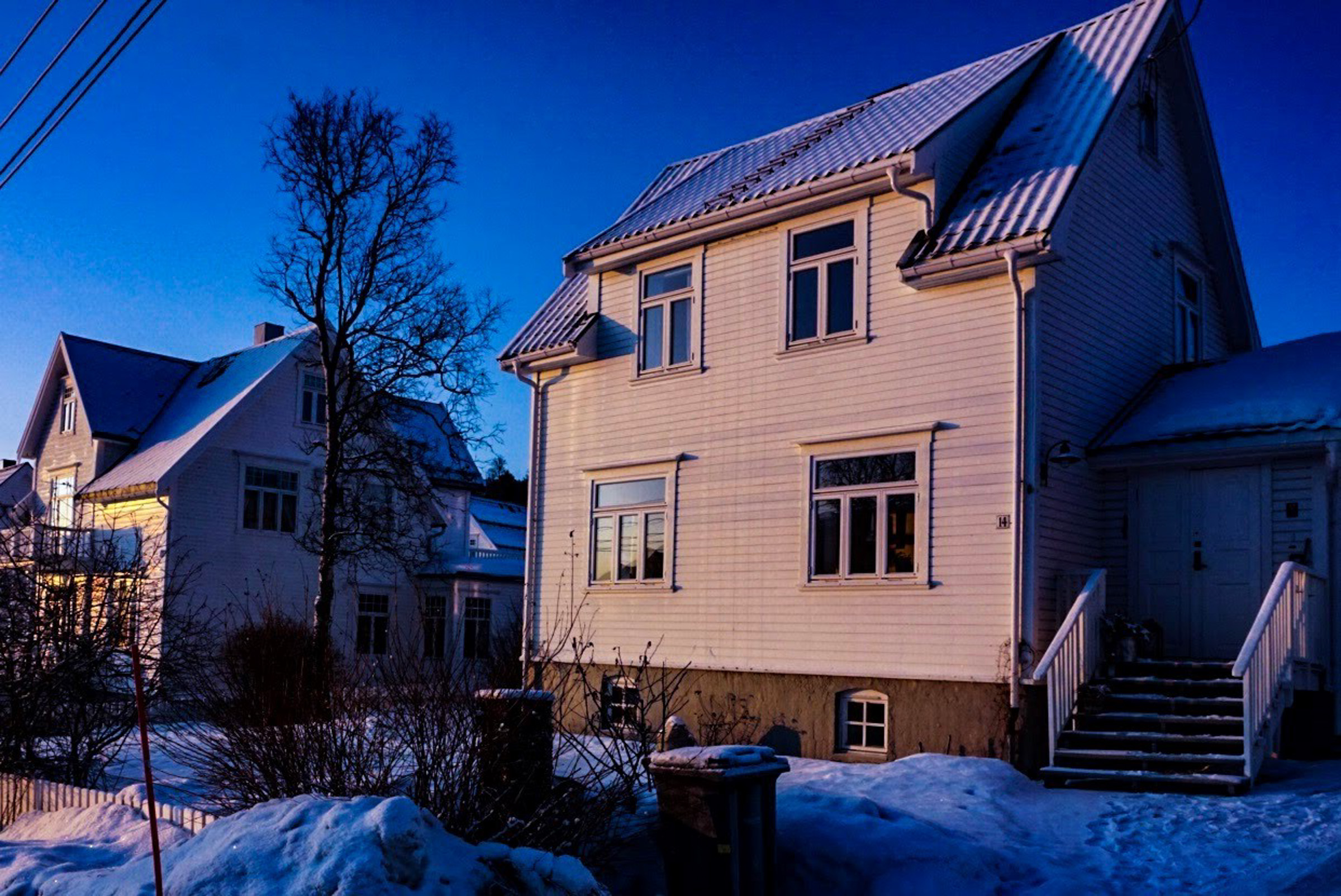
Blending in and staying safe
As Tromsø welcomes more and more visitors—something that brings joy to most locals—it also brings a few small challenges for residents, as is the case in many popular destinations around the world. Fortunately, visitors can easily help by keeping a couple of aspects of Norwegian mentality in mind. Also, traffic and ice might be ai problem.
There are some unspoken rules in Norway when it comes to photographing people. If someone is sitting in their garden or on their veranda enjoying the sun—making the most of good weather at our latitudes—or children are playing around, it’s best not to photograph them or stare at them with interest. In some countries, high fences ensure privacy, but in Norway, you discreetly look the other way. Unless you know them, in which case, throwing in a comment and receiving a witty reply is fair game.
In this day and age of uncontrolled photo sharing, it’s simply not done.
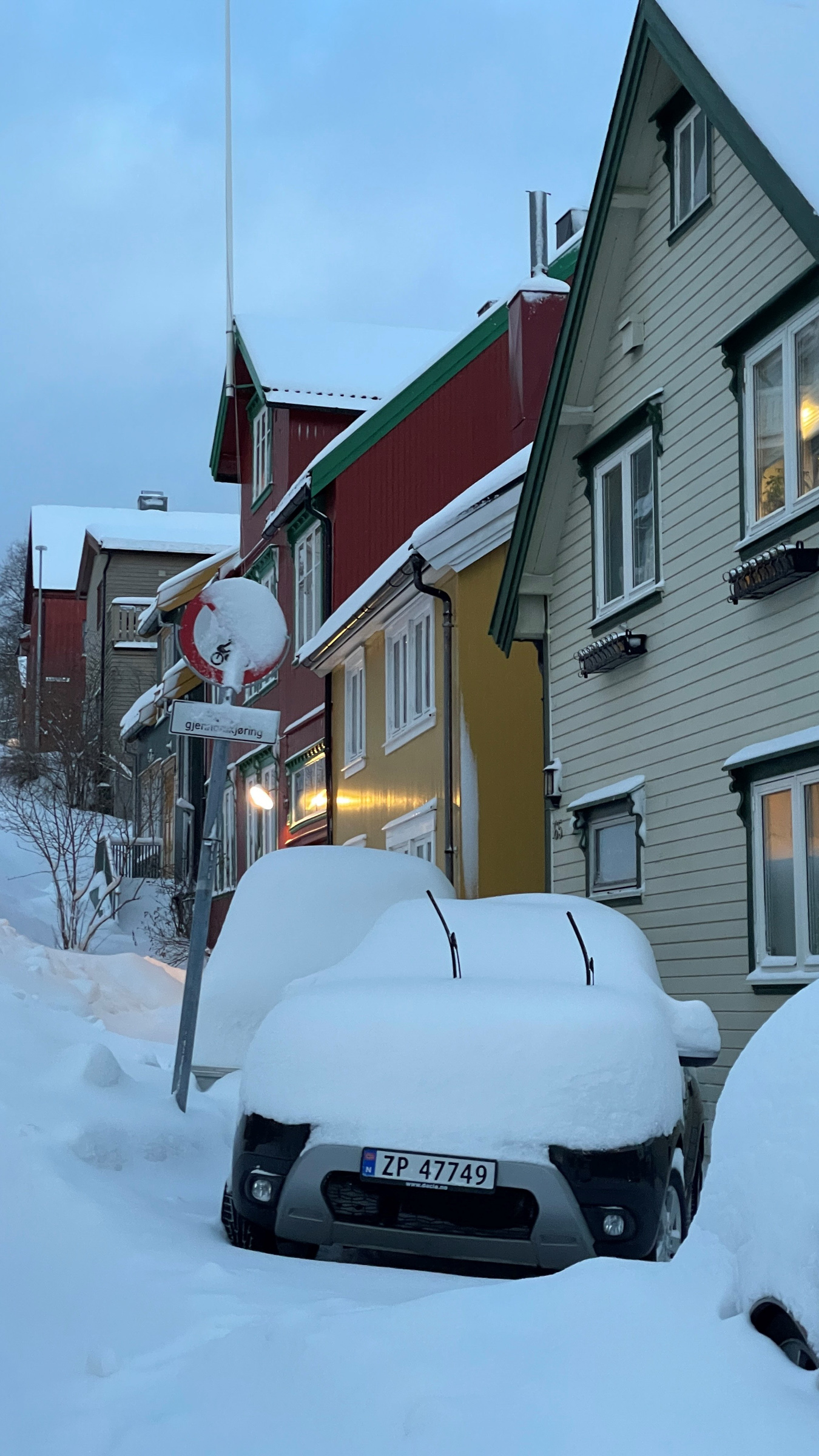
This is partly due to the insane amounts of snow that accumulate in winter, as snowplows sometimes flatten fences. However, this doesn’t mean you can walk into people’s property. While Tromsø residents are accustomed to this, visitors who are used to fenced-in privacy may inadvertently cross invisible boundaries.
The cheap crampons available in souvenir stores and supermarkets may look uncool, but they will save you from falling.
City planning never was Tromsø’s strong suit. This means pavements and zebra crossings are often missing. When walking on a road without a pavement, you should walk on the left side, preferably in single file, for your own safety.
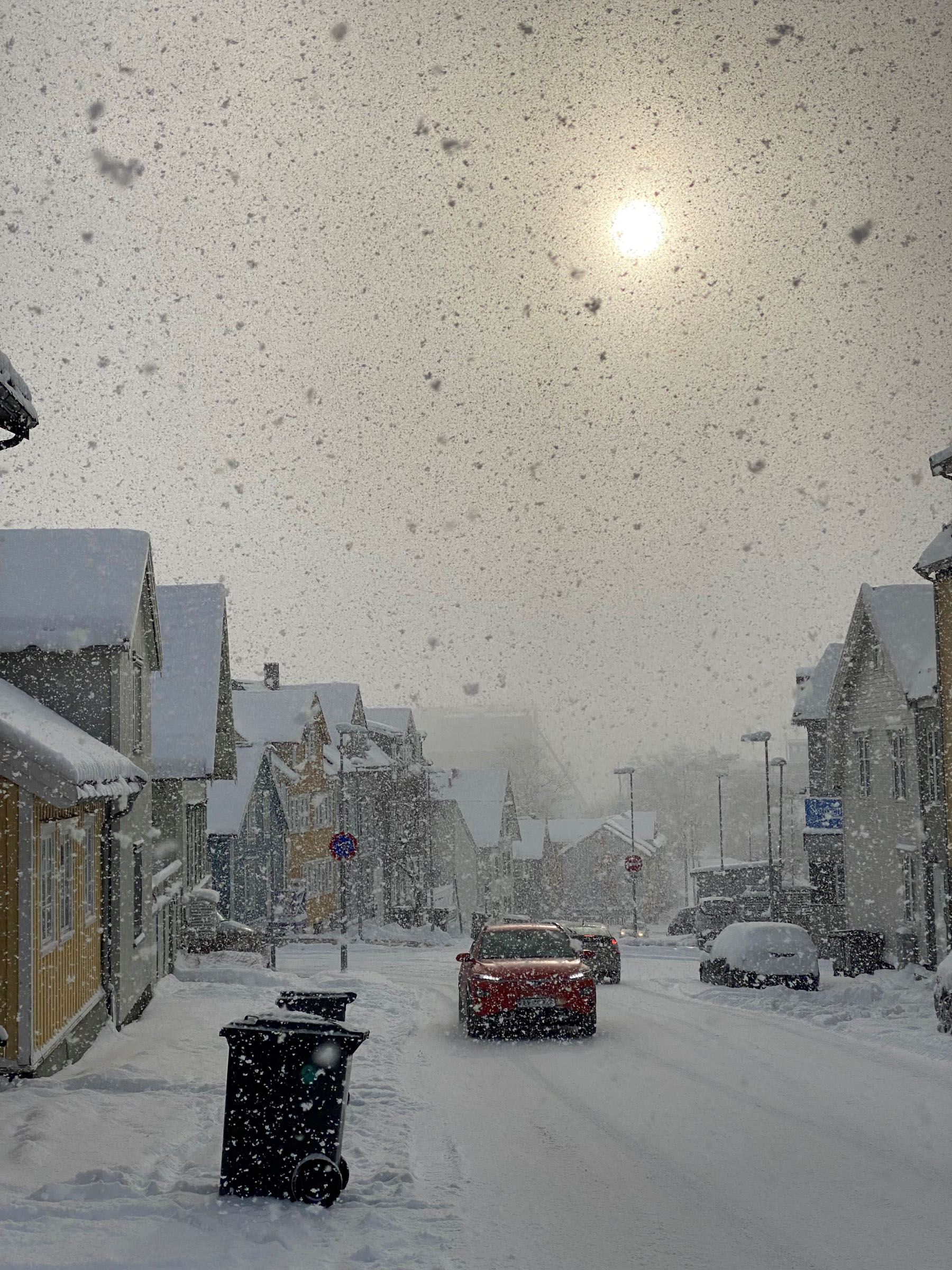
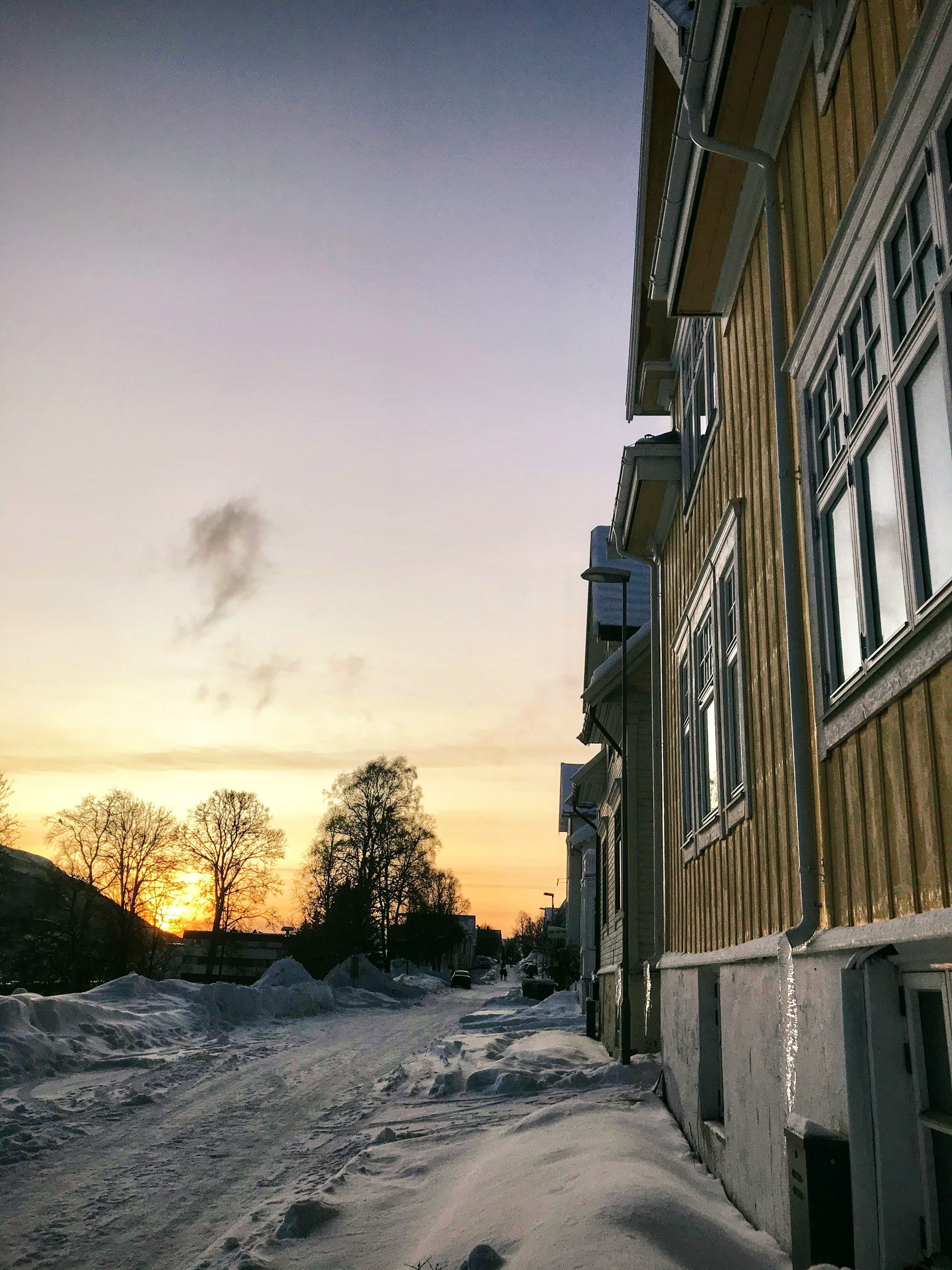
It can be a fun thing to do this tour in the dark in winter, and look for the Northern Lights at the same time. However, walking around in dark winter coats makes you invisible for cars. Get hold of a reflective vest – they are sold everywhere.
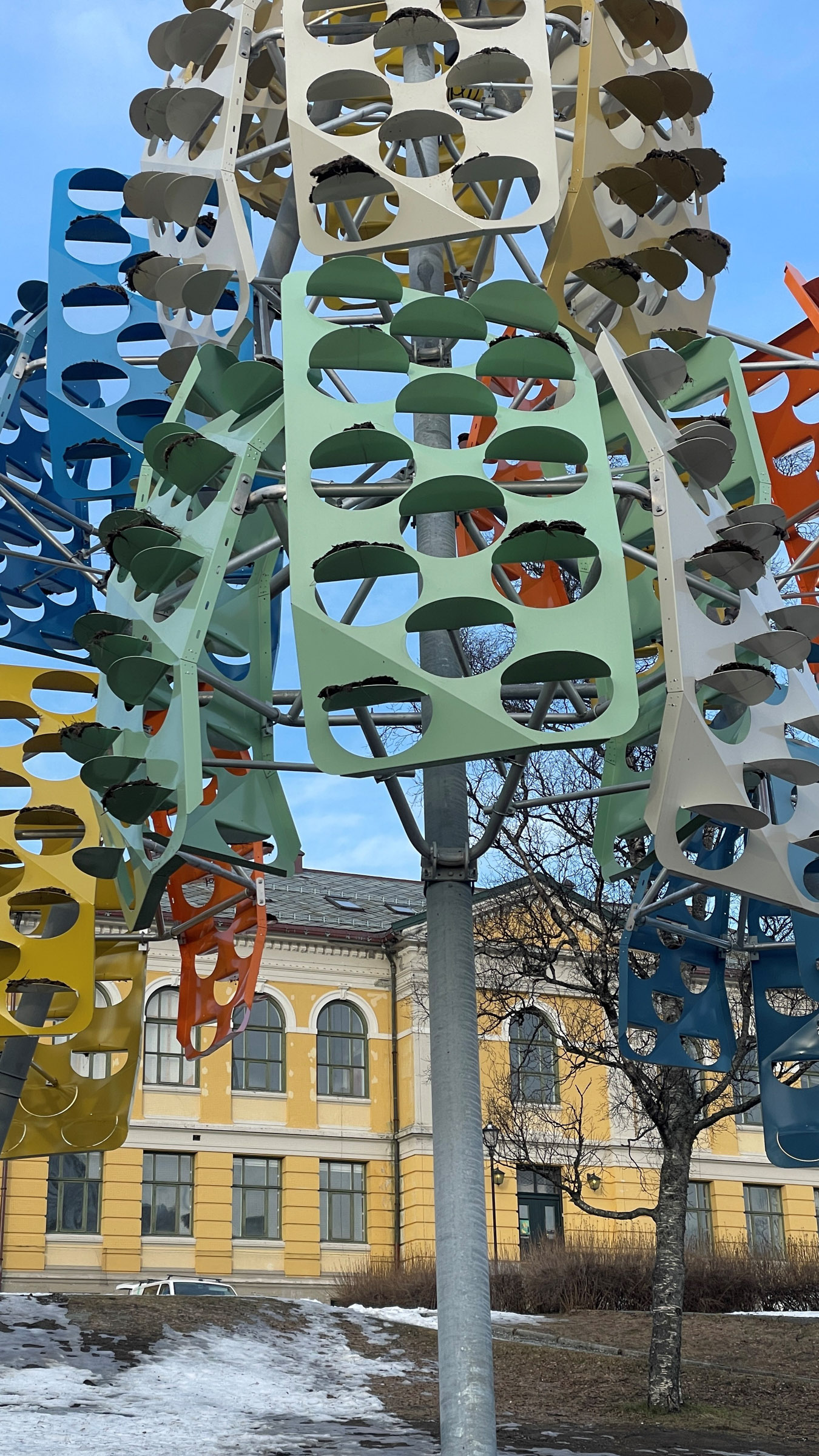
The Art Society is Tromsø’s Old Museum
Let us turn towards the city centre again, but stop at “The Old Museum.” This stately building was constructed for the city’s 100th anniversary in 1894. With its symmetrical design and neoclassical style, it truly resembles a museum, centred around a midsection bay crowned with a triangular pediment. Today, it houses the gallery for contemporary art, and you might want to take a look inside.
Or, simply photograph the strange structures on the front lawn, which are “seagull hotels.” Kittiwakes – small seagulls – have invaded Tromsø’s downtown, probably because there is not enough food in the ocean. To prevent them from nesting on window sills across town, artificial bird cliffs – or seagull hotels – have been constructed. In summer, they are full of life.
Prestenggata offers backyard glimpses
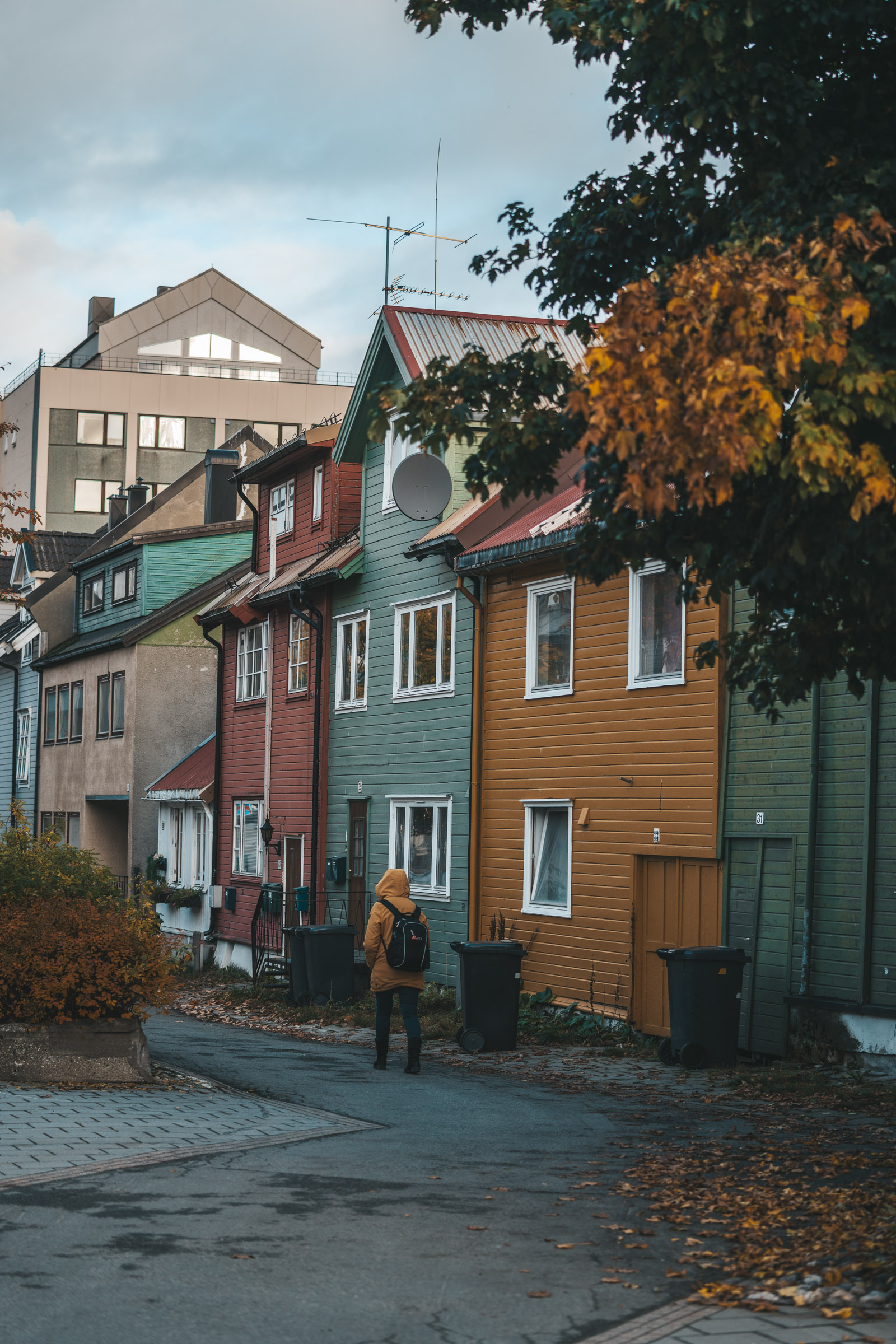
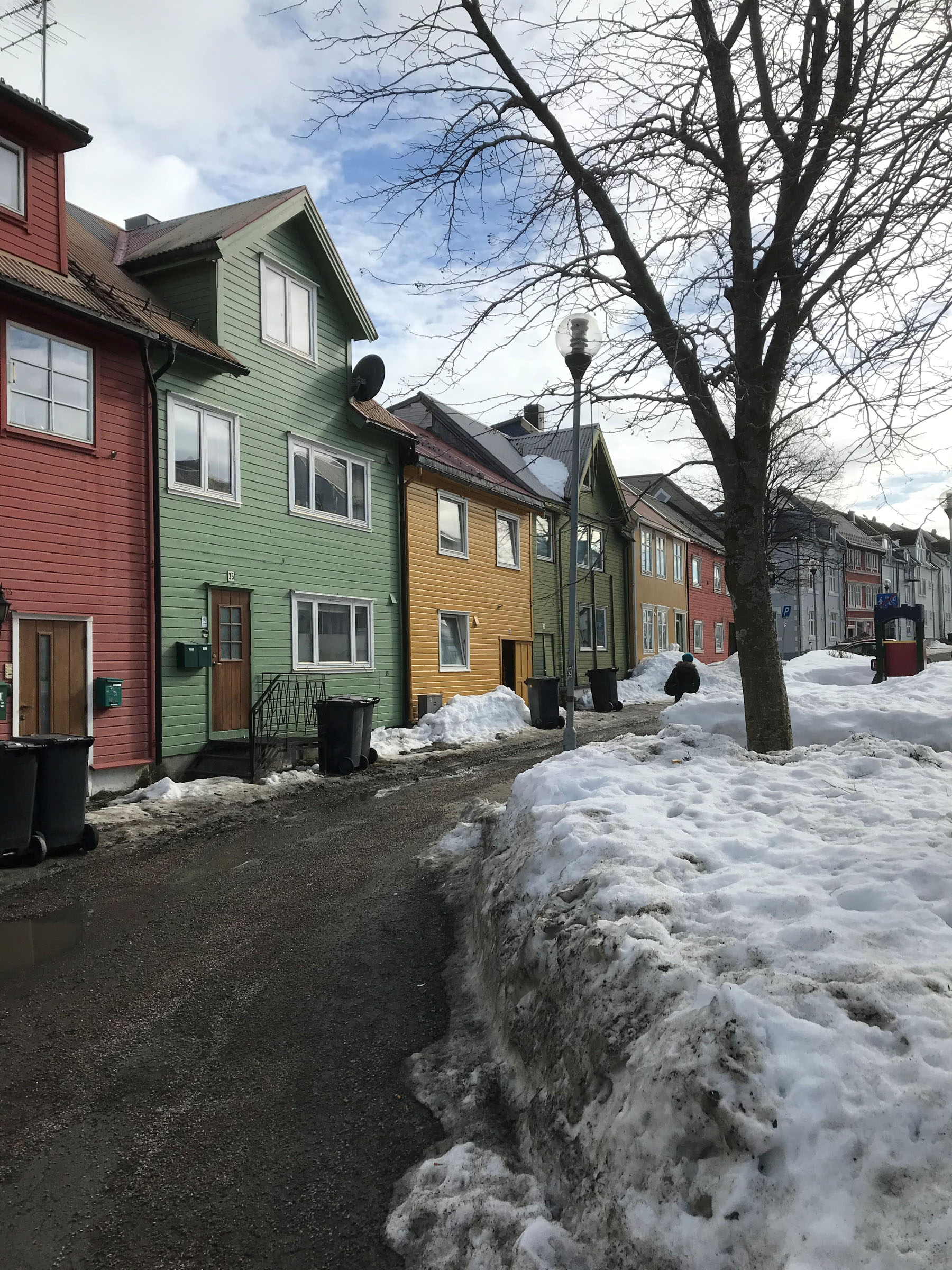
The final leg of the walk takes you along Prestenggata. This street was once a field that was converted into a residential area. As this development occurred around 1900, the houses are closely packed together, and you’ll occasionally catch a glimpse into a backyard. Pedestrianised, this is a street where you’ll need to watch out for a stray football, as children play in the street. You are now descending down to the hustle and bustle of the Storgata main street, may we suggest a coffee somewhere?
This article was written with the help of two books by Sveinulf Hegstad: his master’s thesis in history, Tromsø bysamfunn – sosial lagdeling, boliger og boforhold 1900-1920, and his booklet Fotefar mot nord – byvandringer i Tromsø. The Architecture guide for Northern Norway and Svalbard was also an invaluable source, and I also consulted www.lokalhistoriewiki.no. This article is intended to show you around Tromsø—please don’t base your PhD on it!