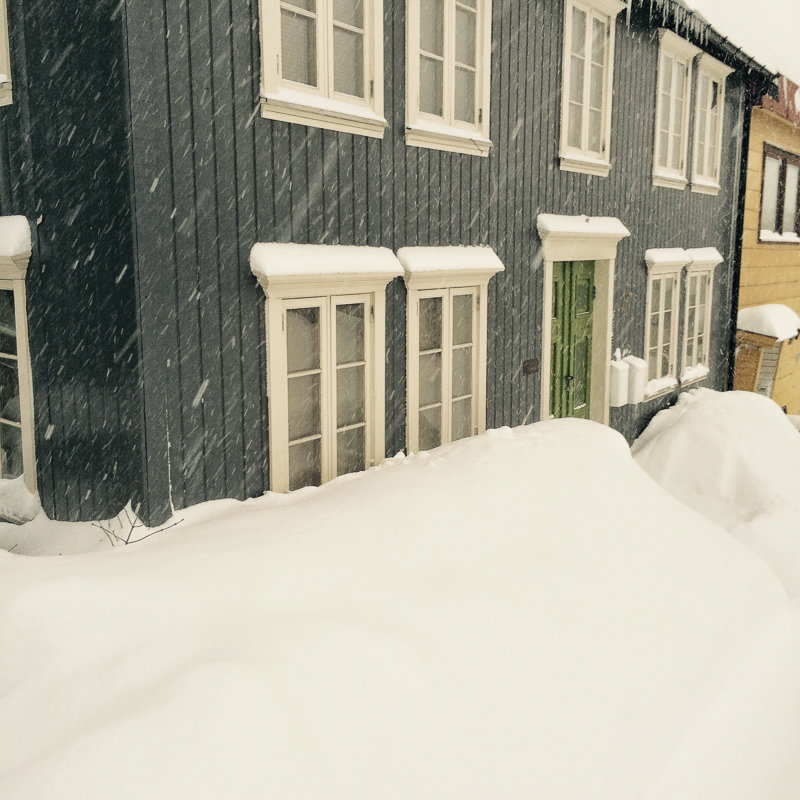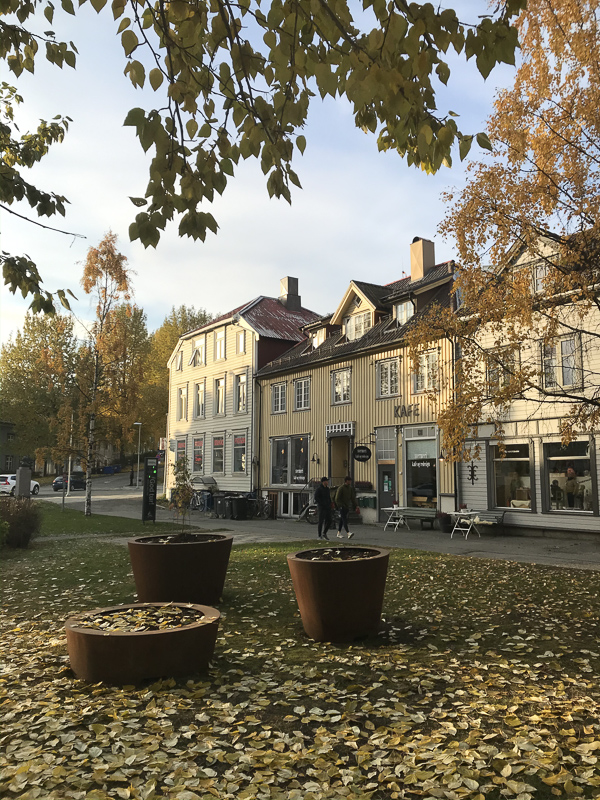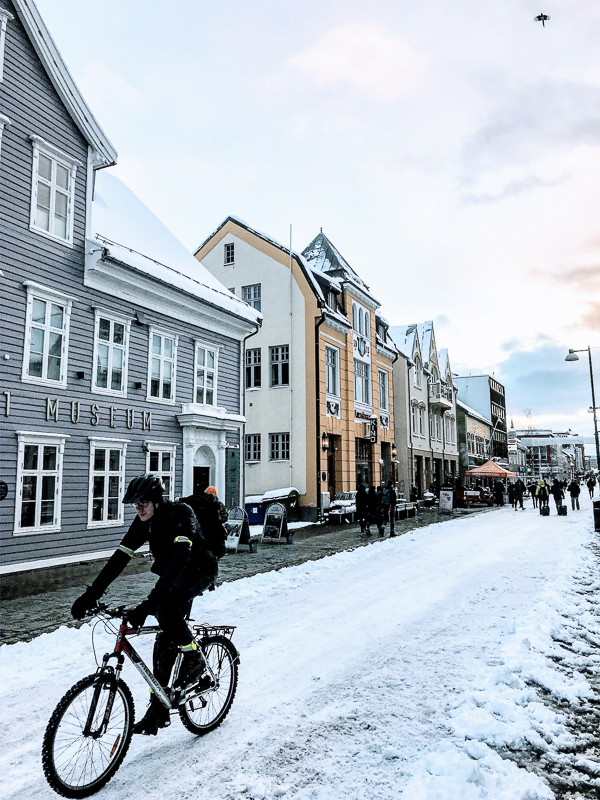
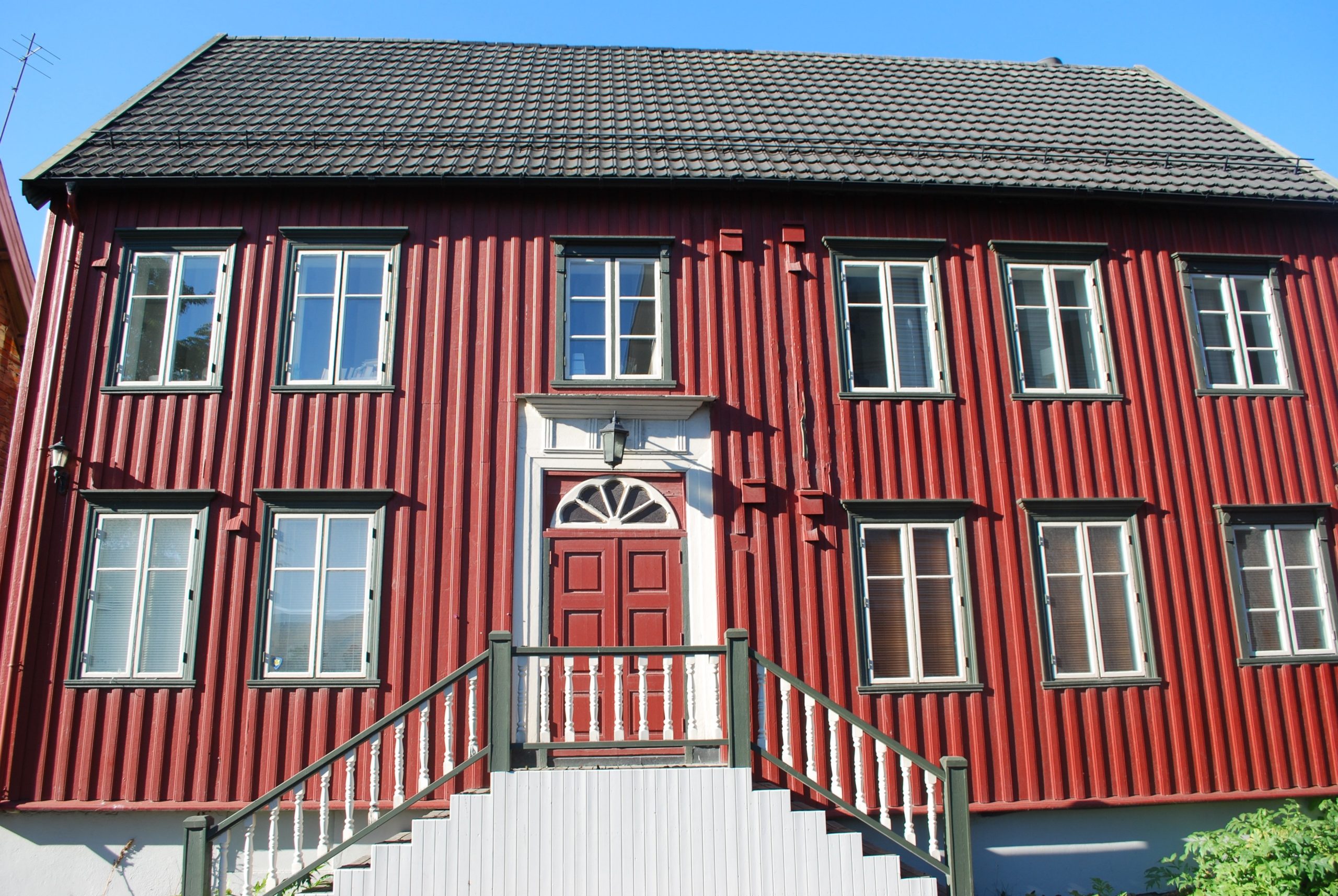
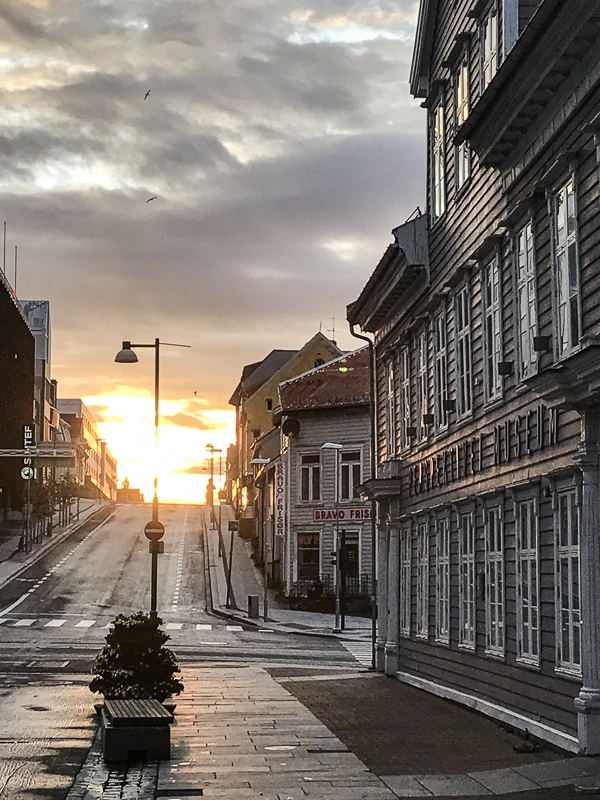
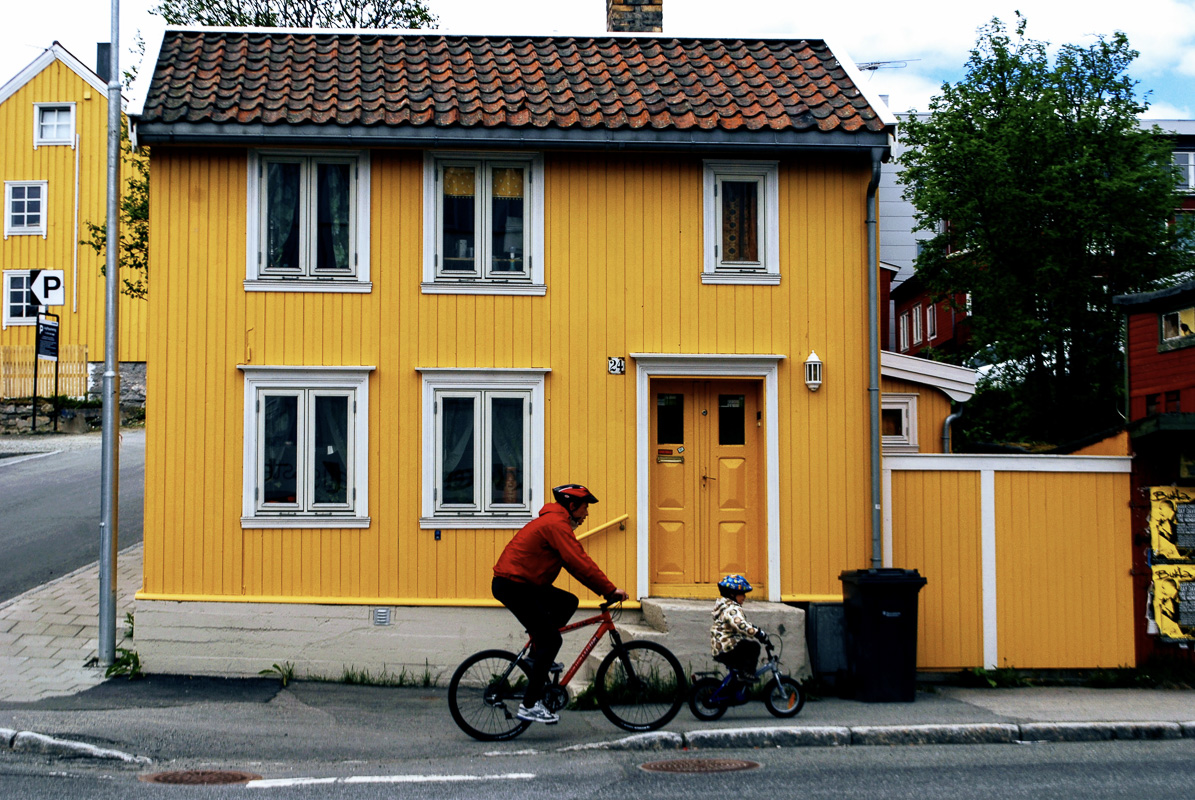
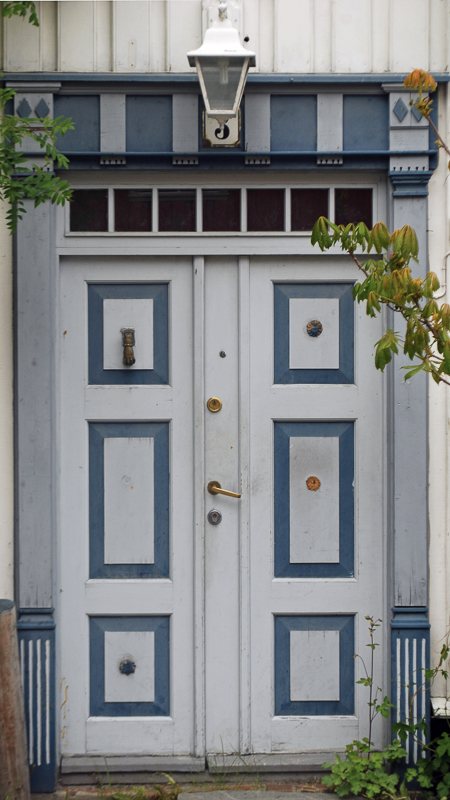
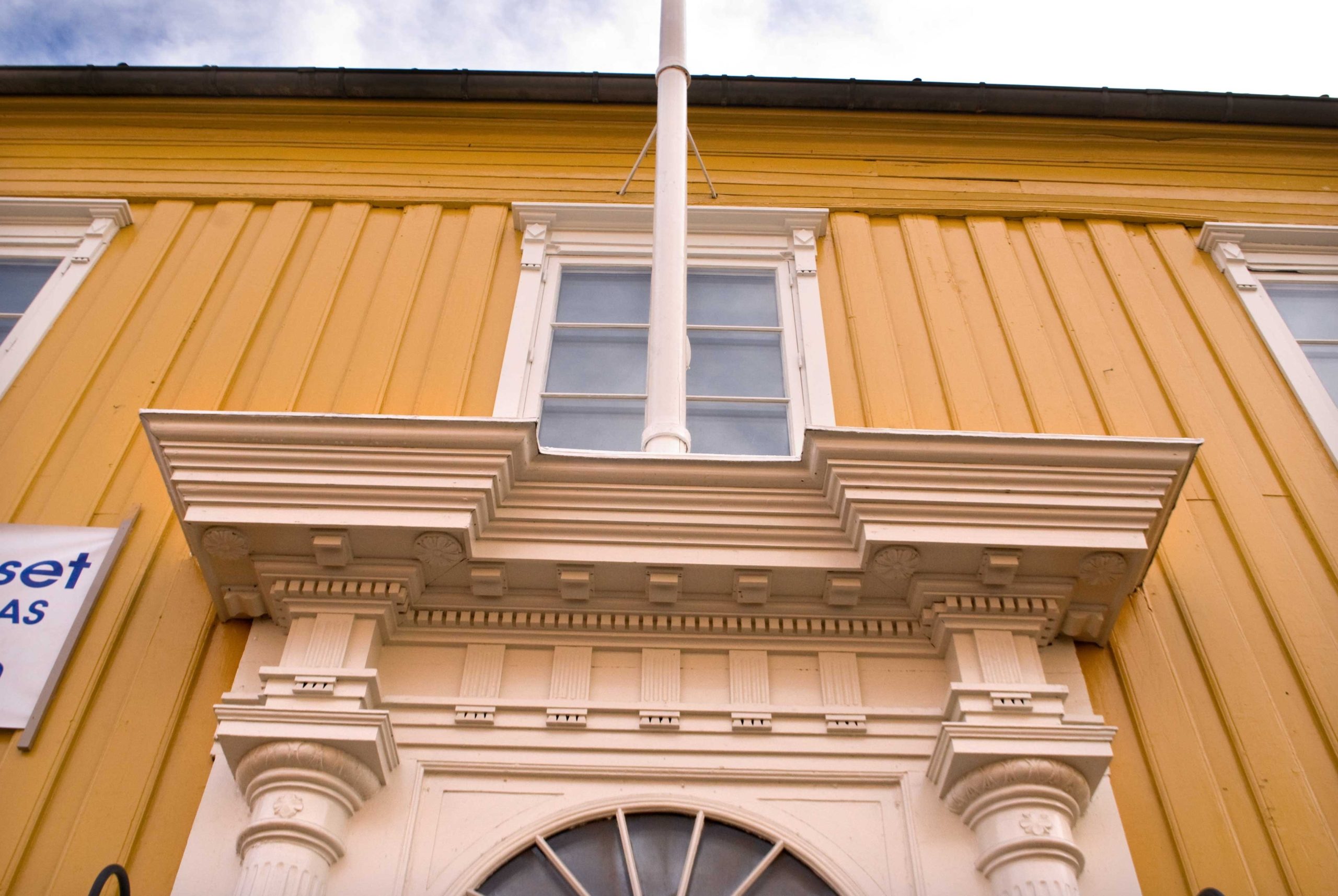
Empire is the name of an international style inspired by the architecture of ancient Greece and Rome. In Tromsø, however, the style has a special twist: the buildings are made of wood, not stone. White doorways with half-columns and hound’s tooth patterns in the window frames – it is all wood. Since Tromsø grew up in the 1800s, it has been dominated by Empire style architecture and the town centre features one of the most important concentrations of Empire architecture in Norway.
Want to know more about Tromsø and its architecture?
Visit Tromso is the tourist information centre for Tromsø, where you can find information about the city and even join a guided walk around the city to learn more about its history and architecture.
Yes! The Northern Norwegian Architect Guide has a vast array of information not just on architecture in Tromsø but the whole northern area of Norway from Nordland to Svalbard.
The paint colour of your housing denoted your status in the community
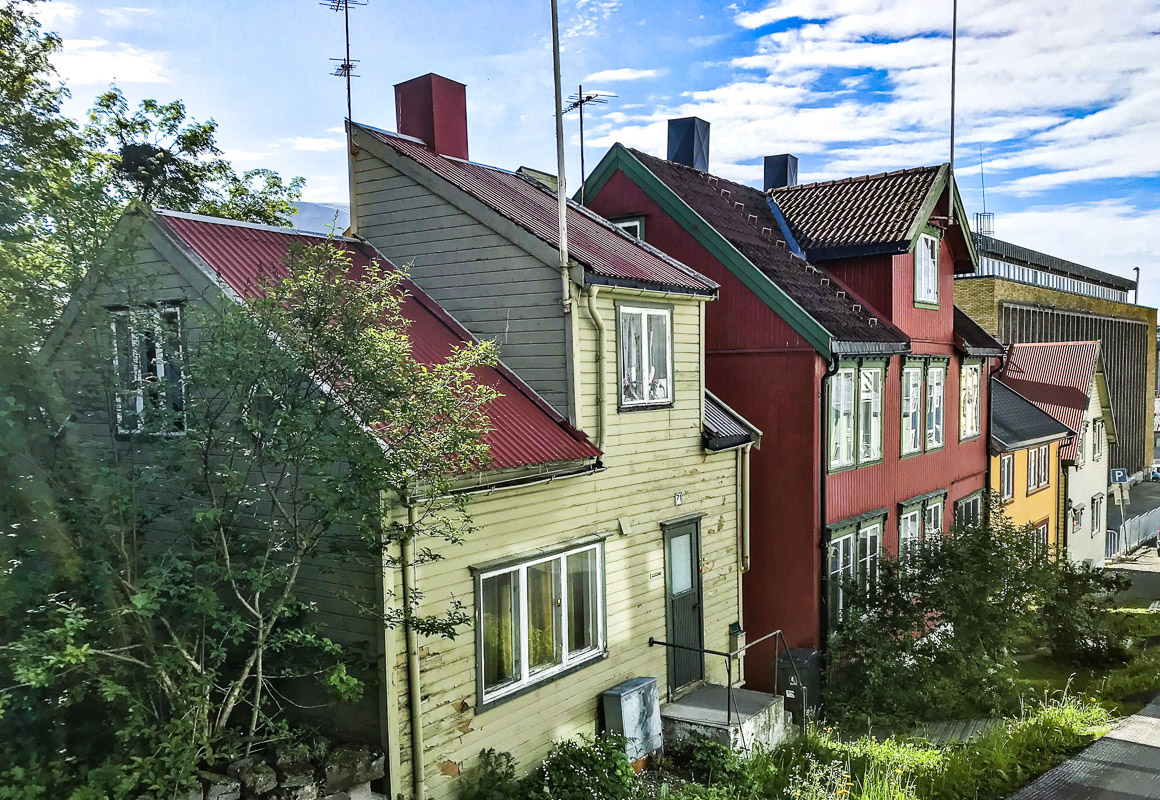
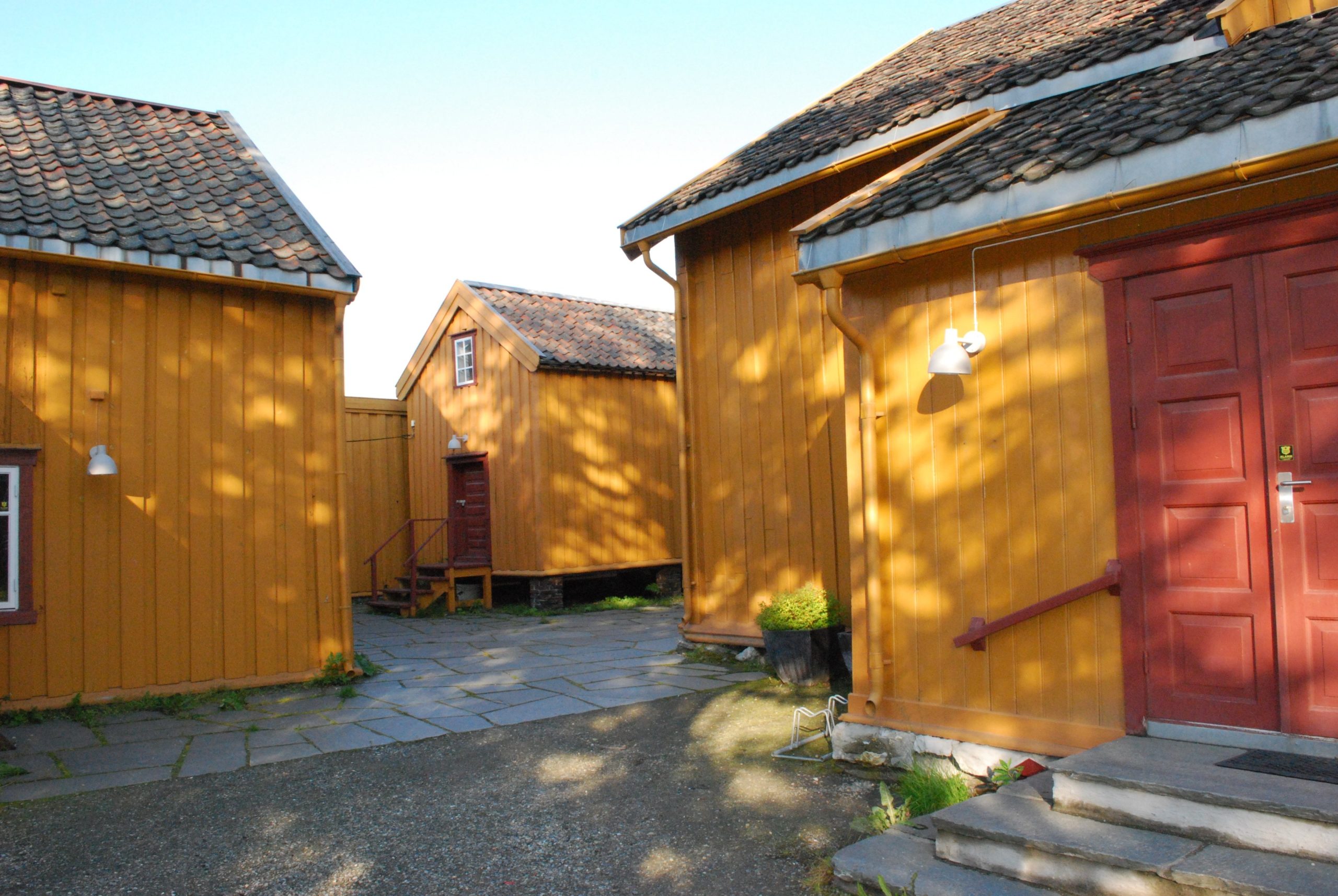
Rich merchants in the developing town built villa complexes where the main building was painted grey, white or yellow. The courtyards were reserved for servants’ quarters and livestock, and the buildings here were more modest and painted using cheap, red fish-oil paint. Time has not been as kind to the courtyard buildings as to the main buildings, but some well-preserved courtyards can still be found.
Horizontal panels came from Bergen while vertical came from Trondheim
The merchants were often the younger sons from merchant families in Bergen and Trondheim who travelled north to share in the almost explosive development of the fishing industry. They brought the building traditions from their home towns with them. This is clearly evidenced on the houses themselves, which feature the horizontal panel style from Bergen or vertical panel style from Trondheim. In Trondheim-style houses, the door is positioned in the centre of the façade, while in Bergen-style houses there is a door at each end.
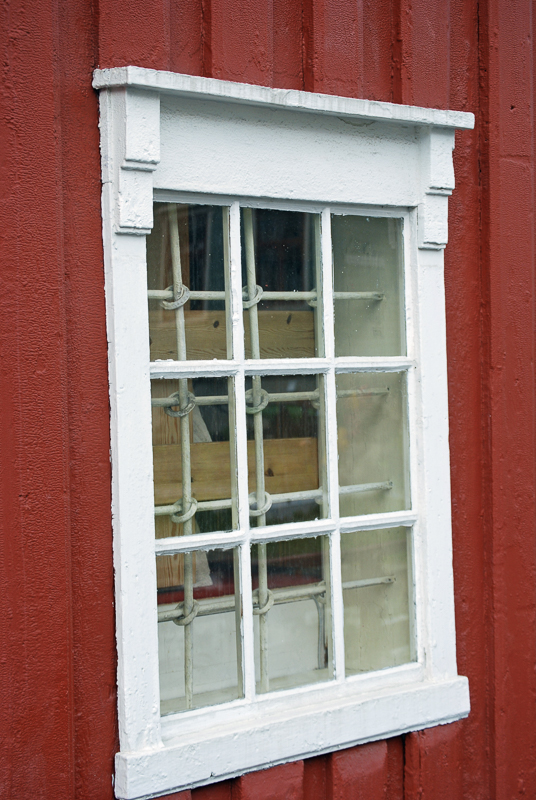
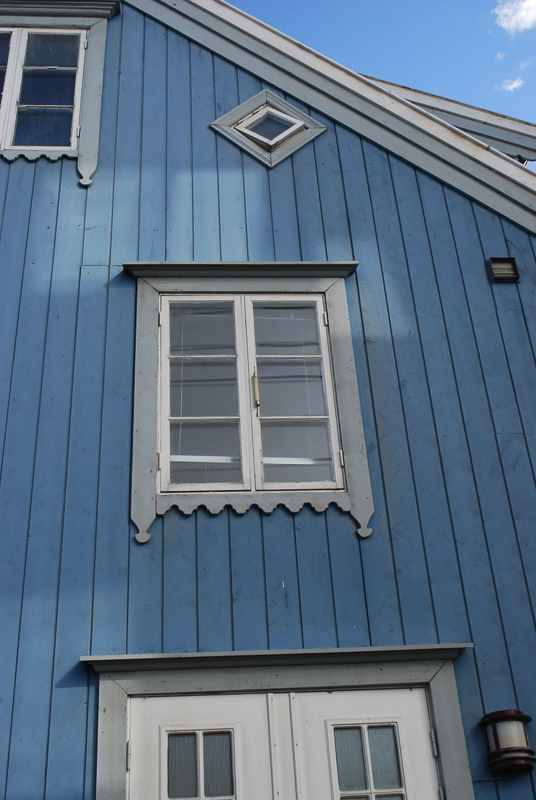
Workers’ housing was red or blue
The workers lived in the north section of the centre, where the sunlight conditions are poor, or south of the old town centre. The workers’ houses are more modest and often painted in the cheaper red colour. However, some are painted blue, which is a style said to have come from Karelia with the Russian traders known as the Pomors. Some of the houses feature strange shapes, as small extensions were added whenever the worker families could afford them.
Wharfs lined the seafront of old Tromsø
“Wharfs” is the term used for storage buildings and packhouses along the waterfront. They were built on poles out in the water to facilitate loading and unloading. Photos from as recently as the immediate post-war years show that the entire waterfront side of the town was lined with wharfs. Fires and demolition subsequently took a heavy toll on the wharfs, but a few of them are still standing in Tromsø.
Neo-Gothic, Swiss and Middle Eastern styles took over from around 1850
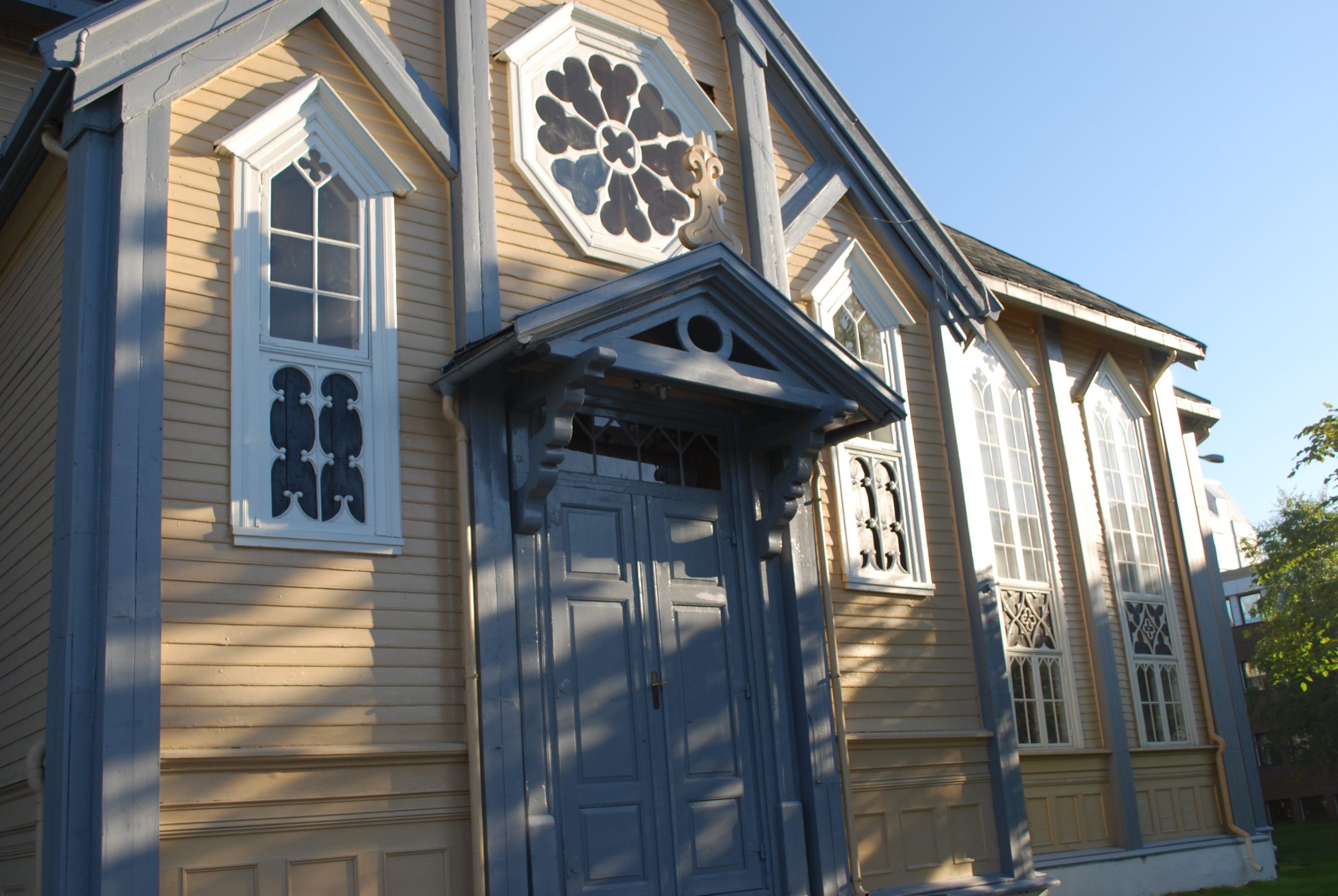
From around 1850, Empire style was forced out by historism, a movement that sought inspiration in all history, not just ancient times. In Tromsø, the style was naturally “transposed” to wood. Tromsø Cathedral and the little Vår Frue Kirke (Church of our Lady) were both built in neo-Gothic style. The colourful Swiss style with its decorative carvings is to be found in both apartment buildings and villas on the outskirts of the centre. Kiosks inspired by Middle-Eastern style stood on almost every corner, and a handful of them have been preserved. Such as the now famous Raketten kiosk found in Tromsø’s main square.
Fire risk meant buildings after 1904 were built of brick
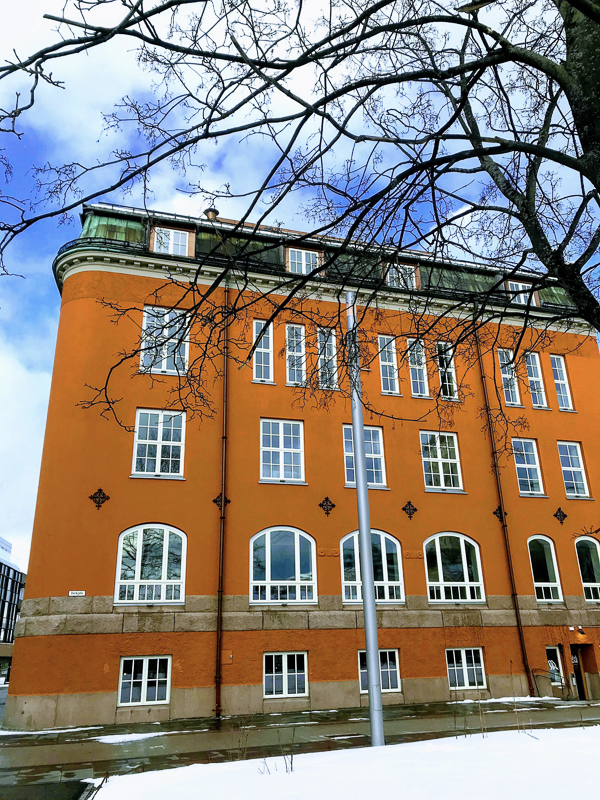
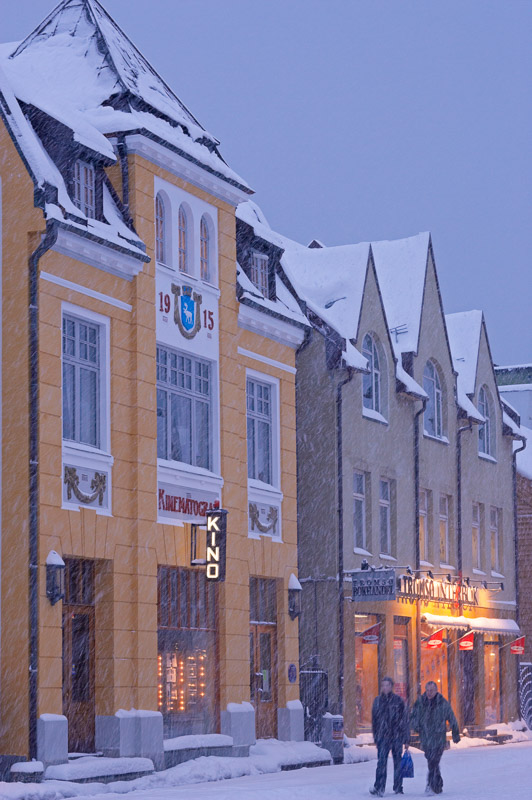
The great fire in Ålesund in 1904 made such a strong impression on the nation that laws were passed making it obligatory to build with brick in all towns. The centre features a number of fine houses in Jugendstil and art nouveau, the styles that dominated the early 1900s. The biggest changes to the townscape first appeared in the 1960s, however, when Tromsø was one of the fastest developing towns in Norway and the old had to make way for the new. It was not until the late 1970s that the idea of conservation began to take root, so the centre of Tromsø today presents a strange mixture of old and new. It is unlikely that the town will ever become famous for its beauty – but it is certainly far from boring.