
First, a few things to know before driving
Whether you’re renting a car, travelling by campervan or driving your own vehicle, here are a few things you need to know before setting off:
- Drive on the right-hand side of the road.
- Keep your headlights on at all times, day and night.
- Follow speed limits. They are strictly enforced, and fines are high.
- Wear seat belts. They are mandatory for all passengers.
- Never use a handheld mobile phone while driving.
- Don’t drink and drive. The legal blood alcohol limit is 0.02% (0.2‰).
- Watch out for wildlife, especially reindeer and moose.
- Stop safely for photographs. Never stop on the road or block traffic.
- Plan for long driving distances. Roads often follow fjords and coastlines, making journeys longer than expected.
- Allow extra travel time for stops, ferry crossings and changing road conditions, especially in winter.
Check the conditions before you go
Arctic Norway covers a large area. Distances can be long, roads are sometimes narrow and may have no centre line, and weather conditions can change quickly. Snow, strong winds and poor visibility can cause delays or road closures, particularly on mountain passes and exposed coastal roads.
Check road conditions and weather forecasts before setting off.
Useful resources:
Winter driving
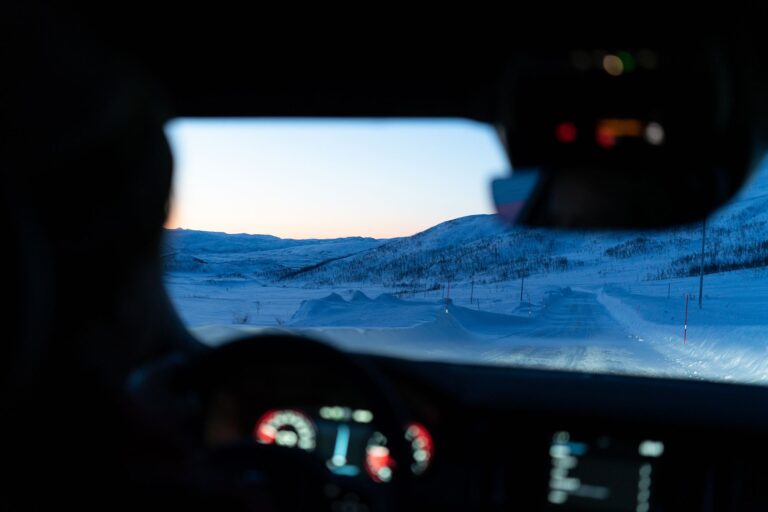
Snow, ice and limited daylight make winter driving in Arctic Norway more demanding, and it’s not for everyone. Conditions can vary considerably between coastal areas, inland roads and mountain passes.
If you have little experience driving on snow and ice, consider public transport or organised excursions instead.
Remember to:
- Adjust your speed to the conditions.
- Keep a safe distance from other vehicles.
- Use suitable winter tyres.
- Allow extra time for your journey.
- Never stop on the road to photograph the northern lights.
Read our guide to winter driving in Arctic Norway:
Exploring Arctic Norway by campervan
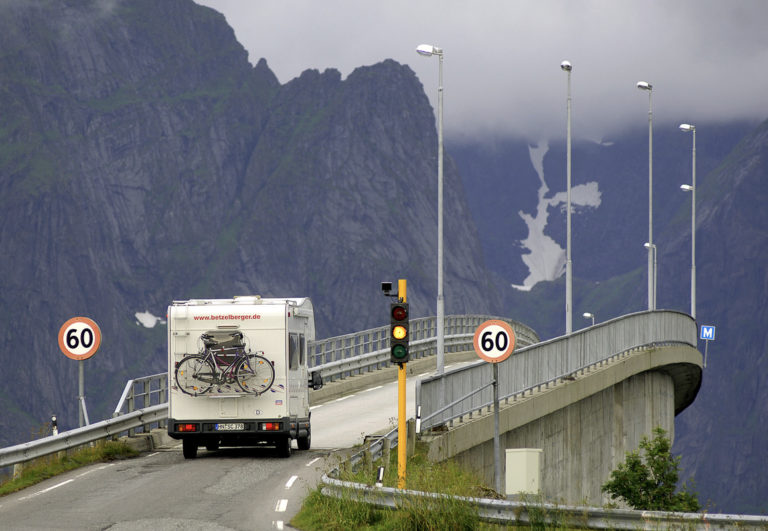
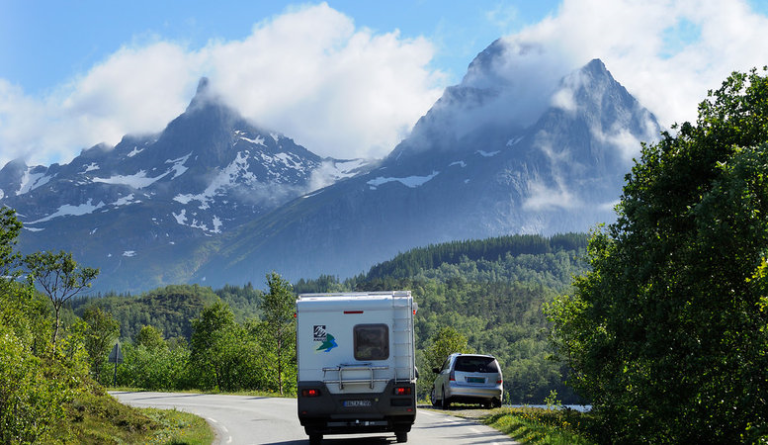
Travelling by campervan or motorhome is a great way to explore the region at your own pace, but there are a few things to keep in mind.
Norway’s right to roam does not mean you can park or camp anywhere with a vehicle. Follow local parking regulations, respect private property and use designated waste disposal facilities.
Campsites and motorhome facilities are available throughout Arctic Norway, but it’s worth planning overnight stops, especially during summer.
Be considerate of other drivers. Avoid holding up traffic, and use designated lay-bys or other safe places to pull over and let faster vehicles pass. Never stop where you could block traffic or create a hazard.
Taking your car on the ferry
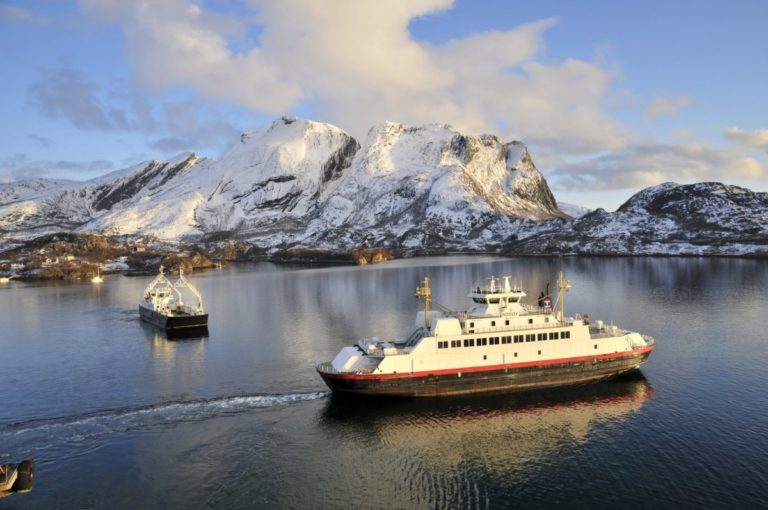
With thousands of islands and a coastline full of fjords, car ferries are an important part of travelling in Arctic Norway. They connect islands and coastal communities, and on some routes, they are the only road connection.
Check timetables before travelling, particularly on routes with limited departures. Ferries can be busy in summer, and bad weather may affect services.
Fares and booking arrangements vary between routes.
Find out how car ferries work in Arctic Norway:
Driving an electric car
Travelling by electric car is possible throughout Arctic Norway, but charging stops require some planning.
Charging stations are available in towns and along many main roads, though distances between chargers can be longer in remote areas.
Cold temperatures can reduce driving range and charging speed. Check charger locations, compatibility and payment options before travelling, and keep extra battery capacity for unexpected delays.
Useful resources for driving in Arctic Norway
For more practical advice, traffic information and road safety guidance, visit the Norwegian Public Roads Administration.