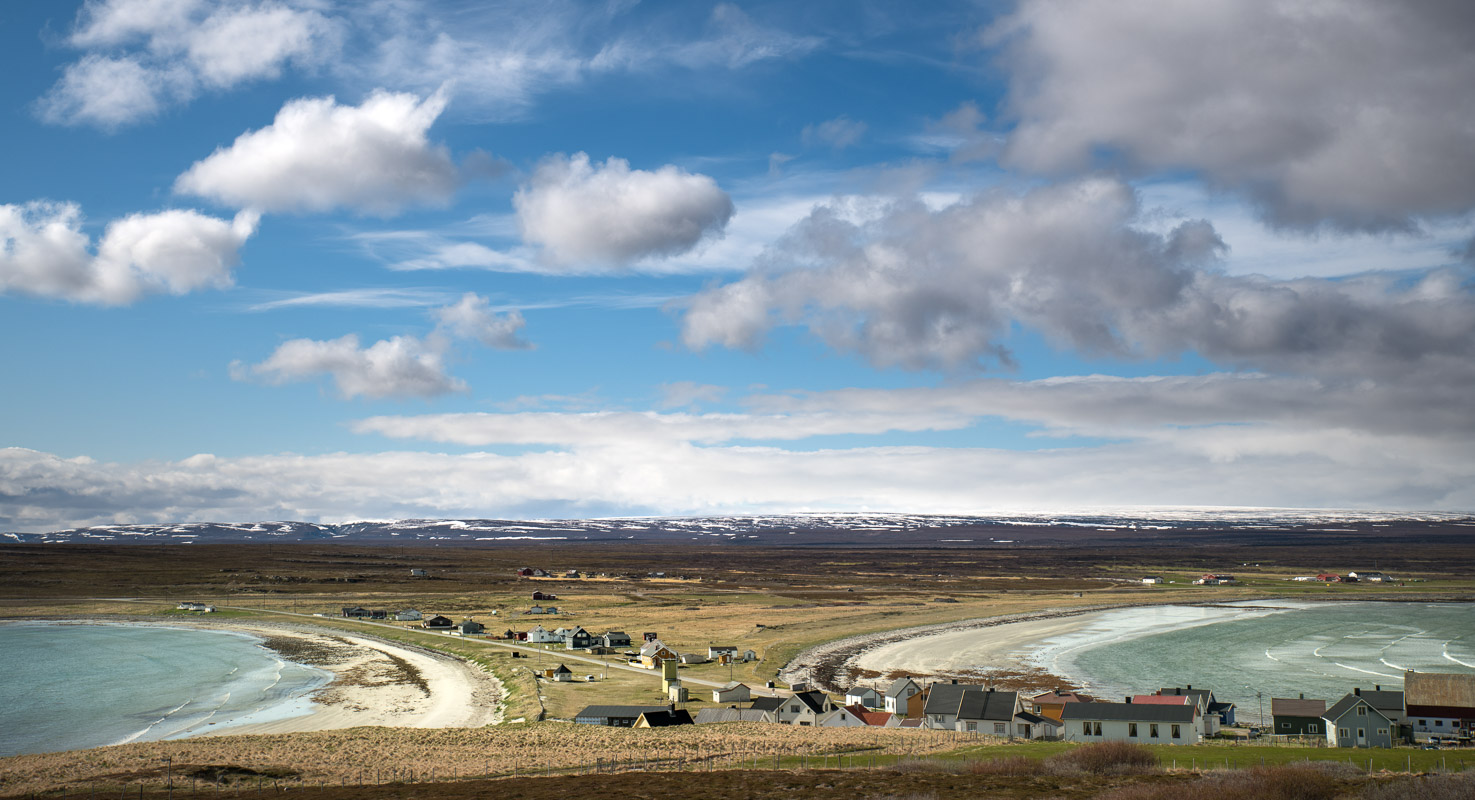
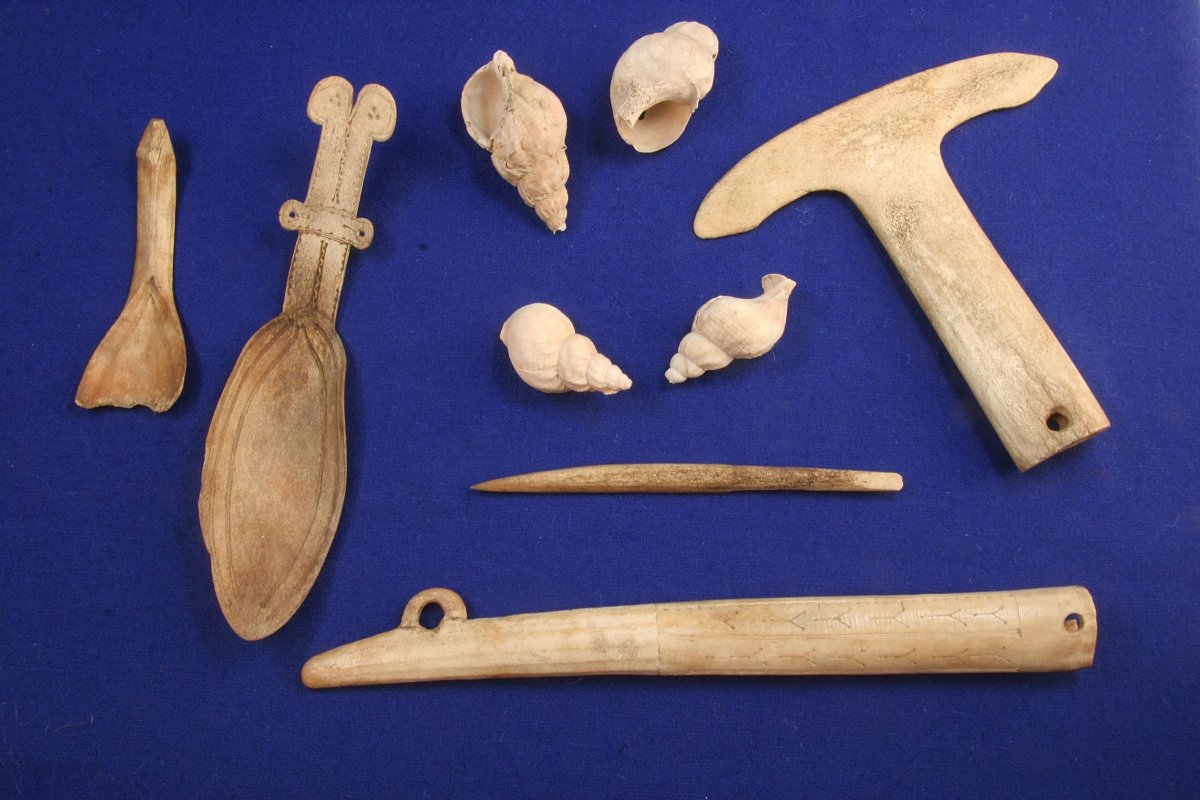
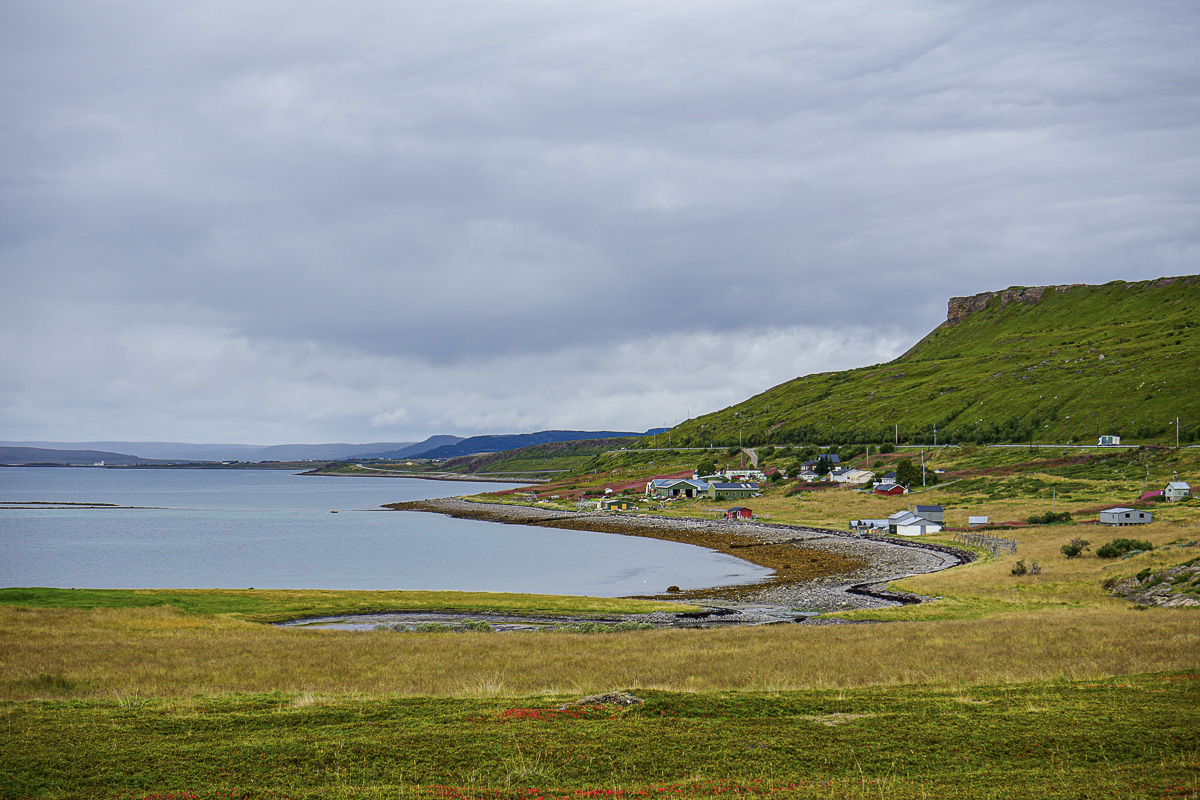
The archaeological excavations in Ceavccageađge (called Mortensnes in Norwegian), at the head of the Varangerfjord, have thrown light on large parts of the history of Finnmark. The uncommonly rich finds take us from the first human settlements 10,000 years ago, via pre-Christian grave sites and sacrificial sites, to remains of Sami turf huts from the end of the 19th century.
Old shorelines denote chronological order
The youngest archaeological sites are closest to the sea, while the older sites are higher up. This is owing to the elevation of the land masses after the Ice Age. The great inland ice sheets that reached their maximum some 18,000 years ago put pressure on the land, causing it to sink. As the ice melted, the land slowly rose. At Mortensnes, the topmost shoreline from 11,000 years ago lies 70 metres above the present shoreline, and the land is still rising today. We have to assume that people would always have chosen to settle close to the shore, as they lived on what they harvested from the sea. This is how finds can be dated based on their height above the sea.
Tented houses were all the rage
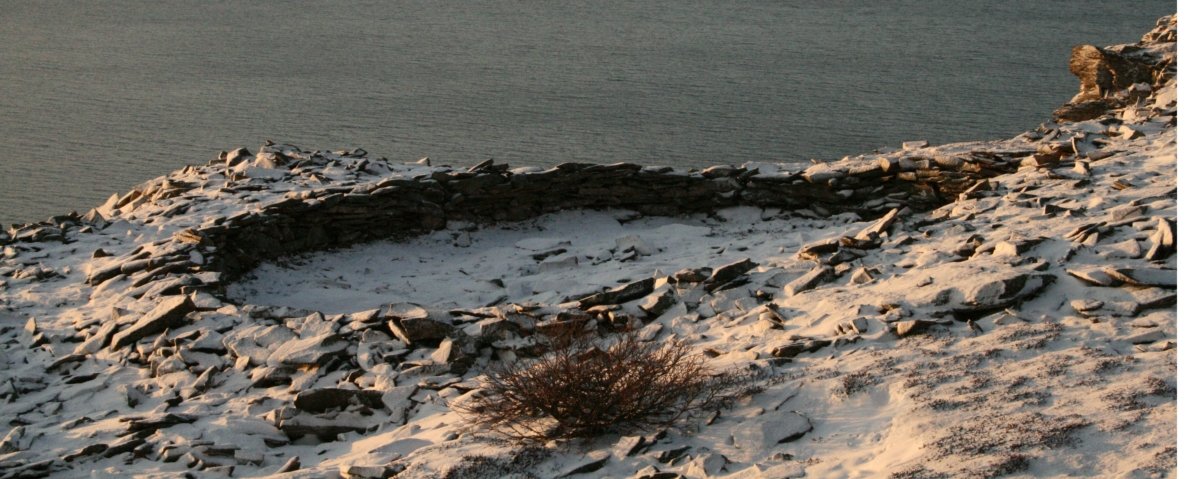
In the Early Stone Age (from 10,000 BC to 4,000 BC), people lived in tents made of animal hides. Traces of these tents can be found in the form of circular or semi-circular stone rings, called tent rings. Also found are stone tools and flakes, i.e. bits of stone that were chipped or “knapped” off larger stones and used to make arrowheads, knives and other objects. During the last few thousand years BC, when the climate was milder than it is now, large turf houses (“gamme”) with a base of up to 50 square metres were, however, built by people who settled permanently at Mortensnes for large parts of the year.
As Sami culture developed, turfed huts became more common place
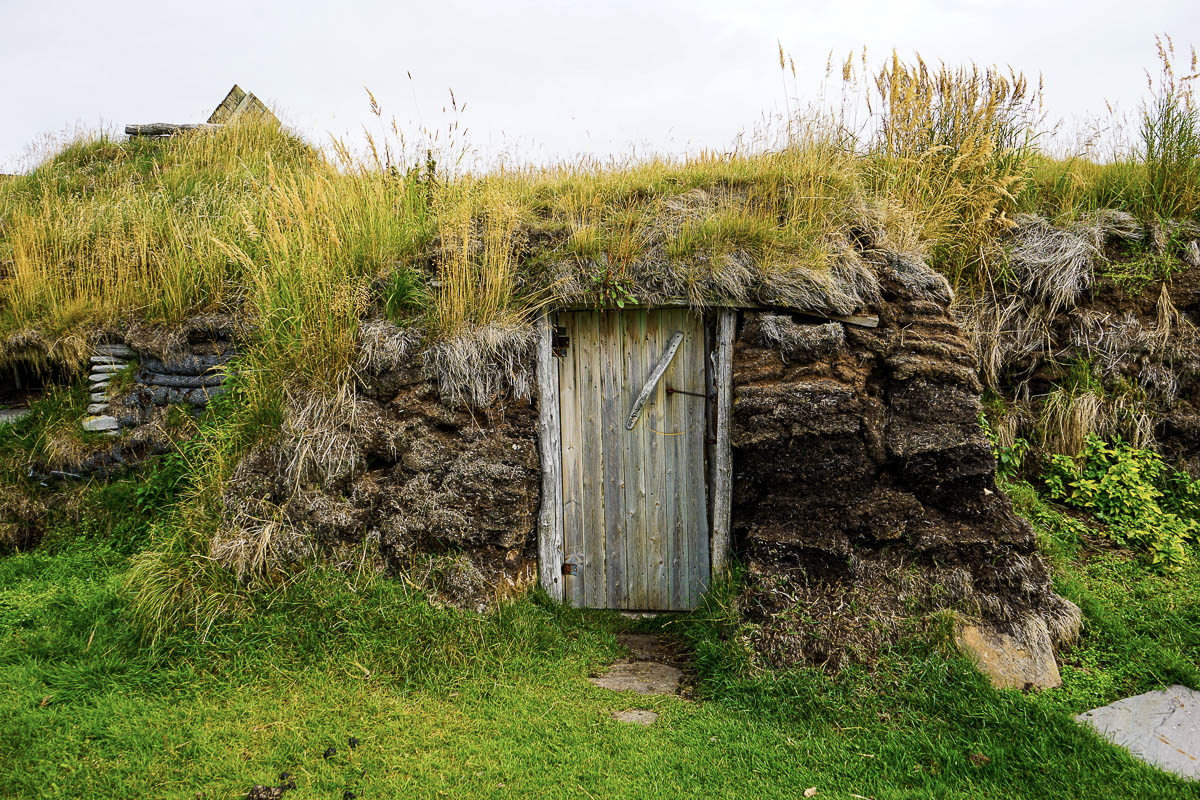
From about 2,000 years ago, people appear to have spent shorter periods of the year at Mortensnes and thus built simpler types of housing. It was during this period that the round arch-beamed turf hut or “gamme” of Sami type appeared, which the Sami continued to use almost up to our own time. From the 18th century onward, the Sea Sami people had a more settled lifestyle, and large, rectangular types of “gamme” were developed, which remained in use until before World War II.
The Gods were presented with animal sacrifices
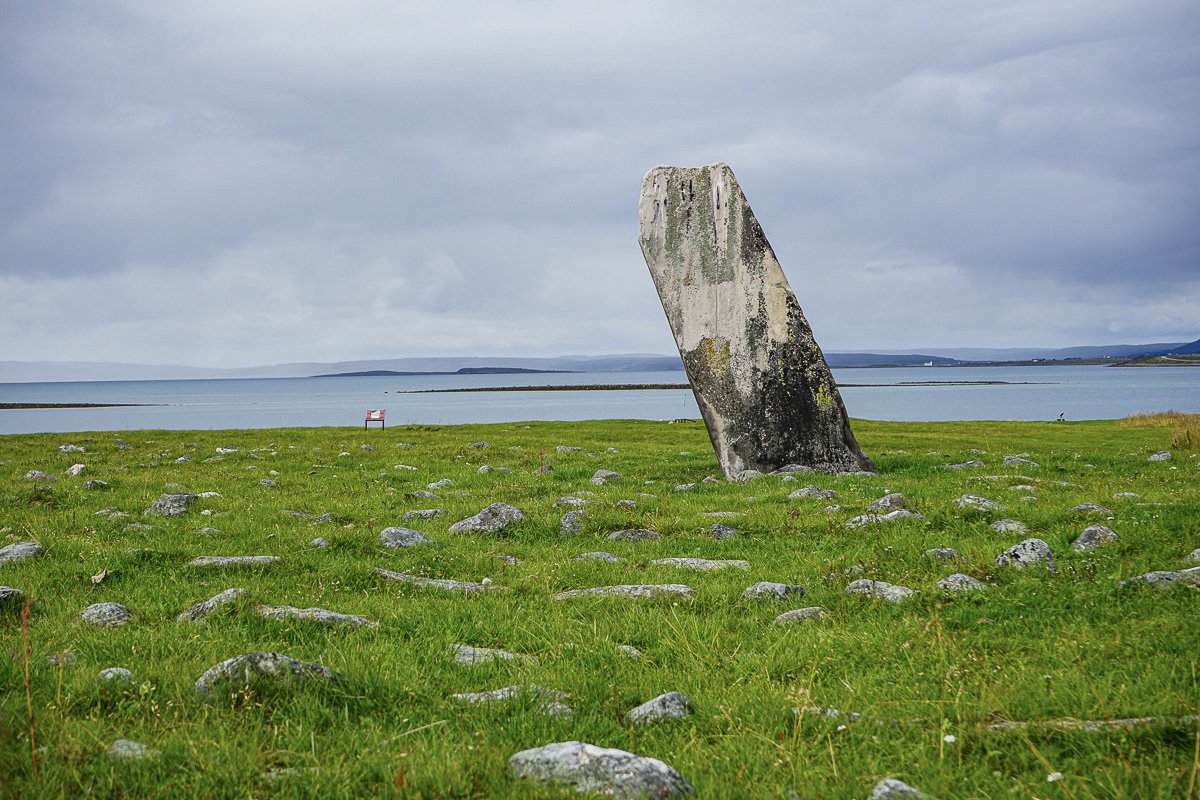
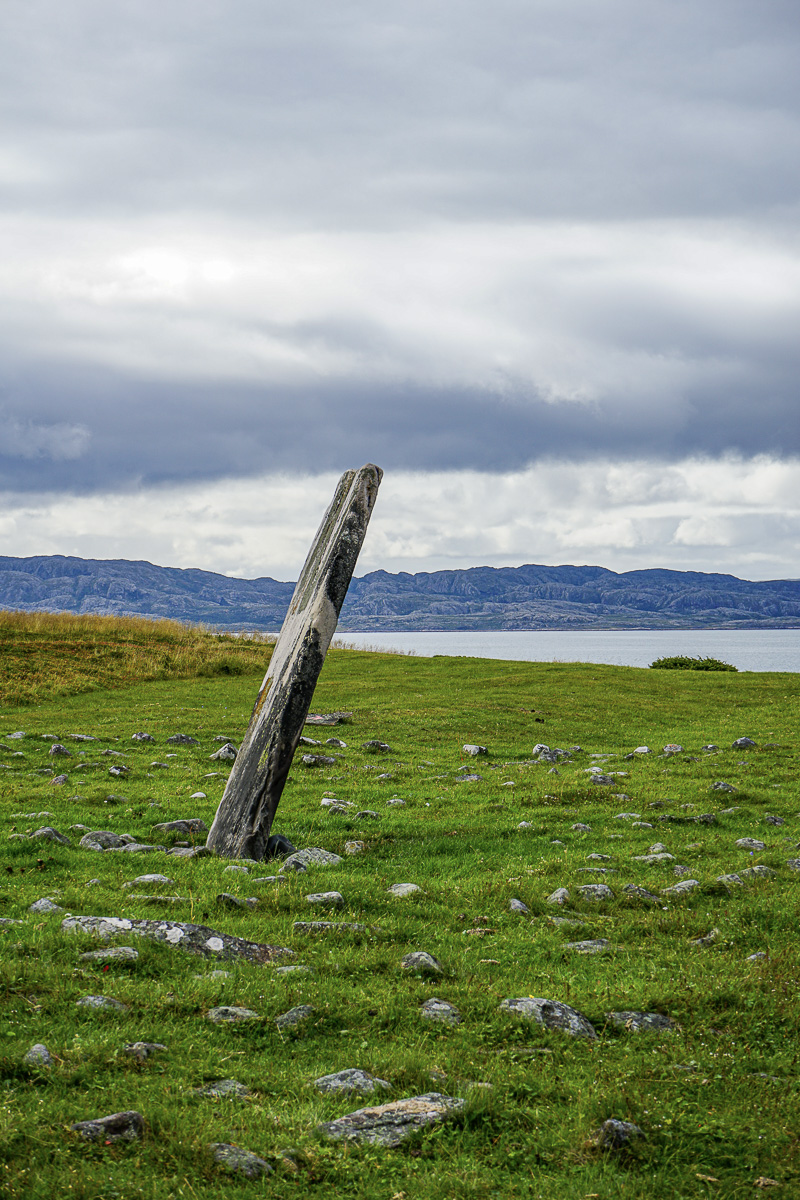
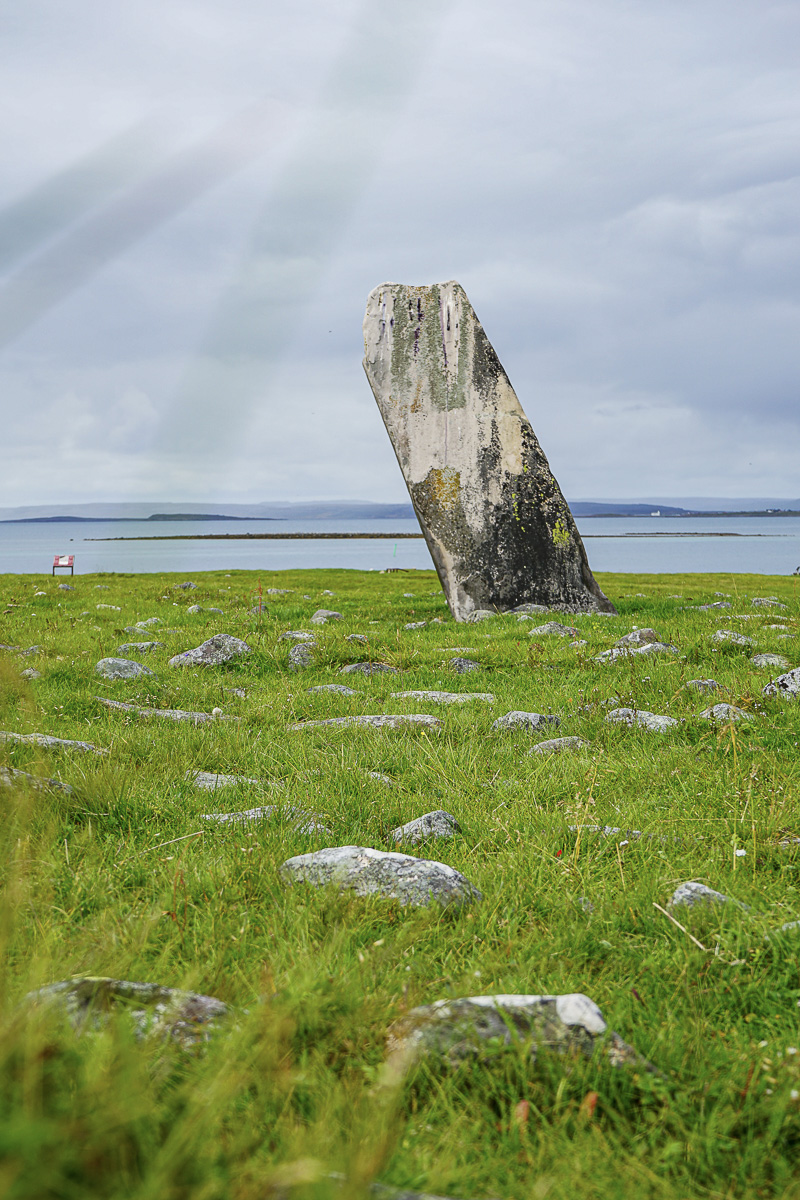
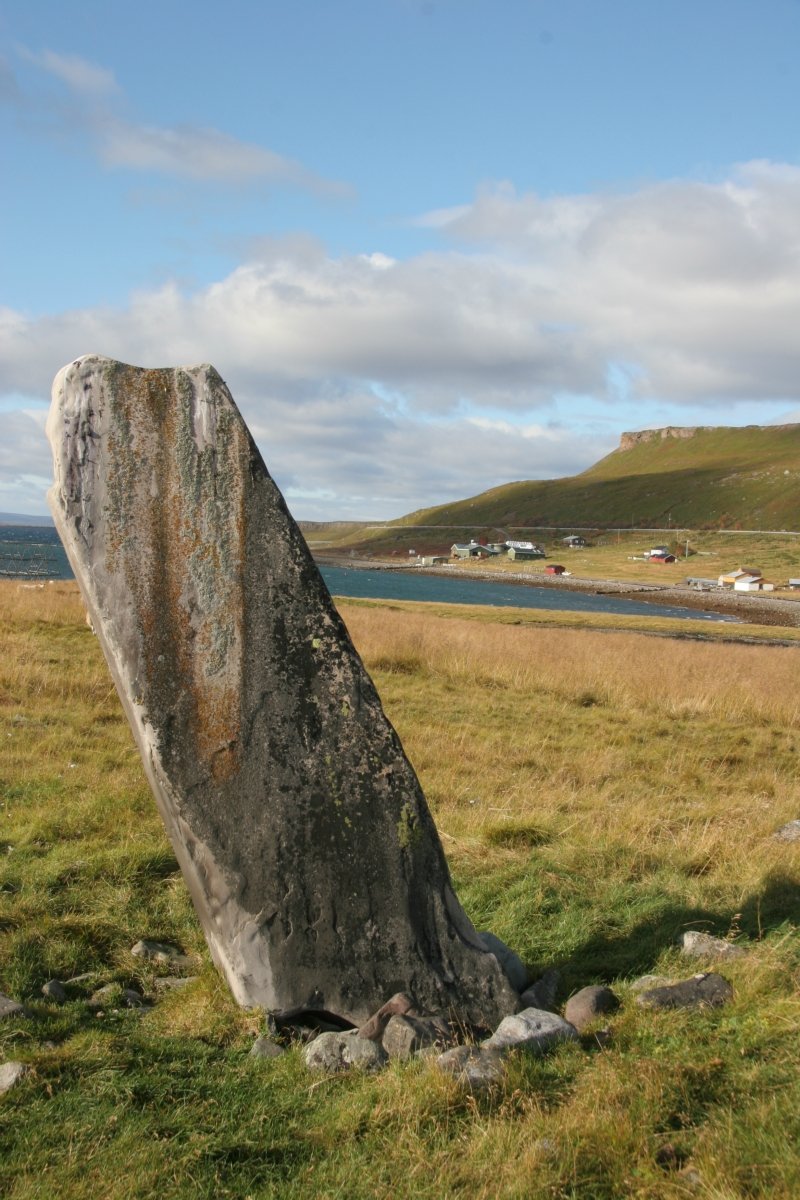
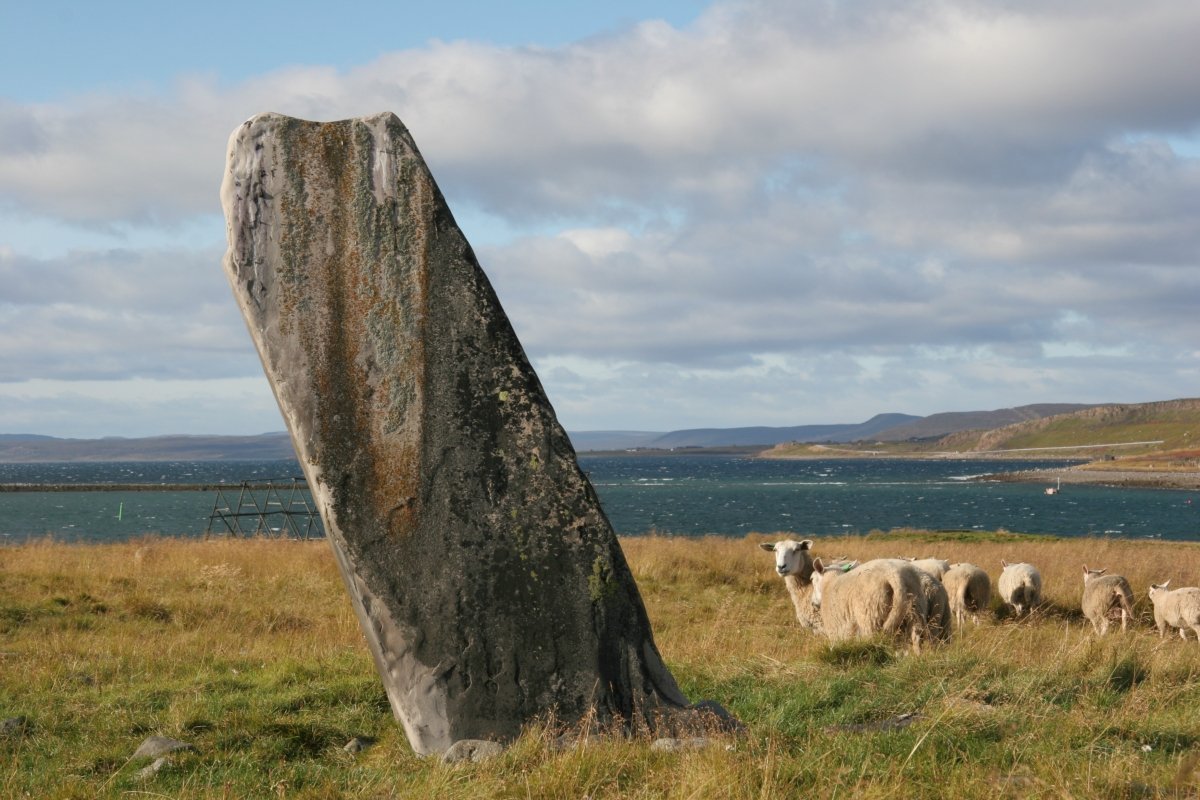
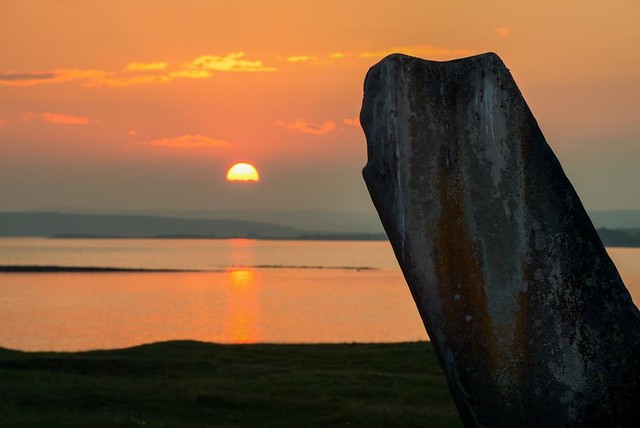
At a meeting place like Ceavccageađge, it was important for people to cultivate their relationship with the realm of the gods, Saivo. The Fish Oil Stone is a monumental standing stone surrounded by several large stones which may perhaps have formed a labyrinth. A block of stone resembling the Sami sacred animal, the bear, is called the Bear Stone. There are also two ring-shaped sacrificial sites at Mortensnes, where reindeer and other animals were sacrificed, and where the “siedi”, the sacred sacrificial stones, were smeared with animal fat and fish oil.
Graves are scattered across the area
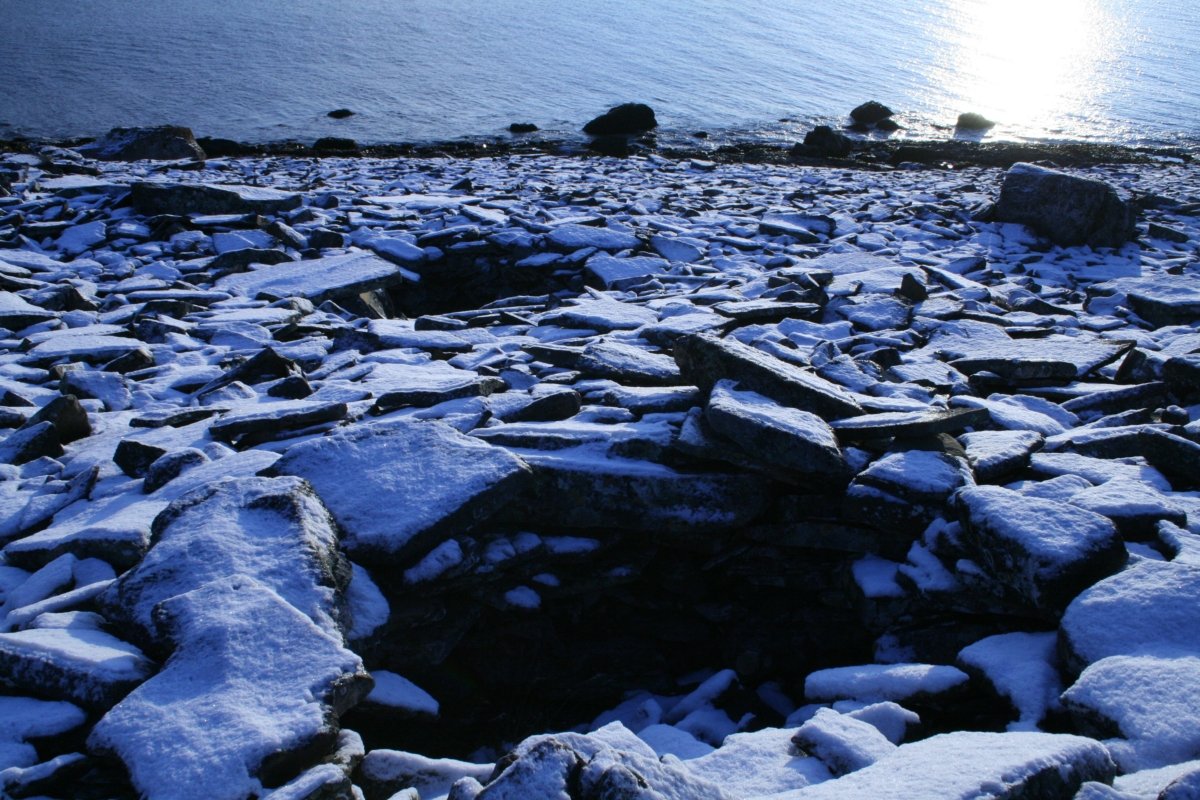
There are some 250-300 graves in the flagstone scree at Mortensnes, where people were buried from about 1000 BC until about AD 1500. The Sami often buried their dead wrapped in birch bark and laid in a reindeer sleigh, after which the sleigh was buried in the scree. Some reindeer were also buried in this way, and a large number of reindeer graves have been found. There were many rituals associated with bear hunting, and bear bones were given a ceremonial burial.
Why was this location chosen?
Ceavccageađge must have functioned as a central meeting place for hunters and trappers. The wanderings of the wild reindeer from the inland areas to the Varanger peninsula, the spring cod fisheries, and the possibilities for hunting seal and whale in the Varangerfjord, made Mortensnes a good place for people to gather together in large groups for parts of the year. Trading with people to the south and east was also an important activity. For the rest of the year, the people at Mortensnes may have lived in smaller and more spread groups. These patterns probably varied during different periods in the 10,000-year-old history of settlement here.
The area is accessible for all
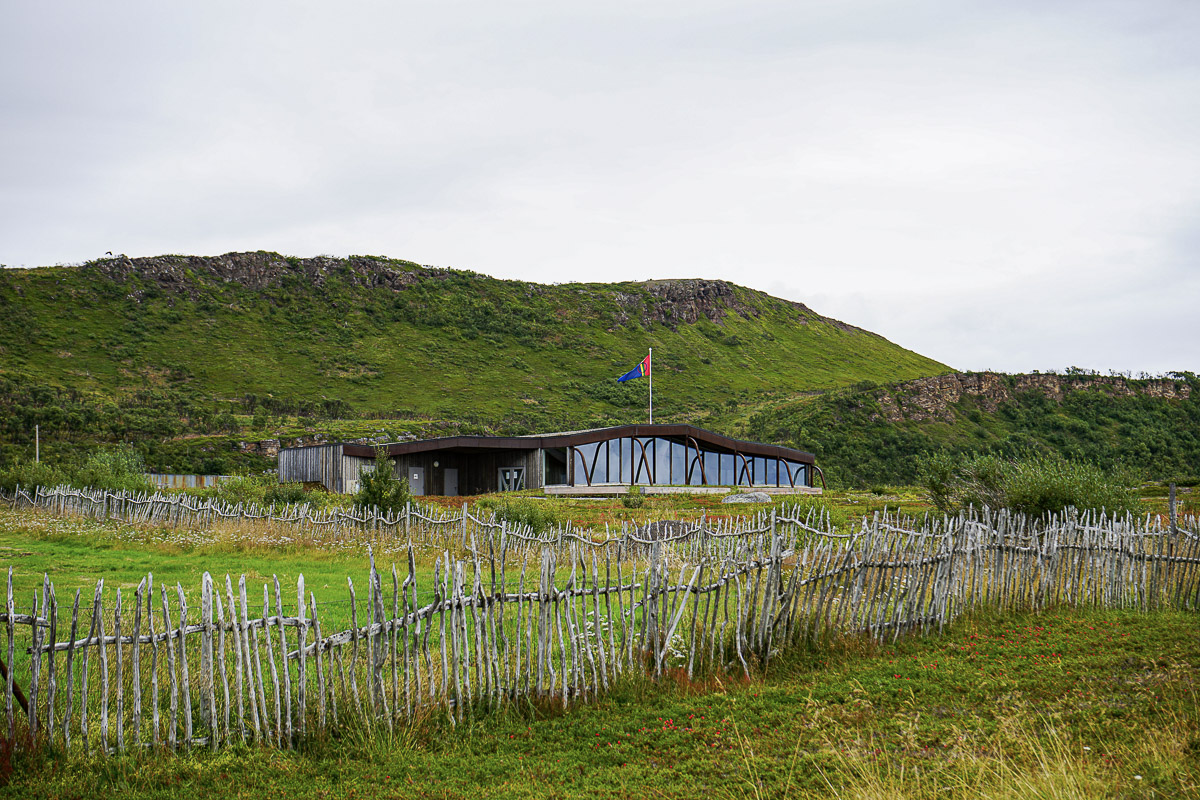
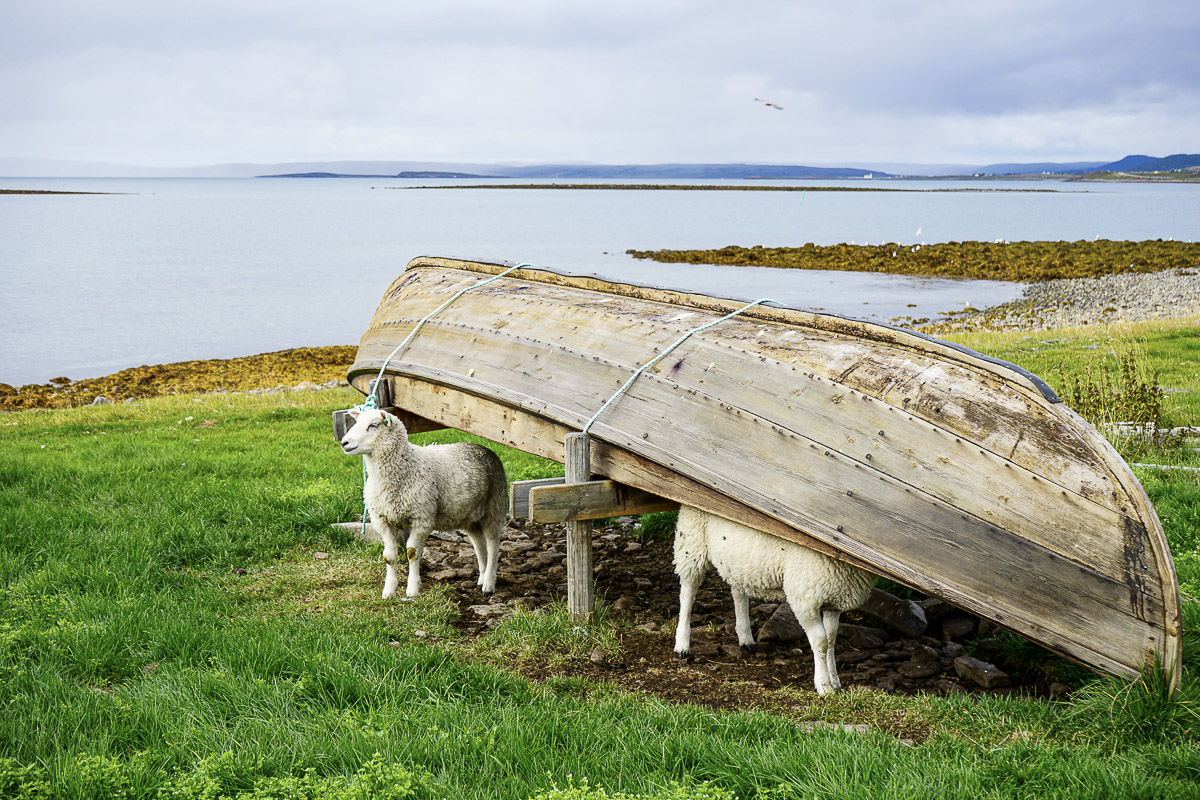
Put on a pair of stout shoes and a windproof jacket, and take a walk through the old heritage landscape at Ceavccageađge/ Mortensnes. The Fish Oil Stone and the Bear Stone are among the most easily recognisable prehistoric monuments, but a well-marked culture trail will also lead you to fascinating sacrificial sites and burial sites. The Varanger Samiske Museum (Sami Museum) in Varangerbotn has a large collection of objects and artefacts displayed in a content-rich and modern exhibition on the cultural history of Varanger.
Practical information on visiting Mortensnes archealogical site
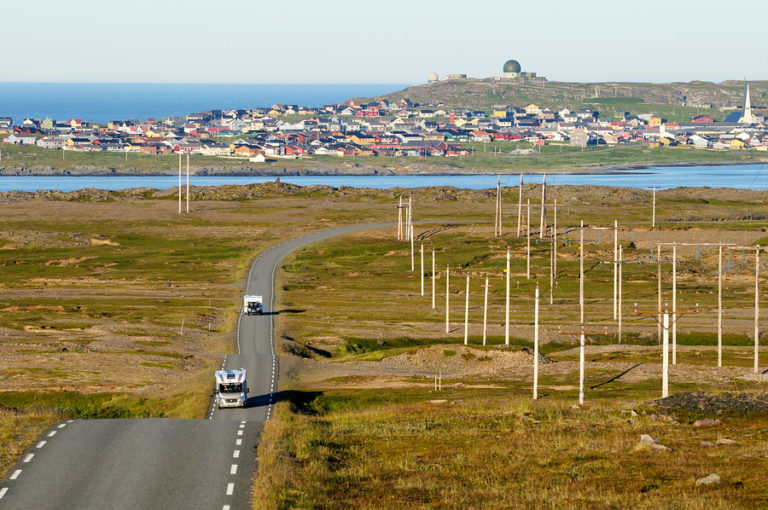
You will find Mortensnes along the Norwegian Scenic Route Varanger (E75). If taking the E6 road from Kirkenes westward you can stop at the Varanger Samiske Museum in Varangerbotn where you can get more information about the site. You then take the E75 north towards Mortensnes.
Visit Varanger has all the information you’ll need about visiting the area. For the Norwegian scenic route Varanger check out their webpage with maps and more information. The Varanger Samiske museum in Varangerbotn also has a webpage to keep track on opening times etc.
Due to the site being outdoor it is recommended to visit during the summer and autumn months. During the winter snow squalls are a common occurrence making driving challenging and much of the site is buried in snow.