
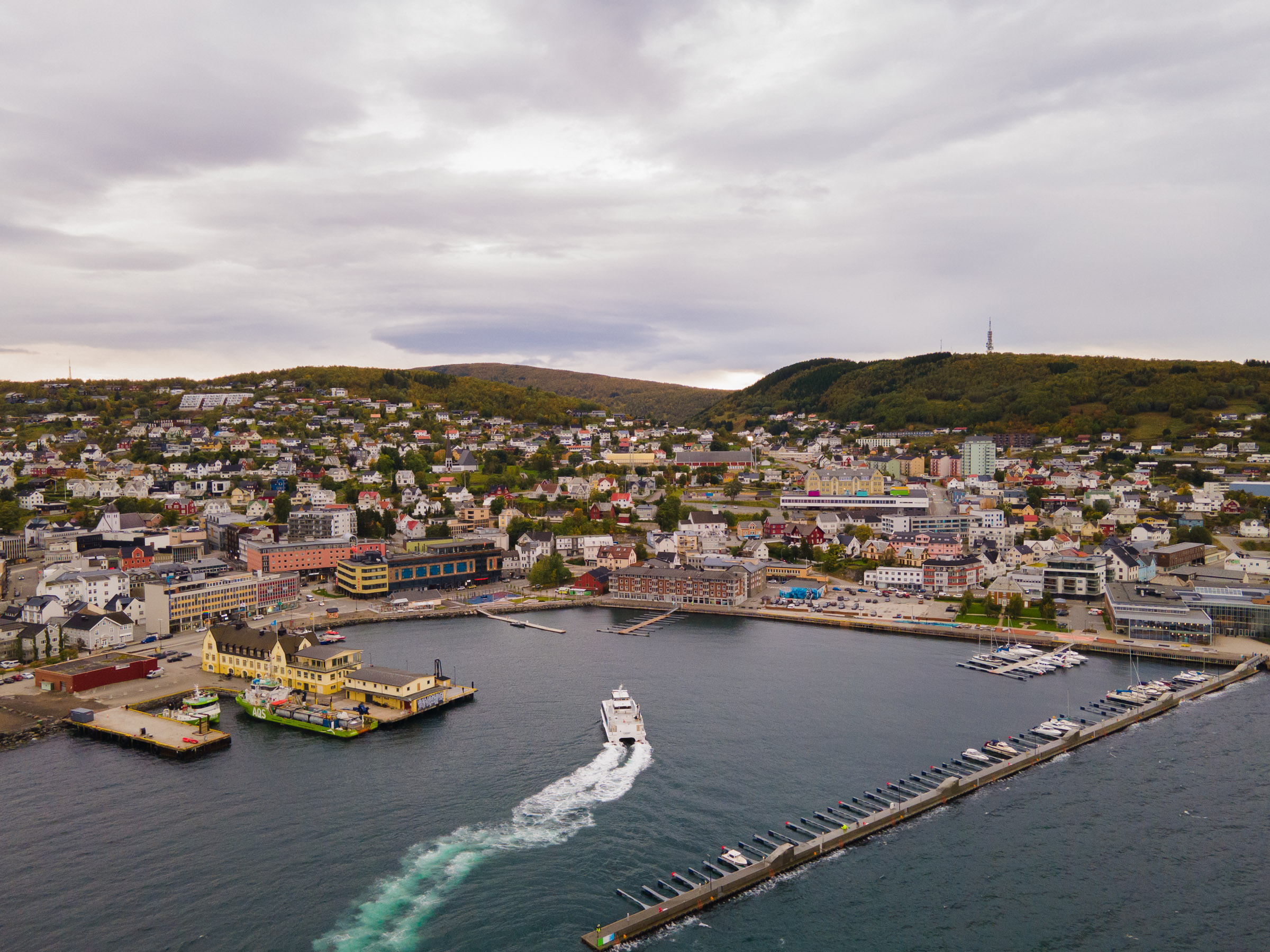
Kvæfjord has set its sights on becoming a leading food region in the Arctic. There is only 3000 people living here, but 25,000 farm animals. A good climate and good soil are key factors, and people were farming this land long before the Kvæfjordkake became a national treasure. Harstad, on the other hand, is a cultural city with niche boutiques and excellent food experiences. With farms and fishing banks in the immediate vicinity, the conditions are right for locally sourced enjoyment.
Ottestad farm goes the whole hog
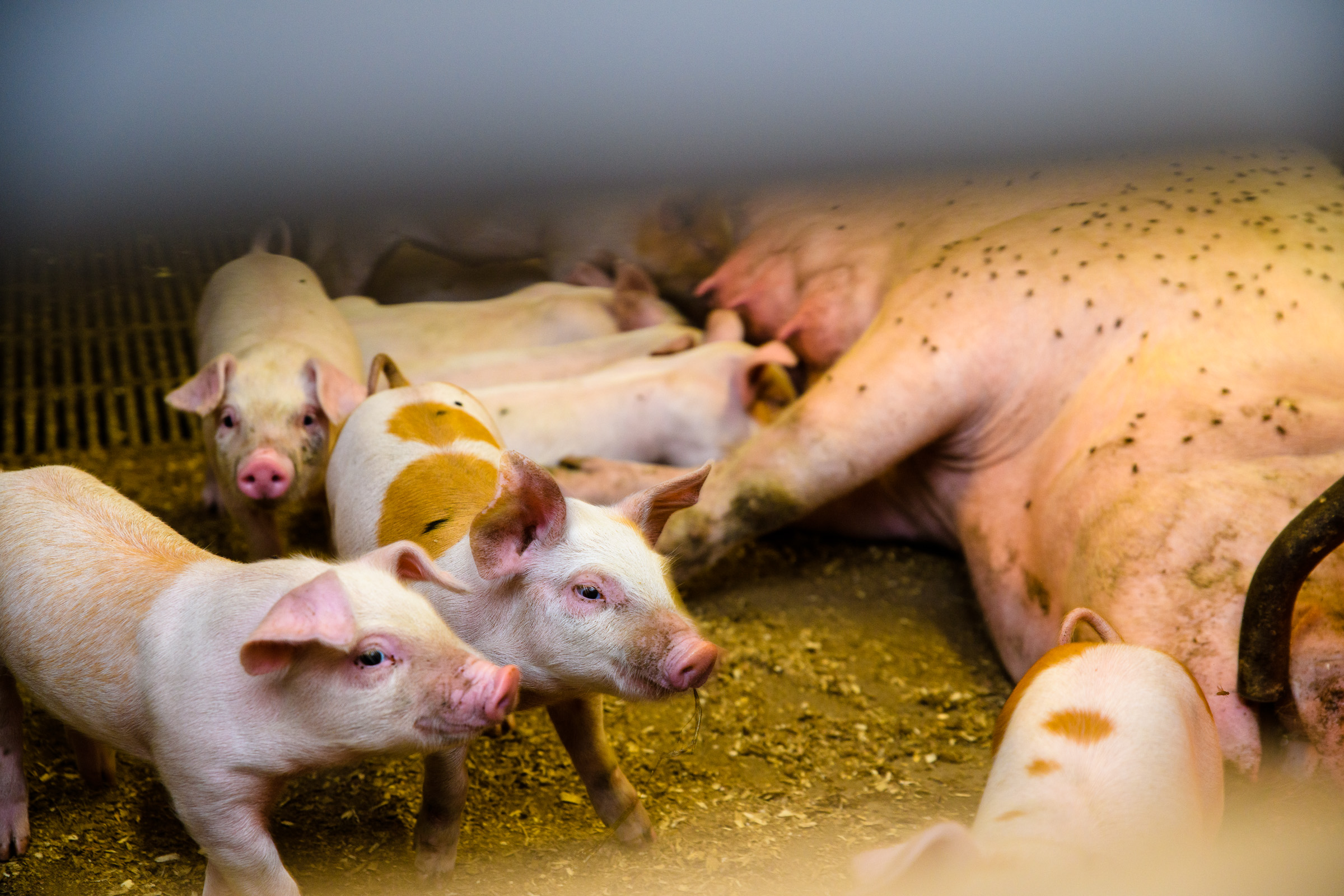
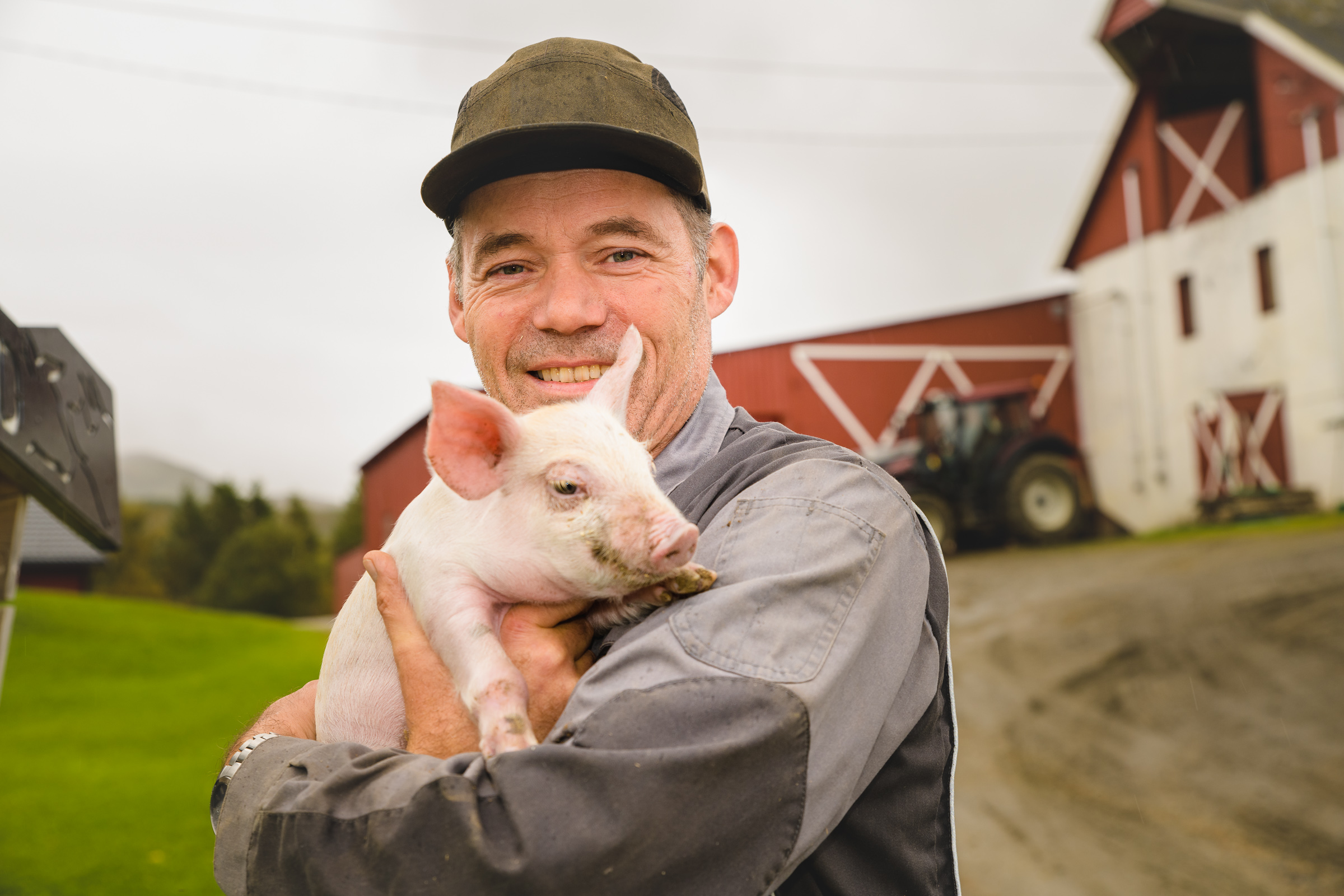
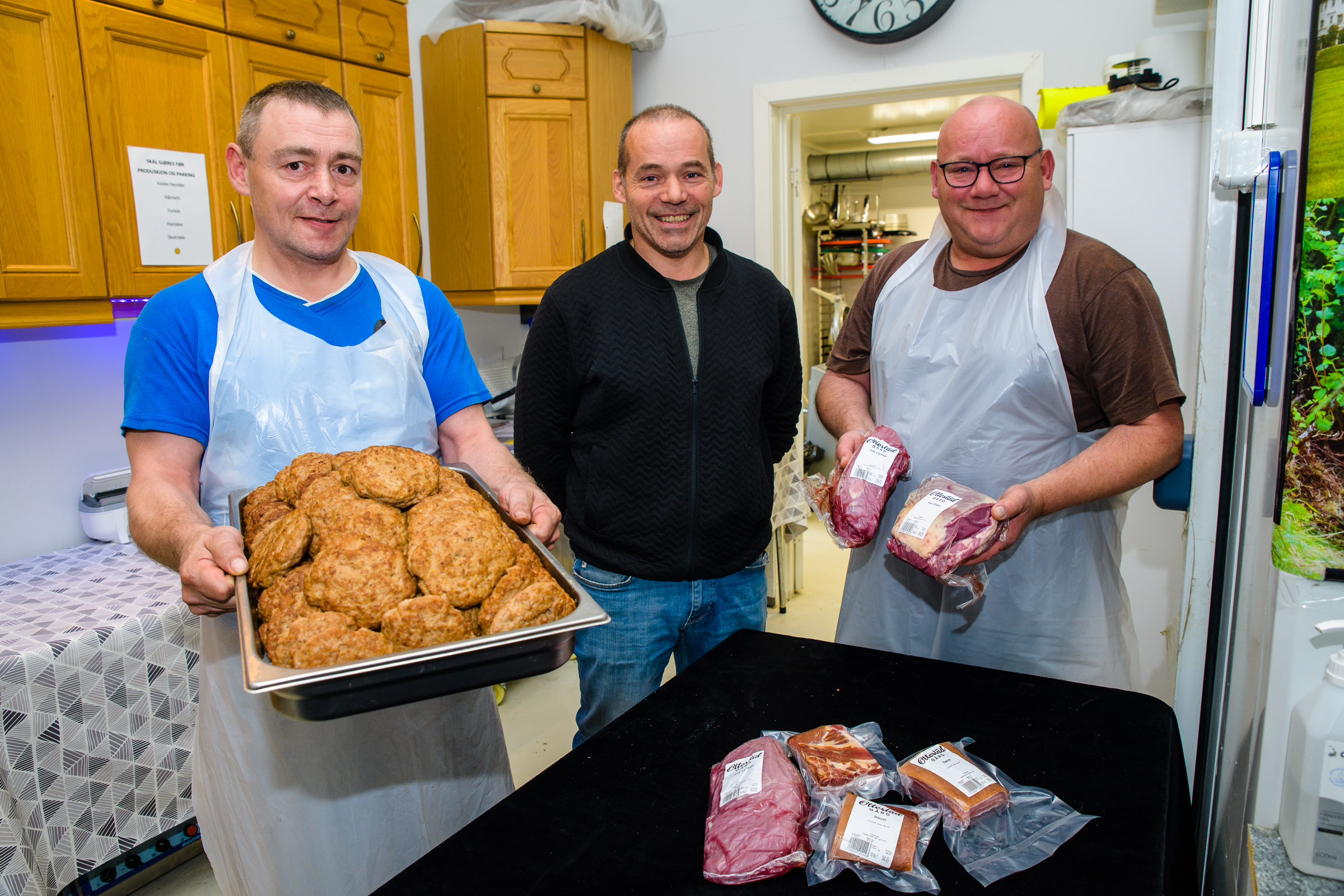
Did you know that the Kvæfjordkake came from Ottestad farm? We’ll get back to that, but back to the hogs. At Ottestad, they raise more than 2000 pigs a year, and they are allowed to roam outside all summer. Farmer Jan Erik Ottestad believes this is good for both the farmer and the animals. “The quality of the meat is much better when the animals are allowed to roam around outside and eat the best food in the open air,” the farmer says. He collects rave reviews from his customers, who include restaurants, specialized shops and people who shop at the Farmers’ Market. “People like to buy directly from the farmer. People who shop from us, often come back,” Ottestad says. In the new farm kitchen, they produce free-range pork and veal products, including smoked sausage, meatballs, Kvæfjord sausage and much more.
Grandmother created the famous Kvæfjordkake
It was the grandmother of the current Ottestad family who created the Kvæfjordkake – we are on historic grounds. This treasure, voted Norway’s national cake, was created by Hulda, who ran a bakery in Harstad. The Ottestad brothers say she had a recipe for a Danish royal cake, but during the war, they could not afford to make the expensive almond base. Instead, they made the cake with a different base and sprinkled a few chopped almonds on top. Thus the “World’s Best”, which is another name for the cake, was born.
Where can we find the most popular carrots?
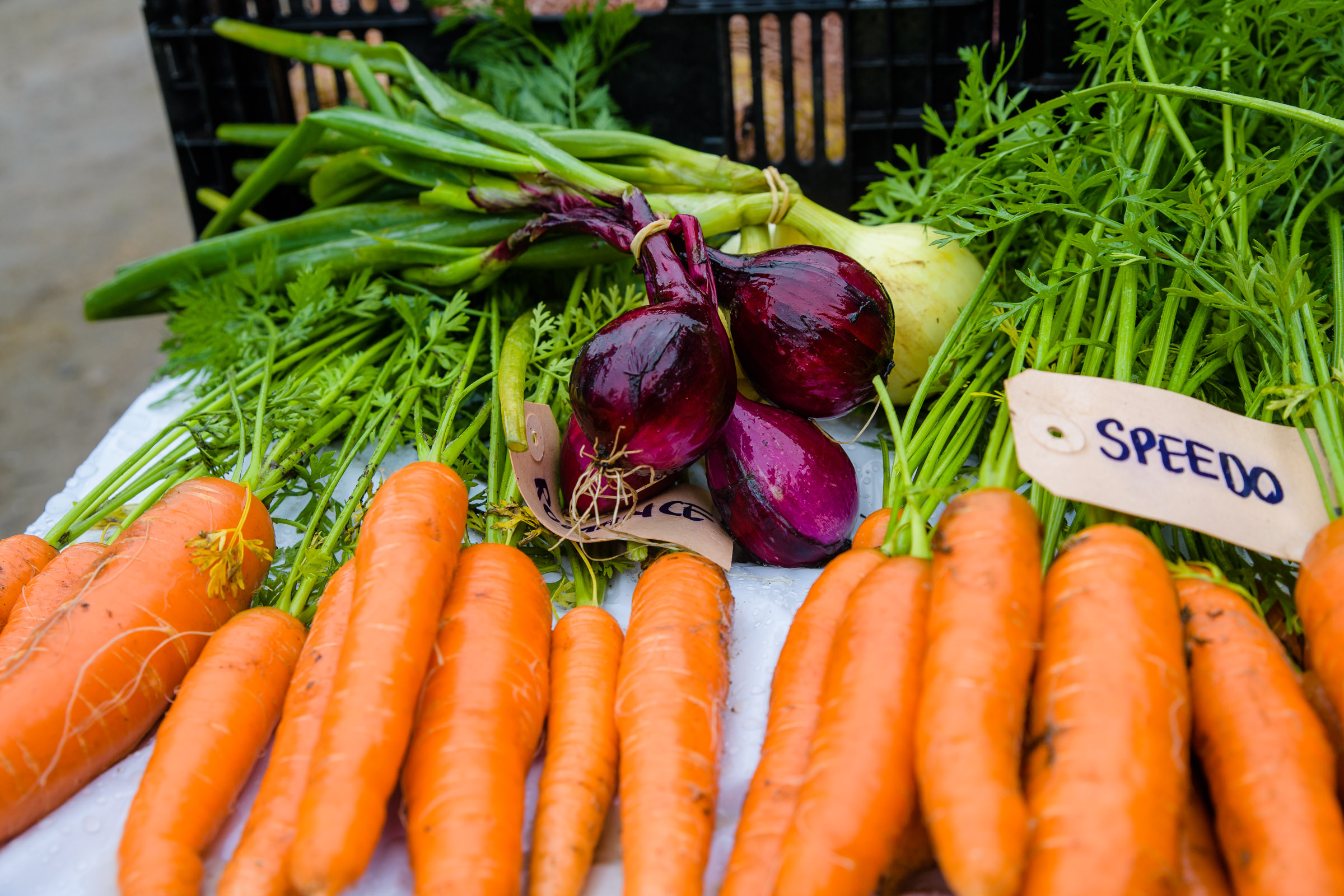
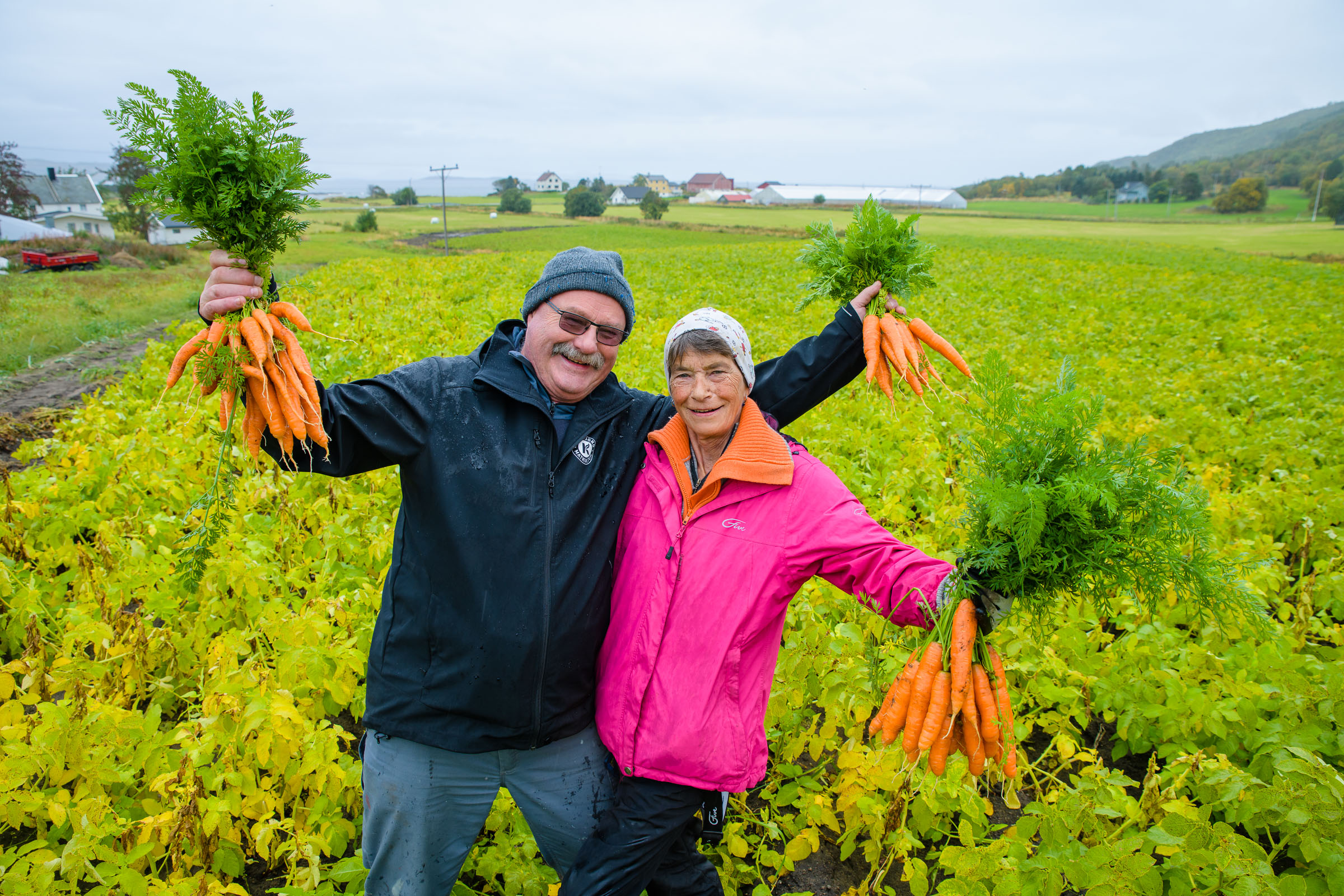
“We like rooting around in the earth. It is good for both body and soul.” We are at Elde farm, where we are met by Johan Helge Elde and Lille Roaldsdatter Larsen, who are renowned for their tasty carrots and juicy potatoes. It all started with a vegetable garden, but with favourable growing conditions, combined with a true passion for food, their vegetables soon became popular.
Good soil and air yield stress-free carrots
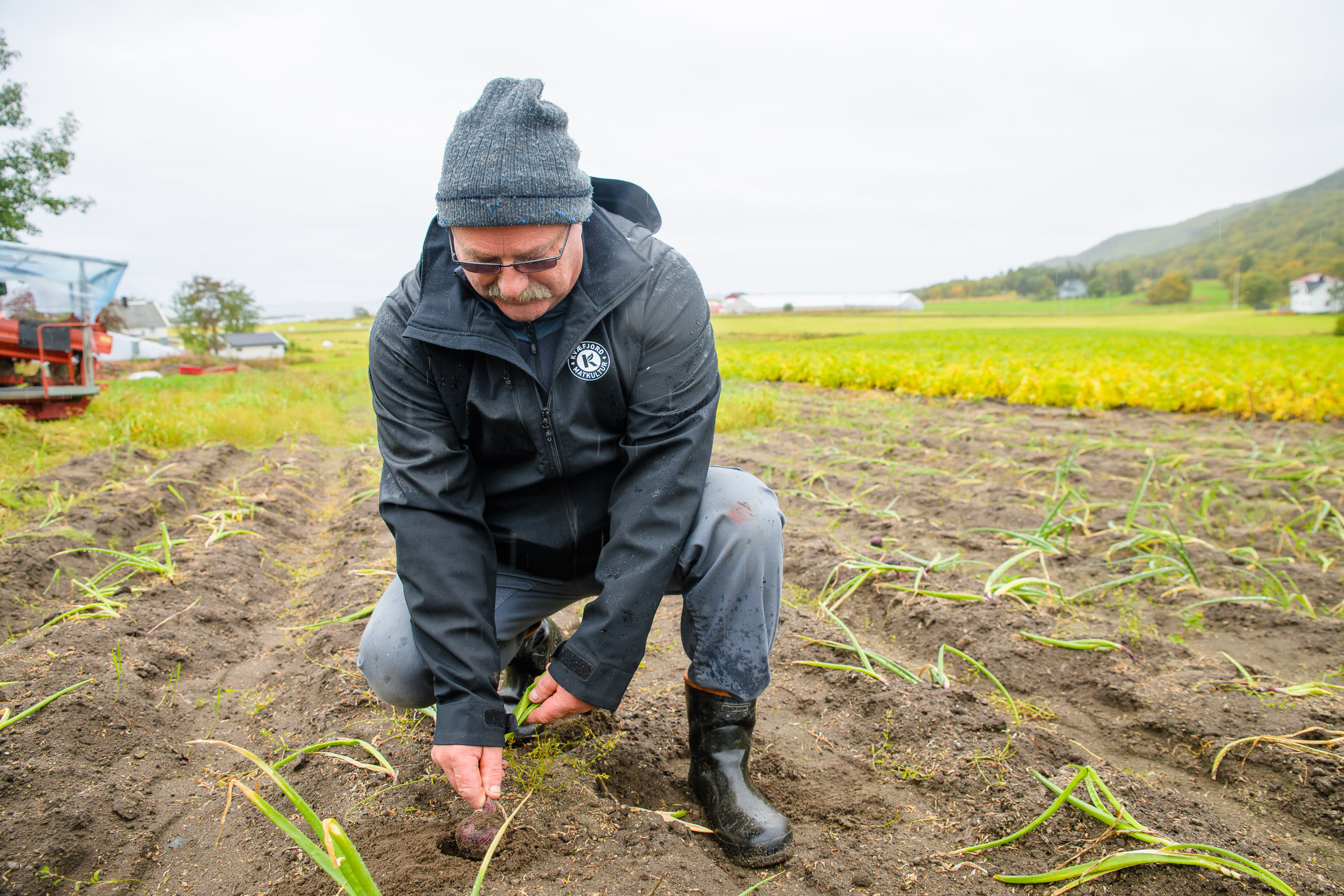
“There is something in the earth and air here,” Johan and Lille say. They explain that the soil is rich in lime, with a good structure, something that produces extra tasty vegetables. In addition, there is the light and sea mist. All in all, the result is good products that are in high demand among locals and restaurants in Harstad. At Elde, they let potatoes and carrots grow together, without too much fertilizer and stress. Johan and Lille believe taste matters more than quantity, and they are part of keeping a part of history alive. The restaurant Bark is among their customers, and we are about to go there.
Enjoy a taste of the garden
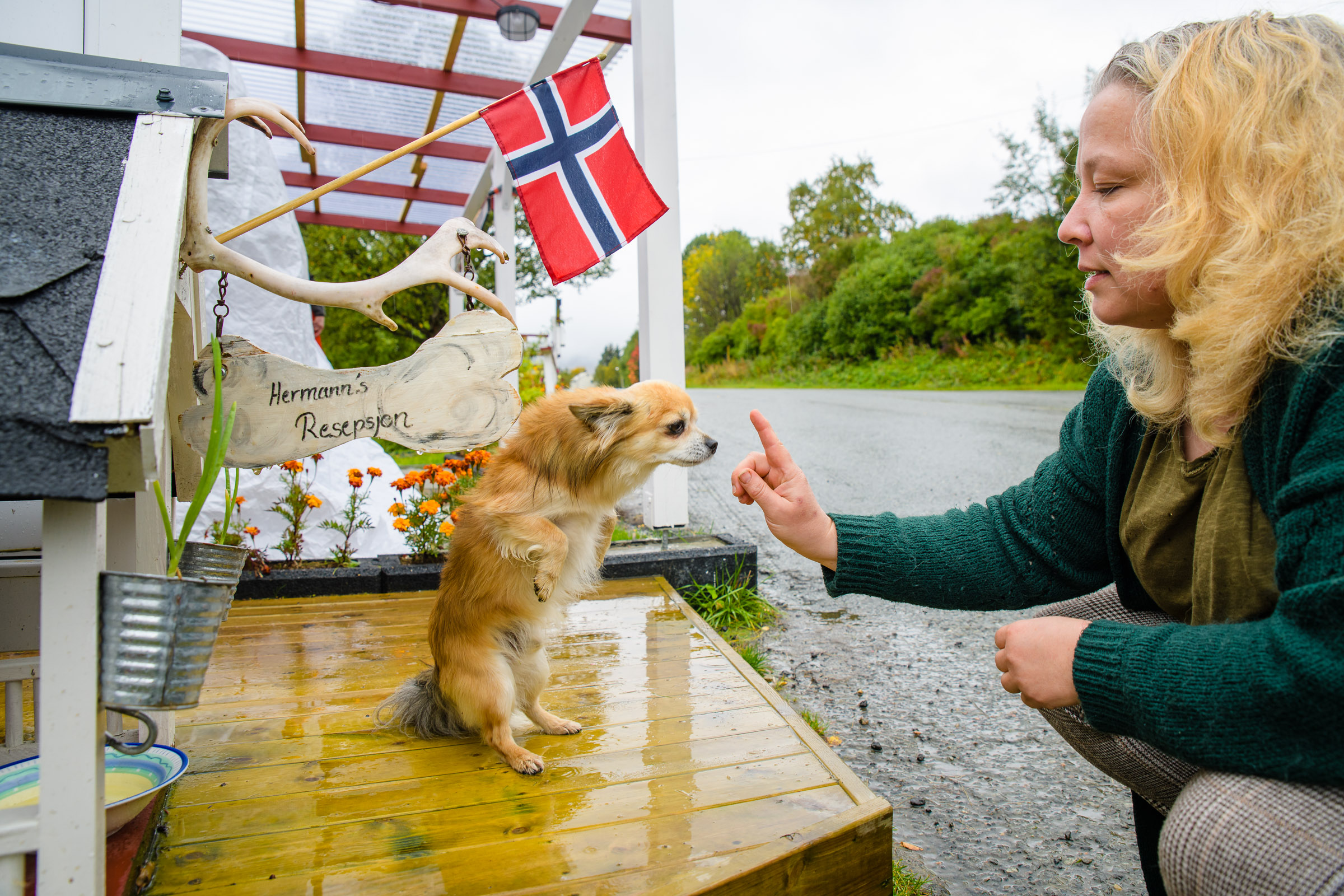
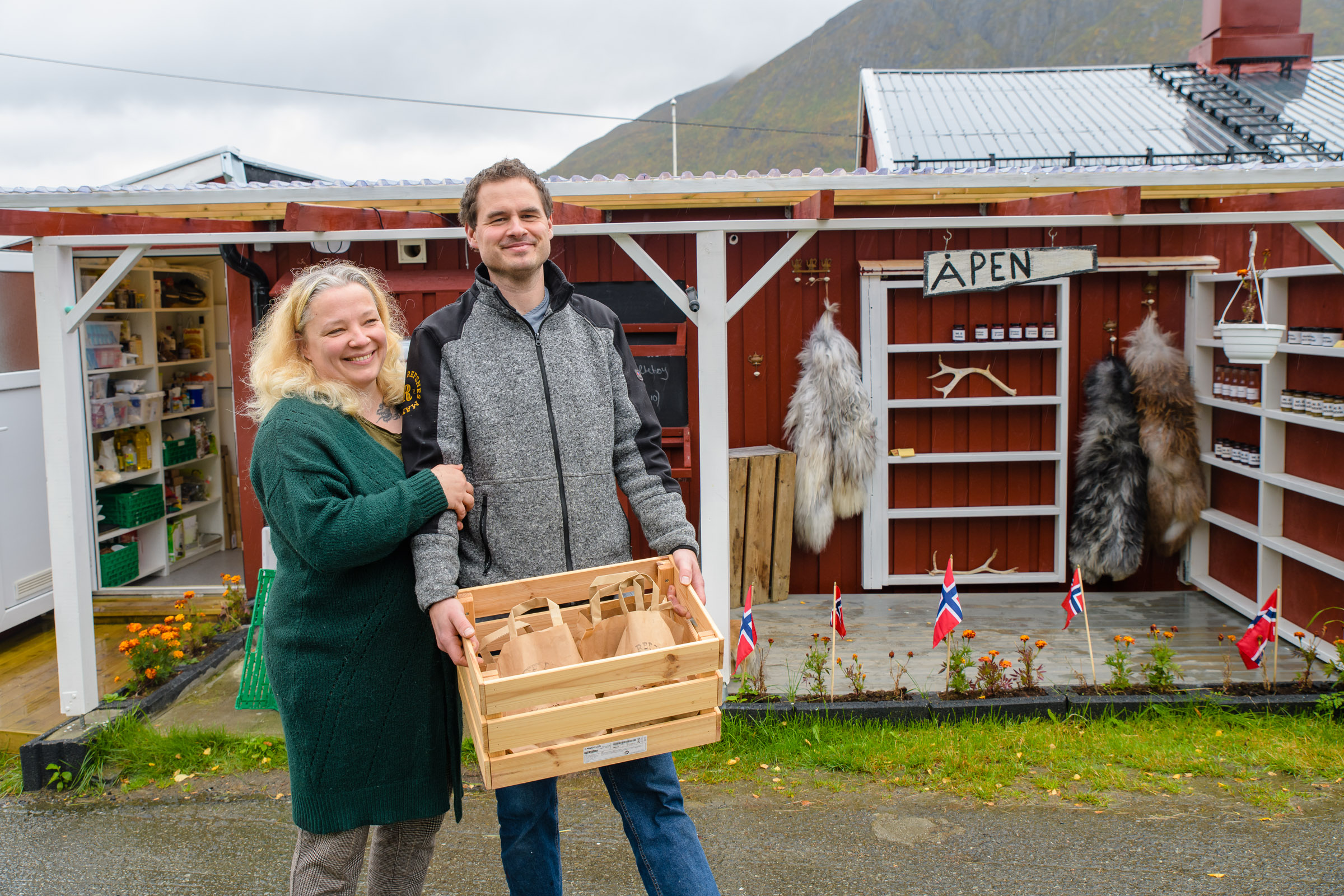
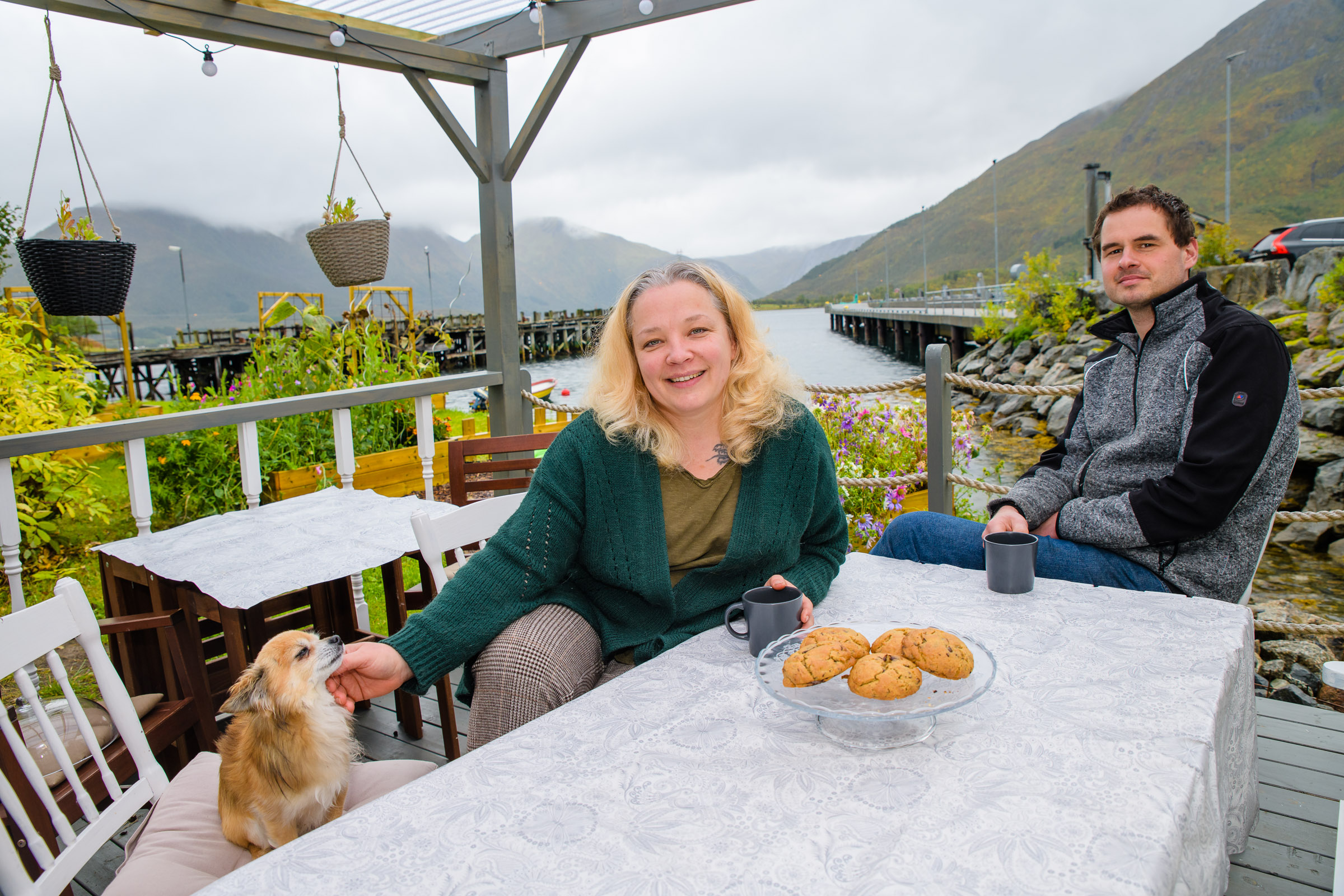
From Elde, we travel to Refsnes Matglede. At the door, we are welcomed by Herman, a small dog with a small reception. Behind him, German hosts, Susanne Hentschel and Thomas Weickert, have build a café, shop and local food factory, all rolled into one. While both of them grew up in what was then East Germany, work in Norway was what brought them together. In the summer, you are welcome to stop by their café for something to eat and drink – enjoy in the garden with a view of the fjord and mountains. “Everything we sell here, we have either produced or processed ourselves. We focus primarily on clean products and producing as little waste as possible,” the couple says. They also offer guided trips, cooking classes, catering, etc.
From busy lives to food joy at Refsnes
“We had such busy lives at home, and we wanted to move north to spend more time together and really focus on our joy for food. The fact that we come from East Germany helps us find solution and to make the most of very little,” they say. Among other things, Refsnes Matglede supply reindeer ham to Bark restaurant, and they are part of the network of food producers called Kvæfjord Matkultur. This local network is incredibly important and direct contact with farms is a must. Now, we are able to make a living from this,” our hosts conclude.
Bark takes care of its guests
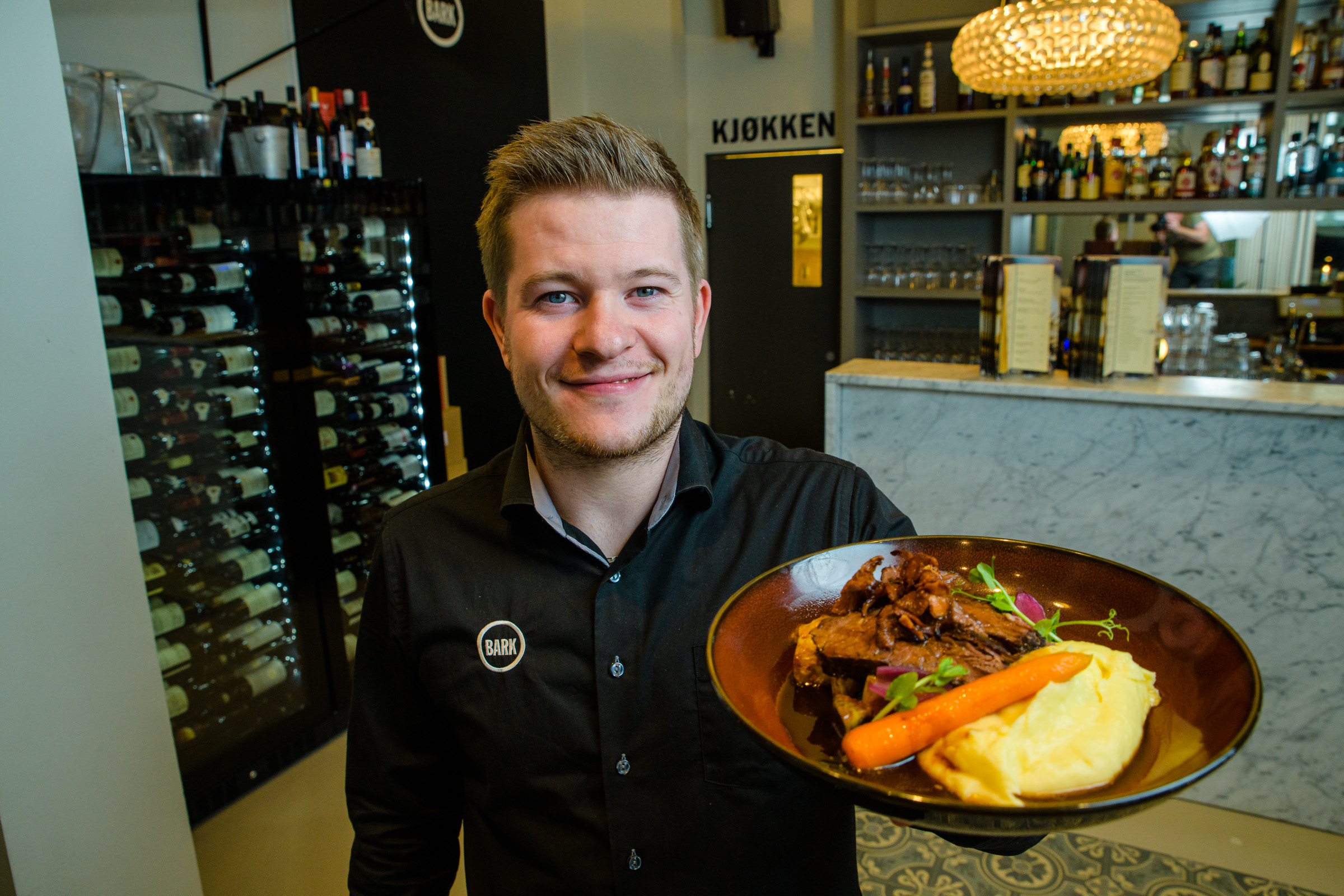
On a tree, the bark is the protective layer. At the restaurant Bark in Harstad, they want to take care of their guests. The owner, Nils Arthur Gjeitanger, welcomes us and informs us that they are in the process of moving to a bigger place, where they can develop this family business further. “We are in Northern Norway, after all, and we want to focus even more on fish and seafood,” Gjeitanger says. They already serve tapas, reindeer, lamb shank and fish soup. In their new restaurant, they will also have a coal-fired grill.
Local ingredients meet international flavours
“We use a lot of local ingredients, and we get fresh fish from local fishermen. In this region, we also have access to locally sourced meat, vegetables and berries,” the owner says. Gjeitanger mentions the delicious pork from Ottestad farm. Local ingredients are often combined with international flavours, as the restaurateur believes this brings out the best of two worlds. “We are all about Northern Norwegian hospitality, we want to be informal. People should expect good food – and good drinks. I have poured my heart into this place and I come to work every day to give people the best. I believe Harstad can be a hub of food and experiences. We have a lot going for us,” Gjeitanger says.
Bakerinnen has a heart for temptation
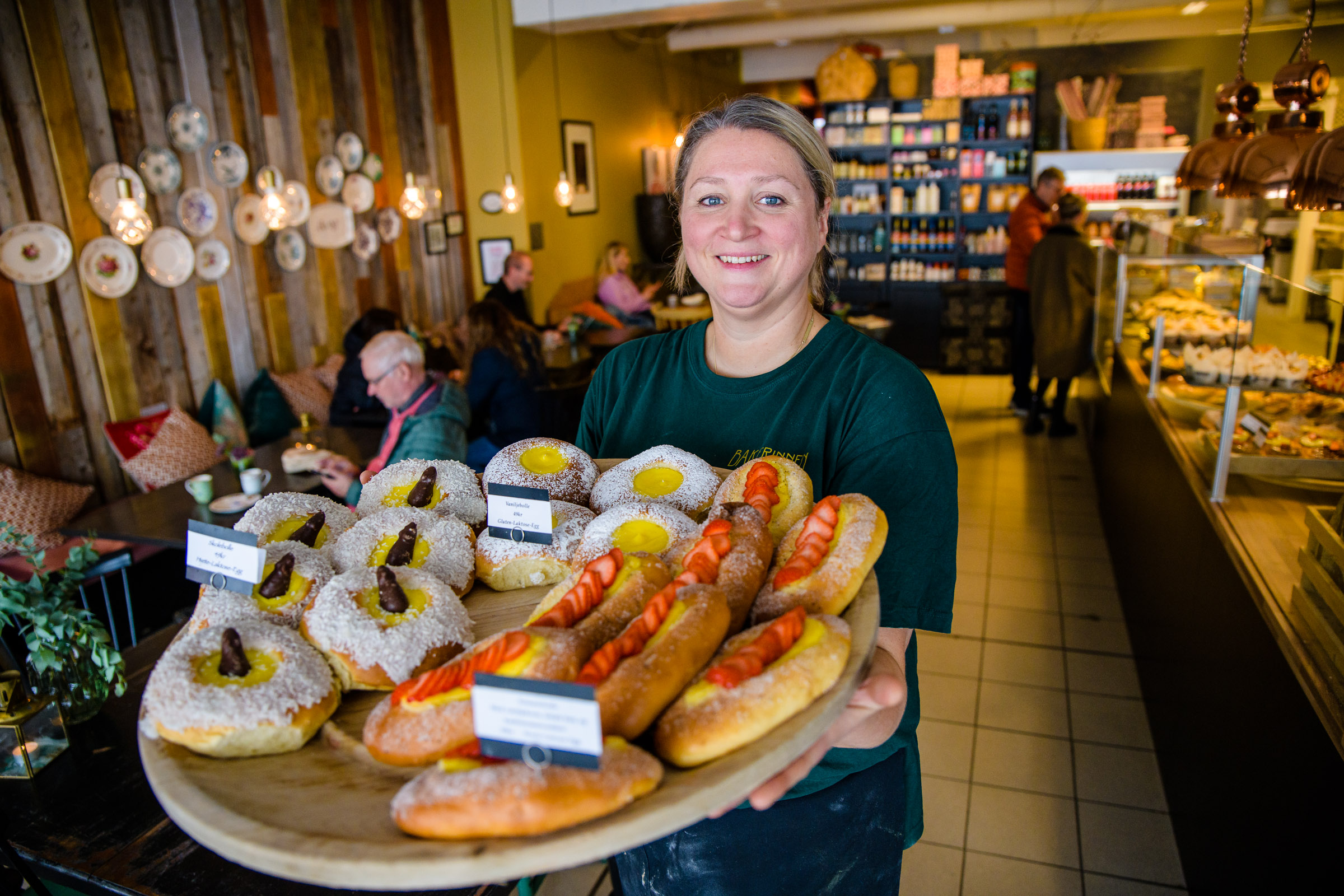
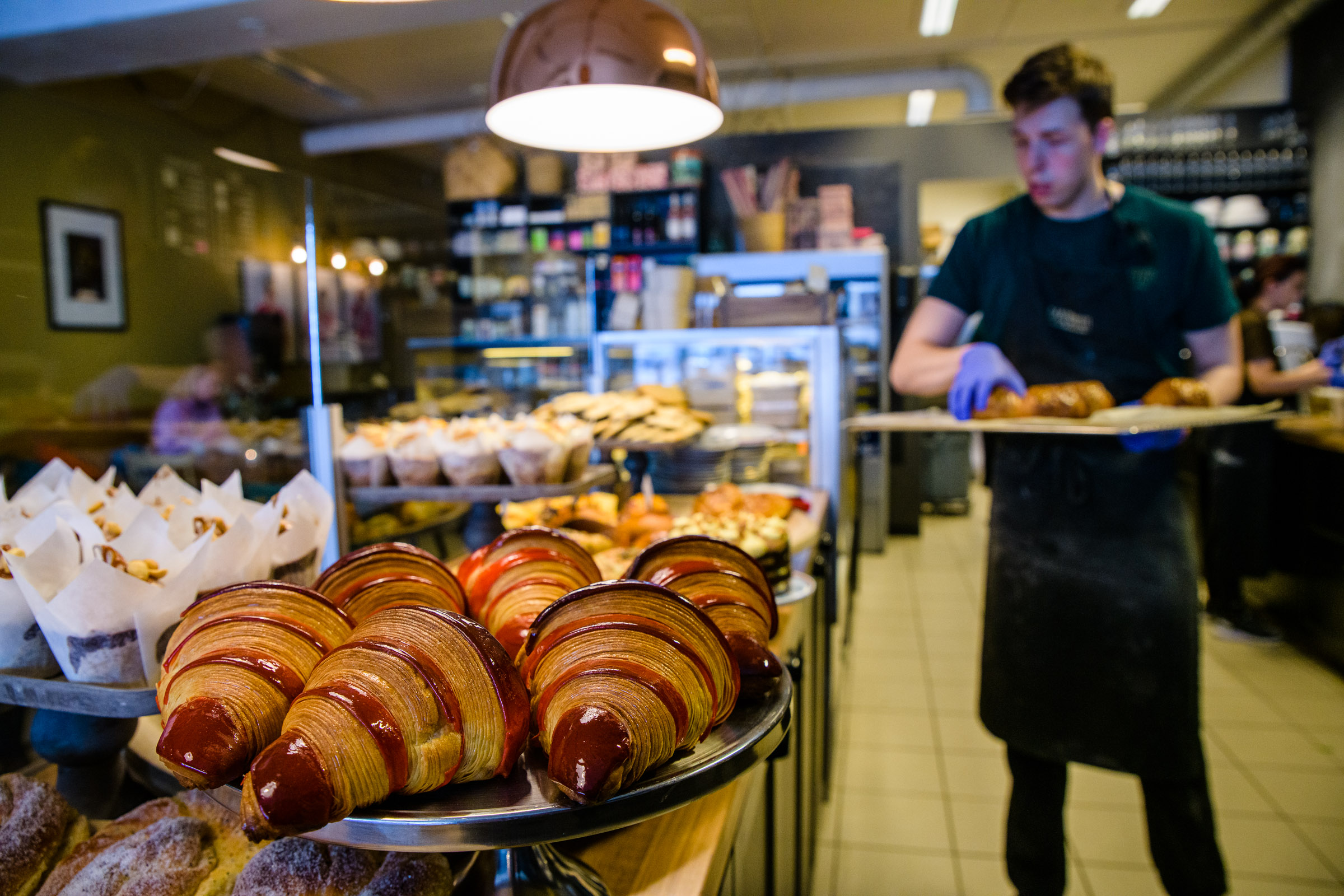
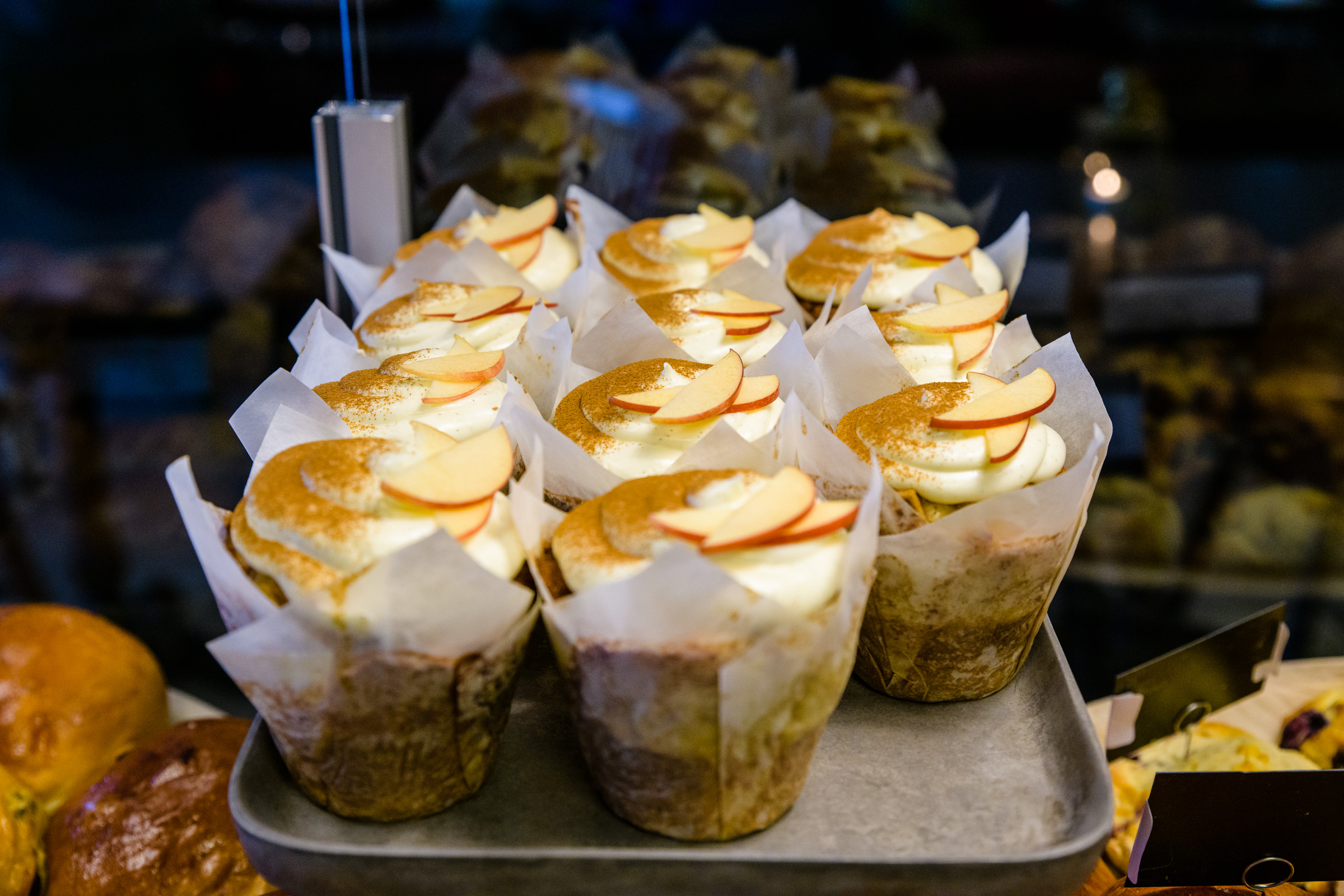
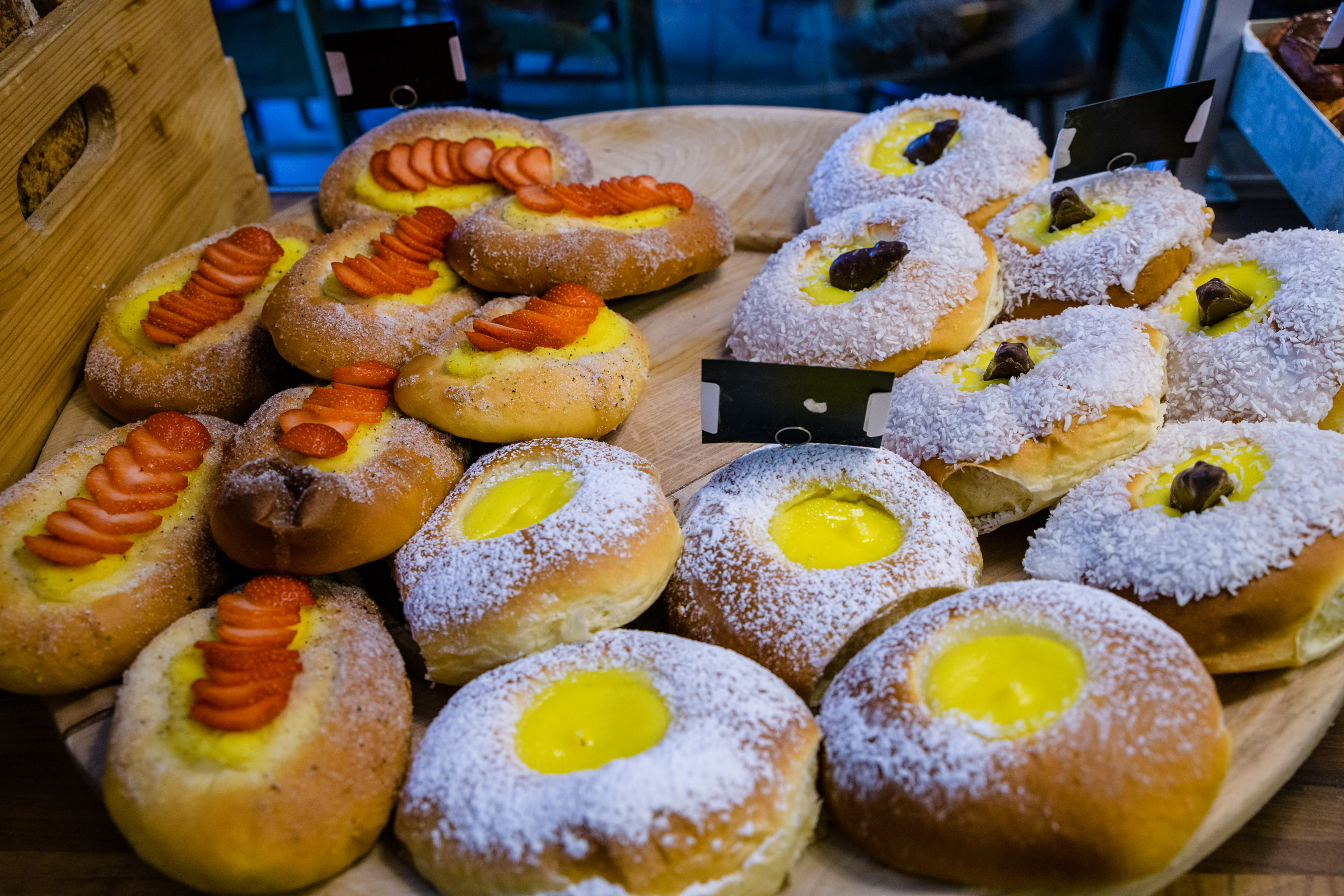
A beautiful place where your sense of smell kicks in immediately. A lot of gorgeous temptations, with something for everyone. “Bollemusa[CA1] ” is a classic here. The above words are not mine, but taken from a review online. When I open the door, I immediately realize it was accurate. A rustic café section to the left, a long counter with beautiful, colourful baked goods to the right. The smell is irresistible. “Every day is Friday here, we want to be our customer’s everyday indulgence,” says the busy “bakeress” Camilla Johansen. From humble beginnings, with one employee, the bakery is now a success, with 28 employees – a place people don’t mind travelling to visit.
Good health in good food
The bakeress herself explains that they are all about real ingredients, good craftsmanship and closeness with customers. “There is good health in good food – food that makes you happy,” Camilla smiles. There are no shortcuts here. The breads take several days to make, and staff members are taken on trips to other cities, like Barcelona, to find inspiration. While we are talking, a customer approaches our baker, praising the French pastry she just ate. “I just have to say, this was delicious, just melting in my mouth.” Camilla says she is proud to get reviews like that. She has also found time to write two books about baking and enjoying oneself. But what about the Kvæfjordkake? Do they have that? “We like to do things our own way. We have had Kværfjordkake, but we did our own twist on it. We’ll let other people do the ordinary cakes,” Camilla concludes.
Skafferiet provides locally sourced food
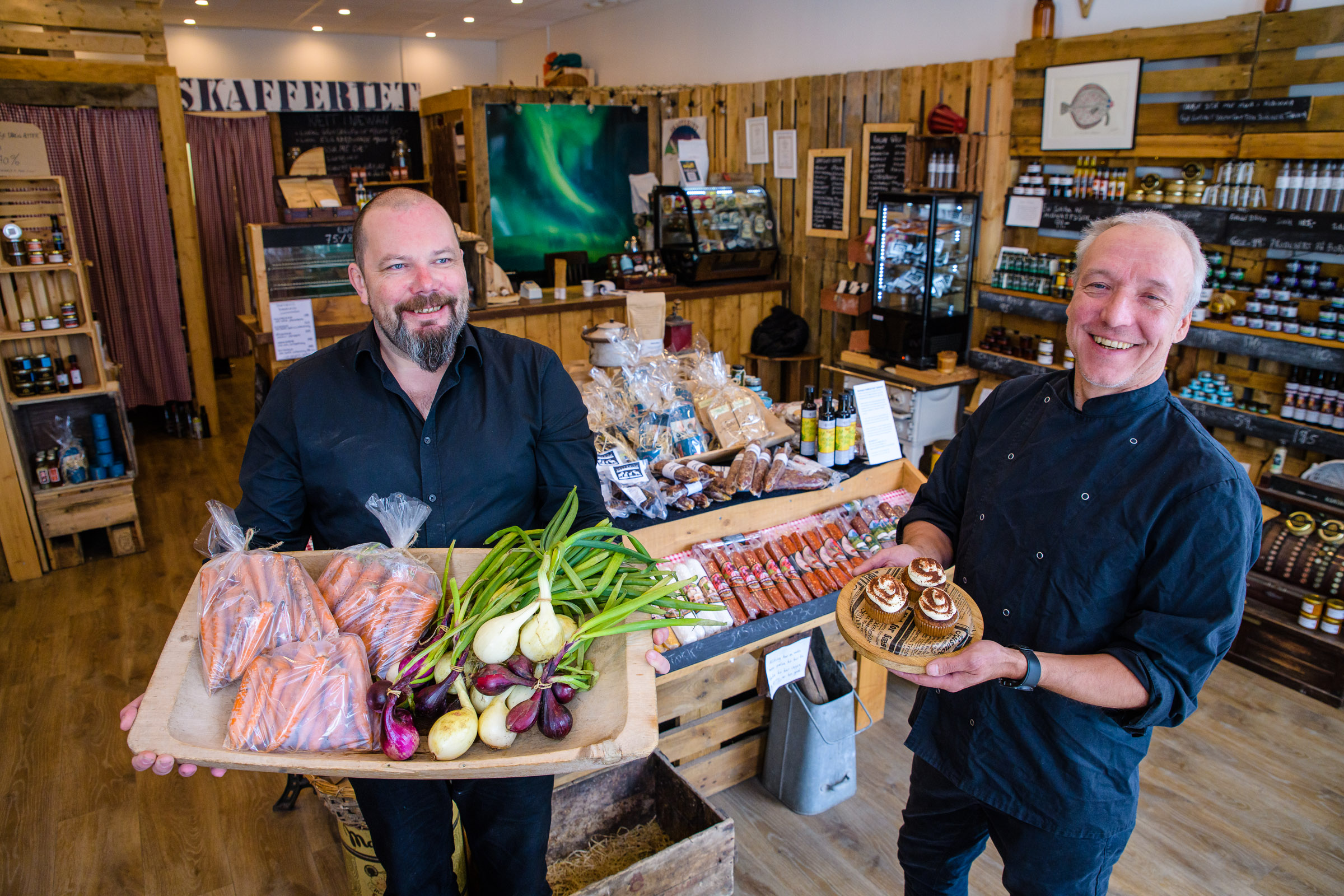
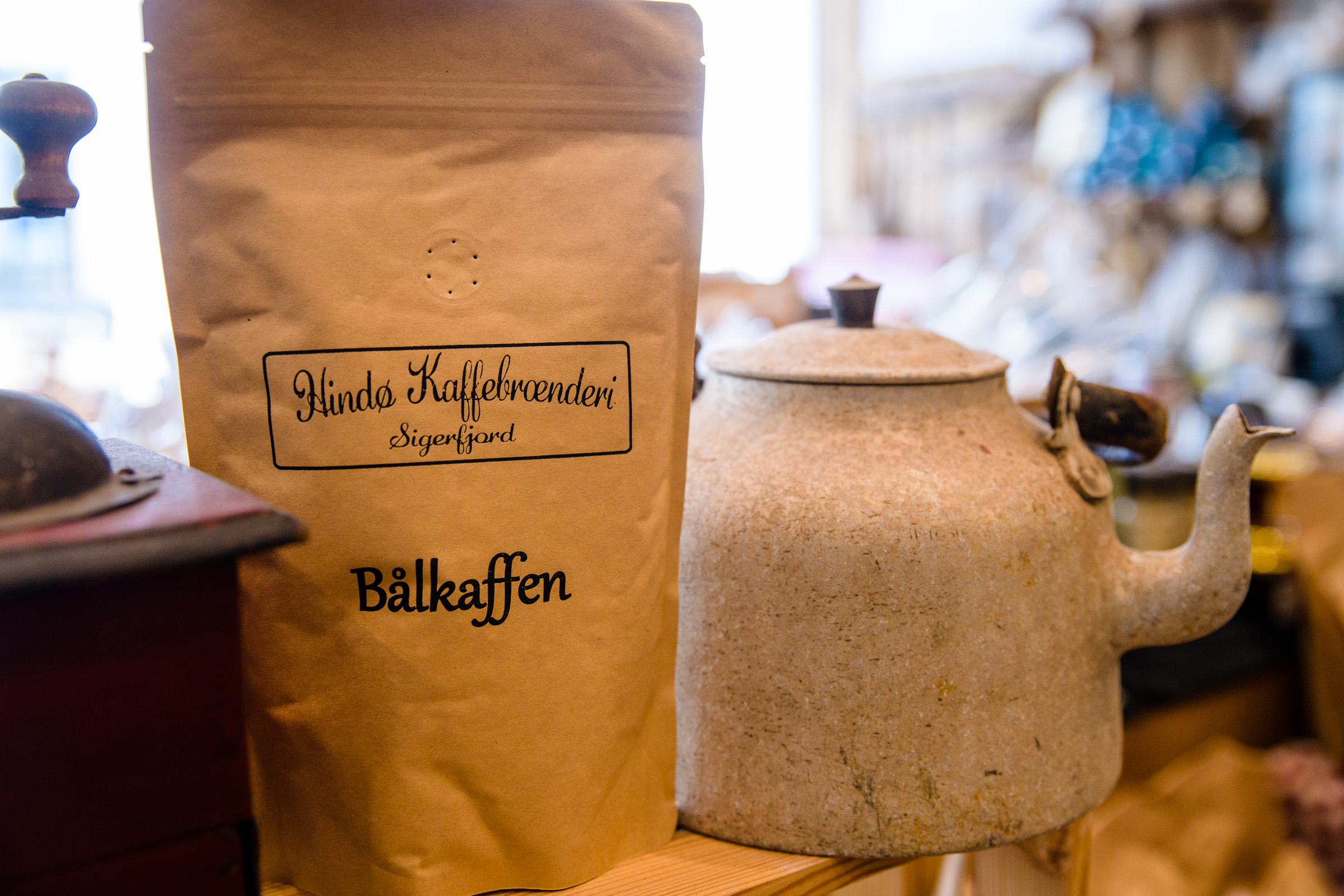
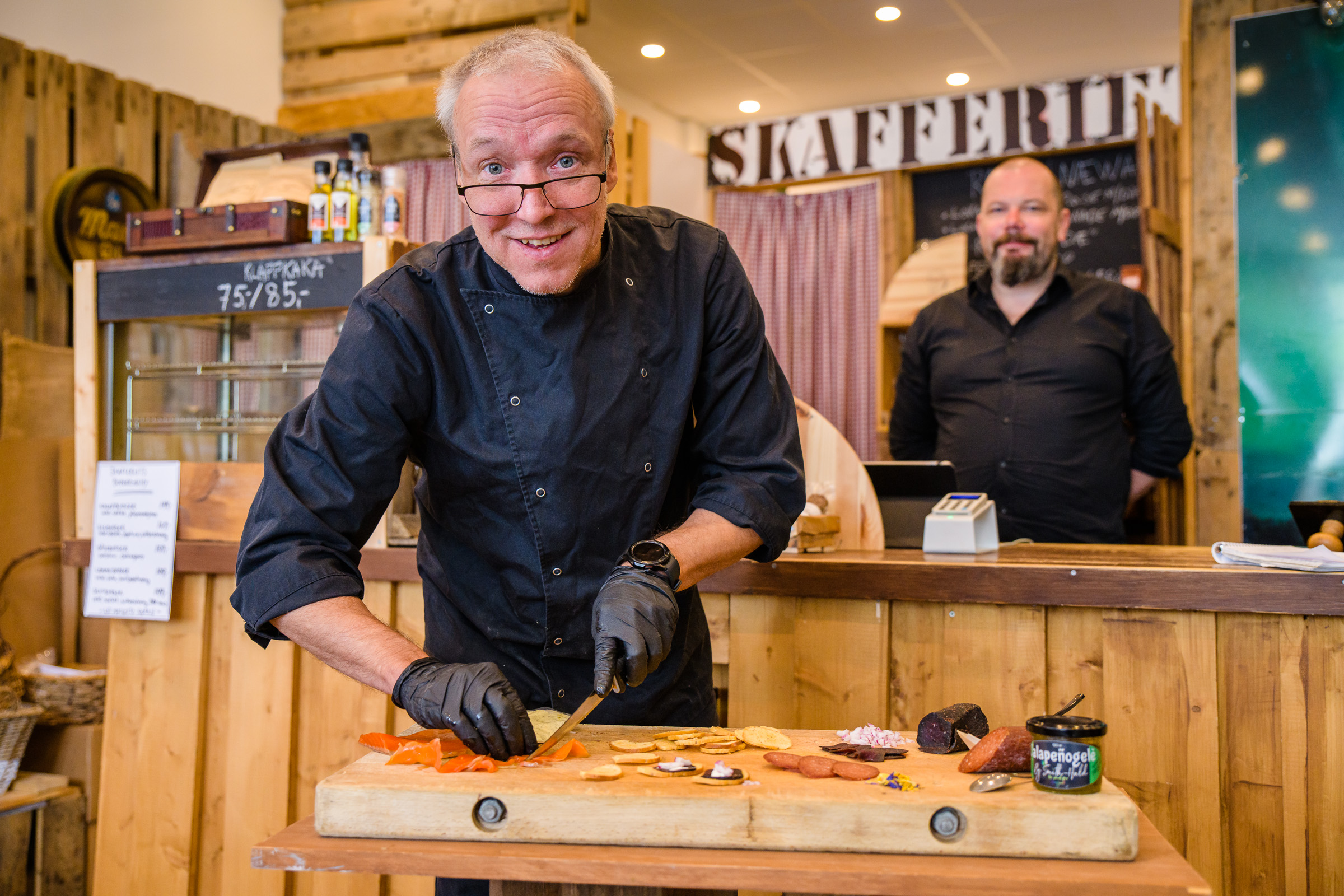
So, Harstad and Kvæfjord has a lot of tasty foods to offer, whether animal or vegetable. But it’s not really practical to drive around from farmer to farmer to buy all you need. Instead, you can stop by Skafferiet Gourmet in Harstad. “We are a big fan of local food, and we carry mostly local products. Ottestad and Elde farms, Refsnes Matglede and many others all have products for sale here,” says Erik Austgard. Austgard is one of three owners and informs us they sell anything from cheese, cured and fresh meats, berries, jellies for seasoning, honey and vegetables. Various types of seafood, such as salted and dried cod, dried cod, caviar and seaweed products, are available in this rustic shop downtown.
They know every producer
“People care more about where food comes from, and they want to know how it was made. We saw a marked increase in demand during the pandemic, and many have discovered that Harstad is a good place to visit, with many boutiques and restaurants,” Erik says. He points out that they know every producer and know the products they sell are made by people, not machines. The story behind the product is also important. “Respect to everyone who can make it work. It’s not always so easy here in Northern Norway. You have to be really passionate,” Austgård [CA2] concludes.
Røkenes farm has a royal licence
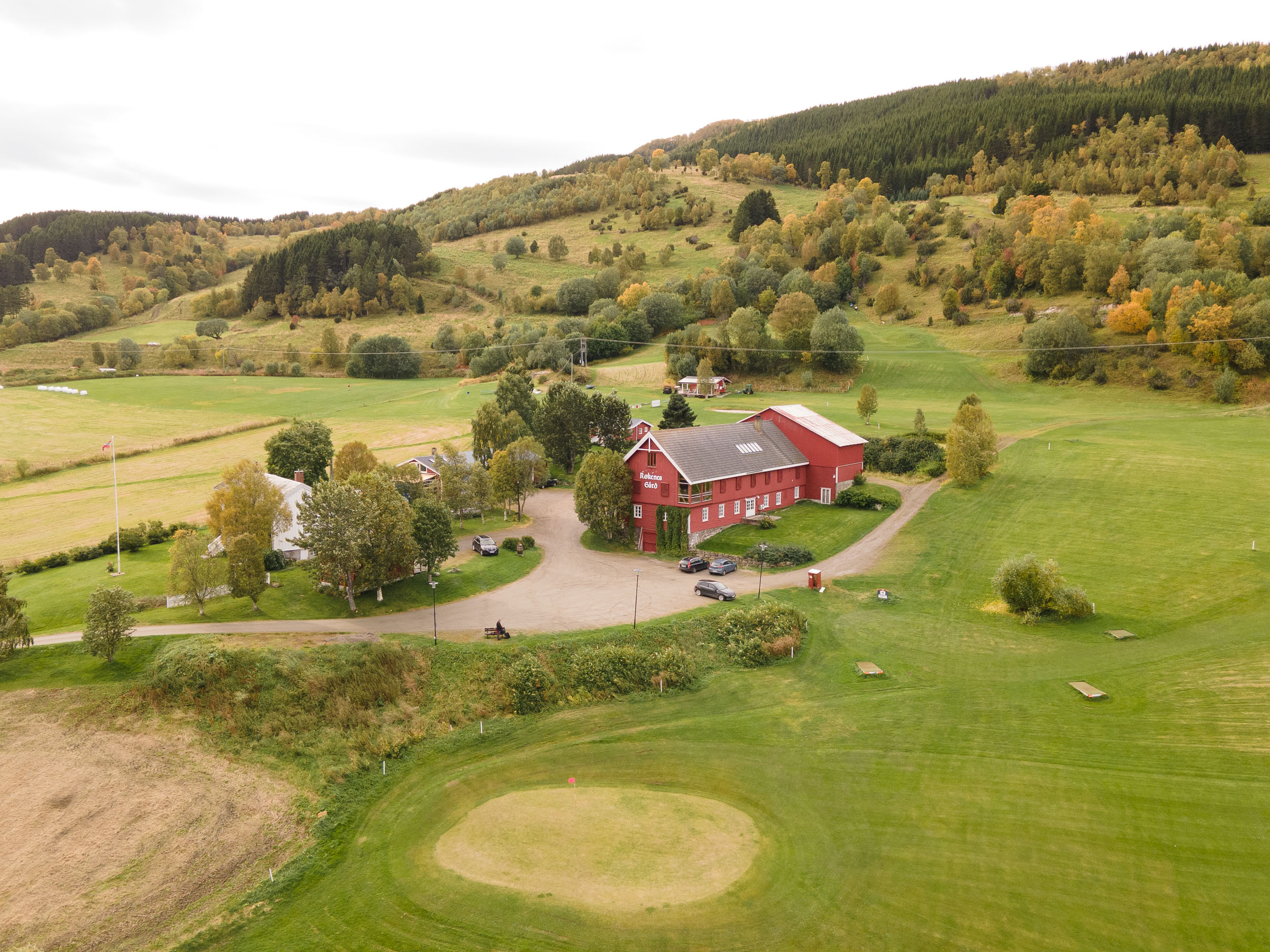
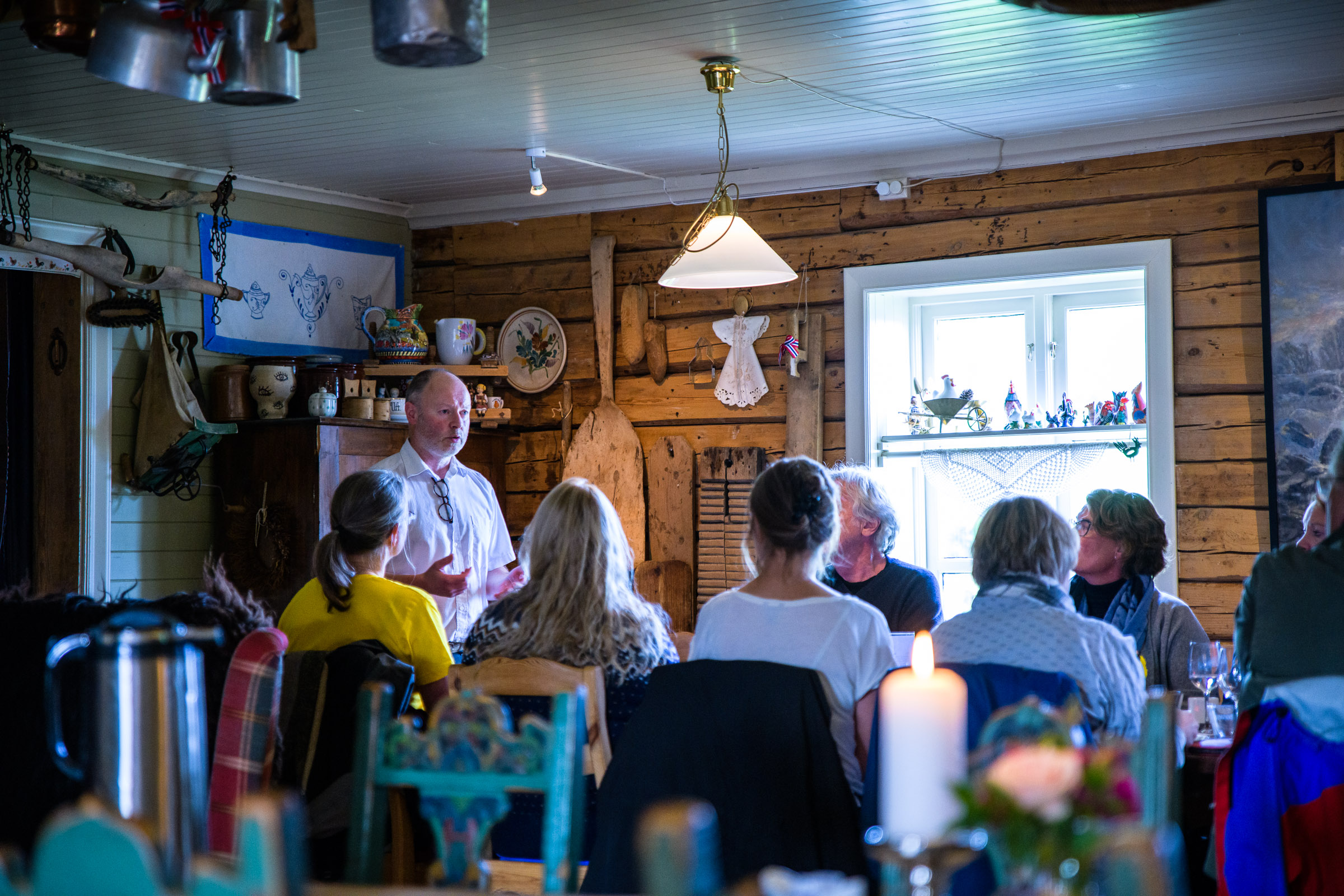
The smell of fresh waffles greets us when we arrive at Røkenes farm. But the elegant log building, with old paintings and antique furniture, is also rich in history. There is a fire in the hearth, and Kristian Kulseng, whose family has owned this farm for ten generations, greets us. The farm’s history goes back 2000 years, but the family who currently owns it, have been at Røkenes since 1673. At a long table, the board of the cultural heritage committee eat while Kristian tells the story of the farm. He tells us about the art by Karl Erik Harr. In the past, dried fish and trade was the main focus here, in addition to farming and fishing. The farm also served as an inn. You won’t be the first to have a drink here, Røkenes has had a royal Danish liquor licence since 1777.
Røkenes has a wide network of contacts
Røkenes is no longer a working farm, but is open to visitors who want to dine and drink in the history of the place. The food is local, and the farm has many local suppliers of anything from wild game, beef and lamb, to vegetables and fish. The potatoes, onions and carrots come from Elde, the Kvæfjord farm we visited. They grow their own herbs on site.
Local food traditions have evolved to suit modern tastes
“We use a lot of the local food traditions, but we have updated them to suit modern tastes,” Kristian says. People are requesting local food, and many of the tourists want fresh fish. Røkenes is dedicated to serving sustainable and local food. “Our history goes back centuries, and our hearts belong to this farm. It is important to us to care for what we have and to preserve it for future generations,” Kulseng says.
Umami celebrates modern food culture
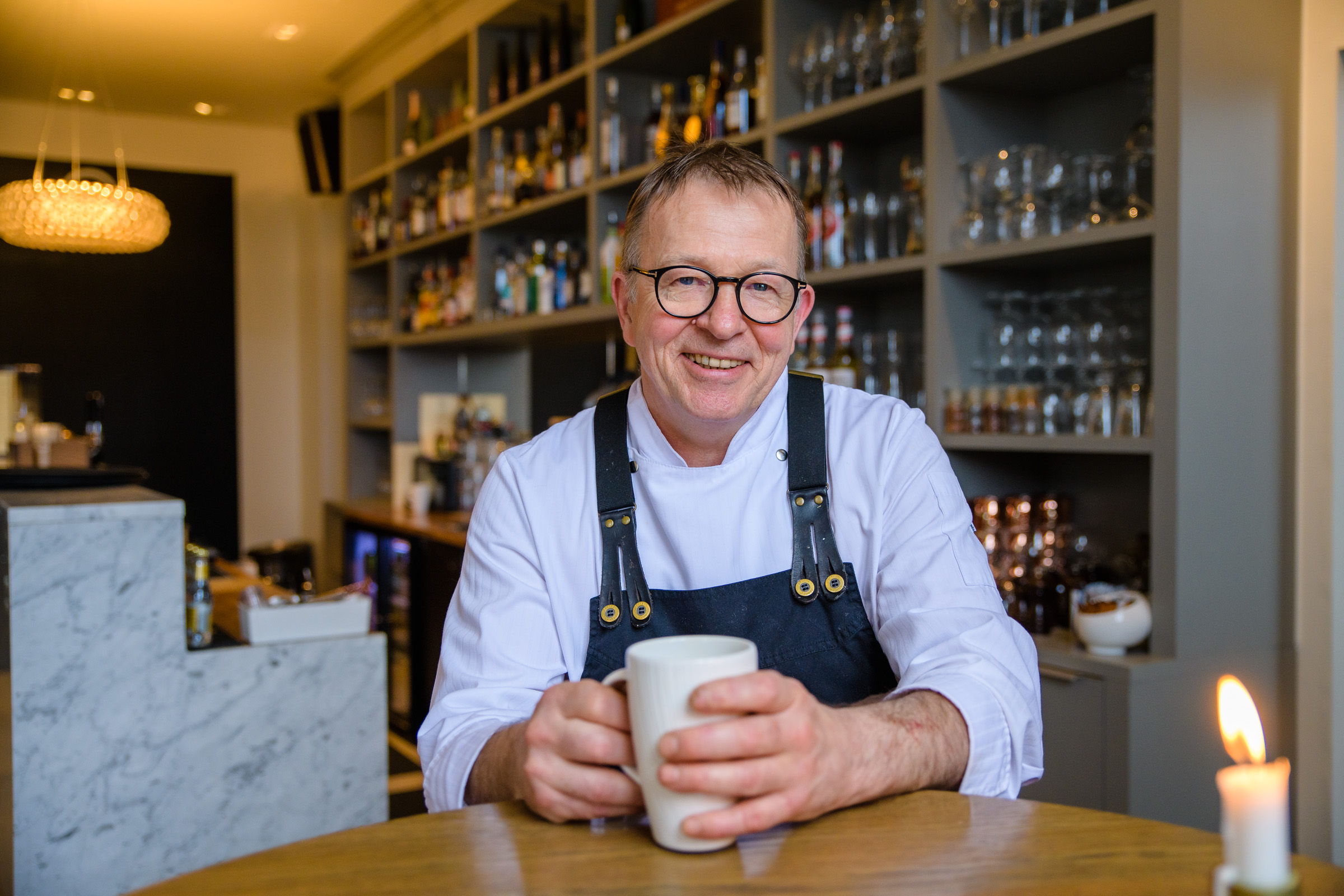
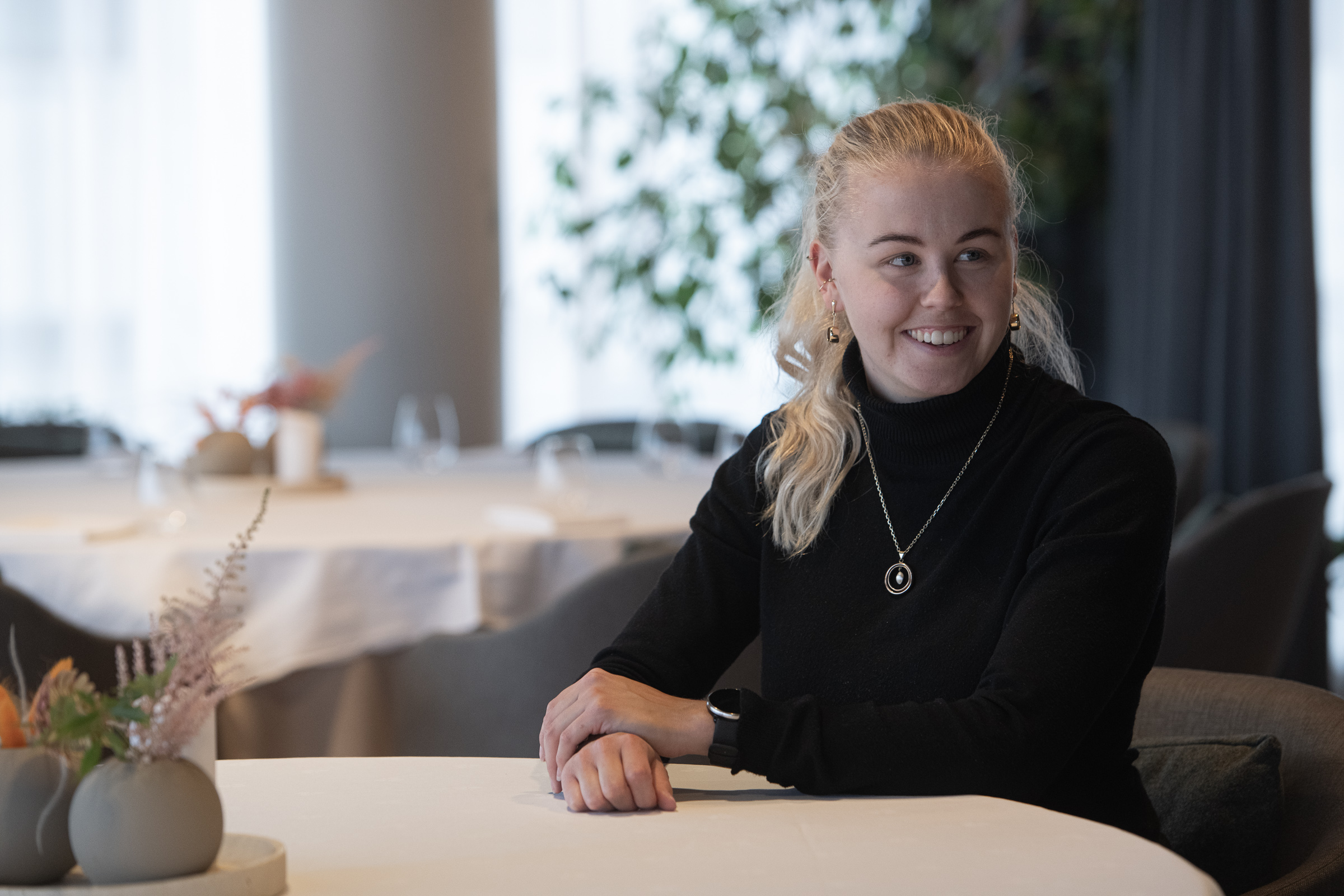
A stone’s throw above downtown is Umami. The name means ‘pleasant savoury taste’ in Japanese, and this restaurant strives to make world class food from local ingredients. The dishes should not only taste good, but they should also be pleasing to the eye. Kim-Håvard Larsen and Sigrid Rafaelsen founded the restaurant in 2011, and they have built a restaurant people travel far to visit. “Everyone here contributes to the good food experience. Our open kitchen also contributes to the intimate atmosphere and ambiance,” Kim-Håvard says.
Ever heard of caramelized cauliflower cream?
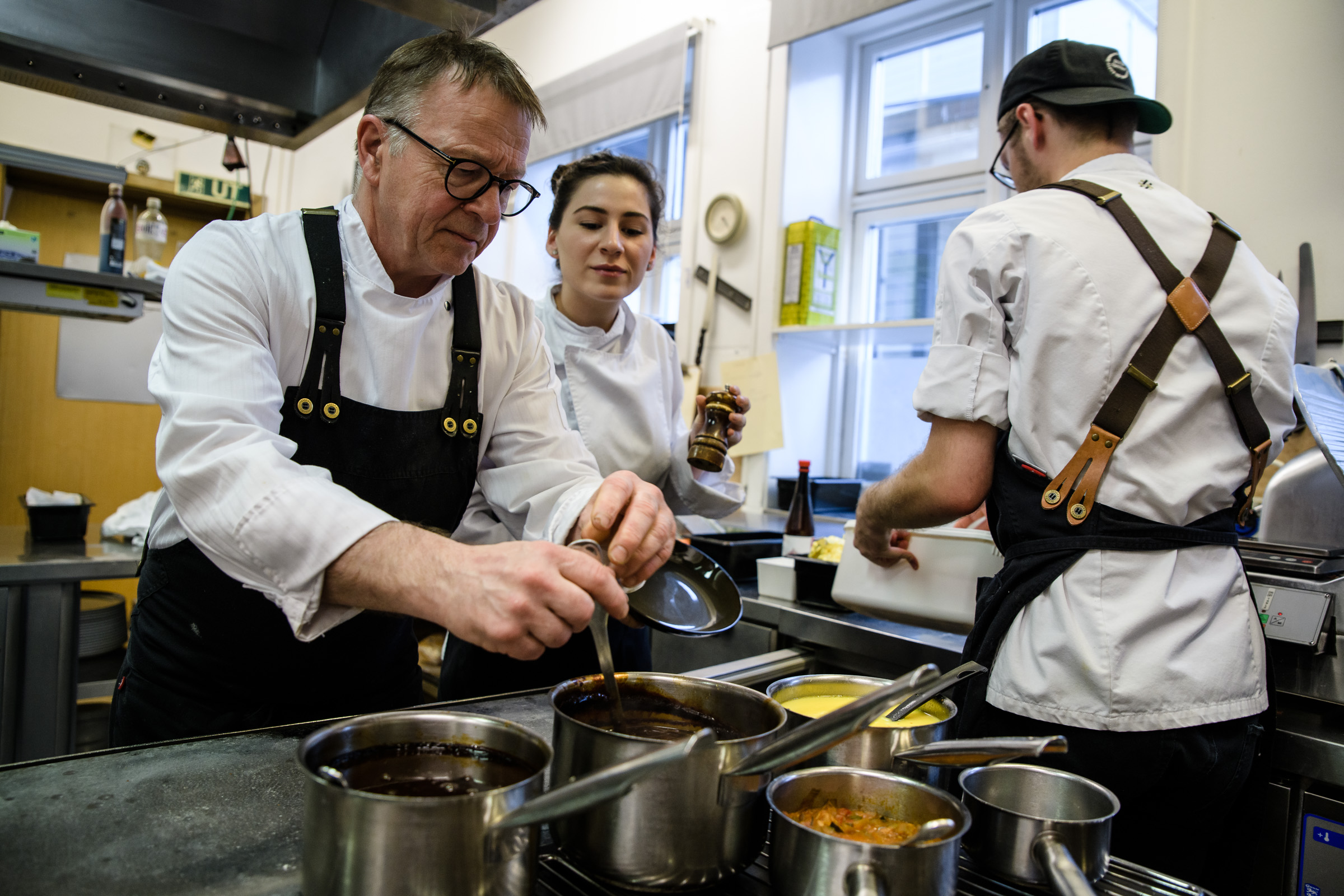
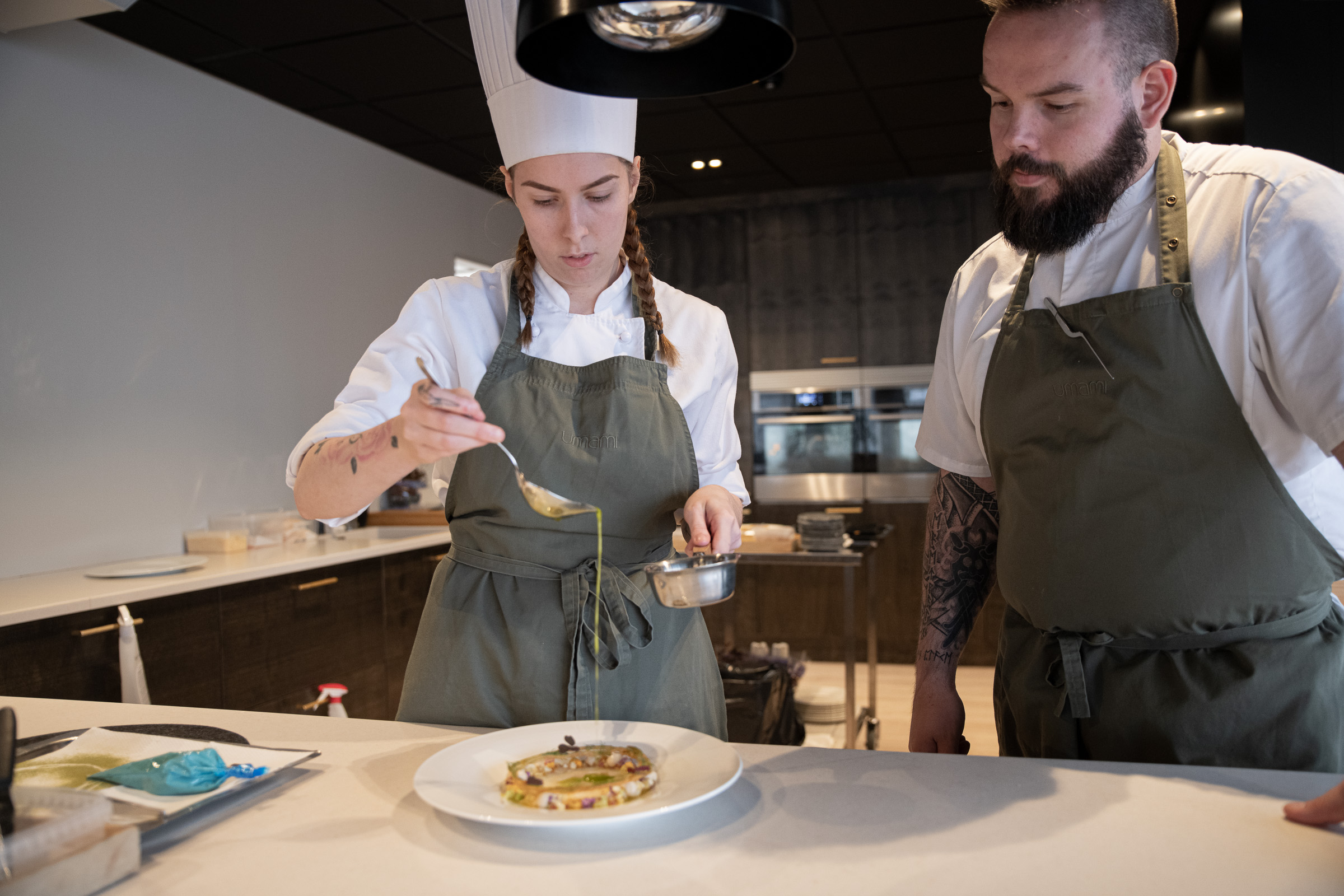
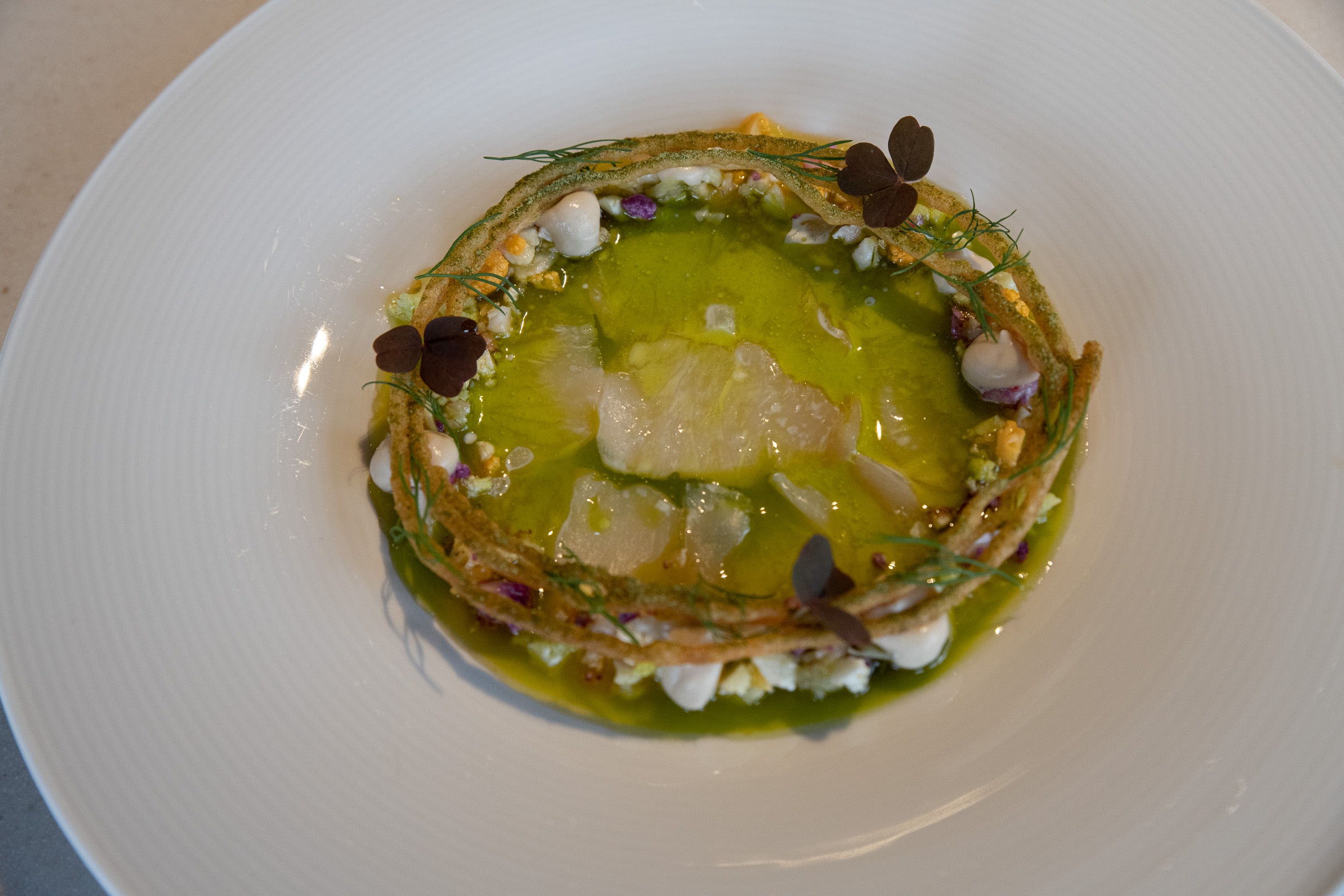
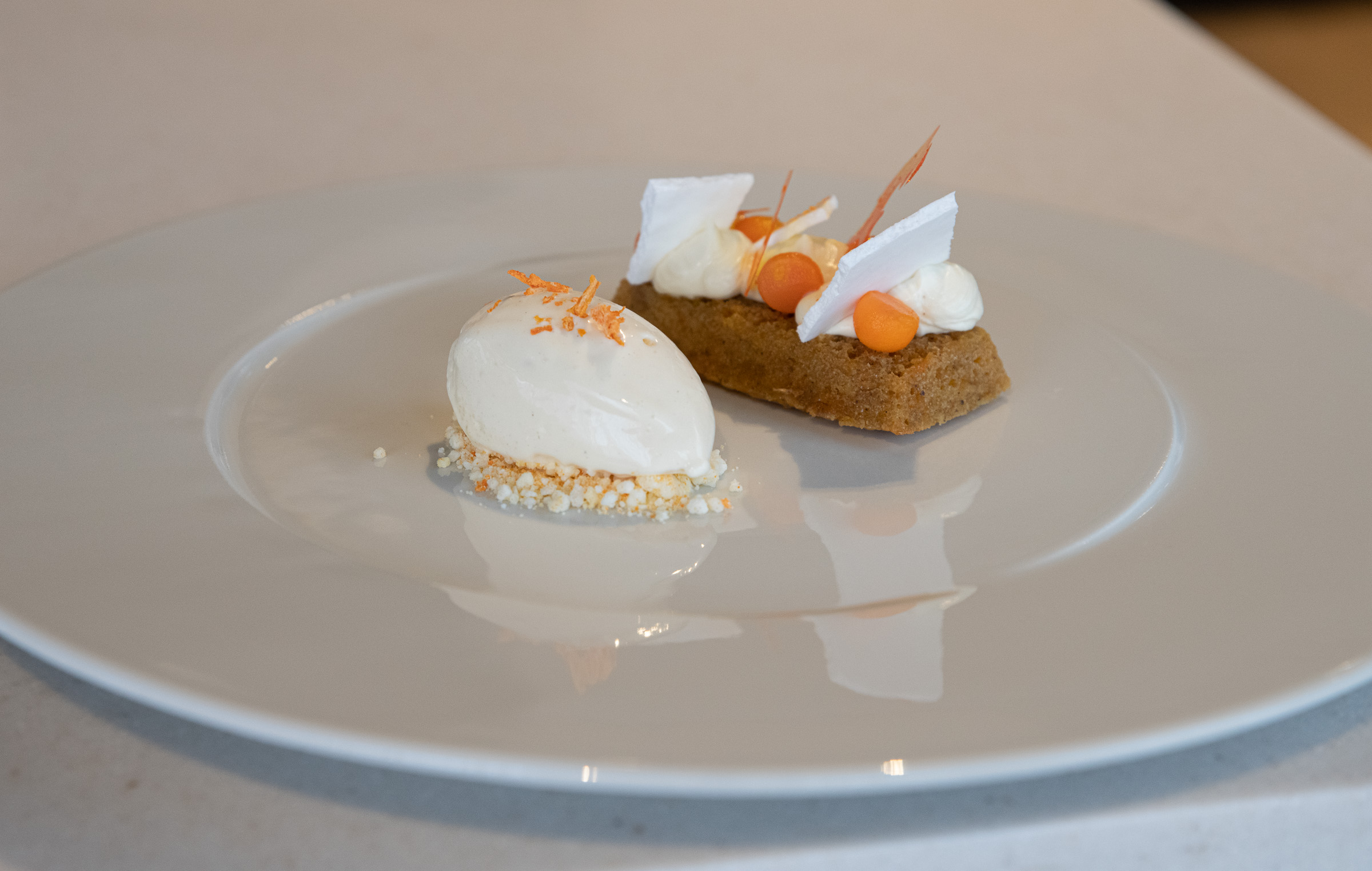
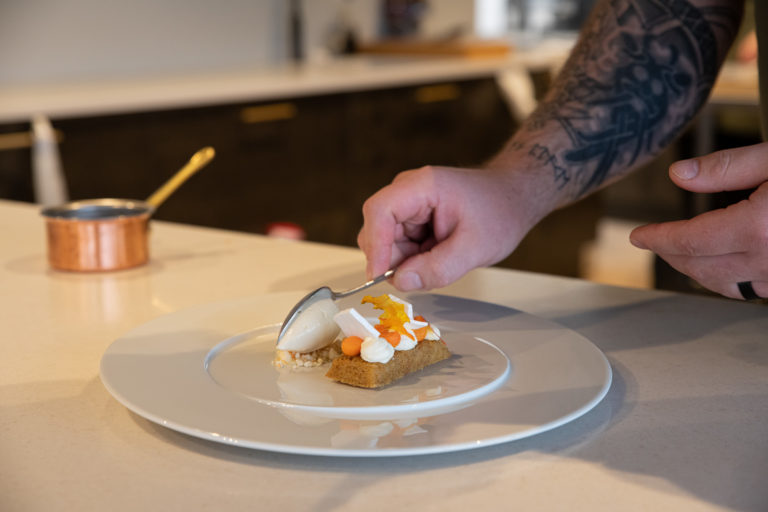
Head Chef Bjørn-Eirik Liljevangen and apprentice Siri Berge are preparing an appetizer with cured and smoked halibut from Senja, marinated cauliflower and caramelized cauliflower cream. The dish is delicious, and we continue to discover new nuances throughout the meal. Local ingredients take centre-stage when the chefs are preparing, and cooking methods from all over the world are used to create interesting flavours.
Farm work is part of the job
Many of the ingredients come from farms in Kvæfjord and Harstad, and the restaurant also has its own vegetable garden, where the staff help with the farm work. Umami is frequently visited by couples in the mood for a romantic evening, but they also welcome larger groups. The owners say they aim to provide a warm and relaxed atmosphere, with world-class food and drinks. Harstad and Kvæfjord have food products grown in good soil, with passion and favourable growing conditions. In addition, the access to local meat is good, and the fish comes from the fjords just outside the city. When these good ingredients are prepared locally and eaten at good restaurants, the stage is set for delicious food experiences.
Lars Åke Andersen is a photographer and journalist from Northern Norway with a passion for food, local culture and everything to do with Northern Norway.


Find your way around Harstad
Haha! We refrain from recommending one particular place. This rather small city of 25 000 people has a good selection of eateries, presented in on the website of the local tourist board. In this article we’re focusing on
This is absolutely debatable. Umami might be the one with the biggest press attention. Bark has also received excellent reviews. The Harstad-ites themselves love to go to Røkenes to dine in historical surroundings.
Some restaurants close on Sundays and maybe on one or two weekdays. In July, professional life comes to a standstill, and the best restaurants close down. Fridays and Saturdays are popular days, and one should definitely pre-book. One should definitely plan ahead, and use the overview on Visit Harstad.
The local visitor’s centre, or tourist board, has a well-stocked homepage.
We went to these three for practical reasons; they are close to each other. The website, Kvæfjord Matkultur (Norwegian only, we’re afraid…) lists a number of small farm, and we wish we could visit them all.
Harstad is not difficult to get to. Harstad/Narvik Airport with frequent departures to Oslo with Norwegian Air and SAS is less than an hour away. The legendary shipping line, Hurtigruten, operated by Hurtigruten and Havila depending on the day, calls at Harstad heading north and south along the coast. To Tromsø, there are 2-4 catamarans a day, and there are buses going to the Lofoten and Vesterålen islands, to the railhead in Narvik and to the Fauske railhead. But all of this is better informed about on the website of Visit Harstad.