
According to an American saying that actually dates back to Aristophanes, “You cannot teach a crab to walk straight.” But king crabs are unlike any other crab – on their long spiky legs they easily move both sideways and straight forward. Perhaps more astounding than their gait is the fact that, every day, thousands of them are checking in to a large luxury hotel at Oslo Airport Gardermoen. From there, they travel the world, only to end up in the hands of top chefs in Tokyo, Seattle, Hong Kong and London. However, before they get that far, we recommend that you meet them in Kirkenes, the town in the far north of Norway where so many of the crabs live and thrive.
The world’s largest crabs have invaded Norway
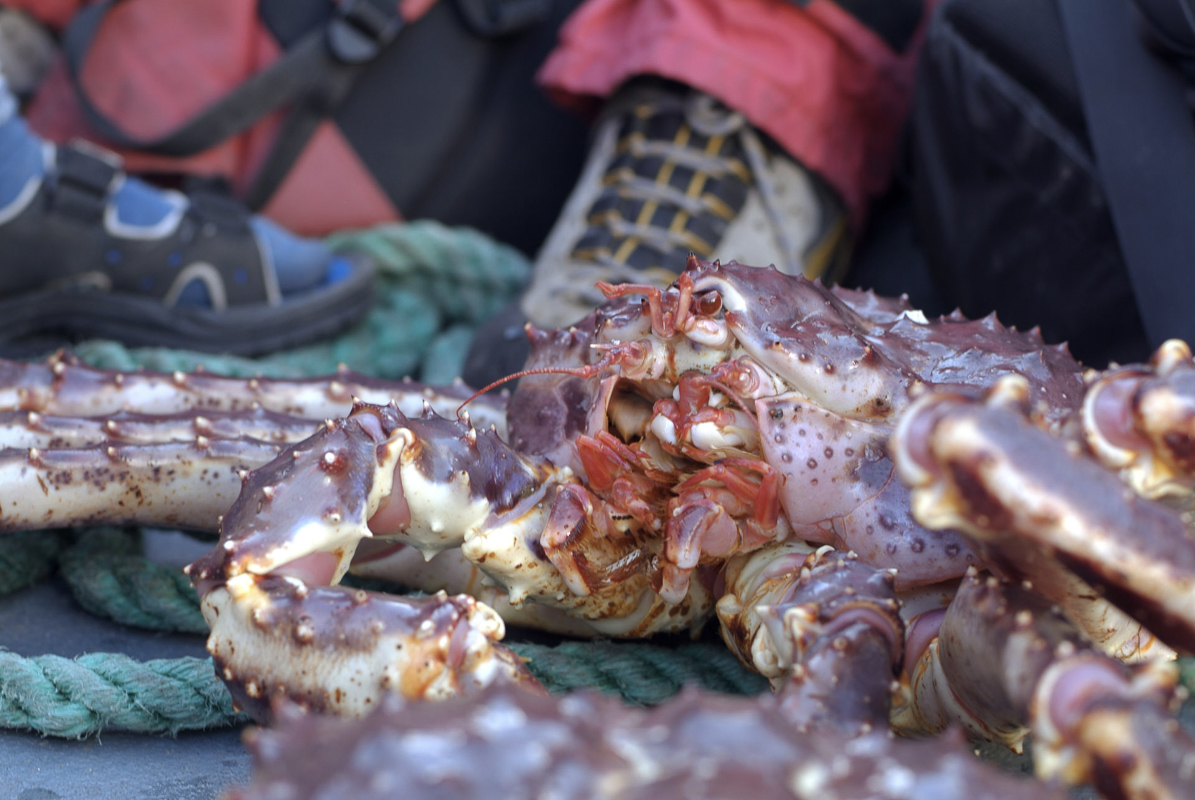
It was at the end of the 1970s that the first Kamchatka crabs (Paralithodes camtschaticus) crossed the Russian border into Norway. Interestingly, these monster crabs had originally been brought from the North Pacific in the 1960s and released in the waters around the Kola Peninsula, as part of a scheme to feed Russia’s people. No one had any idea that they would be so fruitful and multiply so quickly, and certainly no one suspected that they were going to devour everything in their path on their migration across the seafloor! As the monster crabs wandered westward, they have left behind empty clams and other shells, and devastation scattered with remnants of starfish and annelids and other dead organisms.
In places the seabed looks like a plundered wasteland
This abundant diet clearly energised the crab’s reproductive ability, and perhaps the rumour spread that the good life was to be had in the Norwegian sector. One thing is certain: an ever-increasing number of crabs were wandering west.
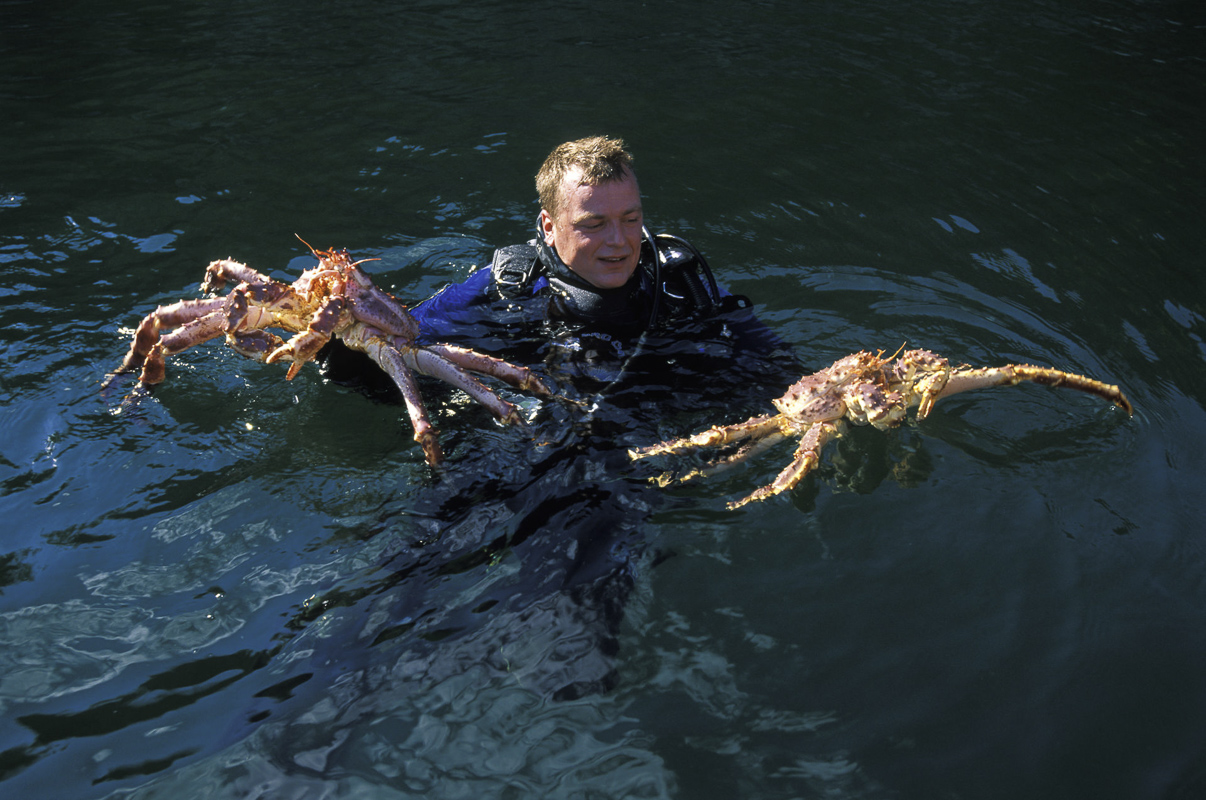
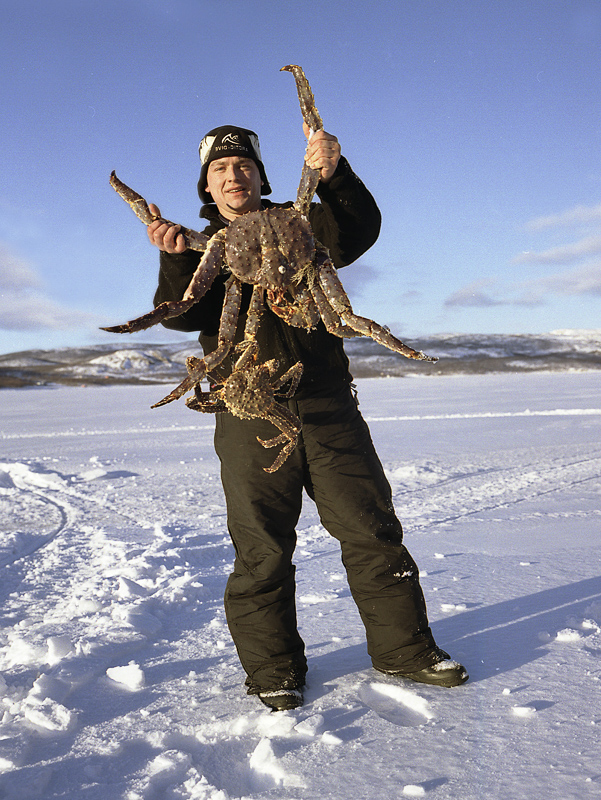
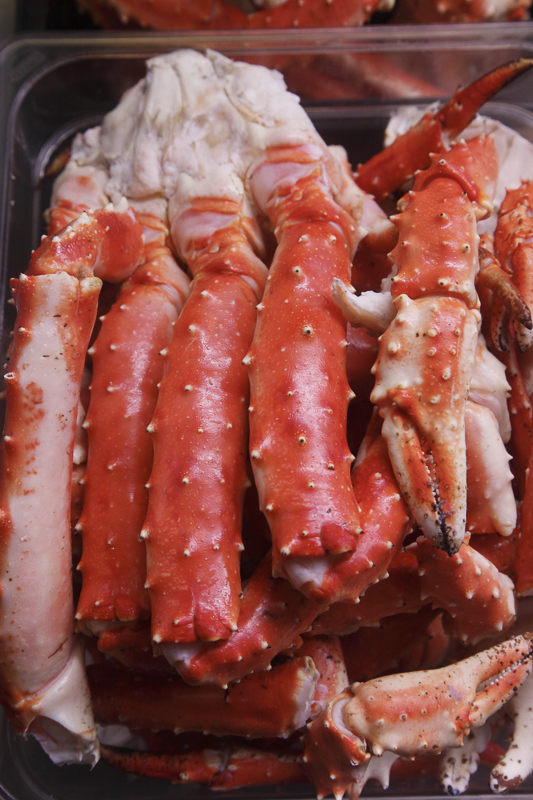
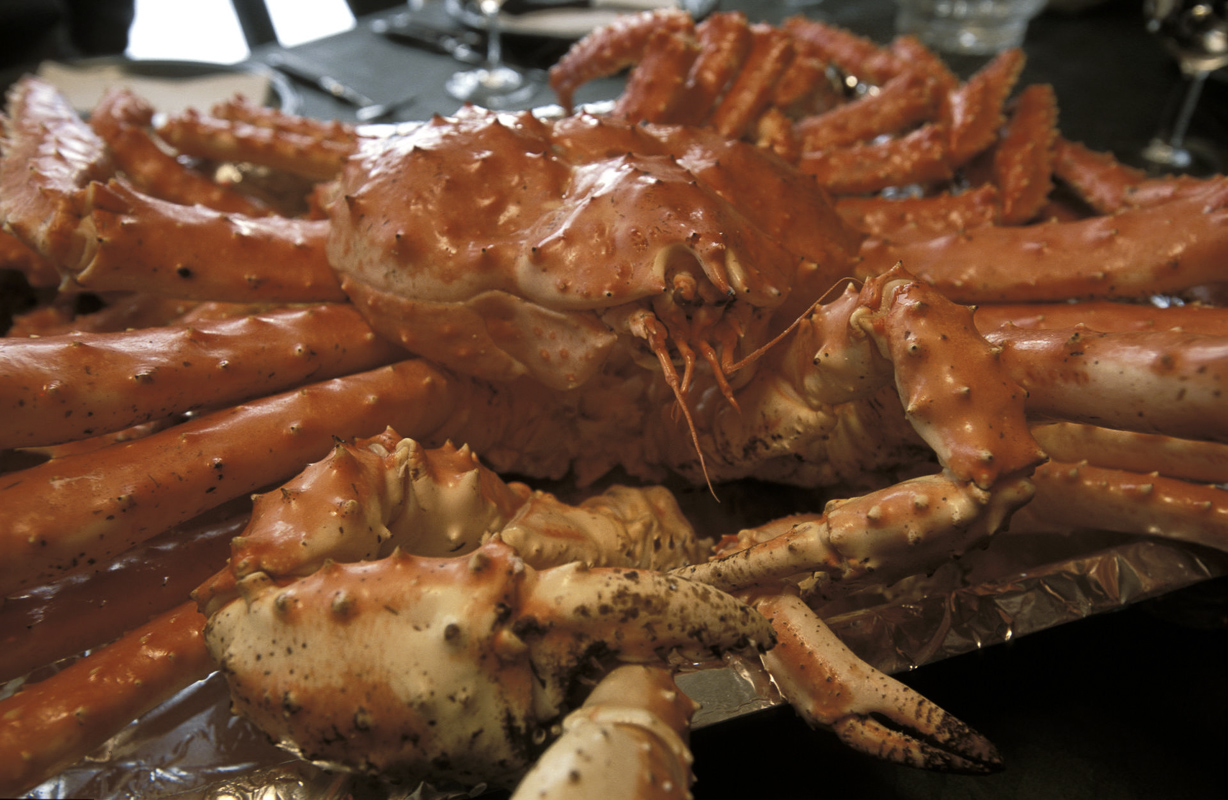
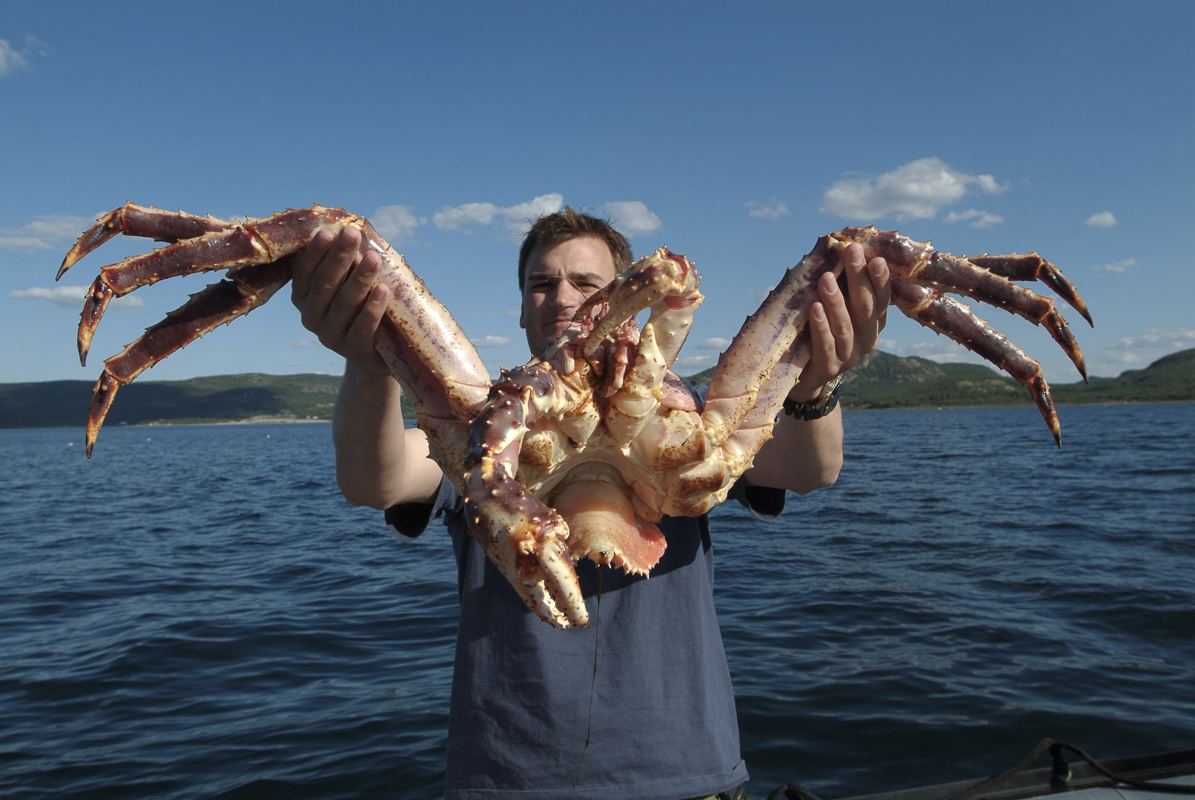
When we consider the fact that each crab measures as much as 1.5 metres from claw to claw, weighs more than eight kilos and may live to more than 20 years, it is no wonder that this northeastern part of Neptune’s kingdom soon became cramped and overcrowded.
By the 1990s, the crabs had grown so plentiful that the fishermen of Finnmark were pulling up fishing nets that were full of them. The fishermen were in deep despair, for this was a huge crisis. Or was it? Their despair would soon turn into a glowing optimism.
Turning a crisis into profits
The diligent Finnmarkers soon understood that it was utterly impossible to get rid of the monster crabs, so they might as well exploit them and make the most of their situation. It proved to be a wise strategy. Something fundamental changed the moment we began to consider them as a resource. Today the Kamchatka crab is probably the most appreciated of Norway’s blacklisted invasive species.
The value of the industry that has grown up around the king crab is staggering. Each live crab is marked with the catch date and the name of the fisherman, before being sent by plane to appreciative chefs on the other side of the world. Their hotel stay at Gardermoen is merely a stopover, but it is specially designed to ensure quality, efficiency and animal welfare.
Since the 1990s, the Norwegian fisheries have developed the king crabs into a sustainable industry and a strong international brand. Today, the fishermen of Finnmark are competing with adventure companies for the strictly-managed annual king crab quotas. Everyone would like a larger share. The objective of the Norwegian Directorate of Fisheries is to ensure that commercial crab fishing remains viable, while limiting the westward spread of the voracious king crab. In the meantime, the demand and prices are rising, not least because crab stocks elsewhere in the world are poorly managed and over-exploited.
A crab feast prepared according to your taste
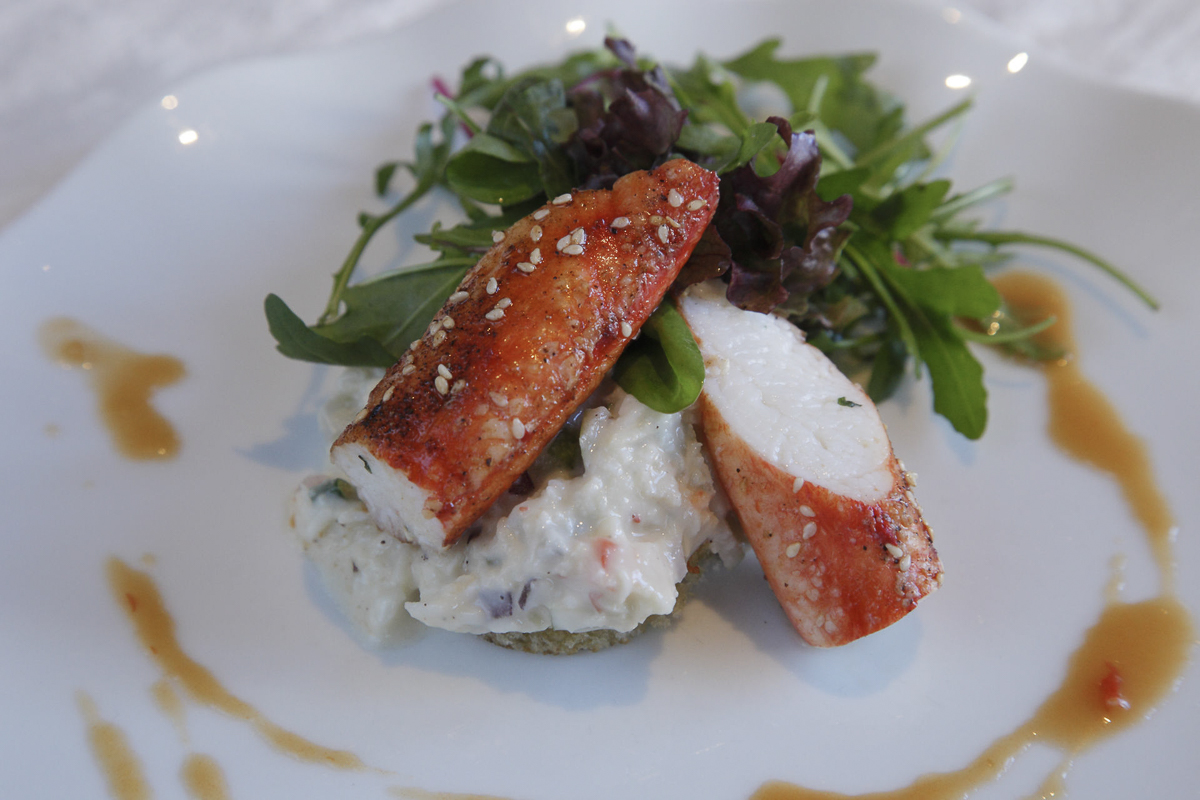
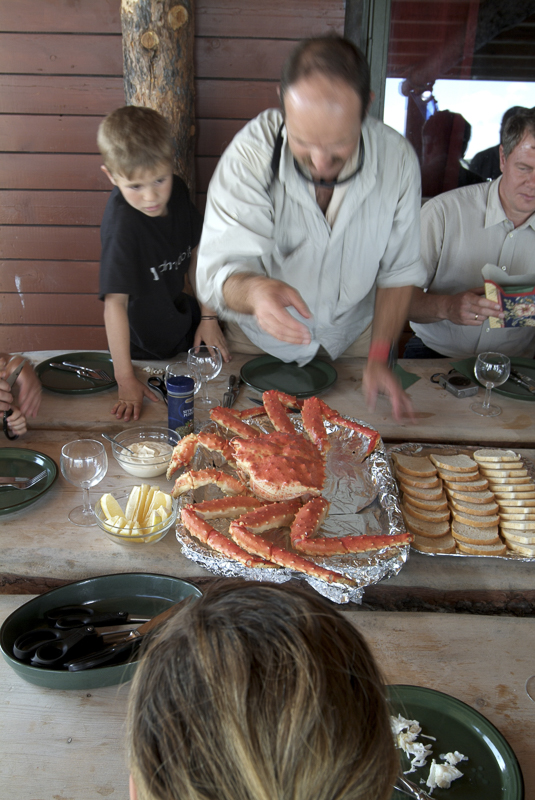
Is the Kamchatka crab from Norway really worth its weight in gold? We leave the answer to professional chefs – and they are unanimous in their verdict. This crab is a world-class delicacy and a hugely valuable commodity. The meat is firm and the taste is slightly sweeter and even more aromatic than lobster. King crab can be eaten alone or combined with a wide variety of other ingredients. It can be prepared in many different ways: poached, baked, grilled, roasted, minced or served au gratin. Because of its size, a single crab provides a large amount of meat. The crab is cracked, and the legs, including the innermost joint, are a welcome luxury at the tables of diners throughout the world.
Kirkenes – a “king crab town” full of surprises!
Let us repeat our hearty recommendation: Come to Kirkenes and meet the king crabs before we send them to their special hotel! Our town, which is known as the “king crab capital”, offers excitement, laughter and pleasure – and it’s the best place in the world to become familiar with one of the most fascinating creatures in the seven seas.
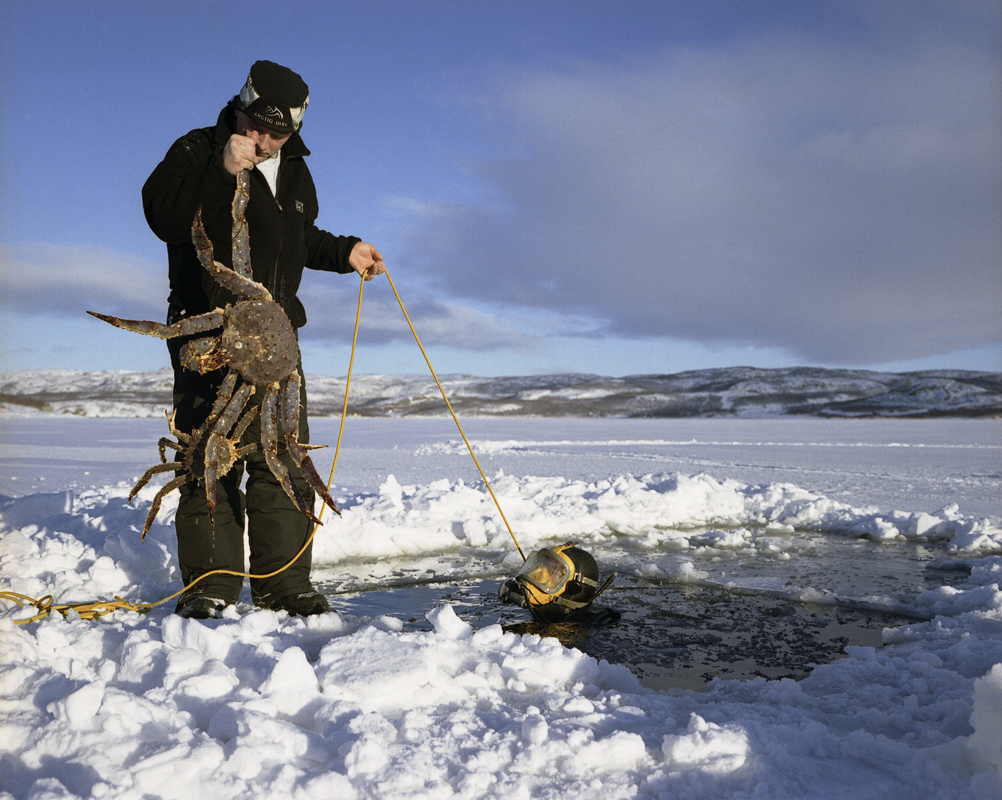
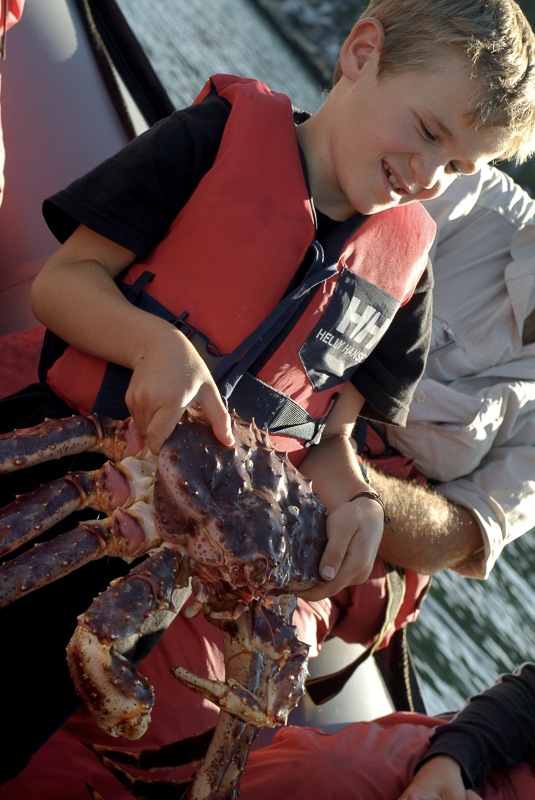
Kirkenes guarantees a king crab adventure suited to your taste; there are surprisingly many to choose from. For example, you may opt for a hands-on experience of helping a fisherman catch the crabs, or choose to stay safely away from the claws, camera in hand. Why not learn from a master chef how to best prepare a royal crab feast for your family and friends? Or perhaps you are content just to gorge yourself on the delicacy! In the winter you can combine your crab adventure with a snowmobile ride – and in the summer combine it with a boat ride on the river. Whichever season you choose to visit, Kirkenes has an amazing king crab adventure waiting just for you!
Where can I get to taste the crabs?
Barents Safari’s website has it all
Consult Pasvik Turist’s website for crab and many other activities
The snow hotel goes crabfishing all year.